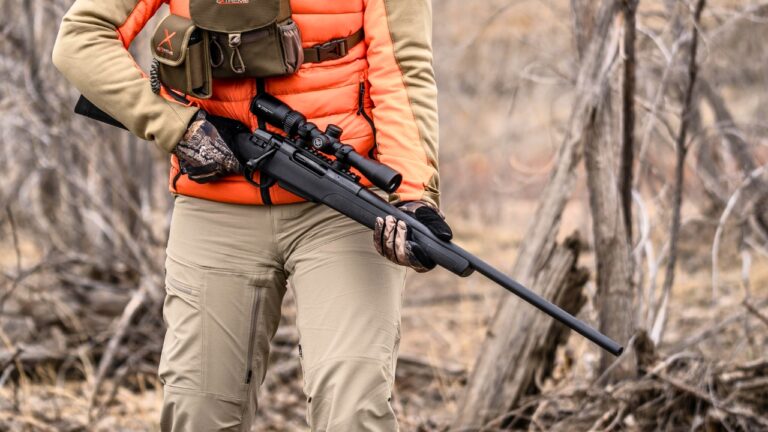
Mountain hunts test every piece of your gear, and your ammunition is no exception. The thin air, steep terrain, and unpredictable weather expose flaws that you’ll never notice at the range. Ammo that groups well at home can perform completely differently at elevation, especially when wind, temperature, and distance come into play. Light, fast bullets that look good on paper often break apart before reaching vital organs, while some loads with soft jackets can’t handle the bone and muscle of mountain game like elk or sheep.
You need ammo that’s consistent, tough, and reliable under pressure. Unfortunately, some cartridges simply can’t deliver when conditions turn harsh. Whether it’s poor terminal performance, extreme sensitivity to temperature, or factory inconsistency, these are the loads that too many hunters have learned to regret the hard way.
Hornady Superformance

Hornady’s Superformance line promises higher velocity, but in real mountain hunts, that speed can work against you. The hotter loads often result in greater temperature sensitivity—something you’ll notice at high elevation or in freezing morning air. The pressure variations can also affect accuracy, especially in lightweight rifles.
Hunters have reported erratic point-of-impact shifts between warm range sessions and cold mountain hunts. That extra speed can also cause rapid bullet expansion on impact, limiting penetration on tough animals like elk. While it performs fine for whitetails at lower altitudes, the Superformance line isn’t ideal for unpredictable mountain conditions. It’s fast, but not forgiving, and those inconsistencies can make the difference between a clean shot and a missed opportunity.
Winchester Deer Season XP

The Winchester Deer Season XP was designed for medium game like whitetails, and it performs well in that role. But in the mountains, it’s notorious for failing on larger or tougher game. The polymer-tipped bullet expands rapidly—too rapidly—causing shallow wound channels and limited penetration at higher impact speeds.
At close range, that soft tip can come apart on bone, and at long range, it may not expand enough to create effective trauma. Hunters chasing elk, mule deer, or mountain goats have often found that the XP doesn’t hold together when they need it most. It’s affordable and accurate, but it’s not built for rugged game or high-altitude impacts. If you’re climbing into serious terrain, this load doesn’t belong in your pack.
Federal Fusion

Federal Fusion ammo is a favorite for deer hunters, but it struggles when pushed into mountain territory. The bonded bullet design is solid in theory, but at higher velocities or on heavy-boned animals, expansion can be unpredictable. Hunters have seen bullets fragment on close-range elk shots or underperform at long range where impact velocity drops off.
The Fusion line also tends to be more temperature-sensitive than other bonded rounds. In freezing alpine conditions, accuracy can shift, and bullet performance becomes inconsistent. It’s a solid all-around choice for midwestern hunting, but it’s not the ammo you want to rely on when every shot in the backcountry counts. For serious mountain hunts, you need a bullet with deeper penetration and more stable expansion.
Remington Core-Lokt

The Remington Core-Lokt is legendary for good reason—but it’s not a mountain cartridge. It’s accurate, affordable, and deadly on deer-sized game, but the traditional cup-and-core design often fails on big-bodied animals like elk or moose. The bullet tends to expand too quickly, shedding weight and limiting penetration.
In steep, unpredictable mountain terrain, that kind of performance leaves too much to chance. Hunters have reported bullets breaking apart on bone or stopping short of vital organs. It’s a classic load, but it’s showing its age compared to modern bonded or monolithic options. For backcountry use, you need something that holds together at any angle or velocity. The Core-Lokt still earns its reputation on whitetail hunts—but not in the high country.
Nosler Ballistic Tip

The Nosler Ballistic Tip is famous for accuracy but infamous for fragile performance on large game. It’s a great round for pronghorn or whitetail, but its thin jacket and rapid expansion make it unreliable on tougher animals. At close range, the bullet can fragment before reaching the vitals, and at long range, it sometimes fails to expand enough to do serious damage.
In mountain hunts where shot angles and distances vary wildly, that inconsistency can ruin your hunt. Even Nosler admits this load is better suited to medium game. Hunters who’ve tried it on elk or mule deer often switch after seeing poor penetration or erratic terminal results. It’s a precision load—but not a mountain performer.
Barnes VOR-TX LR

The Barnes VOR-TX LR is built for long-range accuracy, but its design sometimes backfires in mountain conditions. While it’s a tough monolithic bullet, the Long Range version relies on lower-impact velocity for expansion. At close range or higher speeds, it can over-expand, while at extreme range it may not open at all.
That inconsistency is risky when every shot could range from 50 to 500 yards. Many hunters report excellent accuracy but unpredictable terminal performance when conditions shift. The standard VOR-TX line performs better for most hunting scenarios, but the LR version struggles when distances and temperatures vary. It’s a specialized load that often fails outside controlled conditions.
Hornady ELD-X

Hornady’s ELD-X has a loyal following, but its real-world performance in the mountains isn’t always consistent. The bullet is accurate and sleek, but its soft polymer tip can cause premature expansion at close range, leading to shallow wounds on large animals. On the flip side, at extreme distances, the bullet sometimes fails to expand fully.
Hunters chasing elk or mountain goats often see this inconsistency firsthand. It’s an excellent target bullet that doubles as a hunting round—but only within certain parameters. In unpredictable backcountry conditions, the ELD-X doesn’t always behave the way it does on paper. For reliable penetration and energy transfer in mountain environments, tougher designs perform better.
Winchester Power-Point

The Winchester Power-Point has been around for decades, but it’s showing its limits in modern hunting. Its soft lead core and thin jacket make it expand quickly, often too quickly for big mountain animals. The result is shallow penetration and inconsistent performance, especially on quartering shots or heavy bone.
At high elevation where shots can stretch out and temperatures drop, Power-Points also lose consistency. Hunters who’ve tried them on elk or caribou report bullet breakup and poor blood trails. It’s still a solid load for whitetail woods, but it doesn’t hold up in the steep and unpredictable environments that define mountain hunts.
Federal Power-Shok

Federal Power-Shok is a value load that delivers reliable accuracy—but it’s built for short-range deer hunting, not mountain game. Its simple cup-and-core construction lacks the bonding or controlled expansion needed for bigger animals. On elk or moose, bullets often fragment, limiting penetration and effectiveness.
In mountain conditions, you might be shooting at long range, uphill, or through wind. That demands consistency and structural integrity, two things the Power-Shok lacks under extreme pressure. It’s a dependable budget round for lighter game, but it simply isn’t designed for serious mountain hunting where precision and durability mean survival.
Remington Premier AccuTip

The Remington Premier AccuTip was designed for accuracy, not toughness. Its polymer tip and thin jacket make it ideal for light-skinned game, but at mountain velocities, it tends to over-expand or fragment on impact. Hunters have seen good groups at the range and disappointing results in the field.
It performs best when the impact velocity is moderate—something that rarely stays consistent in steep country. Whether it’s a 50-yard shot on a moving bull or a 400-yard hold across a canyon, the AccuTip doesn’t deliver the reliability mountain hunters demand. It’s a solid precision load, but it’s not built for tough, unpredictable hunts.
Nosler Partition (Old Production)

The Nosler Partition changed hunting ammo forever, but older production runs had their weaknesses. The front core often separated after expansion, limiting penetration on heavy animals. While newer versions have improved, older lots are still floating around—and they don’t always perform like modern bonded bullets.
Hunters using older Partitions in harsh mountain hunts have reported fragmentation on close-range impacts and limited weight retention. It’s still an iconic design, but its age shows when compared to newer bonded or monolithic projectiles. If you’re carrying a box that’s been in your cabinet for years, it might not be the bullet you want to rely on up high.
Norma Whitetail

Norma Whitetail ammo offers great accuracy, but its bullet construction is tailored to light- and medium-sized game. On large-bodied mountain animals, it expands too fast and fails to penetrate deep enough. The soft-point design is effective in flatland deer hunting but too fragile for elk or moose.
At higher altitudes, where velocity and impact energy fluctuate, this lack of structural integrity becomes obvious. Hunters often report bullet breakup on tough angles or heavy shoulder shots. It’s a fine round for tree stand hunting, but for mountain hunts, it’s out of its element.
Prvi Partizan Soft Point

Prvi Partizan Soft Point ammo is affordable, but it’s built with thin jackets and inconsistent cores. That means unpredictable expansion and erratic penetration in large game. In mountain hunting where conditions change by the minute, that inconsistency is a liability.
Hunters have reported wild variations in accuracy, velocity, and terminal performance between boxes. While it’s fine for practice or local hunts, it doesn’t hold up in backcountry environments. In steep, cold terrain, you can’t afford ammo that changes behavior with every shot. It’s best left for the range, not a once-in-a-lifetime mountain hunt.
Fiocchi Exacta Hunting

Fiocchi’s Exacta Hunting line delivers solid performance for the price, but it’s not built for the demands of mountain hunting. The bullets are too soft for heavy-boned animals, and at close range they often break apart before reaching the vitals. At longer ranges, expansion becomes inconsistent.
Hunters have also noticed accuracy shifts in extreme temperatures—a common problem when going from lowland heat to high-elevation cold. For casual hunting, it’s fine. But when you’re climbing thousands of feet for a single opportunity, you need ammo you can bet your tag on. Fiocchi’s Exacta simply isn’t consistent or durable enough to trust in real mountain conditions.
*This article was developed with AI-powered tools and has been carefully reviewed by our editors.