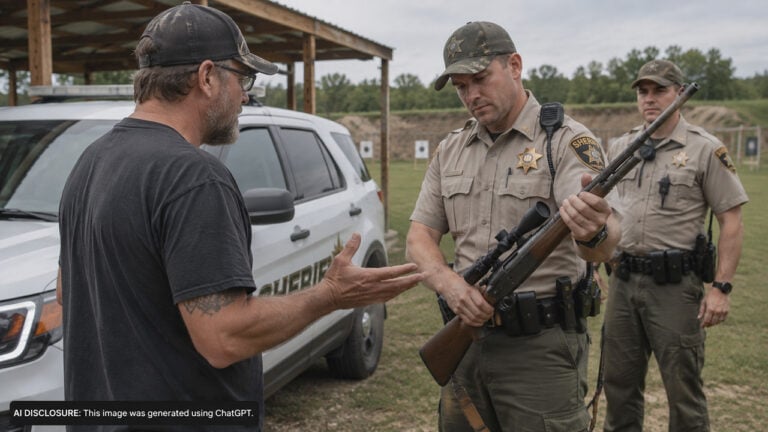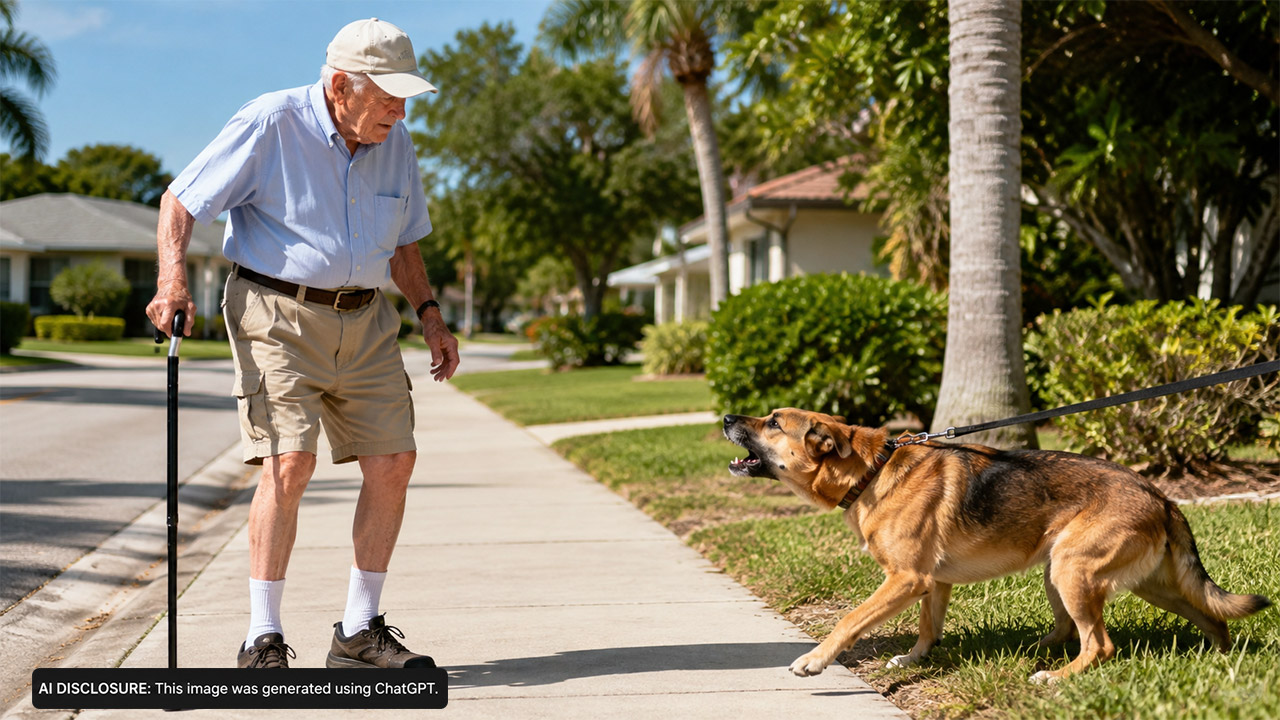
Photo credit: AI-generated image created using ChatGPT. Illustrative only
Most folks who live rural know the drill: loose dogs happen, and sometimes they happen at the worst possible time—on a walk, near a road, or when you’re already on edge from past run-ins. In Gilchrist County, Florida, that kind of everyday problem turned into a criminal case after an elderly man shot a neighbor’s dog and later argued he was protecting himself.
Details shared in the source post describe how 85-year-old Larry Boiven is now facing a jury trial next month on a charge of aggravated animal cruelty. The shooting happened back in October while he was walking to a neighbor’s house, and his claim is simple: the dog approached him while growling, and he feared he was about to be attacked.
A walk to a neighbor’s house turned into a shooting
According to the report, Boiven said the dog came toward him growling. He believed an attack was coming, and he fired. He framed it as a self-defense decision made in a moment when he felt he didn’t have better options.
Boiven also told reporters he’s been bitten by dogs before—twice—and that those experiences shaped how he read the situation. “I felt in fear of being bitten and chewed up. I’ve been bitten twice by dogs before. It’s very unpleasant, you’re helpless,” Boiven said.
Why an 85-year-old’s physical limitations matter in these encounters
Out in the real world, your ability to move changes what “reasonable fear” looks like. Boiven said his age and health issues made him more afraid of the dogs, describing himself as legally blind and physically unstable. If you can’t see well, can’t run, and can’t keep your footing, a fast-moving dog closing distance doesn’t feel like a maybe—it feels like a now.
That doesn’t settle whether the shooting was justified. But it does explain why an older person might perceive a threat sooner than a younger, steadier person would. Folks who have carried a sidearm for decades will tell you the same thing: your risk tolerance changes when you know you can’t just “get out of the way” anymore.
The neighbor video and how deputies interpreted the dog’s behavior
A big piece of this case appears to be video recorded by a neighbor. The report says the video shows one dog directly across from Boiven, and Boiven is already holding his gun.
A deputy who reviewed that video reportedly explained that a dog will often back away before it attacks—and believed that’s what the dog was doing in the video. That detail matters because it goes right to the heart of what jurors tend to focus on in animal-shooting cases: was the animal advancing in a way that clearly signaled an imminent bite, or was it posturing, circling, or retreating?
There’s another hard reality in the report, too: after the initial shot, the deputy ended up shooting the dog to end its suffering. That’s not something any outdoorsman wants to see happen, but it’s also not uncommon in the field when an animal is badly wounded and there’s no realistic chance it recovers.
“Stand Your Ground” claims and the line between fear and force
Boiven’s defense is tied to Florida’s self-defense laws, describing his actions as justified because he feared an attack. In plain talk, the argument is that he didn’t go looking for trouble—he was walking—and he believed he was about to be injured.
But stand-your-ground arguments live and die on specifics: distance, movement, behavior, timing, and whether a reasonable person would have believed they were about to be harmed. And when it’s a dog instead of a human, jurors often bring their own baggage—some have been bitten, some have trained working dogs, some have pets they treat like family. You’re not just explaining ballistics; you’re explaining decision-making under stress.
That’s why this kind of case gets tense in a hurry. A person can honestly be afraid and still end up charged if the state believes the force used didn’t match the threat captured on video.
Loose-dog problems usually have a long fuse before they explode
Boiven said he’s had issues for years with his neighbor’s dogs escaping. Anyone who’s dealt with that knows how it builds: first it’s a dog in the yard, then it’s a dog on the road, then it’s a dog that won’t back off when you’re checking the mailbox or walking to a buddy’s place.
When that pattern repeats, folks start carrying more often, walking with a stick, changing routes, or timing their walks differently. None of that is ideal, but it’s common. The trouble is, when the day finally comes that a person draws a gun, everything before it suddenly matters—every complaint, every prior incident, every time someone “meant to fix the gate.”
The report doesn’t lay out any paper trail or prior calls, just Boiven’s statement that it had been ongoing. Still, that “years” detail is the kind of thing both sides will likely fight over, because it helps explain why he was already primed to believe an attack was imminent.
Why deputies didn’t arrest him right away—and why they later did
One detail that stands out is the timing of the arrest. Deputies did not initially arrest Boiven, but later returned and took him into custody. That’s the kind of sequence that makes people wonder what changed—new evidence, a closer video review, or supervisory input.
Boiven’s attorney, Maurice T. McDaniel, pointed directly at that point. “I was taken back. We have two law enforcement officers, they are trained to be able to determine whether probable cause existed. These aren’t new deputies that just showed up,” McDaniel said.
From a practical standpoint, this is where outdoorsmen should pay attention: in any shooting—whether it’s a defensive shooting against a person, or shooting an animal you believe is attacking—things can shift once video is reviewed, statements are compared, and a case file lands on a different desk. The initial scene isn’t always the final decision.
Boiven is now headed to a jury trial next month on aggravated animal cruelty, and the case looks like it will revolve around the same things that always matter in these confrontations: what the dog did, what he reasonably believed in that instant, and whether the force used matches what the video appears to show.
Like The Avid Outdoorsman’s content? Subscribe to our newsletter so you never miss an article.
Here’s more from us: