Photo credit: AvidOutdoorsman
It started like a lot of small-town Saturday errands do: a guy swings into a convenience store to grab coffee and a snack, wearing normal work clothes and a holstered pistol on his hip. Nothing flashy, nothing brand new-looking, and nothing that should’ve been a surprise in a place where folks hunt, run traps, and keep a rifle behind a truck seat during deer season.
The difference was the handgun itself. It was a home-built firearm—what most people now call a “ghost gun”—put together legally from an unfinished frame and parts. It had no serial number because, under the rules where he lived, it didn’t have to. He wasn’t concealing it, wasn’t acting squirrely, and wasn’t making a point. He was just carrying it the way the law allowed.
A legal home-built firearm met an unfamiliar roadside stop
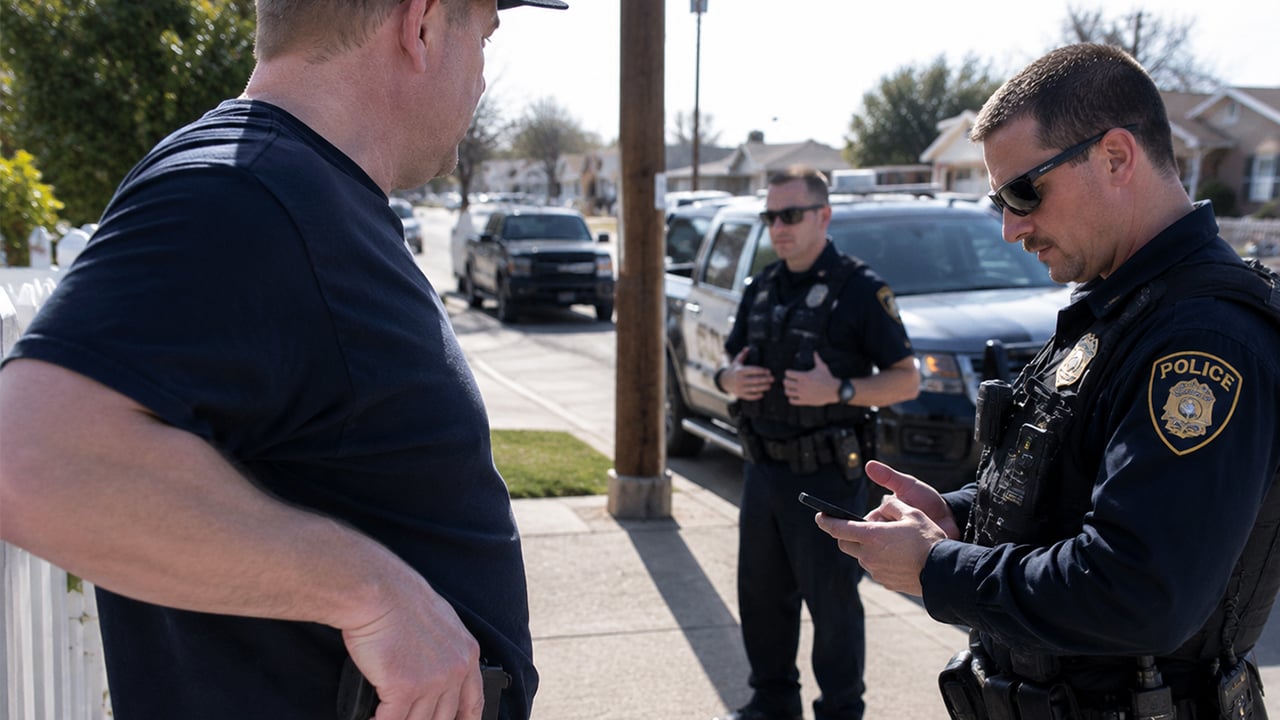
Somewhere between the store and the edge of town, an officer lit him up and pulled him over. The driver did what most level-headed outdoorsmen do when blue lights come on: hands visible, calm voice, no sudden moves. The officer asked about the pistol. Then asked again, but differently.
Instead of it being a quick “you’re good” and a warning to drive safe, it turned into a drawn-out detainment on the shoulder. Another unit arrived. Questions shifted from “Are you armed?” to “Where did that gun come from?” and “What’s the serial number?” When the answer was, “It doesn’t have one,” the temperature changed.
Why a missing serial number turns a normal carry into a long delay
Most hunters and gun owners understand there’s a big gap between what’s legal and what looks legal to someone who doesn’t see it often. A factory pistol has a serial number you can point to, run, and move on. A home-built gun doesn’t give an officer that same easy checkbox, even if it was assembled and possessed within the law.
That missing number tends to trigger a suspicion that the gun is stolen, altered, or tied to something bigger. In reality, a lawfully made, privately manufactured firearm can be perfectly legitimate depending on state rules—especially if it was made for personal use and not for sale. The problem is that “depending on state rules” is doing a lot of work in the real world. Some places have tightened restrictions, others haven’t, and the patchwork is confusing even for people who follow gun news.
So the officers did what a lot of them do when they’re unsure: they slowed everything down, kept him on scene, and tried to verify through dispatch and supervisors whether they had something they could actually enforce.
Thirty minutes on the shoulder: the practical reality of being “right”
For roughly half an hour, the man sat there while officers looked at the pistol, asked about how it was built, and ran his information. He wasn’t arrested. He wasn’t charged. But he wasn’t free to leave, either.
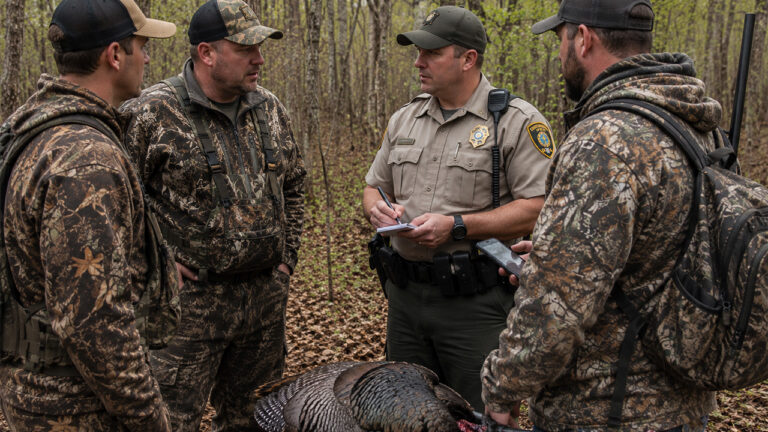
Anyone who’s dealt with a game warden check at a trailhead knows that feeling. You can be legal on tags, legal on weapon, legal on land access, and still spend time explaining yourself because something doesn’t fit the officer’s usual pattern. The difference here is that the “pattern” was a piece of equipment that’s been turned into a political lightning rod.
And for the man on the roadside, it likely felt like getting treated as guilty first and sorted out later. Even if the officers stayed professional, the effect is the same: your day is on hold, your property is being scrutinized, and you’re doing mental math about whether a simple errand just turned into a court date.
How the officers finally got to “no law was broken”
Eventually, the questions circled back to the basics: Was he prohibited from possessing firearms? Was the gun used in a crime? Was there any local rule requiring serialization or registration for this kind of firearm? If the answer to those is “no,” the legal ground gets thin in a hurry.
The detaining officers reportedly ended up acknowledging that he hadn’t violated any laws. That’s the key point: open carry was lawful in that setting, and possession of the home-built handgun was lawful under the applicable rules. Once that became clear, there wasn’t much left besides an awkward release and a lesson everyone had to learn in real time.
If you’ve ever watched a new warden learn private-land boundary rules in a county with weird easements and old fence lines, you know how it goes. The person being checked pays the price in minutes and stress while the system catches up.
What outdoorsmen and gun folks argued about afterward
Talk like this always splits into a few camps. One group focused on the guy carrying it openly in the first place. Their view is that if you choose to carry something unusual, you should expect extra attention, even if you’re legal. That’s not a legal argument—it’s a “how to avoid trouble” argument, and it’s not totally wrong.
Another group hammered the point that lawful is lawful, and an officer’s unfamiliarity shouldn’t turn into a half-hour detainment. They pointed out that in plenty of rural areas, open carry isn’t a stunt. It’s just how folks run to town, especially if they’re moving between the house, the shop, and the back forty where coyotes have been thick.
A third group took the safety angle, which comes up every time. They worried that a home-built gun can be unreliable if it wasn’t assembled correctly or wasn’t function-tested properly. That’s a fair concern in the abstract, but it doesn’t magically make possession illegal. Plenty of factory guns run poorly out of the box, too. Reliability is a responsibility issue, not automatically a criminal one.
And then there were the folks who simply asked the most practical question: “If the officer can’t run a serial number, how do they know it isn’t stolen?” The answer is uncomfortable but true—sometimes they can’t know quickly, and the law doesn’t always give them a shortcut.
What you can do to reduce the odds of a roadside headache
If you’re an outdoorsman who carries—especially if you carry something out of the ordinary—there are a few common-sense moves that can keep a routine contact from turning into a long one. First, know your local carry rules cold. Not “I read something online,” but the actual rules where you are that day, including city limits if they matter.
Second, keep the interaction boring. Calm demeanor, clear communication, no reaching. If you have a carry permit even in a place that allows permitless carry, having it on you can sometimes speed up the “are you lawful?” part of the conversation.
Third, consider documentation that shows lawful ownership of major parts or the build itself, even if it isn’t required. It won’t settle every argument, but it can help an officer or supervisor get comfortable faster. That’s not surrendering your rights; it’s acknowledging how the real world works on a shoulder with traffic blowing by.
Finally, think hard about whether open carry is serving you that day. Some guys do it because it’s comfortable and fits their lifestyle. Others do it to make a point. If your goal is to finish errands and get back to fixing fence, concealed carry—where lawful—often buys you peace and time.
At the end of the day, this was a legal gun owner doing a legal thing and still losing half an hour because the gear on his belt didn’t match what officers expected to see. That’s not a reason to panic, and it’s not a reason to go looking for conflict. It’s a reminder that knowing the law is only half the battle; the other half is navigating the human side of enforcement without letting a simple stop turn into a bigger problem.
Like The Avid Outdoorsman’s content? Be sure to follow us.
Here’s more from us: