Photo credit: AI-generated image created using ChatGPT. Illustrative only
Most gun owners know the routine: you walk into an FFL, fill out your paperwork, pass the check, and go home with a firearm that’s now tied to you in a clean chain of custody. Federal prosecutors say a Phoenix-area crew spent the last couple years abusing that exact system—using “legal” purchases as a cover for a cash-for-guns pipeline.
In a 158-count federal indictment tied to a Homeland Security Task Force investigation, 28 people have been charged in Arizona for roles in an alleged straw-buying and unlicensed dealing scheme, with some guns later linked to smuggling across the border. The details are laid out in the original post from the U.S. Attorney’s Office for the District of Arizona.
A “legal purchase” doesn’t mean a legal purpose
The indictment alleges Fernando Daniel Castro of Phoenix, along with co-conspirators, recruited buyers to purchase firearms from Federal Firearms Licensees in Arizona in exchange for payment. That’s the classic straw-purchase setup—somebody else is effectively buying the gun, but they use a “clean” buyer to get it through the front door.
Prosecutors say the firearms were purchased on behalf of Castro, who then sold them for profit. On paper, the sale at the gun counter looks normal. The alleged problem is what happens after: the gun is moved to someone else, for money, outside the rules that keep private gun sales from turning into full-time, no-paperwork dealing.
The guns mentioned aren’t oddball antiques—they’re common targets
This wasn’t described as a stash of obscure collectibles. The indictment specifically mentions Glock 19 pistols and AK-style rifles among firearms Castro allegedly sold while knowing, or having reason to believe, they would be exported outside the United States.
That matters for outdoorsmen because these are the same types of guns you’ll see in everyday use—range guns, home-defense pistols, and rifles people own simply because magazines and parts are common. When those models show up in trafficking cases, it’s usually not because the gun is “special,” but because the demand is steady and the resale is easy.
Investigators tied the case to earlier border and trafficking prosecutions
This two-year investigation didn’t appear out of thin air. The task force case developed from information gathered in four previously charged federal cases, and the list is the kind of thing that makes you sit up straight.
One defendant, Emmanual Rabena-Velderrain of Mexico, pleaded guilty to Attempted Smuggling of Goods from the United States after being caught trying to cross into Mexico on Feb. 17, 2025, with 42 AK-style rifles and 42 7.62×39 magazines in his vehicle. That’s not a “couple guns in the trunk” situation—that’s a load.
In another case, Amairany Guadalupe Armendariz Alvarez, of Mexico, was sentenced to 24 months in prison after pleading guilty to Alien in Possession of a Firearm. In her plea, she admitted traveling to Phoenix to pick up three M249 rifles and a Colt pistol, and she admitted she knew the firearms were going to be smuggled into Mexico.
Then you’ve got a Phoenix case where Alejandro Rodriguez and Maricruz Carrillo pleaded guilty to Felon in Possession of Firearms and Ammunition. They admitted possessing an M249 rifle, a Barrett .50 BMG rifle, an FN SCAR rifle, 12 AK-style rifles, 6 pistols, and 57,000 rounds of ammo at their residence after felony convictions. That’s the kind of inventory that goes way beyond “collector” and straight into serious public-safety territory.
Finally, Jose Daniel Medina and Juan Jesus Estevez, both of Mexico, pleaded guilty to Conspiracy to Smuggle Firearms and Ammunition from the United States. They admitted conspiring to obtain guns and ammo in Arizona that were smuggled across the border for buyers in Mexico. A third co-conspirator, Christian Alberto Pereida Ramirez of Nogales, Arizona, is scheduled for a change-of-plea hearing, and as part of that investigation law enforcement seized 10 pistols and 56,000 rounds of ammunition.
The scale: warrants, seizures, and a lot of ammo
One reason these cases hit the outdoor community hard is that they don’t just involve a single bad actor. Federal investigators said they executed numerous search warrants on social media accounts, telephones, residences, and vehicles.
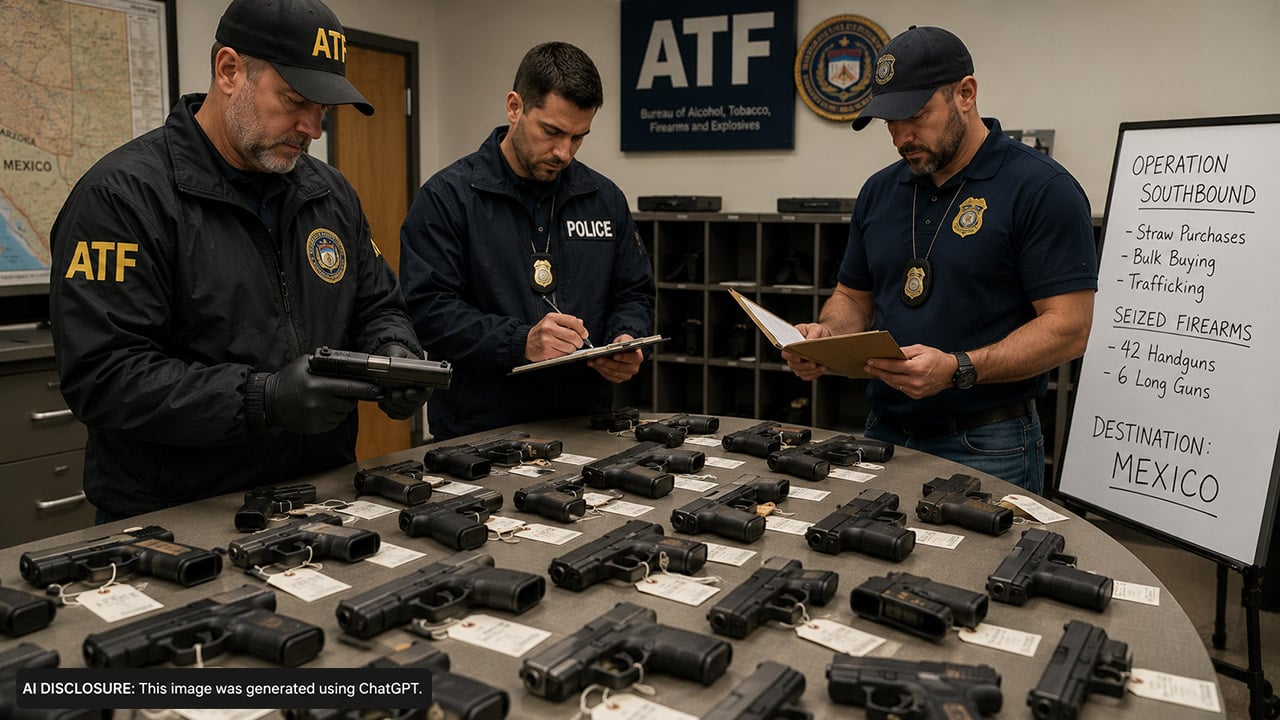
They also seized over 100 firearms and over 125,000 rounds of ammunition in Arizona. If you’ve ever hauled cases of ammo for a training weekend, you know what that number looks like in real life. That kind of volume points to ongoing buying and reselling, not a one-time mistake.
What this means for regular gun owners standing at an FFL counter
Most hunters and shooters aren’t anywhere near this kind of behavior. But cases like this are a reminder that the paperwork questions at the counter aren’t just “store policy”—they’re there to pin down who the actual buyer is and what’s really going on with the money.
If somebody offers cash for you to “help them out” with a purchase, that’s the moment to slow down. The indictment here alleges recruited buyers were paid to purchase guns from FFLs, and prosecutors stacked charges that include Conspiracy to Unlawfully Purchase Firearms for the Purpose of Dealing in Firearms Without a License, Making False Statements During the Purchase of a Firearm, Dealing in Firearms Without a License, and Conspiracy to Traffic Firearms.
Even if a person never goes near the border, the legal risk is obvious: the purchase is tied to the buyer’s name, and the consequences don’t stop at embarrassment. The U.S. Attorney’s Office notes that a conviction for Conspiracy to Traffic Firearms and Prohibited Possessor of Firearms and/or Ammunition carries a maximum penalty of 15 years and a $250,000 fine, while smuggling goods outside the U.S. carries up to 10 years and a $250,000 fine. Other charges listed—conspiracy, false statements during purchase, and dealing without a license—carry maximum penalties of five years and a $250,000 fine.
The indictment itself is not a conviction, and prosecutors emphasized that all defendants are presumed innocent unless proven guilty beyond a reasonable doubt. But for the rest of us who just want to hunt, shoot, and keep our homes safe, the lesson is plain: don’t let anybody rent your clean record to do dirty business, and don’t get casual about “buying for a buddy” when money or pressure shows up. That’s how normal folks end up caught in the same net as traffickers.
Like The Avid Outdoorsman’s content? Subscribe to our newsletter so you never miss an article.
Here’s more from us: