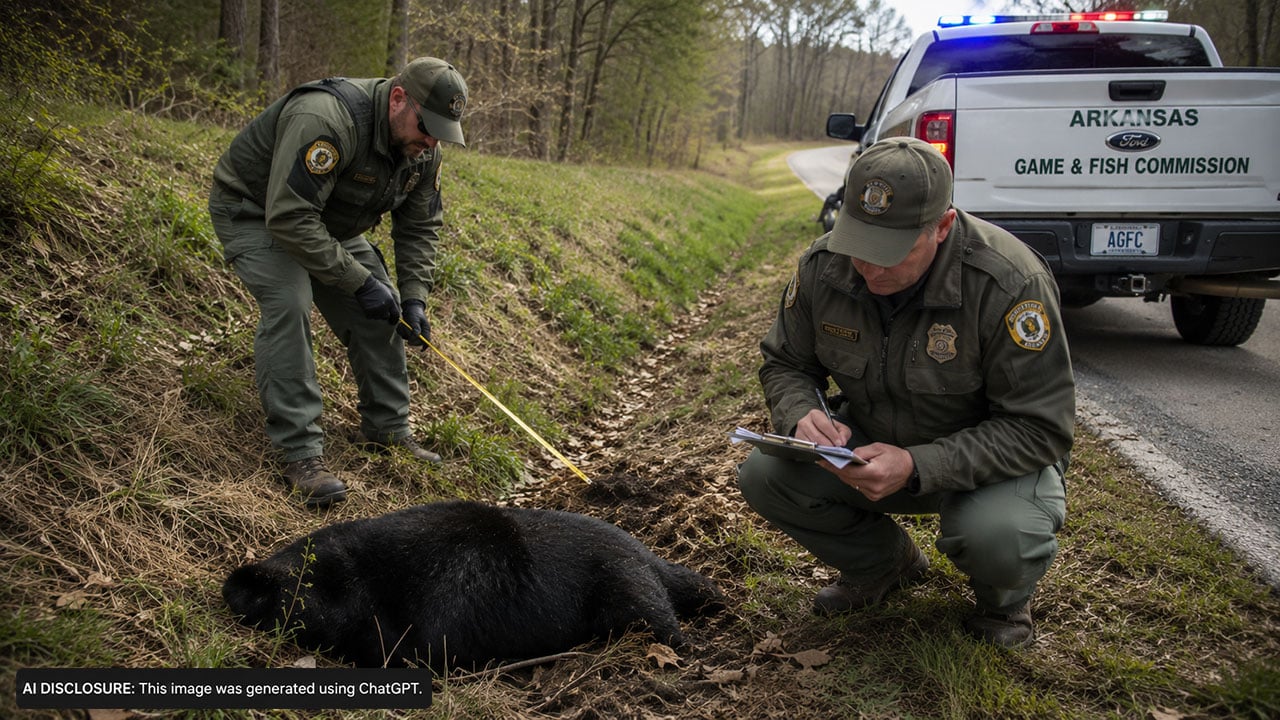
Photo credit: AI-generated image created using ChatGPT. Illustrative only
A black bear dumped in a Pope County roadside ditch isn’t something most Arkansas hunters ever expect to see. But that’s exactly what a citizen reported just before 10 a.m. on Sunday—an adult bear left like trash, missing its head and the lower portions of its legs.
Arkansas Game and Fish officials say the removed parts appeared to be taken as trophies, and game wardens were able to work the scene and identify a suspect quickly. Details were shared in the original post from KATV, including what citations were issued and why this case hits a nerve for folks who care about wildlife and the hunting tradition.
A roadside find turned into an investigation fast
The bear was found on Sunday morning in Pope County after a passerby noticed it in a ditch and made the call. That one phone call matters, because fresh scenes are where wardens can actually piece together what happened—tracks, timing, and the difference between rumor and proof.
According to Arkansas Game and Fish Commission spokesperson Trey Reid, wardens responded, did investigative work “on the ground immediately,” and located the alleged perpetrator. The suspect was cited for two different violations.
Two violations, both avoidable
One piece is straightforward: bear season in Arkansas doesn’t open until September, and this bear was found on Sunday—weeks early. When an animal is taken out of season, it doesn’t matter if it was five minutes or five weeks before the opener. It’s still illegal.
The other violation is one a lot of hunters understand in their bones: you don’t waste meat. Reid noted that in Arkansas it’s illegal to allow the edible portions of any big game to go to waste. From the information released, this wasn’t a case of salvaging meat and making a mistake on paperwork—it sounds like somebody wanted the head, claws, skull, or teeth and left the rest behind.
The penalties can stack up quicker than people think
Each of the two charges carries potential penalties of $250 to $2,500, up to 60 days in jail, and possible revocation of hunting privileges. That last part is the one that should make any serious hunter pause. Fines hurt, and jail is jail, but losing the ability to hunt can follow you for a long time.
It’s also the kind of case that tends to invite extra scrutiny in the field. When you get on the wrong side of a waste-of-game violation, it’s not just “one bad decision.” It tells wardens exactly what your priorities were, and that’s why these cases rarely end with a slap on the wrist.
This wasn’t “just another poaching case”
Reid told KATV that bear poaching isn’t incredibly common in Arkansas, and a dismemberment-for-trophy situation like this is even less common. That’s part of what makes it so hard to swallow. Most bear hunters I know are methodical—tags, check-in rules, meat care, cooler space, the whole deal.
When a bear shows up missing its head and lower legs, it sends a message that the animal was reduced to parts. Even for non-hunters, that’s a rough sight. For hunters who do it the right way, it’s infuriating, because it stains the reputation of everybody who buys a license and follows the rules.
Arkansas worked hard to bring bears back
One reason the Commission is openly disappointed is the long arc of the bear story in Arkansas. The state’s black bear population is now estimated between 5,000 and 8,000—numbers that would’ve sounded impossible about a century ago, when only a few dozen remained after bears were nearly hunted out.
Reid said the Arkansas Game and Fish Commission brought in about 250 bears in the 1960s and early 1970s to repopulate the Ozark and Ouachita Highlands, calling it “one of the most successful species reintroductions in the history of North American Wildlife Management.” That’s not just agency pride. That’s decades of habitat work, management decisions, and hunters buying into a system that keeps the resource healthy.
Reid also pointed out that Arkansas was once known as the Bear State, and that bears are part of the state’s cultural heritage. That’s the kind of thing you can’t measure on a scale, but you feel it when you’re in the timber and you know those animals belong there.
What hunters and landowners can take from this
This case started the way a lot of game law cases start: a regular person saw something wrong and made the call. If you’re a landowner or you spend time on back roads and timber lines, that’s a good reminder that “somebody else will report it” isn’t a plan. A quick report is often the difference between a case that goes nowhere and one where wardens can actually connect the dots.
It’s also a reminder that trophy chasing has to stay inside the lines. Bear season dates are there for biological reasons and management goals, and meat care laws exist because taking a life carries responsibility. If you want a skull, a rug, or claws and it’s legal in season, you do it right: tag it, follow check-in rules, and handle the edible meat like it matters—because it does.
Reid summed up the emotional side plainly: “It makes you sad,” and “maybe a little bit mad,” especially knowing how remarkable the bear comeback has been in Arkansas. That’s about as real as it gets. A bear in a ditch doesn’t just represent a poaching citation—it represents a choice to ignore the ethics that keep hunting respectable and wildlife management working.
For now, the practical takeaway is simple: seasons matter, salvage rules matter, and the public’s eyes are everywhere. If you’re proud of hunting, the best thing you can do is keep doing it the right way—and report the folks who won’t.
Like The Avid Outdoorsman’s content? Subscribe to our newsletter so you never miss an article.
Here’s more from us: