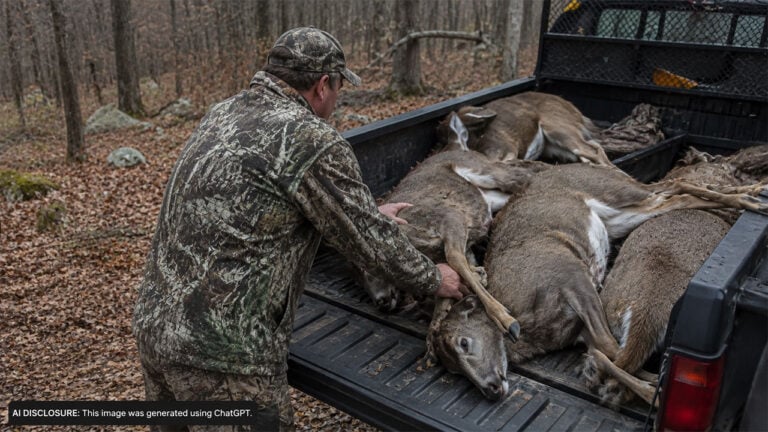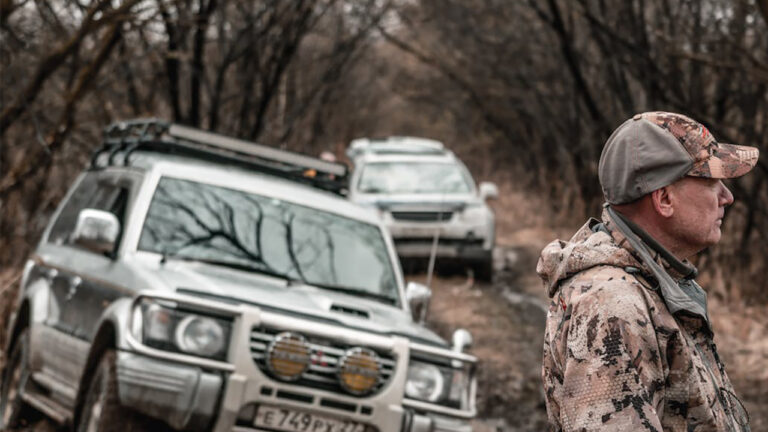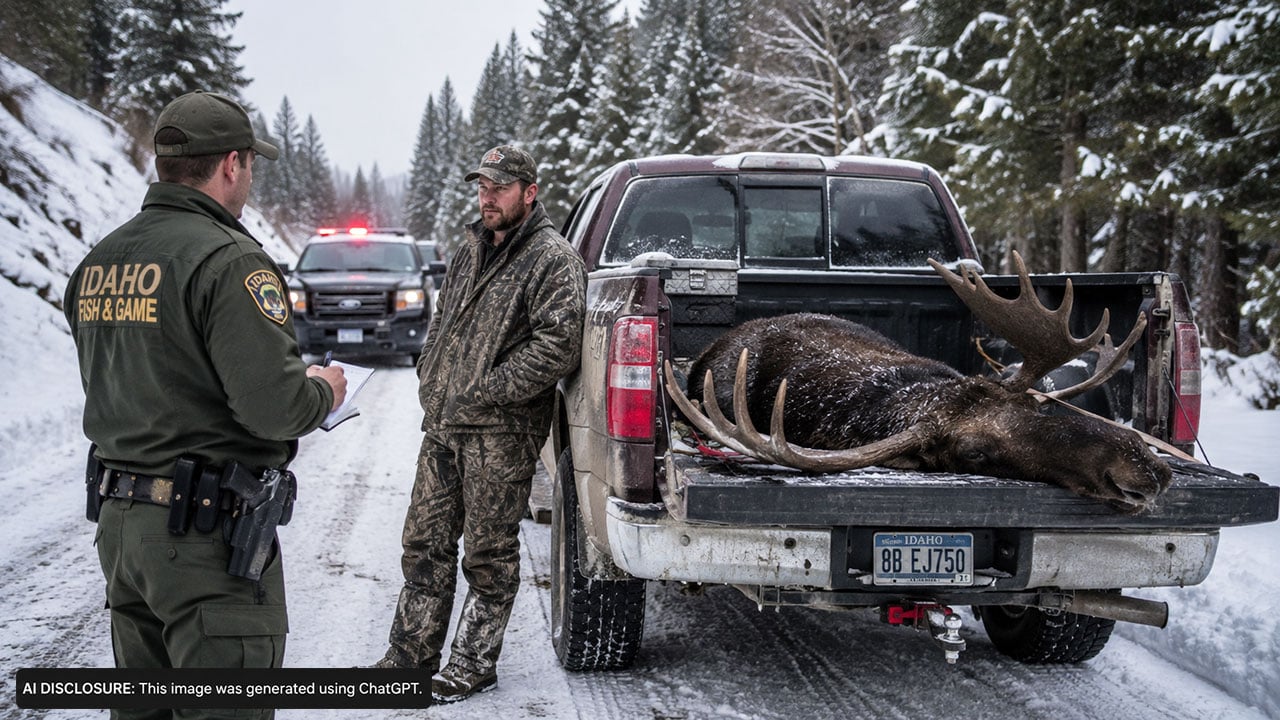
Photo credit: AI-generated image created using ChatGPT. Illustrative only
Every hunter who’s spent time in the high country knows how fast a good plan can turn into a long walk. Snow deepens, roads disappear, and a “quick in and out” becomes a problem you can’t muscle through alone.
That’s exactly where this North Idaho case took a turn—because the guy asking for help wasn’t just stuck. He was tied to a poached, trophy-class bull moose, and the hunters who gave him a ride had the presence of mind to document what mattered. The details come from the original post from Idaho Fish and Game.
A trophy bull went down on a Forest Service road
Idaho Fish and Game says the incident happened Nov. 6, 2024, near Wolf Lodge Saddle in Kootenai County. Investigators determined Raymond A. Black, of Kellogg, illegally shot and killed a trophy-class bull moose with a high-powered rifle while the animal was standing in the middle of a U.S. Forest Service road.
The big problem right out of the gate: Black did not have a moose tag. In Idaho, moose are treated as once-in-a-lifetime species—if you draw a tag and successfully harvest a moose, that’s it. You don’t just buy another tag next year and do it again.
Snow, a stuck vehicle, and a story that didn’t add up
After the moose was killed, Fish and Game says Black tried to load the carcass into his vehicle and got stuck in the snow. Anyone who’s tried to move a big animal in bad conditions understands how quickly things can go sideways—especially when you’re off a maintained road and traction is gone.
Black hiked out to get help and was picked up by two hunters. That’s a normal thing in the woods. A lot of us have stopped for stranded folks, and a lot of us have been on the receiving end of that courtesy.
But this wasn’t a simple “give me a pull” situation. The two hunters noticed inconsistencies in Black’s story and found it suspicious. And here’s the key: instead of confronting him or letting it slide, they wrote down his license plate.
The decision that mattered: document it, then report it
Those hunters quickly submitted the information through the Citizens Against Poaching (CAP) hotline. That’s the kind of move that separates an uncomfortable hunch from something conservation officers can actually use.
This is worth saying plainly: you don’t need to play detective, and you don’t need to escalate things in the field. You just need the basics—what you saw, where you saw it, and an identifying detail if you can get it safely. In this case, that license plate was the thread that unraveled the whole deal.
Fish and Game credited “quick thinking and responsible action by hunters” for helping lead to the conviction. It’s a reminder that the hunting community is usually the first line of defense for wildlife—because we’re the ones out there when it happens.
He got unstuck—and left the moose to rot
After returning to his vehicle and getting it unstuck, Black fled, according to Fish and Game. And he didn’t just leave quickly—he left the entire moose to waste.
Wasting meat is one of those violations that hits a nerve with hunters who do things right. Even if you’ve got a legitimate tag, you’re expected to take care of that animal and bring the meat out. Leaving a whole moose behind isn’t an “oops.” It’s a choice.
And in practical terms, it also tells you something about how this went down. If the plan was to salvage meat, the effort doesn’t stop the second you’re inconvenienced by snow. But if the plan was never legal to begin with, panic makes people do dumb things—like abandon a trophy animal and hope nobody connects the dots.
The plate number led to a search warrant and a felony case
With the license plate information and follow-up investigation, Fish and Game conservation officers executed a search warrant at Black’s residence. They seized the rifle used in the crime along with other evidence.
Black pleaded guilty to a felony charge of unlawful killing, possession or wasting of wildlife. Idaho classifies unlawful killing as a felony when the reimbursable damage amount exceeds $1,000, and bull moose are classified as trophy species under Idaho code with a $10,000 reimbursable damage assessment.
That “reimbursable damage” piece is something a lot of folks don’t fully understand until they see it applied. It’s not just a fine for breaking a rule—it’s a dollar value tied to the animal, on top of the other costs and penalties that can come with a criminal case.
The sentence: money, jail time, and hunting privileges gone for life
On July 8, 2025, Black was sentenced in Kootenai County District Court. The penalties included $1,500 in fines, $10,000 in restitution, $250 in meat processing fees, and $245.50 in court costs.
He also received six months incarceration in county jail, plus three years of supervised probation as a condition of a suspended prison sentence. And the part that’s going to follow him the longest: lifetime revocation of hunting and trapping privileges in Idaho.
Through the Interstate Wildlife Violator Compact, that lifetime revocation applies in all participating member states—meaning he’ll lose hunting and trapping privileges in all U.S. states except Hawaii.
This is what a real wildlife crime looks like when it gets treated like a real crime. Not a slap on the wrist, not “pay a ticket and move on,” but an outcome that removes someone from the hunting community permanently.
Fish and Game also thanked the Kootenai County Prosecutor’s Office for prosecuting the case, and specifically expressed gratitude to the individuals who reported it promptly.
There’s a lesson here that isn’t complicated: help people when they’re in trouble, but trust your gut when something feels off. If it doesn’t add up, write down the plate, keep things calm, and report it through the proper channel. In this case, two hunters did exactly that—and a poached trophy bull moose didn’t just get written off as “one of those things.”
Like The Avid Outdoorsman’s content? Subscribe to our newsletter so you never miss an article.
Here’s more from us: