Photo credit: Matt LaVigne/Shutterstock.com
Bucks tolerate a lot of natural noise in the woods, but the wrong call at the wrong time will send them out of your life in a blur of white tails. Deer calling works only when it sounds like real deer behavior, backed up by realistic movement, scent and setup. To keep from scaring bucks off instantly, I focus less on buying new calls and more on avoiding the classic mistakes that experienced hunters warn about.
Those mistakes fall into clear patterns: calling too loud or too often, using the wrong vocalization for the phase of the season, ignoring wind and visibility, and forgetting that mature bucks are experts at catching human error. By breaking down where calling goes wrong, and how seasoned hunters like Oct, Don and others adjust their tactics, I can stack the odds toward a curious, committed approach instead of a flagging retreat.
Overcalling: When “more” noise makes bucks vanish
One of the fastest ways to clear a timbered ridge is to treat a grunt tube like a megaphone. I have watched hunters lean on calls every few minutes, as if they were running a duck spread instead of hunting a single cagey whitetail. That kind of constant racket does not sound like natural deer movement, it sounds like a hunter trying too hard, and pressured bucks quickly learn to associate repetitive calling sequences with danger.
Experienced bowhunters describe “calling too loud” as one of the biggest mistakes hunters make, comparing a proper grunt to talking across a room instead of shouting across a football field. When I blind call, I keep sequences short and subtle, similar to the light, directional grunts described in Another common tactic that uses a few notes in different directions to suggest a buck on the move. The goal is to sound like a single deer passing through, not a herd convention, so I build in long stretches of silence and let curiosity, not volume, do the work.
Calling where a buck can see “nothing”
Even the most realistic call fails if a buck can scan the area and see no deer at all. In open country, whitetails and mule deer can cover a surprising amount of ground with their eyes, and if they cannot visually confirm the source of a grunt or rattling sequence, they often lock up or slip away. I have watched bucks stop at 80 yards, stare at a bare hillside that “should” hold the deer they heard, then turn off as if they had just watched a magic trick they did not trust.
That reaction matches what seasoned hunters report in wide, open habitats, where deer quickly grow suspicious if they cannot match a sound with a body. One analysis of calling in open terrain notes that deer can cover a lot of ground with their eyes, and if they cannot confirm what they hear, they often hang up out of range. To avoid that, I favor calling setups with brush, dips or timber that hide my exact position while still offering shooting lanes, so a buck has to come looking instead of simply glassing the sound from a distance and deciding something is wrong.
Misreading grunt timing and buck psychology
Grunt calls are among the most abused tools in a whitetail hunter’s kit, largely because timing and context matter more than the sound itself. A soft contact grunt can reassure a cruising buck during the rut, but the same note blasted at a nervous deer that has already winded you can seal its decision to bolt. I have learned to watch a buck’s posture and pace before ever touching the call, because a tense, high headed animal is already on edge.
One detailed account of grunt use describes how a buck heard a call, then saw, smelled and heard no other deer within about 30 yards, which convinced him that the unseen caller was a subordinate that did not match the situation. When that happens, mature bucks often circle downwind or simply fade away, because they know the social order in their home range and do not like surprises. I try to grunt only when a deer is moving naturally and has a reason to believe another buck or doe might be nearby, using short, single notes instead of long strings that sound like a plastic tube, not a live animal.
Confusing snort-wheezes and other aggressive calls
Few sounds will blow a mature buck out of a setup faster than an aggressive vocalization used in the wrong context. The snort-wheeze is a prime example, a harsh challenge that signals a serious confrontation between dominant bucks. If I throw that sound at a young or already wary deer, I am essentially telling him that a bigger, meaner animal is spoiling for a fight right where he is standing, which is a perfect recipe for a retreat.
Call makers and veteran hunters stress that a snort-wheeze should not be confused with the sharp blow or snort of an alarmed deer, and that the vocalization is a drawn out “fffft ffft ffff” pattern that means business, as Oct and Don explain in their breakdown of whitetail deer calling tactics. Similarly, detailed rut calling guides describe the Wheeze as an aggressive, last resort sound that should be used sparingly and only when the rut is boiling over. I reserve it for situations where I can see a mature buck bristling and posturing, and even then I prepare for either a hard charge or a hard exit, because there is rarely a middle ground.
Sloppy sound: plastic, clanks and unnatural cadence
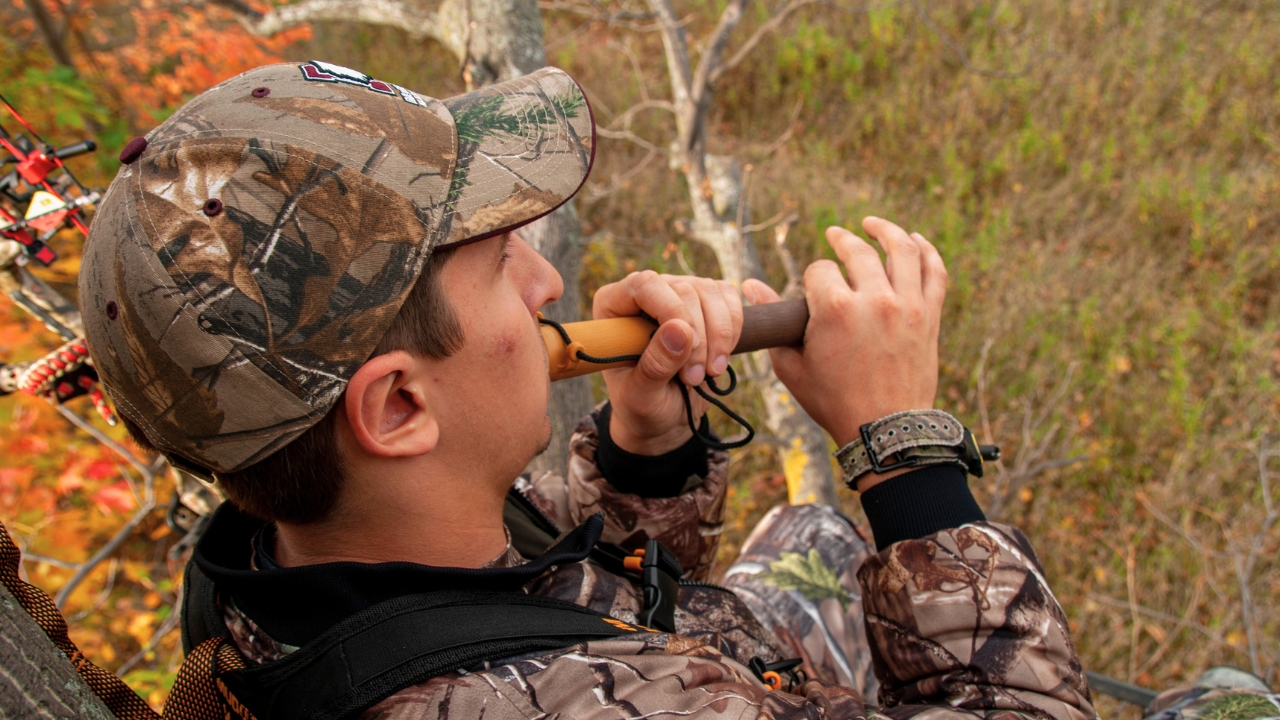
Even when the call type is right, the way it is delivered can betray a hunter instantly. Live deer are surprisingly vocal, but their sounds have a soft, organic quality that cheap plastic or rushed technique can ruin. I have heard hunters blow a grunt tube with the same force and rhythm every time, creating a robotic cadence that no real buck uses, then wonder why deer freeze and stare before slipping away.
One breakdown of aggressive calling notes that a Grunt Tube should be treated like a turkey hunter’s yelp, with varied tone and intensity, because live deer change volume and pitch as they move and interact. On top of that, sound discipline around the stand matters as much as the call itself. Acoustic testing on deer hearing points out that they tolerate natural noises, but if they hear metal clanging, a cell phone ringing or a plastic bucket clunk, it triggers an immediate high alert, and even something as small as a trail camera door closed can end the hunt. I treat my calls, bow and stand like instruments in a quiet orchestra, padding or taping anything that might click when I reach for a grunt tube.
Ignoring wind, scent and approach while you call
Calling is only one piece of a three part puzzle that also includes scent and movement. If my wind is blowing straight toward a buck, no amount of perfect grunting will save the setup once he hits my scent cone. Mature bucks are specialists at using their nose to verify what they hear, and they rarely commit to a call without swinging downwind at some point.
Veteran whitetail hunters emphasize that Mature bucks typically do not survive to old age by making mistakes, and if you tip your hand with poor scent control, a trophy animal will detect you and vanish before you ever know he was there. I build my calling plan around that reality, setting up where a downwind swing still leaves the deer in a shooting lane and treating every sequence as an invitation for a buck to test the air. If I cannot protect my downwind side with terrain, cover or distance, I call less or not at all, because a busted setup educates deer far beyond that single hunt.
Blind calling without a realistic story
Blind calling can be deadly, but only when it tells a believable story that matches the habitat and time of year. Random grunts and rattling in a dead quiet woods can sound like noise for noise’s sake, especially in heavily hunted areas where bucks have heard every commercial sequence on the market. I try to imagine what a real buck and doe would be doing in that exact spot, then build a short, situational script instead of a generic routine.
Some of the most effective blind calling strategies use a few soft grunts in different directions, mimicking a buck drifting along a ridge, which is exactly how Another proven approach is described. Video breakdowns like Deer Calling Tips on rattling and grunting to bucks also stress knowing when and how to call, and how to anticipate deer getting downwind of you. I keep my blind sequences short, then go silent for long stretches, letting the woods reset so any approaching buck feels like he is slipping in on a natural interaction, not walking into a staged performance.
Letting body language and terrain warnings go ignored
Deer rarely spook “out of nowhere” when you are calling; they usually telegraph their doubts through body language first. A buck that suddenly stiffens, raises his head and stares in your direction is telling you that something in the sound, scent or movement picture does not add up. If I keep calling into that tension, I am more likely to push him over the edge than to reassure him.
Whitetail specialists like Hunter’s Specialties’ pro staffer Heath Wood stress that reading body language is critical before and after a grunt, because a relaxed, ears forward deer is far more likely to respond positively than one that is already coiled to flee. Terrain plays into that equation as well. In one public land mule deer hunt, the author admits it suddenly occurred to him that the big buck could have slipped away as he was stalking in, asking himself, “Could I be waiting on a deer that was no longer there?” That same humility applies to calling whitetails: if the sign, wind or behavior says a buck has already ghosted, I do not keep hammering calls at an empty pocket of timber.
Trusting gadgets over fundamentals and practice
Modern calls, from electronic devices to multi function grunt tubes, promise instant success, but they can also amplify bad habits. I have watched hunters cycle through every sound on a device, from fawn bleats to buck roars, in a single sit, as if variety alone would fix a poor setup. In reality, that kind of frantic experimentation usually creates a chaotic soundscape that no real deer herd would produce, and mature bucks respond by slipping out the back door.
Seasoned callers focus instead on mastering a few core sounds and integrating them into a disciplined strategy. Instructional breakdowns like the Deer Society deep dive with Ben Rising, or even candid discussions in videos labeled as the Worst deer call for spooking bucks, highlight how easy it is to misuse a tool if you do not understand deer behavior. I treat every new call like a musical instrument, practicing at home until I can produce soft, realistic notes, then pairing those sounds with wind aware setups and the kind of measured volume described in Calling Deer guides. When I do that, I am far less likely to make the kind of glaring mistake that sends a buck rocketing out of my life instead of into bow range.
Like The Avid Outdoorsman’s content? Subscribe to our newsletter so you never miss an article.
Here’s more from us: