Photo credit: AI-generated image created using ChatGPT. Illustrative only
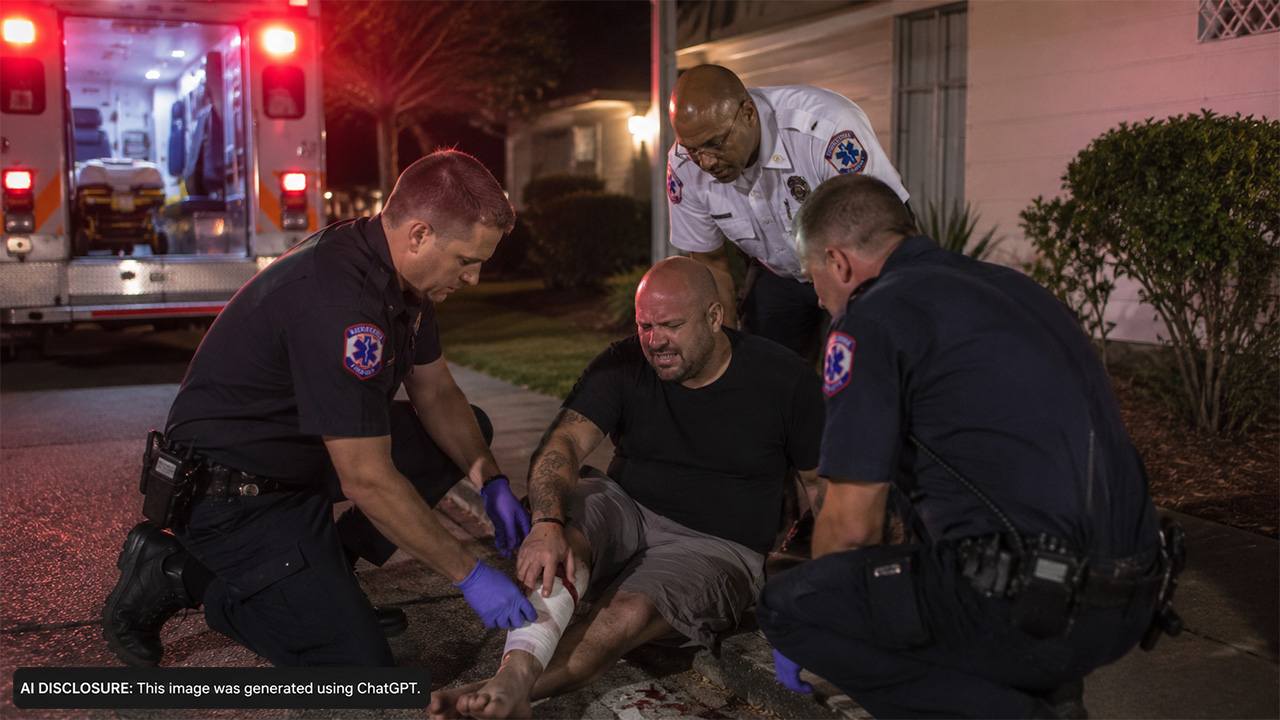
A bad gun handling moment has a way of turning into a full-blown problem fast. In this case, a Florida man said he and his cousin were drinking, “just playing around,” and he accidentally shot himself in the foot. The bleeding, he claimed, was “okay now” after hydrogen peroxide and towels, but the panic set in for a different reason: he said he’s a felon and legally can’t possess a gun.
In the original post, he wasn’t asking how to sight in a rifle or what holster to buy. He was trying to figure out whether a trip to the hospital automatically means a trip to jail—and whether there was any way to get medical care without law enforcement getting involved.
Drinking, a firearm, and a preventable foot wound
The facts he offered were simple and ugly. He and his cousin were drinking, they had the cousin’s gun out, and he wanted to go shooting. Somewhere in that “playing around,” he put a round into his own foot.
If you’ve spent time around ranges, camps, and tailgates, you already know the pattern: alcohol lowers judgment, handling gets sloppy, and a “nothing serious” moment becomes a life-changing injury. A gunshot through a foot isn’t like a bad cut from a broadhead. There’s bone, tendons, joints, and a mess of blood vessels packed into a small space.
Home “first aid” that can hide a bigger problem
He said the bleeding was under control after hydrogen peroxide and wrapping the foot “really tight” in towels. That kind of home patch job might slow blood, but it doesn’t tell you whether the bullet fractured bone, carried debris into the wound, or tore something that’ll show up later as infection, numbness, or limited mobility.
Outdoorsmen tend to be self-reliant, and that’s usually a good thing. But a gunshot wound is a different animal than a fishhook in the hand. When the wound is deep, contamination is likely, and circulation matters, “wrapped tight” can turn into another problem if it’s too tight. The fact he was even thinking “maybe I can just tough it out” shows how fear can warp decision-making.
The question he couldn’t shake: will the hospital call the police?
His first legal question was whether Florida doctors have to report gunshot wounds to police. He’d heard that a doctor who “finds a gunshot” has to make the call, and he wanted to know if it was true.
From a practical standpoint, hospitals see gunshot injuries as both medical emergencies and potential crime scenes. Even when someone is the only victim, medical staff are trained to document, ask what happened, and keep an eye out for threats to staff and other patients. In a lot of places, gunshot wounds trigger reporting requirements or at least standard notification procedures, especially when the injury looks recent and firearm-related.
He also asked whether that kind of reporting violates the Fifth Amendment right against self-incrimination. That’s the kind of question that comes up when folks assume medical care is “private” in the same way a conversation with a spouse is private. In real life, medical privacy has limits, and the moment a firearm injury is involved, those limits can get tighter.
When a medical problem turns into a firearms possession problem
The biggest cloud hanging over him was his own admission: he’s a felon and he “cant have a gun.” That’s not a minor paperwork issue. If someone is prohibited from possessing firearms, being wounded by one doesn’t erase the underlying possession question—it can put a spotlight on it.
That’s where the “two problems at once” reality hits. First, he needs real medical attention. Second, the circumstances he described—handling a gun while being prohibited—can create criminal exposure. And even if the gun belonged to someone else, “it’s not mine” doesn’t always end the conversation when the injury itself suggests he was holding it and using it.
He asked if he should get a lawyer and bring the lawyer to the hospital “so i dont get in trouble.” That tells you he knew he was in deep and wanted some kind of shield before walking into a place that keeps records and asks questions for a living.
The cousin’s gun, the cousin’s risk, and shared bad decisions
After his initial post, he added an edit: it was his cousin’s gun, they were playing around with it, and the cousin wanted to know if he could “get in trouble.” He also emphasized the cousin “didnt make me do it,” and that he wanted to go shooting too.
There are two separate realities here—one moral and one practical. Morally, if you hand a firearm to someone you know can’t legally possess it, you’re taking a gamble with both their future and yours. Practically, when an injury happens, the story gets examined in reverse: who owned the gun, who had it out, who was drinking, and who let what happen.
The cousin might have thought it was just a casual, dumb moment between family. But “casual” turns into statements, timelines, and consequences when someone shows up needing treatment for a bullet hole in a foot.
“Can I go to a veterinarian like in the movies?”
The most desperate question he asked was whether he could go to a veterinarian and have them fix it. That’s the kind of thing people say when they’ve watched too many old crime movies and not enough real-life emergency room stories.
A vet clinic isn’t set up to be your no-questions-asked trauma ward, and a gunshot wound isn’t a stitch-and-send situation you want handled in a back room. Beyond legality, it’s the wrong move for your health. If the foot gets infected, if there’s a fractured metatarsal, or if circulation is compromised, the cost won’t just be money—it can be function, or worse.
He also asked if there’s a medical advice forum, which again shows the split in his mind: he knew he needed medical help, but he was trying to solve the legal fear first.
This is the part that ought to stick with every gun owner who hunts, shoots, or keeps a firearm around the house. Bad gun handling doesn’t only risk your body—it can expose everything else you’ve got going on, from who was drinking to who shouldn’t have been touching a gun in the first place. The cleanest way out is not a clever workaround; it’s not drinking around firearms, storing them responsibly, and not putting yourself—or your buddies—in a position where a preventable accident becomes a medical emergency and a criminal case at the same time.
Like The Avid Outdoorsman’s content? Be sure to follow us.
Here’s more from us: