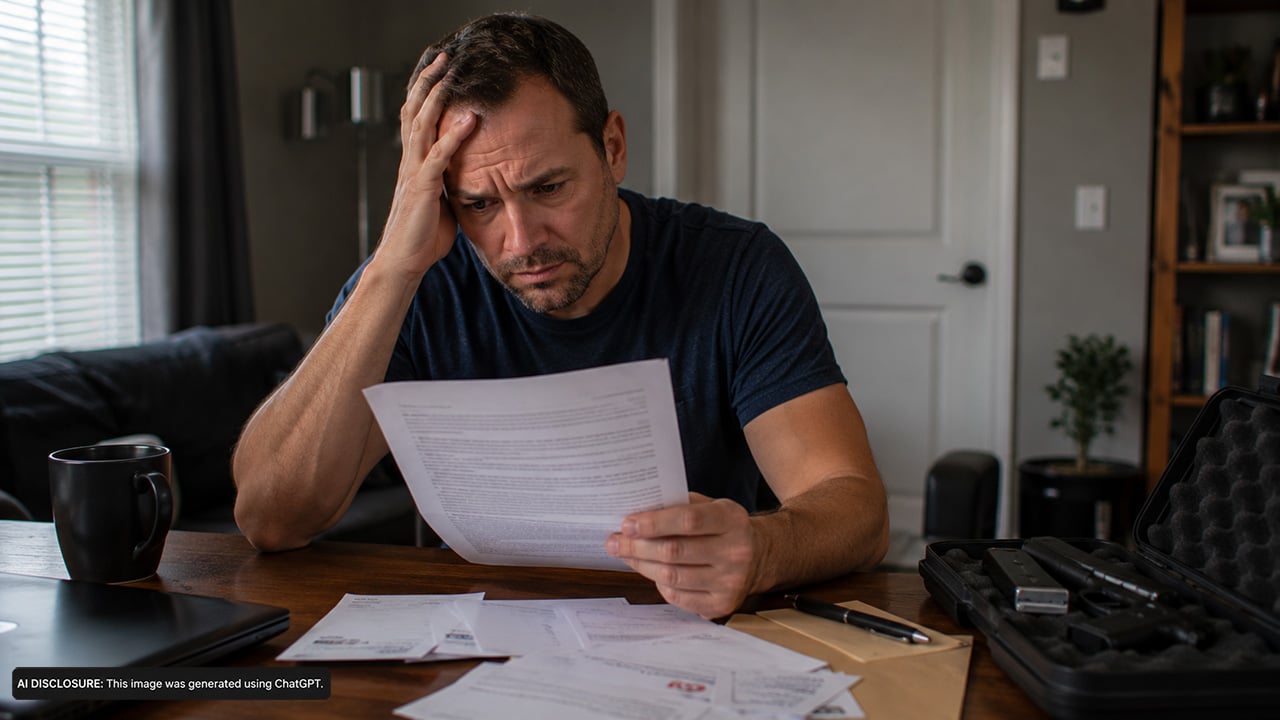
Photo credit: AI-generated image created using ChatGPT. Illustrative only
A restraining order can feel like a hard stop on a normal life—especially if you’re the kind of person who hunts, keeps a handgun for home defense, or just wants the option to buy a firearm like any other law-abiding adult. That’s why one man’s question after his order expired hits close to home for a lot of outdoorsmen who try to do things the right way.
In the original post, the man said he’d been under a restraining order for three years in California, never violated it, and the order recently expired. He’s since moved out of state, and now he’s wondering if he can legally go buy a handgun—or if he’s going to burn a day driving “a few hours away” just to fail the background check because the system hasn’t caught up.
A paper expiration date doesn’t always mean your rights snap back instantly
On the calendar, an expired order looks simple: the end date passes and that’s that. But firearms restrictions tied to restraining orders don’t always work like a light switch, especially in a place like California where firearm prohibitions around court orders are taken seriously and the paperwork trail can be thick.
Even when a person has done everything right—no violations, no new trouble—the practical reality is that databases and court records are part of the process. If a court’s record still shows an active prohibition, the gun counter is where you find out the hard way.
Moving out of state doesn’t necessarily clean the slate
One detail in the man’s post that matters is that he moved states after the restraining order ran its course. A lot of folks assume leaving the issuing state means leaving the whole issue behind. In the real world, court orders and the records tied to them don’t respect state lines the way we wish they would.
If the order originated in California, the record of it can still be what a background check is keyed off of, even if the attempted purchase happens somewhere else. That can create a nasty surprise: you’re standing at a gun shop in your new state, and the old state’s paperwork is still driving the result.
The background check “system” is only as good as what gets reported
The man’s main question was about timing—how long it takes for the system to update after an order expires. That’s a practical question any working person would ask. Nobody wants to take time off, burn fuel, and then get denied because a file somewhere still hasn’t been closed out properly.
Here’s the rub: there isn’t one single “system.” Background checks pull from a web of records—court dispositions, state repositories, and the data that ultimately feeds the check used at the point of sale. If the expiration doesn’t get recorded correctly, or if reporting lags, the check may still reflect the prohibition even when the order is no longer active.
Why this matters for hunters and gun owners in the real world
For an outdoorsman, this isn’t just about paperwork. It’s about whether you can replace a stolen sidearm, pick up a new handgun for bear country, or buy something suitable for home protection when you’re living rural and deputies are a long ways off.
And it’s also about avoiding a bigger mess. A denied purchase can be more than an inconvenience depending on the circumstances. At minimum, it can put you on a longer road of clarifying records before you can legally own what you’re trying to buy.
The safest play is verifying status before making the drive
The man said he didn’t want to make the trip and fail the background test. That’s the right instinct. When you’re dealing with something tied to a restraining order, “I think it’s expired” isn’t the same as “the record is clear for purchase.”
In practical terms, the best move is to confirm—through official documentation—that the order is expired and that any associated firearm prohibition has actually ended. That can mean getting certified copies showing the termination/expiration, and if needed, figuring out what agency or court office is responsible for updating the record that background checks rely on. It’s not glamorous, but it beats gambling a long drive on a maybe.
The hard lesson: an expired order and a lifted firearm prohibition aren’t always the same thing
The angle that jumps out of this situation is the disconnect between “the order ended” and “you can buy a gun today.” In some cases, an order can expire, but other restrictions may still apply based on how the order was issued, what kind it was, and what state and federal law attach to it.
That doesn’t mean the man is permanently barred—he didn’t say anything about violations or new charges. It does mean that the end of the restraining order is only one piece of the puzzle. The rest is making sure the legal prohibition actually ended and that the record reflects it before he tries to purchase a handgun.
For folks who live by common sense—keep your nose clean, follow the rules, and handle firearms responsibly—this is one of those reminders that court paperwork can outlast the calendar. If you’ve been under a restraining order and you’re trying to get back to normal gun ownership after it expires, slow down, verify your status in writing, and get the record straight first. It’s the difference between an ordinary day at the gun counter and a frustrating denial that can take months to untangle.
Like The Avid Outdoorsman’s content? Subscribe to our newsletter so you never miss an article.
Here’s more from us: