Photo credit: AvidOutdoorsman
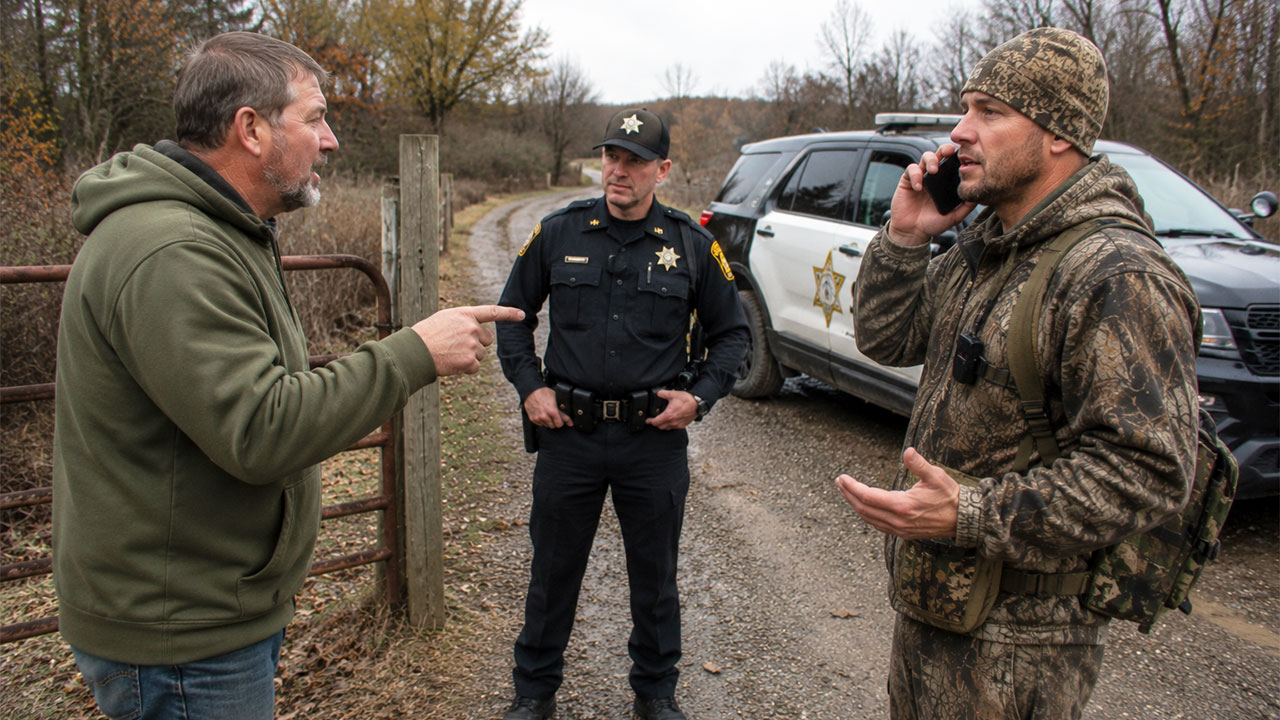
Posted gates are about as plain as it gets in the country. They’re not decoration, and they’re not a suggestion. That’s why this kind of run-in hits a nerve: a homeowner sees boot tracks past his signs, confronts the guy in camo, and before the dust settles the hunter is the one dialing 911 claiming he was threatened.
The posted gates were clear, and the hunter went around them anyway
The landowner had his property set up the way a lot of rural folks do when they’re tired of random vehicles and “just checking things out” foot traffic. Two gated entrances, both marked, and enough signage that you’d have to work to miss it. This wasn’t an “oops, I crossed an invisible line” situation—this was walking past a barrier that was literally built to stop you.
Late morning, the homeowner noticed a parked truck that didn’t belong and then caught movement in the timber line that borders a field. He didn’t go looking for trouble, but he did what plenty of folks would do: he walked down to the gate line and waited until the hunter came back out.
The first conversation stayed calm until it didn’t
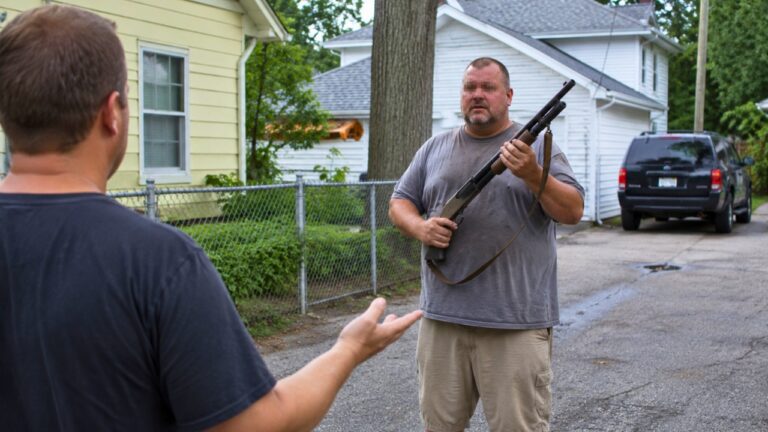
When the hunter came into view, he wasn’t dragging a deer, but he was geared like he intended to be there a while—daypack, rifle, and that “I’m on a mission” pace you recognize. The homeowner asked the simple question: whose permission did you get to be here?
The hunter’s answer wasn’t a name and a phone number. It was the kind of vague explanation that usually means someone is trying to talk their way through a bad decision—claiming he thought it was public, or that he’d “always hunted back here,” or that somebody told him it was fine. The homeowner wasn’t interested in an argument. He told him to leave the way he came and not come back.
That’s when the tone shifted. The hunter didn’t like being corrected, and the conversation tightened up fast. Nobody wants to be called a trespasser with a rifle in their hands, even when that’s exactly what’s going on.
When the hunter called police first, the whole situation flipped
Here’s the part that surprised a lot of outdoorsmen who heard about it afterward: the hunter pulled his phone out and called law enforcement first. Not a game warden hotline. Not the landowner number posted at the gate. Straight to police, framing it like he was being threatened while trying to leave.
That “call first” move matters, because it sets the first narrative officers hear rolling up. The homeowner is standing there on his own property, frustrated, trying to get a trespasser off the place. Meanwhile, the person who ignored the posted gate is telling dispatch he feels unsafe.
It’s a tactic you see more now than you used to. Sometimes it’s panic. Sometimes it’s a guy trying to get ahead of a mess he created. Either way, it forces the homeowner into a defensive posture immediately, even when he didn’t start the problem.
The safety piece is what makes these encounters go sideways
Anytime there’s a firearm involved—slung, in-hand, or even just visible—the margin for misunderstanding gets thin. Landowners are thinking about their kids, their livestock, their dogs, and the direction shots might be fired. Hunters are thinking about not getting hemmed up or losing their gear.
In this case, the homeowner didn’t have to “do” much for a threat claim to get tossed around. A raised voice, a step forward, a pointed finger, or a line like “you need to get off my land right now” can be spun into something else when someone is talking to an officer who wasn’t there.
This is why I’ve always said: if you’re a landowner and you catch a trespasser, your best tool is not a tough-guy speech. It’s distance, documentation, and a phone call. Get a plate number if you can do it safely, keep your voice level, and let the people with badges sort out the legal part.
Commenters zeroed in on cameras, boundaries, and “permission culture”
The outdoors crowd tends to split into two groups on stories like this. One side says posted means posted, end of story, and the hunter should be charged every time. The other side starts digging for the “how could he be confused?” angle—bad mapping apps, old fence lines, easements, corner crossings, and the fact that some areas have a long history of handshake access that isn’t written down.
But most folks agreed on a couple of practical points. Trail cameras aimed at gates aren’t just for deer. They’re for license plates and faces. Clear signage matters more than people think, especially when property lines cut through timber without obvious landmarks. And if you allow anyone access—neighbors, family friends, the kid from down the road—put it in writing, even if it’s a simple text message that states the dates and the boundaries.
There was also plenty of talk about mapping apps. They’re great tools, but they’re not gospel. Private land layers can lag, GPS can drift under canopy, and one wrong assumption can put you behind a posted gate with a rifle, trying to explain yourself.
What the homeowner could do next, and what hunters should learn from it
Once law enforcement gets involved, the best outcome is usually the calm one: everybody stays separated, the hunter leaves, and the incident gets documented. If there’s proof—photos of signage, camera footage of the hunter entering, a clear boundary—then trespass warnings and citations become easier. If it’s a messy boundary with poor marking, it turns into a he-said, he-said headache.
For landowners, the simple upgrades matter. Fresh signs at eye level. Gates kept closed. A log of incidents with dates and times. Cameras that cover entrances, not just food plots. And if you’ve got recurring issues, a conversation with a local game warden can go a long way, because they understand hunting access problems better than most patrol officers.
For hunters, the lesson is even simpler: don’t cross posted gates. Don’t assume the old-timer permission still counts. Don’t let a mapping app override a physical sign. If you realize you messed up, apologize, unload and sling the gun safely, and leave immediately. Trying to “win” a confrontation in the woods never ends the way you think it will—especially when the other guy owns the ground and you’re the one who walked around the gate.
The country runs on respect. When that breaks down, the first person to pick up the phone often controls the first version of the story. The smart move—whether you’re holding the deed or carrying the tag—is to keep it calm, keep it safe, and handle it in a way that doesn’t turn a simple trespass into something that follows everyone home.
Like The Avid Outdoorsman’s content? Be sure to follow us.
Here’s more from us: