Photo credit: The Avid Outdoorsman
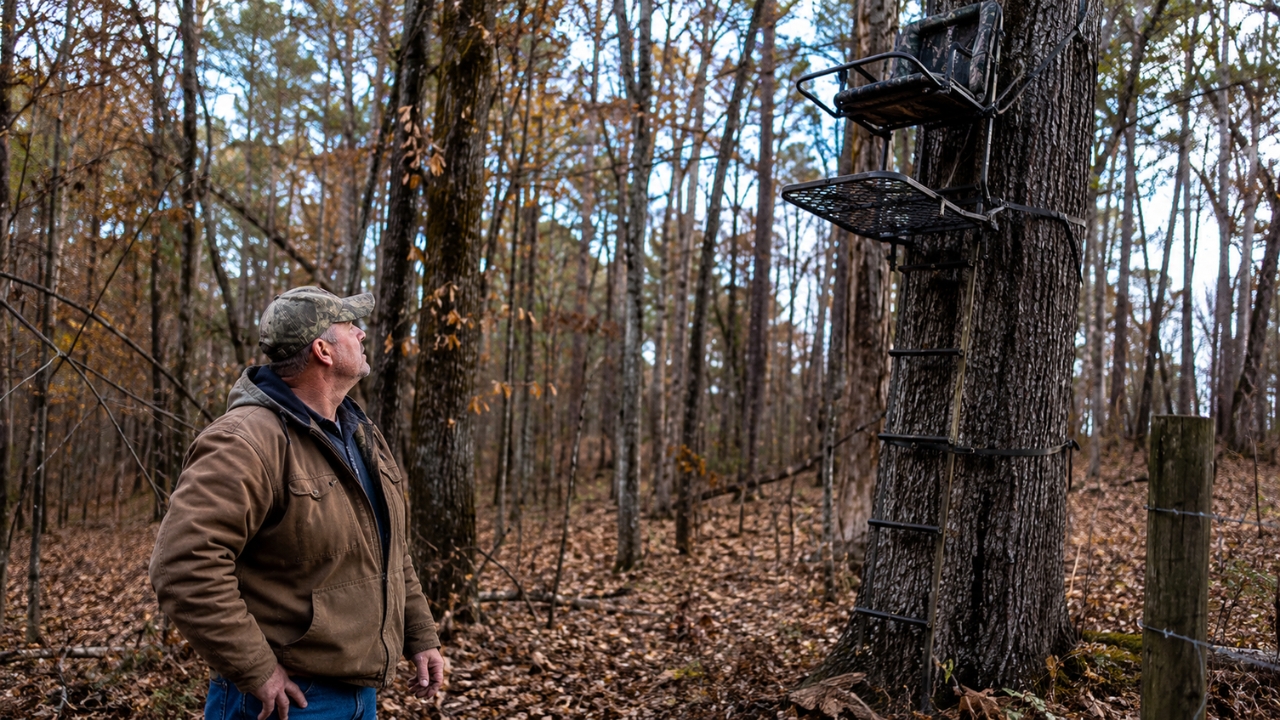
The landowner said the deer stand was sitting on his land, and that alone made it a problem. According to the Reddit post, someone had placed a deer stand on the property without permission. He did not know who owned it, how long it had been there, or whether the person planned to return.
The original Reddit post can be found here: https://www.reddit.com/r/legaladvice/comments/1algd1j/someone_put_a_deer_stand_on_my_land/
A deer stand is not something people usually leave behind by accident. Someone had to carry it in, pick a spot, set it up, and decide the location was worth hunting. For a landowner, that raises the obvious concern: if the stand is there, the hunter may be coming back.
That changes how a person looks at their own property during hunting season. It is no longer just woods or pasture. It may be a place where an unknown person plans to sit before daylight with a rifle or bow. The landowner does not know whether that person is licensed, careful, sober, familiar with the property lines, or aware of where homes, livestock, roads, or other people may be.
The post centered on what the landowner could legally do with the stand. That is where these situations get irritating. From a common-sense point of view, the stand should not be there. It is on private land without permission. But destroying it, keeping it, or dragging it away without documentation could create another argument if the owner shows up later and claims theft or damage.
There is also a difference between abandoned gear and active trespassing. If the stand has been there for years and nobody has returned, it might be forgotten equipment. If it has fresh straps, trimmed shooting lanes, bait nearby, or recent tracks, it may be part of an active hunting setup. That difference matters for how urgently the landowner needs to respond.
The safest move is usually to document first and act second. Photos, GPS location, property records, and notes about signs of recent activity can help if the landowner calls a game warden or sheriff. If the property is posted, photos of the signs and boundary markers can also help show that the stand owner had no reason to assume the land was open.
Commenters told the landowner not to destroy the stand on impulse. Several said the better move was to photograph it, mark its location, and contact a game warden or conservation officer. Since the issue involved possible hunting trespass, wildlife officers would know how to handle it.
Others suggested putting up or checking no-trespassing signs. If the property was not clearly marked, the landowner could still have rights, but posting it properly would make future enforcement easier.
Some commenters recommended leaving a note on the stand telling the owner it was on private property and needed to be removed. Others thought a trail camera was smarter, because it might identify who returned without forcing a confrontation.
A few people warned the landowner not to confront an unknown hunter alone. Someone returning to a stand during season may be armed, embarrassed, or angry. That is a bad setup for a property-line argument in the woods.
The post ended with the landowner facing a familiar rural headache. The stand was only a piece of hunting gear, but what it represented was bigger: someone had decided his land was a place they could use without asking.
Like The Avid Outdoorsman’s content? Subscribe to our newsletter so you never miss an article.
Here’s more from us: