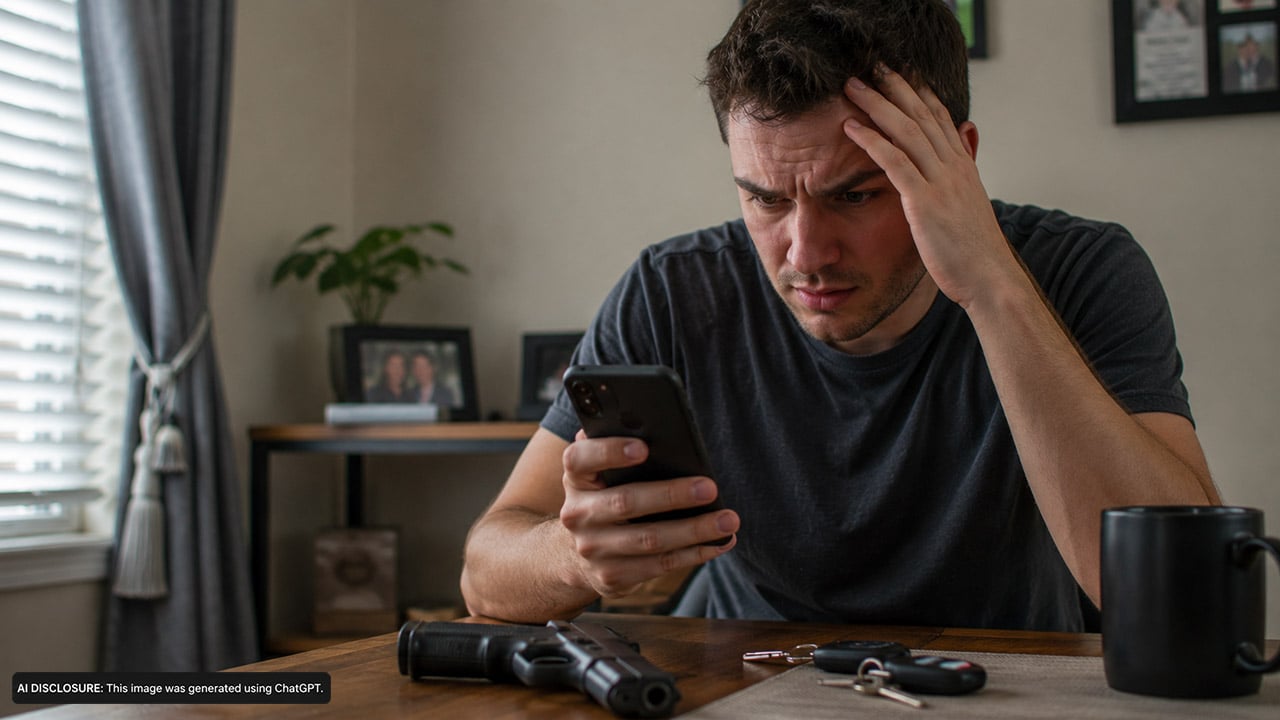
Photo credit: AI-generated image created using ChatGPT. Illustrative only
It starts like a lot of messy breakups do: one person has the other person’s vehicle, it’s still titled and financed in the owner’s name, and the “simple” request to return it turns into a game of hide-and-seek across state lines. In the original post, a Washington man said his ex was keeping his car out of state, refusing to tell him where it was, and ignoring requests to return it so he could insure it properly and stay in compliance with the loan.
Then the ex dropped a line that changes the whole risk picture for anyone who carries: she claimed she’d filed a restraining order. If that’s true, he’s not just dealing with a family-law headache anymore. Depending on the type of order and what it says, he could have been unknowingly prohibited from possessing firearms while still going about his normal day-to-day life—carrying for weeks without realizing he’d stepped into a legal minefield.
He tracked down his car, but the phone call lit the fuse
According to the post, the car is in his name only, and his ex’s name isn’t on it. He said she concealed the vehicle’s location, kept it out of state, and wouldn’t return it or even tell him where it was—something that can cause real problems when you’re the one holding the loan and the insurance responsibility.
Eventually, he located the car and had it towed. When his ex called, he told her where the car was and how she could retrieve her possessions from inside. That’s when she told him she’d gotten a restraining order against him, and he hung up.
A restraining order claim can flip your firearm status overnight
Folks who carry regularly tend to think in terms of permits, training, and staying squared away with state law. But protective orders are a different animal, and they can move fast—especially if one gets entered without you being present at the initial hearing.
The man said he hasn’t seen his ex in over seven months. He also said she alleged he damaged her property and stole a gun from her—claims he called baseless. Whether those allegations are true or not isn’t the point from a gun-owner’s perspective. The point is that once an order exists, certain types can trigger immediate restrictions on possession, and those restrictions can apply even if you haven’t been served yet, depending on the jurisdiction and circumstances. That’s how a person can suddenly realize they may have been carrying while prohibited and had no idea.
Cross-state orders make it even trickier for regular people to verify
This situation has Washington on one side and Texas on the other. That’s a common setup now: people move, divorce, share custody, and the paperwork doesn’t stay neatly in one courthouse. The man said he searched his state court website and only found their divorce.
That’s not surprising. A protective order could be filed in a different county, a different state, or under a different case type than the divorce docket. And even when a case exists, online portals don’t always show everything to the public, especially if there are confidentiality protections or sealed details. For an outdoorsman who just wants to know, “Am I legal to carry today?” it can feel like trying to glass a hillside in fog.
Why taking the call “to calm things down” can backfire
The man admitted he wanted to take her calls and “ease some of her worries.” That instinct makes sense to anyone who’s tried to keep a situation from boiling over, especially when kids and custody are involved. But when someone says they’ve filed an order against you—and then starts “blowing up” your phone with calls and texts—every contact can become part of the narrative.
If an order exists, it may include a no-contact provision. If it doesn’t exist yet, those messages can still be used to argue that contact is unwanted or persistent. Even if you’re trying to be polite, repeated communication can get spun into harassment. In the gun world, we’re big on not giving a problem more opportunities to become a bigger problem. This is one of those times.
Professional licensing pressure makes the stakes higher than a normal divorce fight
One detail in the post that matters: he said he’s a mental health professional licensed by the state, and he’s worried an order could affect his professional license. That’s a real-world concern.
Licensing boards don’t operate like your hunting buddies at deer camp. They don’t care that you “didn’t mean anything by it.” They look at paperwork, allegations, and whether there’s a court order attached to your name. Even if you ultimately beat it, the process can chew up time, money, and sleep. Add in firearm restrictions—temporary or otherwise—and it becomes a full-blown personal and professional emergency.
The practical “outdoorsman” takeaway: verify fast, then lock down your exposure
When you carry—whether that’s daily concealed carry, a handgun in the truck for ranch chores, or a sidearm while you’re out checking trail cameras—your legal status needs to be boring and predictable. A claimed restraining order makes it the opposite of boring.
From a practical standpoint, the immediate priority is to confirm whether an order actually exists, where it was filed, and what it says. If one is active and it includes firearm restrictions, the safest move is to stop carrying and avoid possessing firearms until you’ve gotten competent legal advice specific to your situation and jurisdiction. That’s not about politics or feelings; it’s about not compounding your problems with a new charge that sticks.
Just as important: stop feeding the situation. If she’s calling and texting repeatedly, don’t engage directly “to smooth things over.” Preserve messages, avoid contact, and route communication through proper channels—especially if there’s any custody issue in the background or if you suspect a court process is underway.
Plenty of outdoorsmen put serious effort into being responsible: safe handling, safe storage, and staying within the law. The hard lesson here is that your status can change because somebody else filed paperwork, and you might not find out in a clean, orderly way. If you ever get that kind of warning—even from an unreliable source—treat it like a brushfire in August: assume it can spread fast, and act accordingly.
Like The Avid Outdoorsman’s content? Subscribe to our newsletter so you never miss an article.
Here’s more from us: