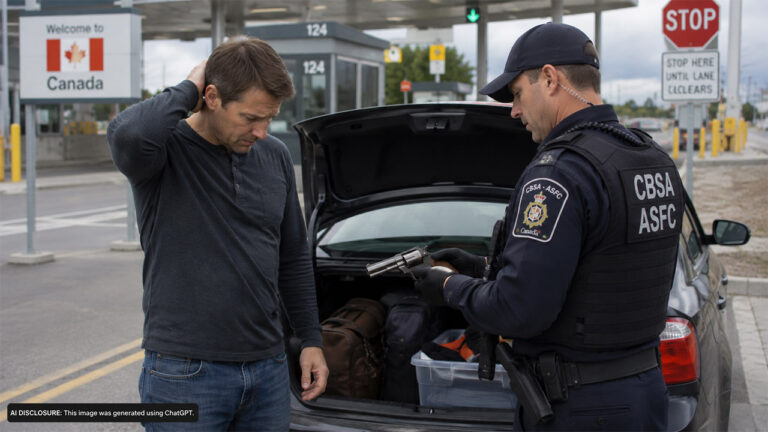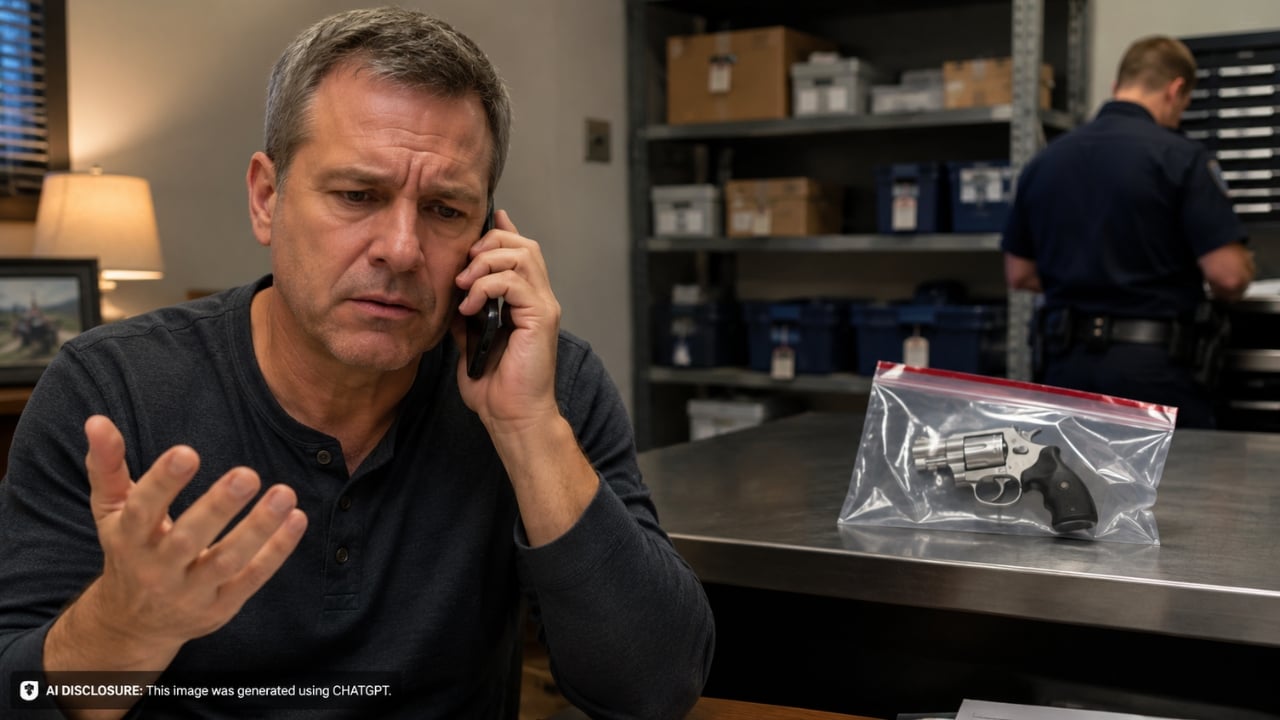
Photo credit: AI-generated image created using ChatGPT. Illustrative only
A revolver gets stolen out of a vehicle and you do what you can: report it, hope it turns up, and try not to think about where it’ll end up. In this case, it did turn up—because the feds came looking for it. And that’s when the headache really started.
In the original post, the owner of a Smith & Wesson 642 Airweight said the gun was taken from his wife’s car about a month prior. Not long after, his local FFL called with a surprising heads-up: the ATF had reached out to run a trace on that exact revolver. When the owner called the ATF to ask why, he learned the gun had been recovered and was being held by local police.
A lightweight carry revolver became part of a much bigger case
The gun in question wasn’t some oddball collectible. A S&W 642 Airweight is a common, practical revolver—exactly the kind of small-frame .38 folks tuck into a pocket holster on quick trips to town, or keep close when they’re knocking around the property.
But the recovery didn’t come from a routine traffic stop and a simple return. The owner said the suspects were tied to a “plethora of stolen guns,” and that they were sitting on extremely high bail—$1.9 million and $2.1 million. That tells you right away the case wasn’t being treated like petty theft.
The ATF trace was the first real confirmation the gun was found
A lot of gun owners assume that if a stolen firearm is recovered, the police will call. Sometimes that happens. Plenty of times it doesn’t, especially if the gun is tied up in an ongoing investigation and moves through multiple hands.
Here, the owner didn’t find out through a knock on the door. He found out because his FFL called him after the ATF contacted the shop while tracing the revolver. That trace work is one of the ways stolen guns get connected back to the last known lawful owner, and it can be the first clue that the firearm is no longer out on the street.
Local police said “evidence,” and the timeline got ugly fast
Once the owner learned the revolver had been recovered, he did what most of us would do—he called the police department holding it and asked how to get it back. That’s when he got hit with the answer that makes your blood pressure climb: it was being held as evidence, and it could take up to two years before it’s returned.
That’s the part that feels backwards. The gun is yours, you didn’t do anything wrong, and you want it back now—not after it’s sat in an evidence room through continuances, plea deals, and court scheduling. The owner questioned why high-quality photos and video wouldn’t do the job, instead of keeping the actual firearm for that long.
Why “just take pictures” often isn’t how evidence works
From a practical standpoint, the “take pictures and give it back” idea makes sense. A revolver isn’t contraband when the rightful owner is lawful, and photos would seem to show a jury whatever they need to see.
But evidence rules and courtroom reality don’t always follow common sense. A firearm can be evidence for multiple reasons: it may need to be physically identified in court; it may be linked to other stolen property; or it may need to be available for examination. Even when a case seems open-and-shut, prosecutors often don’t want to risk a defense attorney raising chain-of-custody questions later. Holding the actual item is the safest route for the case, even if it’s a miserable outcome for the victim.
That doesn’t mean the two-year estimate is guaranteed. It means the owner was being told to expect the gun to stay in limbo until the criminal case is finished—or at least until the court says it can be released.
The strangest detail: the gun showed up in a rap video
The owner added one detail that’s hard to forget. He said the thieves allegedly stole more than 40 guns and then made a YouTube rap video where his revolver could be seen—sitting in one guy’s lap and in his hand in a few scenes.
He also said he found their Instagram account with phone numbers publicly listed. It’s the kind of thing that makes you shake your head because it’s so brazen, but it also highlights a real point: stolen guns don’t always disappear quietly. Sometimes they get waved around for attention, and that can create additional evidence that investigators and prosecutors will want to preserve and tie together.
The hard lesson for gun owners: recovery doesn’t always mean return
Out in the real world, especially for hunters and rural families, a stolen firearm isn’t just a line item on an insurance claim. It’s a tool you may rely on. A small revolver might be a daily carry piece, a truck gun, or a last-ditch option when you’re checking fence lines after dark.
This situation is a reminder that even when law enforcement does solid work and the gun is recovered, you still might not get it back anytime soon if it’s tied to a bigger case. The owner’s frustration is easy to understand, because the process can feel like you’re being punished a second time—first by the thief, then by the timeline.
It also underlines a preventative point that’s worth saying plainly: vehicles get broken into all the time, and they’re one of the most common ways guns end up stolen. If a firearm has to ride in a car, locking it up in a dedicated lockbox and keeping it out of sight is about as close as you can get to stacking the odds in your favor.
In the end, the owner got the answer he wanted—his revolver was found—but not the outcome he expected. The gun may be sitting safely in an evidence room instead of on the street, yet it’s still out of his hands for the foreseeable future. That’s a win for public safety, but it’s a long wait for the person who bought it, carried it, and did everything right after it was taken.
Like The Avid Outdoorsman’s content? Be sure to follow us.
Here’s more from us: