Photo credit: AI-generated image created using ChatGPT. Illustrative only
Most folks who live out in the country accept a certain amount of noise as part of the deal—tractors, barking dogs, even the occasional weekend target practice. But it’s a different story when a full-blown shooting setup pops up right on the fence line and turns into an everyday, all-day routine.
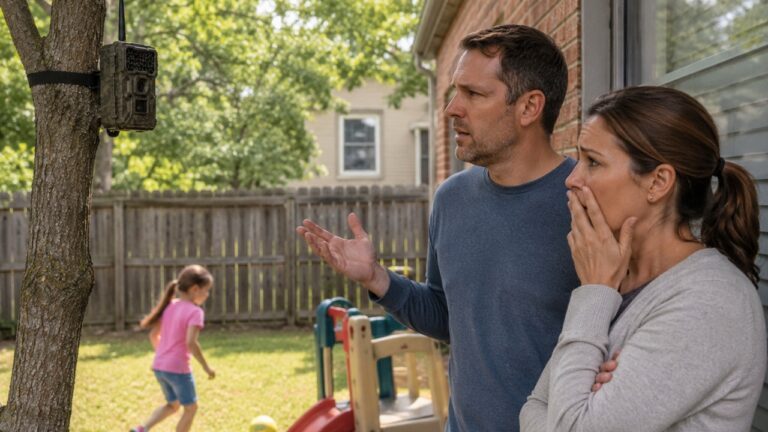
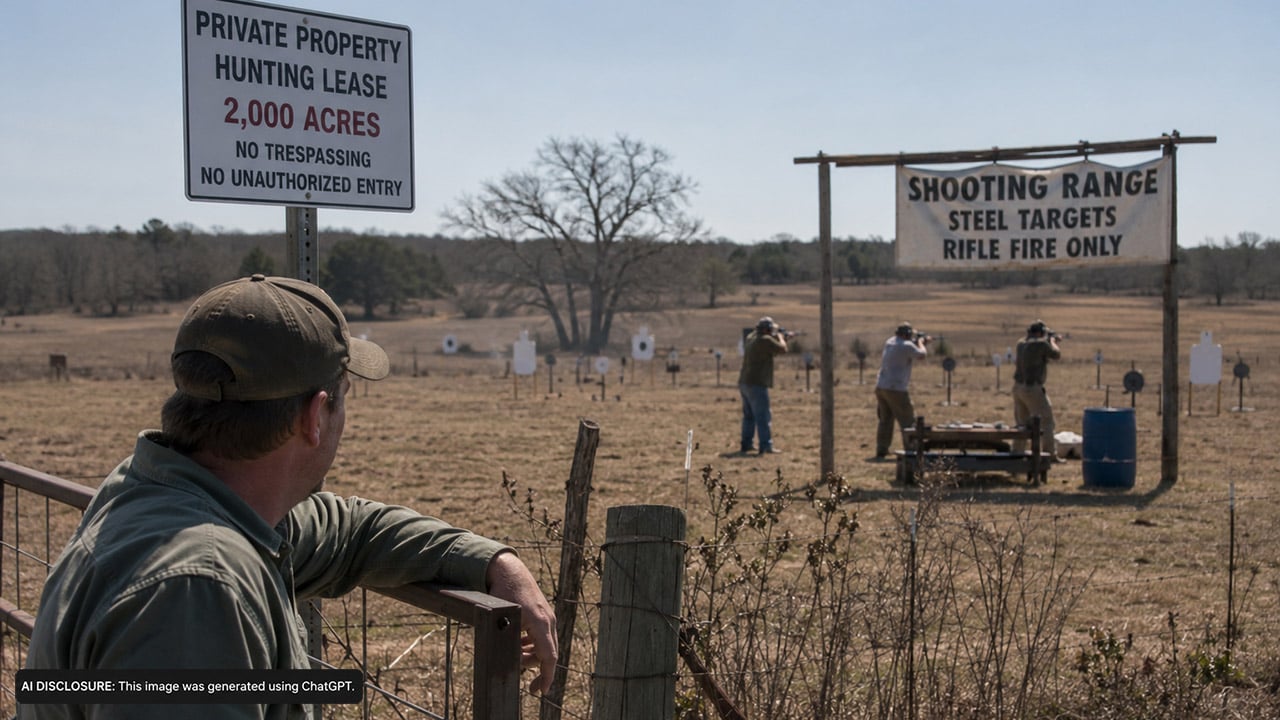
That’s the situation one Texas homeowner described in the original post: hunters leasing roughly 2,000 acres behind their home built a shooting range where the two properties meet, and the homeowner says they’re firing loud rifles daily—so loud it carries through a brick house. With a baby due in less than three weeks, the homeowner says the constant shooting has become more than an annoyance. It’s now a stress and safety issue.
A 2,000-acre lease—and the range goes right on the line
According to the homeowner, the group behind the shooting isn’t the landowner. They’re leasing the tract from a forest investment company, and despite having thousands of acres to choose from, they picked the spot closest to the neighboring home.
That decision is what has the homeowner feeling boxed in. When you’ve got that much land, placing a range on the boundary feels less like convenience and more like disregard. The homeowner said they’ve owned the place since 2019, but the shooting started this year, and it quickly became a daily presence.
Rifle fire “every day, all day” changes life at home
The homeowner’s description is the kind that makes your shoulders tighten if you’ve ever tried to relax on a back porch: loud rifles going off constantly, to the point you can hear them inside a brick home. Not once in a while. Not on Saturdays. “Every day, all day,” as they put it.
Noise is one thing; living under it is another. The homeowner said it’s ruined their ability to enjoy the yard, stressed their animals, and made rest difficult—especially with a newborn arriving soon. Anybody who’s been around a house with a baby knows sleep becomes currency. The idea of trying to get naps between rifle strings isn’t realistic.
The safety worry: a deer stand and feeder aimed toward the neighbor
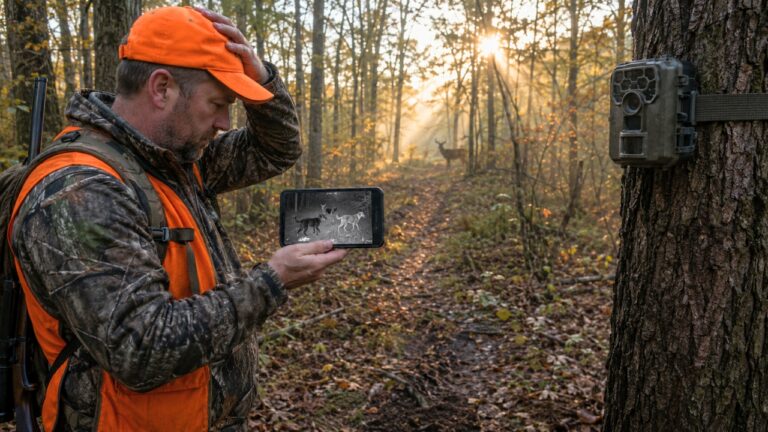
The moment this situation stops being a “bad neighbor” dispute and starts feeling serious is when the homeowner talks about direction of fire. They claim there’s a deer stand and feeder “pointed where they will shoot TOWARDS OUR PROPERTY,” and that they told the hunters they didn’t feel safe.
The reported response—“it’s pointing down”—isn’t the kind of reassurance most folks want to hear when they’re standing on the other side of a property line. In the hunting world, safe shots depend on more than muzzle angle. Backstops, terrain, ricochets, and the simple reality that people make mistakes all matter. If a stand location creates even the appearance that rounds could travel toward a home, that’s not something to wave off.
The homeowner tried talking first—even offered to pay
Before anybody thinks this turned into a feud right out of the gate, the homeowner says they did what most reasonable people would do: they went to the hunters and asked them about moving it. They even offered to help pay for relocating the setup.
But the hunters reportedly refused, saying they spent “thousands” building the range and “we’re not moving it,” adding that they pay “thousands” to lease the land. When asked why they couldn’t place the range somewhere else on the 2,000 acres, the hunters reportedly said it was “the safest place for us.”
That answer is hard to square from the outside. A range can be “safe” from the shooter’s perspective and still be a problem for everyone around it. Safe isn’t just about what’s easiest to supervise; it’s about where rounds can go if something goes wrong and how close the activity is to homes, livestock, and public roads.
What practical options tend to matter in a situation like this
The homeowner asked what can be done and what kind of attorney to call, assuming real estate law might be the right lane. While specific legal outcomes depend on county rules and the exact facts on the ground, a few practical pressure points usually matter when gunfire and property lines collide.
First is documenting what’s happening. A clear log of dates, start/stop times, and types of shooting helps separate “it’s loud sometimes” from “this is daily and disruptive.” If there’s a question about direction of fire, photos from the homeowner’s side of the line (taken safely and without confrontation) and notes about where the stand and feeder sit in relation to the property boundary can be useful.
Second is whether any local ordinances apply. Texas has plenty of rural areas where shooting is normal, but some counties and subdivisions have noise rules, restrictions near occupied structures, or specific limitations tied to platted neighborhoods. This isn’t about trying to “ban shooting.” It’s about whether this specific setup is being run in a way that’s lawful and reasonable that close to a residence.
Third is the landowner—the company that actually owns the leased 2,000 acres. A lot of hunting leases come with rules about where you can build structures, how close you can shoot to boundaries, and how you’re supposed to treat neighbors. If the leaseholders are creating a liability problem, the landowner may care a whole lot, especially if there’s any chance rounds could leave the property or if a neighbor starts talking about safety concerns in writing.
And fourth is the kind of lawyer. “Real estate” is a common guess, but issues like this often overlap with nuisance law (excessive interference with enjoyment of property), liability concerns, and sometimes local regulatory enforcement. The right fit is typically a local attorney who handles property disputes and civil claims in that county—some do real estate, some do general civil litigation, and many do both. The key is someone who knows how these cases play out locally, not just what a statute says.
What the gun-owning crowd usually agrees on: don’t run a range like this
Most responsible shooters and hunters don’t want to be “those guys.” If you’re going to shoot regularly on a lease, you pick a spot with a serious backstop, a safe direction of fire, and enough buffer that neighbors aren’t eating it all day. You also think about noise. A rifle range right on a property line, next to a home, is a good way to make an enemy and draw attention that nobody in the hunting community wants.
The hard part is that once someone has spent money and sweat setting something up, pride kicks in. That’s when common sense gets replaced by digging in. But the homeowner’s concerns here aren’t abstract: they’re talking about a newborn, stressed animals, constant rifle fire, and a perceived risk of shots being taken toward their property.
If you’re the shooter, the smarter play is simple: move the range deeper into the tract, build a better backstop, and keep your hunting setups oriented so there’s no question where rounds are going. If you’re the neighbor, the smartest play is to stay calm, document everything, and push the issue through the channels that matter—starting with the actual landowner—before it turns into a bigger, uglier fight that nobody wins.
Like The Avid Outdoorsman’s content? Be sure to follow us.
Here’s more from us: