Photo credit: Ken Griffiths/Shutterstock.com
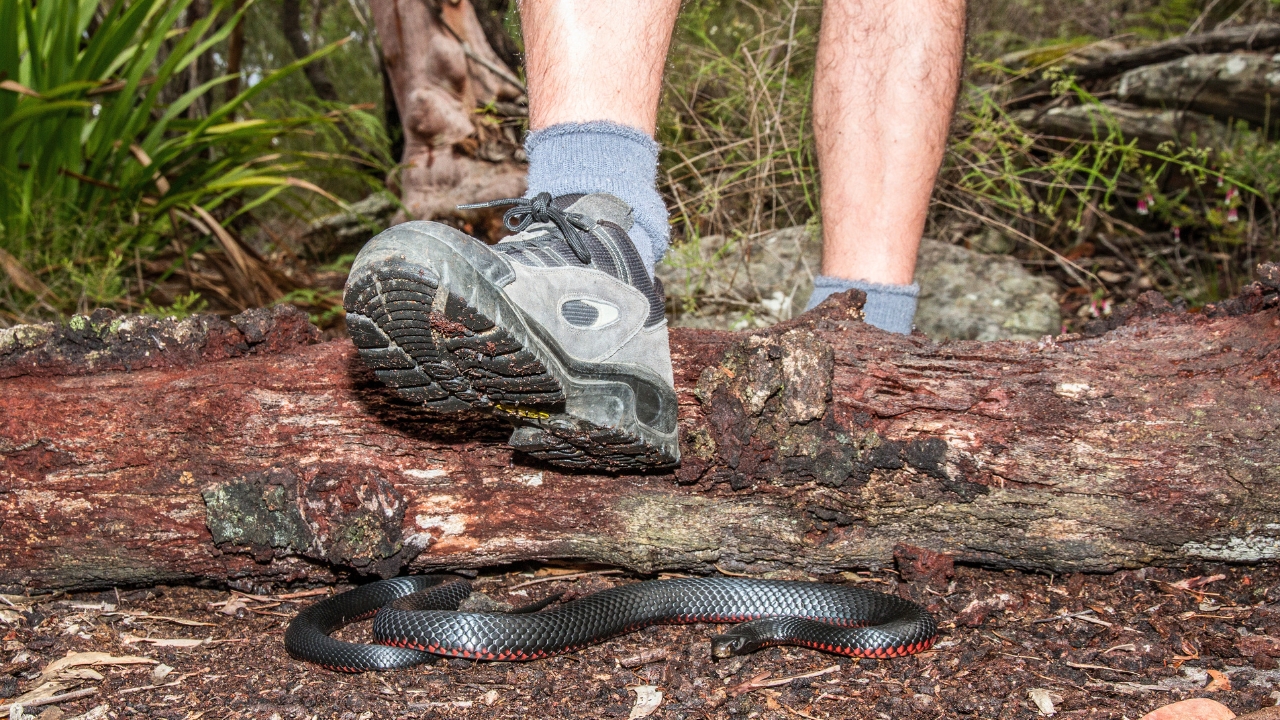
Most hikers don’t get bitten because they wandered into some horror-movie snake den. They get bitten because they moved like a normal person on a normal trail and accidentally forced a close-range decision. That’s the part people miss when they say “aggressive.” The truly dangerous encounters usually aren’t a snake “hunting you.” They’re a snake getting surprised, getting stepped near, getting pinned by terrain, or getting messed with because somebody didn’t recognize what they were looking at. When it turns bad, it turns bad fast because snakes don’t negotiate with your intentions. They react to distance, vibration, and whether they think they have an escape route.
The snakes that feel “aggressive” to hikers are usually the ones that combine three traits: they’re common in places people walk, they camouflage well or hold tight instead of fleeing, and they defend themselves hard when you get inside their bubble. A rattler that warns and slides off might never even register in your memory. The one you almost step on in leaf litter, or the one you surprise on a sunny trail edge, is the one you tell stories about. If you understand which species are most likely to produce those close-range surprises and what terrain makes it happen, you can hike in snake country without turning every shadow into a panic event.
Copperheads are “aggressive” because they don’t leave when you expect them to
Copperheads are one of the most common “stumbled into it” snakes in the eastern half of the country because they win the camouflage game so completely. They blend into leaf litter, dead grass, and the mottled shadows along rocky edges and hardwood slopes, and they have a nasty habit of holding still instead of fleeing. That stillness is what people interpret as aggression, because a lot of hikers assume a wild animal will announce itself or move away. Copperheads often don’t. So a normal step over a log, a pause to tie a boot, or a hand placed on a rock for balance can put you inside strike range before your brain even registers “snake.”
What makes these encounters go bad is that copperheads live in the exact places people stop paying attention. You’re looking at the view, talking, checking a phone, or watching your footing on uneven ground, and a copperhead is just another piece of the forest floor until it isn’t. When you surprise one at close range, you don’t get a warning rattle. You get a defensive bite meant to create space. The practical takeaway isn’t fear, it’s behavior: copperhead country demands that you treat leaf litter and step-over points like a blind corner, because to your eyes, it often is.
Cottonmouths can feel confrontational because water and banks trap your options
Cottonmouth encounters feel “aggressive” because they often happen near water, and water changes everything about movement and escape routes. Creek banks, muddy edges, marshy trails, and flooded timber create tight lanes where both you and the snake have fewer easy exits. A cottonmouth that feels pinned on a bank, or one that’s using shoreline cover, may hold its ground and posture instead of sliding away cleanly. That posture can look like “coming at you” when, in reality, the snake is trying to look big and buy itself space. Add in the fact that people are usually moving slower near water, stepping carefully on slick ground, and putting hands down on rocks or logs, and you get lots of close-range opportunities for a defensive bite.
The other reason cottonmouths get a reputation is that hikers and anglers frequently misread normal snake behavior in water. A snake swimming with its head above the surface can look like it’s “tracking you” when it’s simply moving through the same channel you’re standing near. Then the human makes the worst move: they try to shoo it, throw something at it, or block its path. That’s when the encounter escalates, because now you’ve removed the snake’s easy exit and forced it into a defensive decision. The safest approach is simple and boring: give it space and let it pass, because the water’s edge is already a place where one bad step can put you too close for comfort.
Rattlesnakes are usually avoidant, but trail-edge surprises create instant emergencies
Rattlesnakes don’t survive by picking fights with hikers. They survive by not getting stepped on and by convincing threats to leave them alone. But the reason they’re on this list is that normal hikes create the perfect conditions for accidental close-range contact. A sunny trail edge, a rock outcrop, a switchback with tall grass, or a warm patch on a cool morning is exactly where a rattlesnake may be staged. If you crest a small rise or round a blind corner and the snake is coiled within a step or two of your path, the situation can go from normal hike to “oh no” in less than a second. The rattle is a warning, but it’s not a guarantee you’ll hear it in wind, running water, or conversation.
What makes rattlesnake encounters go bad fast is the way humans move when they feel startled. People hop backward, wave arms, scramble over rocks, or try to jump a log without looking. That’s when ankles get tagged, because the bite is about proximity and sudden movement. The snake is trying to make you leave, not chase you down the trail, but that doesn’t matter when your foot lands in the wrong place. The calm fix is to freeze your feet, locate the snake, and back out slowly with your eyes on it, because sudden steps are what turn a warning encounter into a medical problem.
Black rat snakes, racers, and big watersnakes can act “mean” without being venomous
If you define aggressive as “won’t stop coming at you” or “keeps striking,” a bunch of nonvenomous snakes deserve honorable mention because they can be bold and defensive when cornered. Racers are fast, curious, and sometimes look like they’re charging because they move with purpose and don’t always flee in the direction you expect. Watersnakes can be especially spicy near creeks and lakes because they’re common, thick-bodied, and quick to defend themselves if you get close or step into their cover. Black rat snakes are usually content to climb away, but when they’re surprised in a tight spot or grabbed by someone trying to “relocate” them, they can thrash and strike repeatedly, which feels aggressive even though it’s just a panic response.
These encounters matter because they’re the ones that trick hikers into making worse decisions. People see a big snake that isn’t obviously a rattler, assume it’s harmless, and then they try to move it with a stick, poke it for a photo, or grab it to show someone. That’s how you get bitten, and it’s how you get bitten a lot, because a defensive nonvenomous snake will often keep striking until it feels it has an escape. The bite might not be medically dangerous the way a pit viper bite can be, but it’s still a painful, bloody lesson that can ruin a trip. The better habit is treating every snake like it deserves space, because “not venomous” doesn’t mean “won’t bite.”
Coral snakes aren’t likely to chase you, but handling mistakes turn rare encounters into serious ones
Coral snakes usually don’t make this list because they’re out looking for conflict. They’re typically secretive and spend a lot of time hidden under debris, in leaf litter, or around edges where you’re not likely to step directly on them the way you might with a pit viper. The reason they still matter is that when people do encounter them, it often happens during the exact activities hikers do casually: flipping a log, moving brush, collecting firewood, or picking up a small snake because it “looks harmless.” Coral snakes are a classic “human error” bite scenario, because the snake is small, the warning colors can be misunderstood, and the person gets too close with their hands.
When an encounter turns bad here, it’s usually because someone tried to identify the snake at arm’s length instead of giving it room and letting it move off. It’s also because people underestimate how quickly a small snake can defend itself when restrained. A coral snake isn’t built to deliver a dramatic, obvious warning the way a rattlesnake is. If you create contact, you can create consequences. The lesson is simple: you don’t need to be a herpetologist to stay safe. You just need the discipline to not handle unknown snakes and to treat “small and pretty” as a reason to keep distance, not a reason to get curious.
The real “aggression” trigger is you removing the snake’s options at close range
Across all these species, the encounters that go sideways share the same ingredients: close distance, surprise, and blocked escape routes. Dense brush, tall grass, rock piles, creek banks, and downed timber are the terrain features that turn normal hiking into close-range snake country, because they hide the snake and funnel your feet and hands into predictable places. Add in warm days when snakes are more active, or cool mornings when they’re seeking warmth on trails and rocks, and you get the classic stumble-in scenario where the snake and the hiker don’t detect each other until it’s almost too late. The snake’s “aggressive” response is usually a defensive attempt to create space, and your job is to not force the decision.
The practical solution isn’t turning every hike into a tactical patrol. It’s adopting a few habits that prevent surprise: don’t step blindly over logs and rocks, don’t place your hands where you can’t see, slow down at trail edges where sun meets shade, and pay attention in exactly the spots hikers relax their attention—switchbacks, creek crossings, and scenic pauses where your eyes leave the ground. If you keep your distance and let snakes have an exit, most of these encounters end as a non-event. The “aggressive snake” story usually begins when a person accidentally makes a snake feel trapped, then compounds it by trying to solve the situation with quick movements or hands-on curiosity.
Like The Avid Outdoorsman’s content? Subscribe to our newsletter so you never miss an article.
Here’s more from us: