Photo credit: Harry Collins Photography/Shutterstock.com
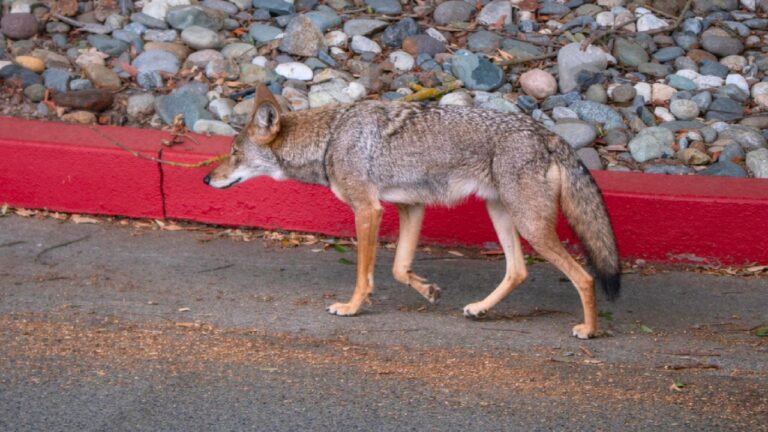
If you grew up hearing that coyotes are strictly night animals, you’re not alone. A lot of folks still treat a daytime coyote sighting like it’s proof something is wrong with the animal. Sometimes there is a problem, but a lot of the time it’s simpler than people think. Coyotes are opportunists with a strong survival instinct, and they adjust their schedule based on food, pressure, weather, and what’s happening around them. When a neighborhood gets quieter mid-day, or when food sources pop up in the open, they’ll move when it makes sense. The mistake is assuming daylight automatically equals rabies or an “aggressive” coyote. The reality is you need to look at behavior and context, not just the clock.
The good news is you can usually tell pretty quickly what kind of situation you’re dealing with. A coyote trotting across a field edge or cutting behind a tree line at 10 a.m. isn’t the same thing as one that’s pacing a fence, staring at dogs, or circling a kid’s swing set. Coyotes can live close to people without constantly causing trouble, but they can also get comfortable fast if they’re being unintentionally fed. Daylight sightings are often your early warning sign that something on your property, or in your neighborhood, is making it easy for them to stick around.
Coyotes aren’t “nocturnal,” they’re adaptable
Coyotes are best described as crepuscular, meaning they’re naturally most active at dawn and dusk. But “naturally” doesn’t mean “only.” In rural areas with low human pressure, you’ll see coyotes out in daylight pretty regularly, especially in winter when they need more calories and can cover ground easier. In places with heavy hunting pressure or constant traffic, they lean more nocturnal because it keeps them alive. When the pressure changes—like during a warm spell, after a big rain, or when a neighborhood quiets down during the day—they change right along with it. A daytime coyote can simply be a coyote that’s doing coyote things in a place where it feels safe enough to do it.
This is why folks in farming country often shrug at a daylight sighting, while someone in a subdivision panics. Same animal, different expectations. If you’ve got creek bottoms, greenbelts, pastures, or thick brush nearby, a coyote can cross your yard at noon and be back in cover in seconds. That doesn’t automatically mean it’s stalking people. It may be moving between bedding cover and a food source, or it may be following a travel corridor it’s used for years.
The #1 reason: easy food, especially from humans
Coyotes don’t hang around where calories are hard to come by. If you’re seeing them in daylight close to houses, it’s worth assuming there’s a food draw somewhere. That could be obvious stuff like trash cans that aren’t secure, pet food left outside, or a compost pile that includes meat scraps. It can also be “soft food,” like rodents feeding under bird feeders, rabbits living under sheds, or outdoor cats that roam at night and nap on porches during the day. Coyotes go where the prey goes, and prey goes where the food and cover are.
One of the most common setups I see is a neighborhood with a few well-meaning people feeding stray cats or leaving bowls out. That creates a routine. Routine creates confidence. And confidence is what makes a coyote show up earlier and earlier. Once they learn a yard always has something worth checking, they’ll start checking it in daylight too, because it’s safer and easier to see what’s going on. It doesn’t take long for that to become a pattern.
Daylight in late winter and spring can mean pups are involved
Coyotes have a breeding season, and during that stretch you can see a bump in daytime movement. Later, when pups are in the picture, adults can be more active because they’re working harder to feed a den. That can mean more hunting runs during daylight, more movement along the same edges, and more sightings close to cover. If you’ve got a drainage ditch, brushy fence line, or overgrown corner of a pasture, that’s the kind of place coyotes like to den, especially if it’s quiet and people don’t walk through it much.
This is also where people misread “protective” behavior. If someone unknowingly walks a dog close to a den, coyotes may follow, posture, or even try to haze the dog away. That’s not them “hunting” a human, it’s them trying to push a perceived threat away from pups. It’s still a serious situation because dogs can get hurt, but the motive matters. The right response is giving that area space, keeping pets leashed, and not letting a curious dog roam into thick cover where you can’t see what it’s sniffing.
Weather can push coyotes into the open at odd times
After a storm or a big temperature change, coyotes often take advantage of fresh movement. Rodents get active, rabbits shift around, and scent conditions can be better for hunting. Snow, wet ground, and strong winds can also change how they travel. In some conditions, it’s easier for them to move on open ground than fight through thick brush, especially if they’re trying to cover distance. If you see a coyote cruising a fenceline after a rain, that may be a “travel day,” not an “I’m moving into your backyard” day.
Heat can do it too. In hot months, coyotes may move earlier in the morning and later in the afternoon, and that can overlap with times people are out walking. So you end up with more sightings that feel alarming, even though the animal is doing what it has to do to avoid overheating. A quick glance at your weather pattern and your local habitat can explain a lot.
The red flags that actually matter
Here’s where I draw a hard line: the behavior is what matters. A healthy, cautious coyote will usually avoid close contact. If it sees you, it leaves. If you clap, yell, or step toward it, it moves off. If you’re watching one that’s lingering in the open, staring at people, approaching slowly, or showing no concern about noise, you’re not looking at normal “passing through” behavior. That can be habituation from food, it can be sickness, or it can be a young animal that’s learned bad habits early.
Also watch for repeated appearances in the same spot at the same time. Coyotes are routine-driven. If one is showing up near your driveway every morning, that’s a pattern, and patterns don’t happen without a reason. Another red flag is a coyote that’s snapping at or chasing pets in daylight, especially if it’s doing it close to the house. That’s not a “let it be” situation. That’s a “remove attractants and tighten the perimeter immediately” situation.
What to do first: remove attractants before you do anything else
People jump straight to “call someone” without fixing what’s drawing the animal in. Start with the basics. Lock down trash, don’t leave pet food outside, clean up fallen fruit, and stop feeding wildlife anywhere near your house. If you’ve got bird feeders, understand you’re also feeding rodents, and rodents bring predators. If you’ve got chickens, tighten up feed storage and clean up spills, because spilled grain draws mice and rats, and coyotes don’t ignore a free buffet of rodents and smells.
Next, change the routine. Motion lights, closing off crawl spaces, trimming brushy edges, and fencing repairs all matter. Coyotes use cover. If you remove the easy cover near your home and remove the easy food, most of your “daytime coyote” problem goes away on its own. Coyotes are smart, but they’re also energy-driven. When it costs more to check your yard than it pays, they usually move on.
How to haze a coyote the right way (and why it works)
If you see a coyote that’s too comfortable, you want to teach it that people equal trouble. That’s where hazing comes in. You make noise, you look big, you clap, yell, bang a pot, or use a loud whistle. The goal isn’t to chase it across the county; the goal is to break the confidence loop. Coyotes that get away with being close keep doing it. Coyotes that consistently get pushed out learn to keep their distance. The key is consistency across a neighborhood. If one house hazes and the next house feeds, you’ve got mixed signals and the coyotes will still hang around.
Do not haze by running toward it with your back turned later or trying to “herd” it like a dog. Keep eyes on it, keep distance, and make it clear you’re not prey and you’re not passive. If you’ve got kids outside, bring them in calmly, and don’t let a small dog off leash to “go see what it is.” Coyotes are built to pick the easiest target available, and small pets are exactly that.
When it’s time to involve pros
If a coyote is acting aggressive, approaching people, biting, or clearly sick, that’s when you call animal control or your local wildlife agency and report it. If you’ve got repeated incidents with pets, or you suspect a den close to a high-traffic area, it’s also worth reporting because local authorities may have advice specific to your area. The point is to respond based on behavior and pattern, not panic over a single midday sighting. A one-off coyote crossing the yard is often just a coyote doing what it does. A coyote that’s testing people and pets is a different story, and you treat it like one.
Like The Avid Outdoorsman’s content? Subscribe to our newsletter so you never miss an article.
Here’s more from us: