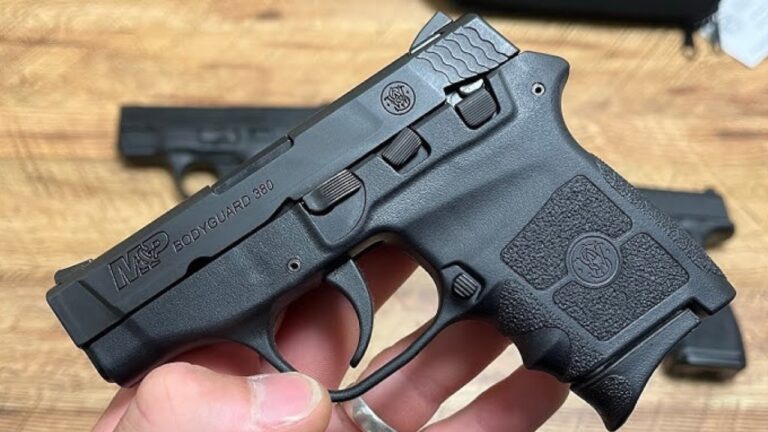
Photo credit: HessGuns/GunBroker
The handgun market is built to make people feel like age equals irrelevance. Every year brings another wave of improved ergonomics, better optics cuts, better texturing, better triggers, better modularity, and a stronger sales pitch about why the older gun in your safe has finally been left behind. Some of those newer pistols really are excellent. Some solve real problems. But plenty of older pistols keep hanging around for a much simpler reason: they still work extremely well in the ways that matter most.
That is the part newer designs do not erase so easily. A pistol does not stop being useful because something more recent exists beside it. If the older gun still shoots well, still handles pressure well, still fits the hand naturally, and still gives the shooter confidence, then it remains relevant no matter how many product launches came after it. In many cases, the older pistols that keep competing are the ones that were built around solid fundamentals from the beginning. They may not have every modern feature, but they still bring enough shootability, durability, and real-world usefulness to stay in the fight.
Good triggers do not go out of style
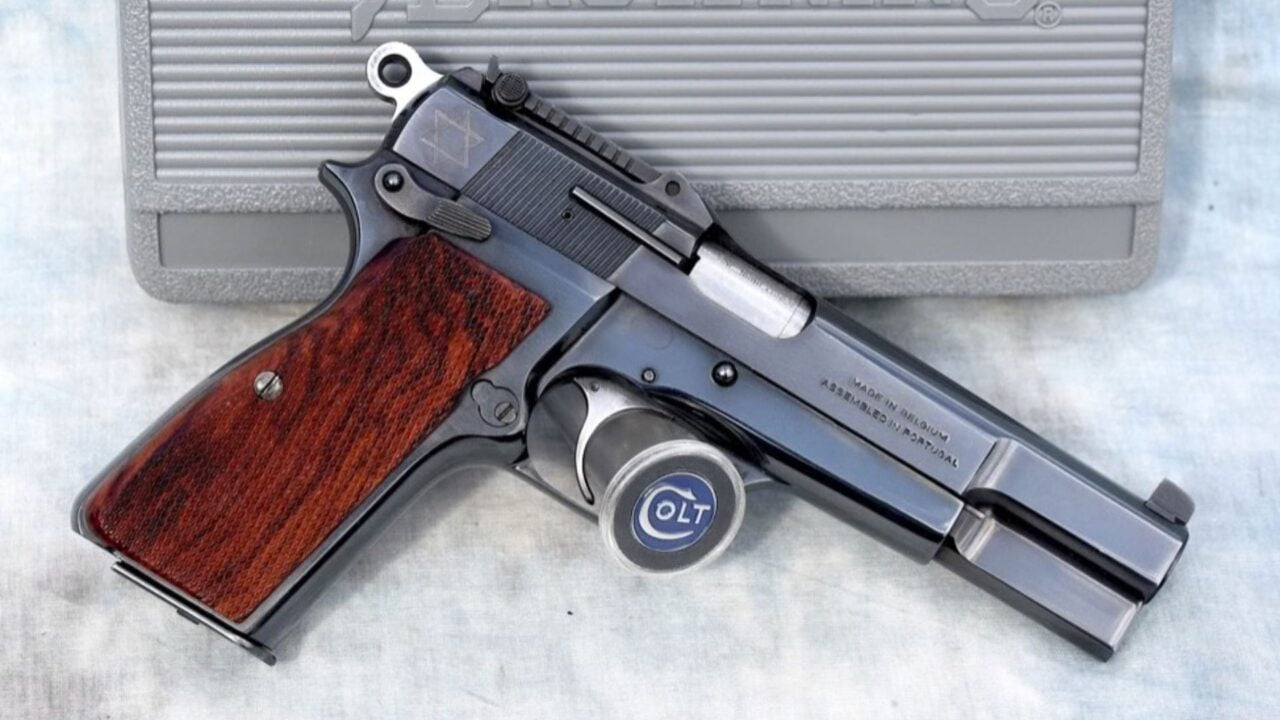
One of the biggest reasons older pistols keep holding their ground is that a truly good trigger still matters just as much now as it did decades ago. This is one reason pistols like the Colt Government Model 1911, Browning Hi-Power, and quality older Smith & Wesson metal-frame autos still get so much respect. A pistol with a clean break, predictable reset, and controllable feel gives the shooter something immediately valuable, and no amount of industry hype changes that.
A lot of modern pistols offer good triggers, but plenty still do not fully replace what some of these older designs deliver. That becomes obvious when the shooting gets more demanding. A shooter working through fast strings, difficult accuracy standards, or awkward positions tends to appreciate a well-sorted trigger more, not less. That is one reason older pistols remain relevant. The fundamentals they got right are still the same fundamentals that win at the range and matter under pressure.
Weight and balance still matter in real shooting
Older pistols often keep competing because many of them were built with steel or alloy frames that give them a shooting feel newer polymer guns do not always match. A Beretta 92FS, SIG Sauer P226, CZ 75 BD, or Smith & Wesson 5906 may not feel especially trendy, but once the slide starts cycling and the recoil starts stacking, the value of that extra weight becomes obvious. The gun stays calmer. The sights return differently. The whole shooting experience often feels more settled and more deliberate.
That matters because controllability is still a huge part of pistol performance. A newer gun may be lighter to carry or easier to manufacture, but that does not automatically make it easier to shoot well. Older pistols often keep competing because they still offer a recoil character and balance that serious shooters continue to value. They may not win every category, but they still win enough of the important ones.
Durability built the reputation, and it still counts
A lot of older pistols survive comparison with newer designs because they earned their reputation through hard use, not through launch-day excitement. Pistols like the SIG Sauer P220, HK USP 9, Beretta 92FS, Glock 17, and Browning Hi-Power did not become respected because they looked advanced. They became respected because shooters, agencies, and ordinary owners learned they could trust them over time. That kind of reputation ages well when it was built honestly.
This is important because reliability is still the center of the whole conversation. A pistol that looks modern but has not yet built a long record is still living on promise. An older pistol with a proven track record is living on evidence. That does not mean every old gun is automatically better than every new one. It means that proven durability is still one of the hardest things to beat, and older pistols that already proved themselves do not lose that value just because newer options show up.
Ergonomics were not invented yesterday
Another reason older pistols still compete is that good ergonomics did not suddenly appear in the modern era. A lot of shooters handle a Browning Hi-Power, CZ 75, or classic 1911 and realize very quickly that some older pistols still fit the hand better than plenty of newer ones. Grip shape, trigger reach, pointability, and general feel all matter, and some of these older designs nailed those things long before the current generation of pistols showed up.
This is part of why older pistols often keep winning people over slowly. They may not make the strongest first impression if the buyer is focused on features, but once the gun gets fired enough, the shape and balance start doing real work. A pistol that points naturally and sits correctly in the hand remains useful no matter how many optics-ready slides hit the market.
Older service pistols still reward trained shooters
Many older pistols keep competing because they reward skill in a way that experienced shooters continue to appreciate. A DA/SA pistol like a SIG Sauer P226, Beretta 92FS, or CZ P-01 may ask more from the user than a modern striker-fired gun, but it also gives back a lot once the shooter has learned the system properly. The same is true of a quality single-action pistol like a 1911 or Hi-Power. These guns may not be the easiest to master casually, but they often remain excellent in trained hands.
That matters because not every pistol needs to be optimized for beginners to stay relevant. Some older designs survive because they still offer a deeper level of control, refinement, or shooting quality for people willing to actually learn them. When a pistol continues rewarding better fundamentals, it tends to hold its place far longer than the market expects.
New features do not always equal better shooting
A newer pistol often wins the feature list without automatically winning the real shooting test. Optics-ready slides, modular chassis systems, interchangeable grip panels, front cocking serrations, and accessory rail variations all have their place, but they do not replace the basics. A pistol still has to feel right when fired. It still has to track in a useful way. It still has to stay dependable and predictable. That is where some older pistols keep surprising people.
A shooter can pick up something like a SIG Sauer P229, Beretta 92G Elite-style pistol, or Colt Government Model and realize quickly that the gun still performs at a very high level even if it lacks some current packaging advantages. That is why older pistols keep competing. They may lose the marketing war, but they keep winning enough real range arguments to stay important.
Mature support keeps older pistols alive
Older pistols also stay relevant because they usually benefit from mature support. Holsters exist. Spare parts exist. Sights exist. Magazines exist. Gunsmiths understand them. Shooters understand them. That kind of ecosystem matters much more than people think. A pistol that has been around long enough to build broad support often becomes easier to live with than some newer design that still feels like it is building its footing.
This is one reason guns like the Glock 17, Glock 19, 1911, Beretta 92 series, and SIG classic P-series keep lasting. They are not only proven as guns. They are proven as ownership platforms. A new design has to be very good to beat that kind of maturity, and many simply are not beating it in the ways that matter most.
Some older pistols just feel more complete
One thing experienced shooters often notice is that certain older pistols feel more complete. They may not be lighter, smaller, or more modular, but they feel finished in a way some newer guns do not. A well-made metal-frame pistol with a good trigger, solid balance, and dependable controls often feels like it was built around actual shooting rather than around a market category. That is a hard quality to replace once someone learns to appreciate it.
Pistols like the CZ 75, Browning Hi-Power, SIG Sauer P226, Smith & Wesson Model 39/59 family, and good 1911s often survive because of this. The owner may try newer guns and still keep coming back because the older one simply feels more satisfying to use. That kind of response is not nostalgia. It is the result of a gun continuing to do real things well.
Older pistols compete because the target has not changed
At the end of the day, older pistols still compete with newer designs because the core job of a serious handgun has not changed all that much. It still has to be reliable. It still has to be shootable. It still has to let the user place rounds where they matter without adding unnecessary confusion or weakness to the process. A pistol that already did those things well decades ago does not suddenly stop being relevant just because a new catalog arrives.
That is why so many older designs keep holding their ground. They were built around the same truths that still matter now. Newer pistols can absolutely be excellent, and many are. But they do not automatically erase what came before. If anything, they often prove how hard it is to actually surpass a design that got the fundamentals right the first time.
Like The Avid Outdoorsman’s content? Subscribe to our newsletter so you never miss an article.
Here’s more from us: