Photo credit: IndigoBunting/Pixabay.com
Territory isn’t some cute nature documentary concept. For a lot of wild animals, it’s food, breeding rights, safety, and survival all wrapped into one. When an animal decides a spot is “theirs,” you’re not dealing with the same behavior you see the rest of the year. You’re dealing with an animal that’s willing to burn every ounce of energy it has to hold ground, run something off, or keep rivals from taking over. Hunters see this most during rut, nesting season, or when resources get tight. And if you’ve ever been too close when that switch flips, you know it can turn loud and violent fast.
Bull elk

A rutting bull elk is one of the clearest examples of territory getting taken personally. When a bull sets up on a pocket of cows, he’s not in “avoid trouble” mode. He’s in “run everything off” mode, and that includes other bulls, predators, and sometimes humans who wander too close to the wrong setup. The sounds alone—screams, grunts, raking—tell you this isn’t a calm animal.
What makes elk stand out is how committed they get. Bulls will push fights hard, take hits, and keep coming back until one finally breaks. They’re not trying to “win” in a clean way. They’re trying to keep breeding rights, and that pressure makes them stubborn. If you’re calling, moving through thick timber, or between a bull and his cows, you can get a close encounter that feels like it escalates out of nowhere.
Whitetail bucks

Whitetail bucks can look jumpy and cautious all year, then rut hits and they turn into fighters. During peak breeding, bucks will lock horns and shove until one gives out, and those fights can cause serious injury or death—especially when antlers tangle or one buck gets driven into something it can’t escape. It’s not always “to the death,” but it can get there when neither one backs off.
Hunters notice it in body language first: stiff-legged walking, ears pinned, head low, and that hard stare that doesn’t look like a deer trying to flee. When bucks are defending a scrape line, a doe group, or a bedding edge they’ve taken over, they’ll chase rivals hard and burn themselves out doing it. That’s why you’ll see exhausted bucks mid-day during rut doing things they never do in October.
Mule deer bucks
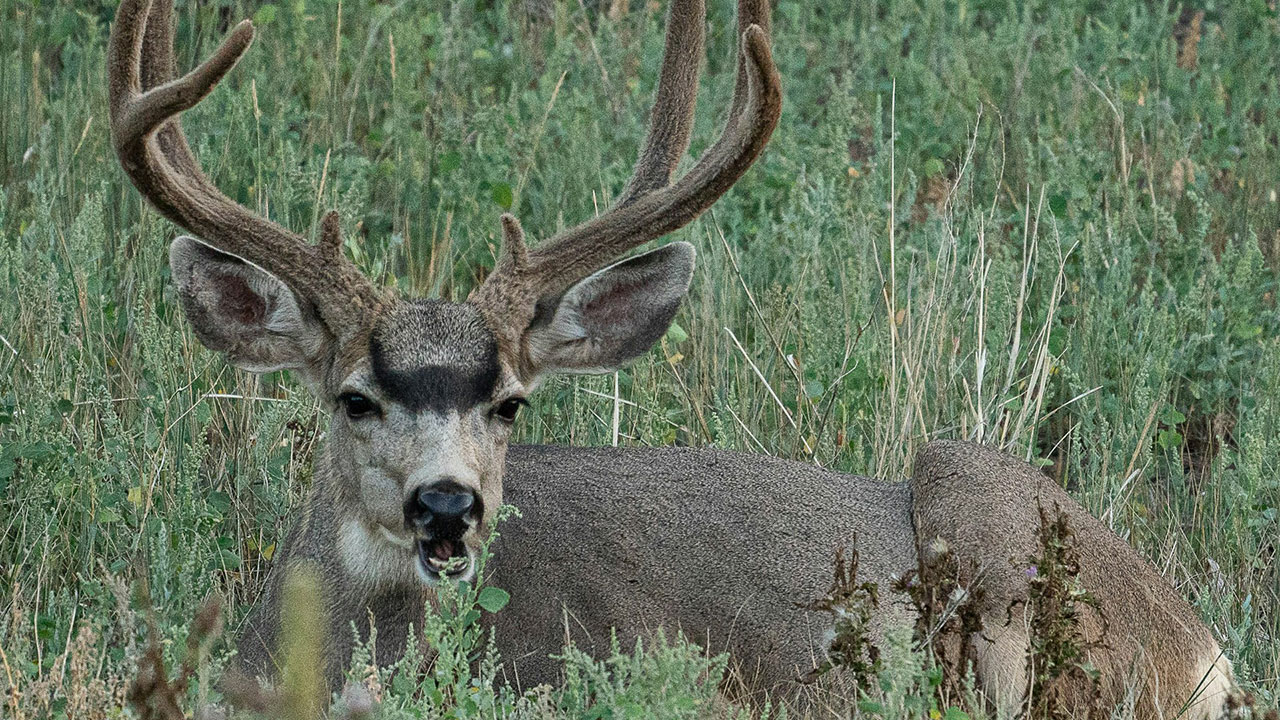
Mule deer bucks aren’t as loud as elk, but when they decide a ridge, basin, or doe group is theirs, they get serious fast. They’ll posture, push, and spar, and when two mature bucks collide, it’s not a gentle bump. It can turn into repeated impacts that wear both animals down. In rough country, a bad fall during a fight can end the whole deal right there.
The reason mule deer make this list is how often their territory defense plays out in open terrain where you can actually watch it happen. You’ll see a dominant buck run off smaller bucks like it’s a full-time job. And if he’s got limited feed or water in dry conditions, he’ll guard that spot even harder. Hunters sometimes mistake this for “aggression,” but it’s really control—control of space, and control of access.
Moose

Moose defend space the way a big, confident animal does—by acting like you’re the one who needs to leave. A rutting bull is already fired up, and a cow with a calf can be even more dangerous because she’s not doing a dominance show. She’s protecting. Either way, when a moose decides a patch of willows, a trail, or a water edge is theirs, they don’t always give warnings that feel obvious to humans.
Moose fights can be brutal. Bulls will clash antlers, shove, and grind until one is exhausted or injured. And moose don’t need to “bite” to kill something. They stomp, strike, and crush. Hunters learn quickly that “territorial” doesn’t mean “predatory.” You can be an uninvited guest and still get treated like a threat worth flattening.
Wild hog boars

Boars are territorial in a practical way: they claim a zone, claim sows, and claim feeding areas, and they’ll fight anything that tries to take that from them. When two mature boars square up, it can get nasty fast. Tusks aren’t for decoration. They’re for cutting, and boars use them with purpose when the fight gets close.
Hunters see the territorial side when a boar refuses to leave an area even under pressure. It’ll circle, pop its jaws, and sometimes come in instead of running. That’s usually a dominance decision. In thick cover, that’s where boars get people and dogs hurt, because the boar doesn’t need to chase you. It just needs you to step into its lane while it’s committed to holding ground.
Wolves

Wolves don’t defend territory with a single dramatic charge the way a bear might. They defend it through presence, pressure, and teamwork. Packs claim ranges, travel routes, and kill zones, and they don’t tolerate other packs casually drifting through. When packs clash, it can turn into a real fight that ends with severe injury or a dead wolf, especially when numbers are close.
Hunters see wolf territorial behavior when they hear howling change tone—challenge howls, responses, then silence. Or when wolves keep showing up on the same ridge line and won’t just “move on.” If you’ve got a dog with you, that’s where the risk spikes, because wolves often treat dogs like intruders. A dog crossing into the wrong pack’s space can trigger a fast, coordinated response.
Coyotes

Coyotes are smaller than wolves, but they’re often more common where people hunt, and territorial behavior shows up constantly—especially during denning season. Coyotes will defend territory against other coyotes, and they’ll also defend dens and pup areas hard against dogs, bobcats, and anything else that gets too close. Those fights can get lethal because coyotes fight dirty and they gang up when they can.
Hunters learn it when they call and get a coyote that doesn’t act cautious—it acts angry. Or when a pair circles hard and tries to get behind you instead of running straight in. Coyotes aren’t always “fighting to the death,” but they will commit to protecting a core area when pups are involved. That’s when a coyote stops being a background animal and starts acting like a landowner.
Mountain lion

Mountain lions are territorial the way solitary predators are territorial: quietly, persistently, and without a lot of drama until it’s unavoidable. Lions maintain ranges, and they don’t share those ranges happily with other adult lions of the same sex. When two lions overlap in the wrong way, the fight can be serious and sometimes fatal, because neither one can afford to lose control of hunting ground.
Hunters don’t usually witness lion fights, but they see the signs—scrapes, scent marking, and the way a lion will “own” a travel corridor. A lion that feels challenged doesn’t posture like a deer. It either leaves silently or it commits fully when contact happens. That’s why territorial predators are so dangerous: they’re not built for warning shots. They’re built for decisive outcomes.
Bobcat

Bobcats get underestimated because they’re not huge, but they’re still hardwired to defend a range, especially in areas where food is tight or cover is limited. When bobcats clash, it’s usually close, fast, and violent. Claws, teeth, and speed matter more than size, and injuries can pile up quickly when both cats refuse to give ground.
Hunters see bobcat territorial behavior around calls, den areas, and travel routes along creek bottoms and brush edges. A cat that thinks another cat is moving into its space can show up stiff and ready, not creeping like a curious animal. If you’ve got dogs that tree or bay cats, that’s where the territorial side becomes a problem, because a cornered cat defending its space will fight like it has nothing else to lose.
Alligator

Alligators are territorial, especially larger males, and they defend key spots—banks, basking areas, and sections of water where they want control. When two big gators contest the same territory, it can get rough: head slaps, bites, rolling, and pushing until one backs off. Sometimes they don’t back off in time, and that’s when you see serious injury.
Hunters and outdoors folks notice it when a big gator “stays put” while smaller gators avoid an area. Or when you see scars and missing digits on gators that clearly didn’t come from a gentle life. Territorial gators aren’t looking for a fight with humans most of the time, but they can be unpredictable around the edge when they’re keyed up, defending space, or competing during breeding season.
Crocodile

Crocodiles take the alligator concept and make it harsher. In places where crocs live, prime territory is life—good basking spots, good ambush lanes, and control of water edges where prey has to come drink. Big crocs defend those zones aggressively, and when they fight, it can be brutal enough to kill or permanently cripple the loser.
You’ll also see territorial pressure in how other animals behave around crocodile water. Prey animals choose different drinking points, and smaller crocs avoid big males like they’re avoiding a landmine. Hunters who’ve spent time near croc water learn to read the “occupied” feeling—less activity, odd silence, tracks that suggest one dominant animal is pushing everything else out of the area.
Hippo

Hippos are one of the strongest examples of territory defense around water. They’ll claim sections of river and protect those lanes aggressively, especially when they feel crowded or challenged. They don’t need to “hunt” anything to be deadly. Their territory defense is about dominance and space, and they’re willing to use force immediately if they think you’re in the wrong place.
The scary part is how quickly they can move from calm to violent. A hippo can charge with speed that surprises people, and when it hits, it’s crushing force. Hunters, anglers, and locals who live around hippo water treat them with a level of caution that sounds extreme until you’ve seen how many problems start with “we were just near the edge.”
Cape buffalo

Cape buffalo defend territory and herd position in a way that makes them famous. Bulls establish dominance, herds protect space, and wounded or pressured buffalo are known for refusing to simply “leave.” When buffalo fight, it’s not a casual shove. Horns, mass, and sheer stubbornness can turn it into a fight that ends with one animal badly hurt or dead.
Hunters respect buffalo because the territorial mindset bleeds into everything they do. A buffalo that decides you’re a threat doesn’t always run away and cool off. It may hold, circle, and challenge. That’s not a prey response—that’s a territorial, dominance-based response. Even if you never hunt them, the buffalo stories exist for a reason: some animals treat space like something worth dying over.
Bison

Bison fights are pure dominance and territory, especially during the rut. Bulls will push, collide, and test each other until one breaks. Those impacts aren’t gentle. In the wrong footing, a bull can go down hard, break something, or get trampled in the chaos. Even when they don’t die, they can get wrecked enough that winter finishes the job.
People forget that bison aren’t domesticated cattle. They’re wild, and their sense of space is firm. A dominant bull will claim a zone and respond to pressure with movement that’s more explosive than most folks expect. Hunters who spend time around them learn to respect distance because a territorial bull doesn’t need a long argument. It needs one decision.
Badger

Badgers are small, but their territory defense is real, especially around dens. A badger doesn’t give ground easily, and if it gets cornered in its own space, it’ll bite and fight hard enough to injure animals larger than it. That’s why they’re a problem for dogs that like to stick their head into holes or dig where something else already lives.
Hunters and trappers see this when a badger comes out ready, not fleeing. It’s not a “I’m scared” energy. It’s a “you don’t belong here” energy. Badgers don’t always fight to the death, but they’ll fight like they’re willing to. And in the wild, that level of commitment can be lethal—because a dog or predator that underestimates it can get hurt badly before it realizes it made a mistake.
Wolverine

Wolverines have a reputation for a reason: they defend territory and resources like they’re bigger than they are. When a wolverine claims a carcass, a den area, or a travel corridor, it may stand its ground against animals that should logically bully it out. And sometimes it wins—not because it’s stronger, but because it’s relentless and willing to take damage to keep fighting.
Territorial fights between wolverines and other predators can get deadly because wolverines don’t do half-measures. They bite, hold, and keep coming back. Hunters who’ve seen one in real life describe them as all business—no bluff, no drama, just a hard commitment to holding what they consider theirs. That’s exactly why they belong here: their mindset is “take it if you can,” and they make “can” a lot harder than it should be.
Like The Avid Outdoorsman’s content? Subscribe to our newsletter so you never miss an article.
Here’s more from us: