Photo credit: AshyToast/Youtube
Every few years the market gets a quiet little gift: service guns get rotated out, trade-ins hit the distributors, and suddenly you can buy something built for duty use for the price of a shiny “budget” gun that’s never done anything harder than sit in a foam case.
Now, trade-ins are not magic. Some look like they rode in a holster through three summers and two divorces. Others barely show wear. The trick is knowing which retired workhorses are still easy to feed, easy to support with parts and mags, and actually make sense for what you do—carry, home defense, truck duty, or just a reliable range gun that doesn’t make you wince every time you scratch it.
Here are 20 retired-from-service guns that tend to be some of the best values on the used rack, if you pick with your head and not your ego.
1. Glock 22 (Gen 3/Gen 4)

The Glock 22 is probably the king of the trade-in pile. When agencies moved away from .40 S&W, these things came out by the pallet. Most are ugly in that honest “holster polished” way, but the guts are usually fine.
.40 isn’t everybody’s favorite anymore, but it still works, and it’s often cheaper to buy the gun than a new striker-fired 9mm. Bonus: magazines and parts are everywhere, and if you’re the type who likes options, conversion barrels exist (keep it legal and safe, and don’t get cute with questionable parts).
2. Glock 17 (Gen 3/Gen 4)
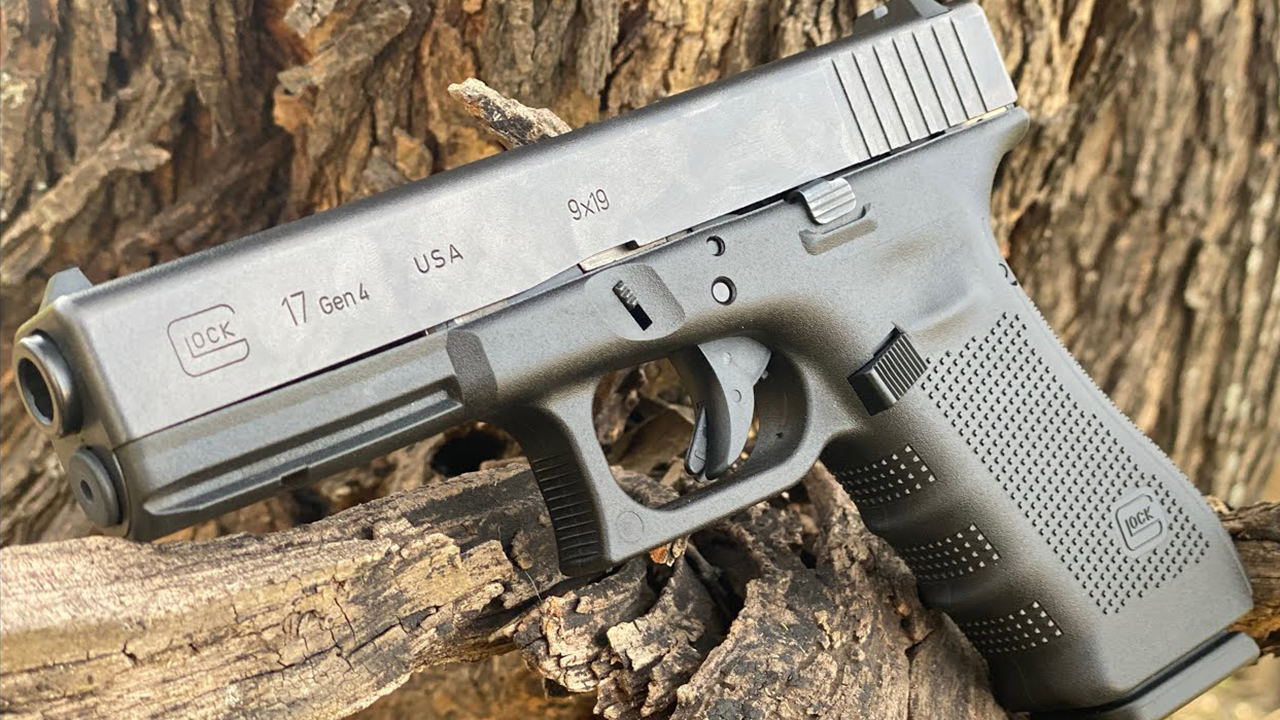
When a Glock 17 shows up as a trade-in, it usually doesn’t sit long. It points naturally, it’s boring in the best way, and it just keeps running if you don’t neglect it like an old fence line.
Used examples can be one of the cheapest ways to get into a proven full-size 9mm with endless support. Check the night sights (often dead) and the recoil spring assembly if it feels sluggish, then go shoot it.
3. SIG Sauer P229 (DA/SA, .40 or .357 SIG)

The P229 is what you buy when you want a duty pistol that feels like a real tool—solid, smooth, and a little heavy. A lot of these came out of service in .40 or .357 SIG, and the prices usually reflect the market’s shift back toward 9mm.
DA/SA isn’t trendy, but it’s forgiving if you actually train. The first pull is a commitment, and then it settles into a nice rhythm. Inspect the frame rails and check that the decocker works cleanly without gritty nonsense.
4. SIG Sauer P226 (DA/SA)

This is one of those pistols that can make a newer polymer gun feel like a stapler. The P226 carries big, especially with a light, but it’s steady and shoots flat.
Trade-ins often have finish wear and maybe some old qualification grime in the grips, but mechanically they’re usually sound. If you want a home-defense gun that feels like it was meant to be shot a lot, this one’s hard to hate.
5. Smith & Wesson M&P40 (1.0)
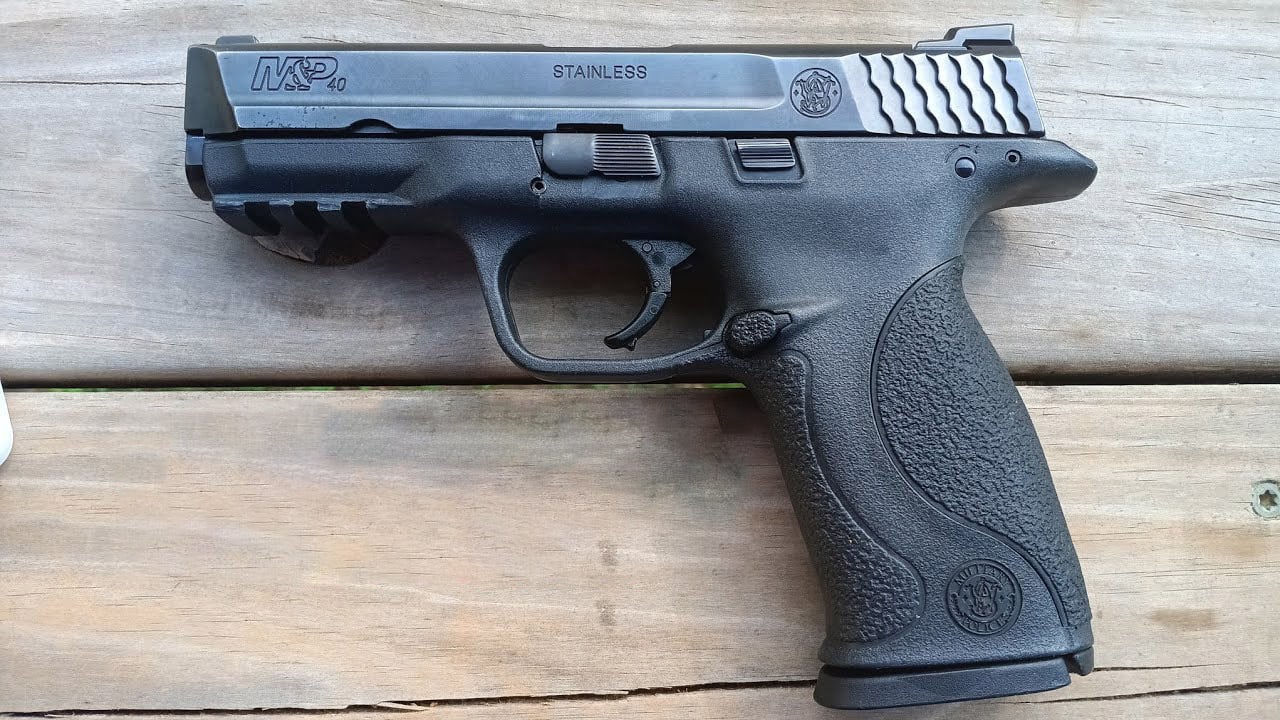
The original M&P40s show up used all the time, and they’re one of the better values if you don’t get hung up on having the newest texture and slide cuts. They were carried a ton, and many fired very little outside of quals.
The .40 recoil has more snap than a 9, but the ergonomics help. Make sure the trigger reset feels consistent and the magazines drop free. If it passes those basic checks, it’ll usually do its job.
6. Smith & Wesson M&P9 (1.0)

The first-gen M&P9 isn’t as “nice” as the 2.0, but it’s still a solid duty design. I’ve handled trade-ins that looked rough and shot straight, and I’ve seen pretty ones choke because they were dry as a bone.
Plan on replacing springs if you don’t know the round count. Mags are common and reasonably priced. For a used-market 9mm that still has real support, it’s a smart buy.
7. Beretta 92FS / M9

Big, long, and not shy about it—the 92FS/M9 is a classic service pistol for a reason. It runs, it points well, and it has a recoil impulse that feels more like a push than a slap.
Trade-ins often have shiny edges and worn locking blocks. If you buy one, check the locking block area and overall function. If it’s healthy, you’ve got a pistol that’s easy to shoot well and forgiving for newer shooters.
8. Beretta PX4 Storm (9mm or .40)
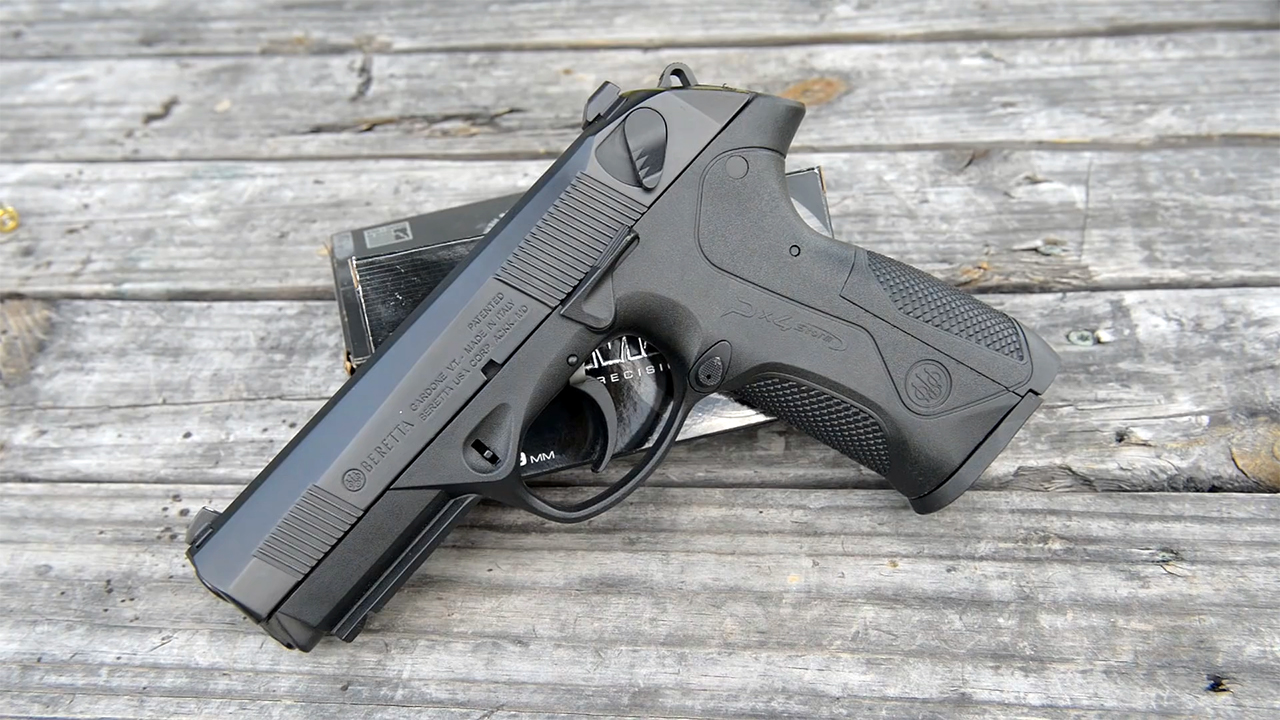
The PX4 is one of the most underrated duty pistols out there. The rotating barrel system keeps it surprisingly soft, and it doesn’t beat you up in longer practice sessions.
It’s not as common as a Glock trade-in, but when you find a used one, the price is often kinder than it should be. The downside is aftermarket support isn’t endless, so buy it because you like it, not because you want to turn it into a project.
9. CZ 75D PCR / CZ P-01 (used police surplus)
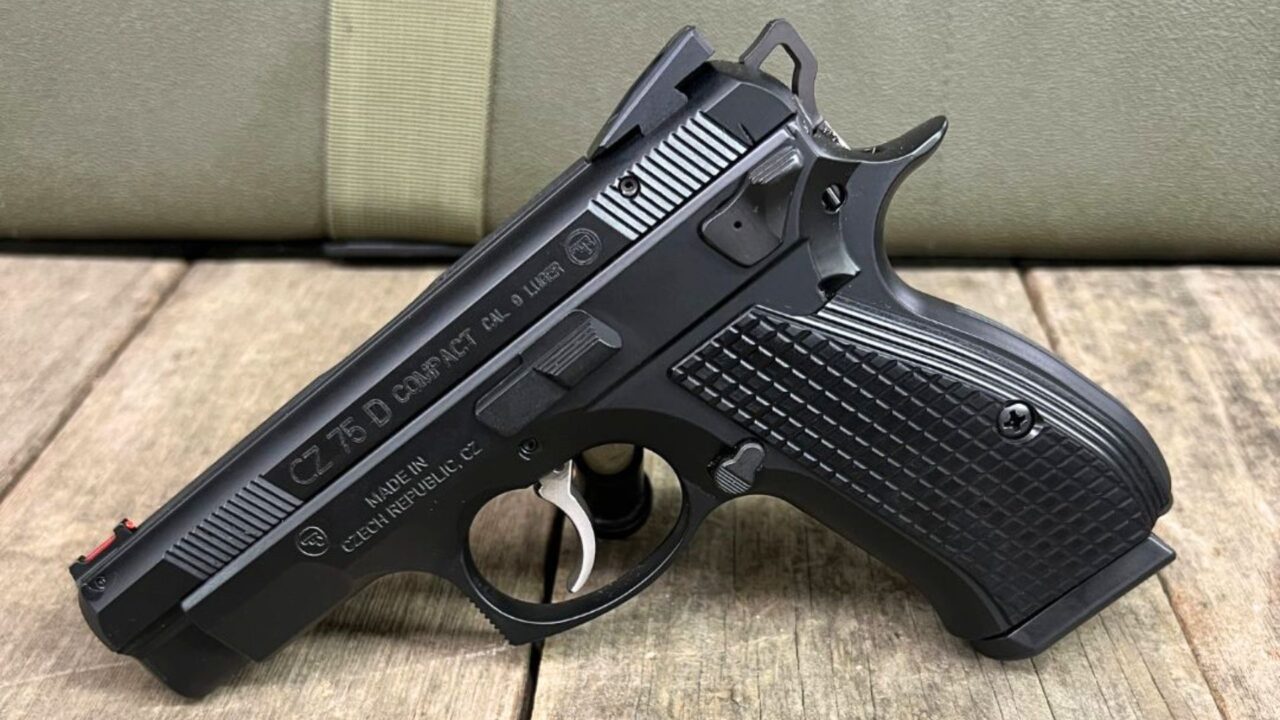
When surplus CZ compacts hit the used market, they tend to be excellent shooters with just enough carry wear to prove they weren’t safe queens. The grip shape fits a lot of hands, and the guns tend to point where your eyes are looking.
DA/SA takes some practice, but the single-action pull is usually worth the effort. Look for proper function of the decocker and make sure the slide cycles smoothly without gritty drag.
10. Heckler & Koch USP40 (police trade-in)

The USP40 has a reputation for being overbuilt, and it earns it. It’s chunky, the trigger isn’t winning beauty contests, and it still just runs. If you want a “truck gun” that doesn’t feel delicate, this is one.
Prices on HKs can be weird, but trade-ins sometimes land in that sweet spot where you’re paying for reliability instead of logos. Check for cracked frame rails (rare) and confirm you can actually find magazines without taking out a loan.
11. Heckler & Koch P2000 (9mm)

The P2000 is what you buy when you want HK durability in a more carry-friendly package than a USP. It’s not fashionable, which is exactly why used prices can be so reasonable.
It’s a great option for somebody who wants a hammer-fired carry gun with a proven track record. Just be honest about holster availability and your preferred trigger variant before you commit.
12. Ruger P95 (9mm)

The Ruger P95 is not pretty. It feels like a cordless drill in the hand. But I’ve seen them run when nicer pistols were being finicky about ammo or lack of cleaning.
These were used by agencies and security outfits, and they show up cheap. If you want a glovebox pistol you won’t cry over and you’re okay with “serviceable” accuracy, it’s hard to argue with the value.
13. Smith & Wesson Model 10 (trade-in revolver)

Old duty revolvers are a different kind of deal. A Model 10 is plain steel, fixed sights, and a trigger that can be unbelievably smooth if it wasn’t abused. There is nothing fancy about it, and that is kind of the point.
Check timing and lockup, and don’t ignore endshake. If it’s tight and the bore looks decent, you’ve got a revolver that will still do honest work around the property or at the range.
14. Smith & Wesson Model 64 (stainless Model 10)
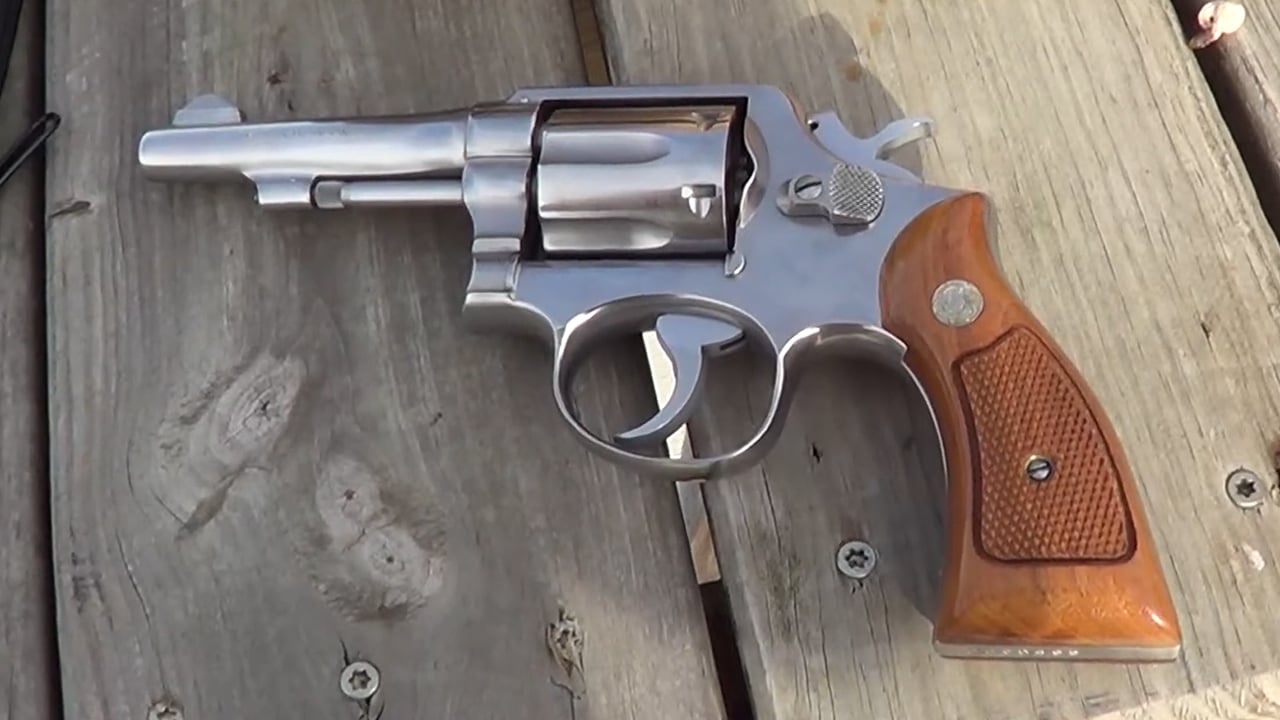
The Model 64 is the stainless, working-man version that rode in a lot of duty holsters and glove compartments. Stainless is forgiving if the gun lived through humid summers and questionable storage.
These are great “farm revolvers” if you don’t need high capacity and you do want simple. Load it with sensible ammo, keep it clean, and it’ll outlast a lot of modern stuff.
15. Remington 870 Police Magnum

If you’ve ever cycled an 870 Police model next to a worn-out bargain pump, you can feel the difference. Police Magnums were built for hard use, and even with exterior wear, they can be excellent shotguns.
Look for a clean chamber (sticky extraction is usually a chamber issue), and make sure the action bars feel straight. An 870 with a good light and a basic sling is still a serious home-defense tool.
16. Mossberg 590 (agency shotgun)

The 590 shows up less than the 870 in some places, but it’s a real value when it does. The tang safety is a win for a lot of shooters, especially with gloves, and the gun is easy to keep running.
Trade-ins may have rack numbers, worn parkerizing, and dented furniture. That doesn’t bother a shotgun. Confirm the safety works positively and the elevator isn’t bent up from hard use.
17. Benelli M1 Super 90 (police surplus)
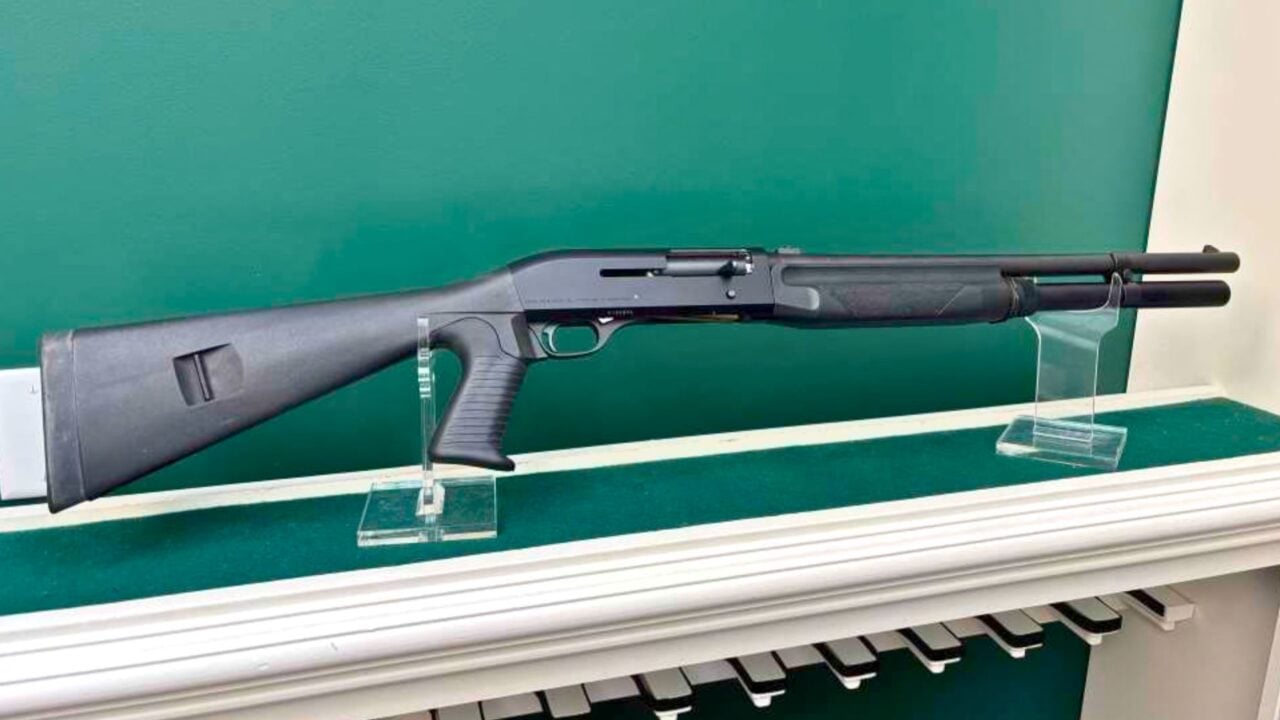
An M1 that came out of service can be one of the best “buy once” semi-auto shotguns on the used market. They’re fast, reliable, and built around real-world use, not just looking cool on a forum.
They aren’t cheap like a trade-in Glock, but compared to new Benelli pricing, the used deals can be painful to pass up. Make sure it cycles the loads you intend to use and inspect the recoil spring area for neglect.
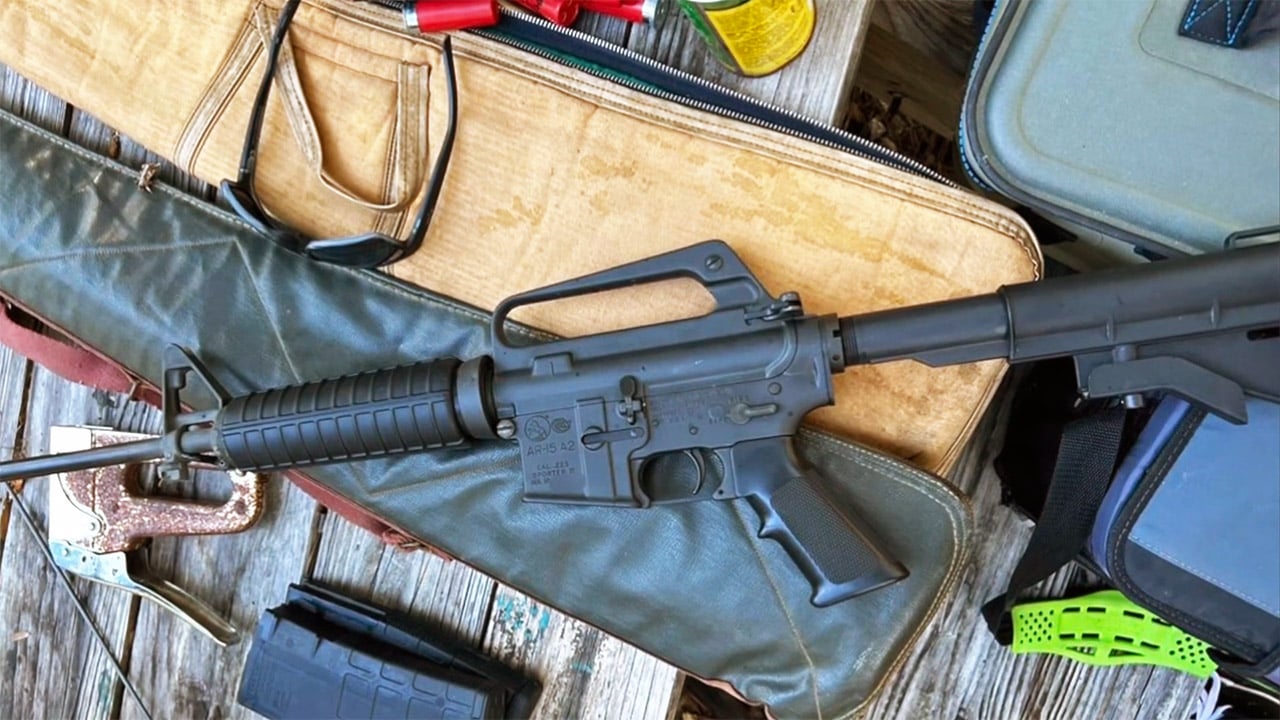
18. Colt AR-15A2 / M16A2-pattern surplus (semi-auto variants)
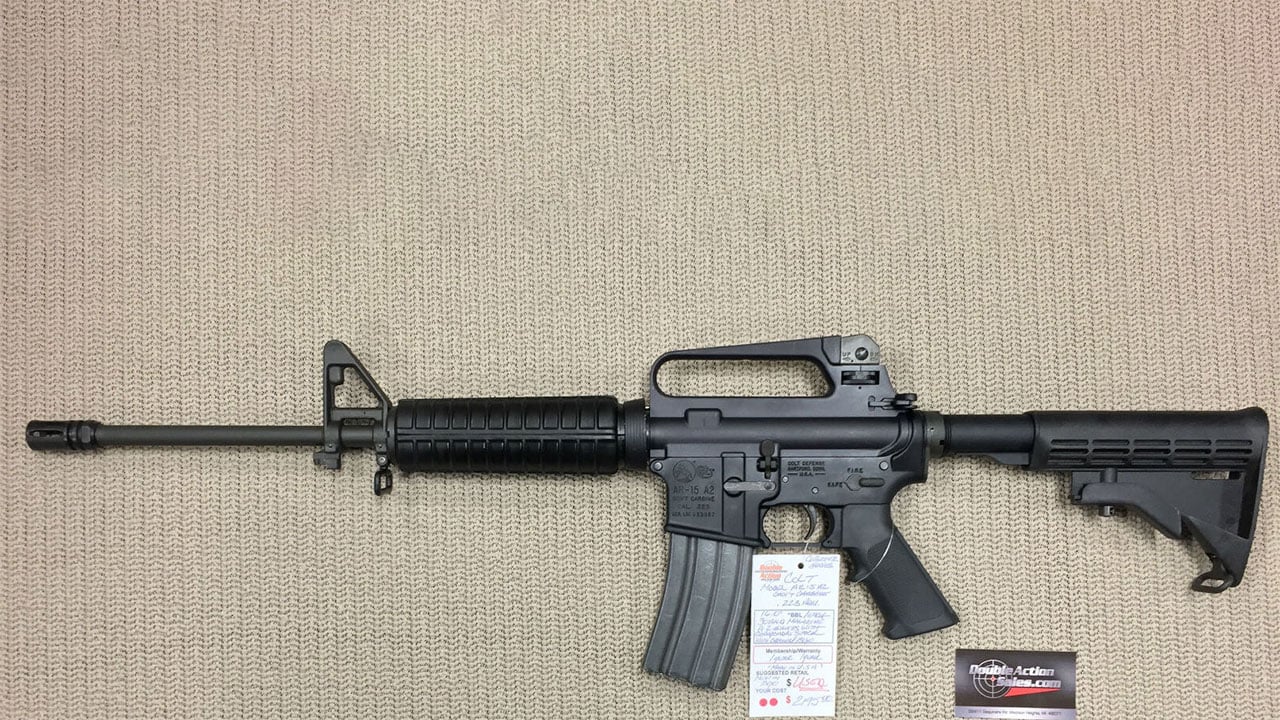
A2-style rifles aren’t flashy, and that’s why they can be sneaky-good deals when you find legitimate semi-auto variants built to that pattern. Fixed carry handles and government-profile barrels still do work, especially for training and basic utility.
Check the bore, the crown, and overall assembly quality. Replacement parts for ARs are plentiful, but it’s nice to start with a rifle that isn’t cobbled together from three “almost mil-spec” bins.
19. FN Herstal FNS-9 (police trade-in)
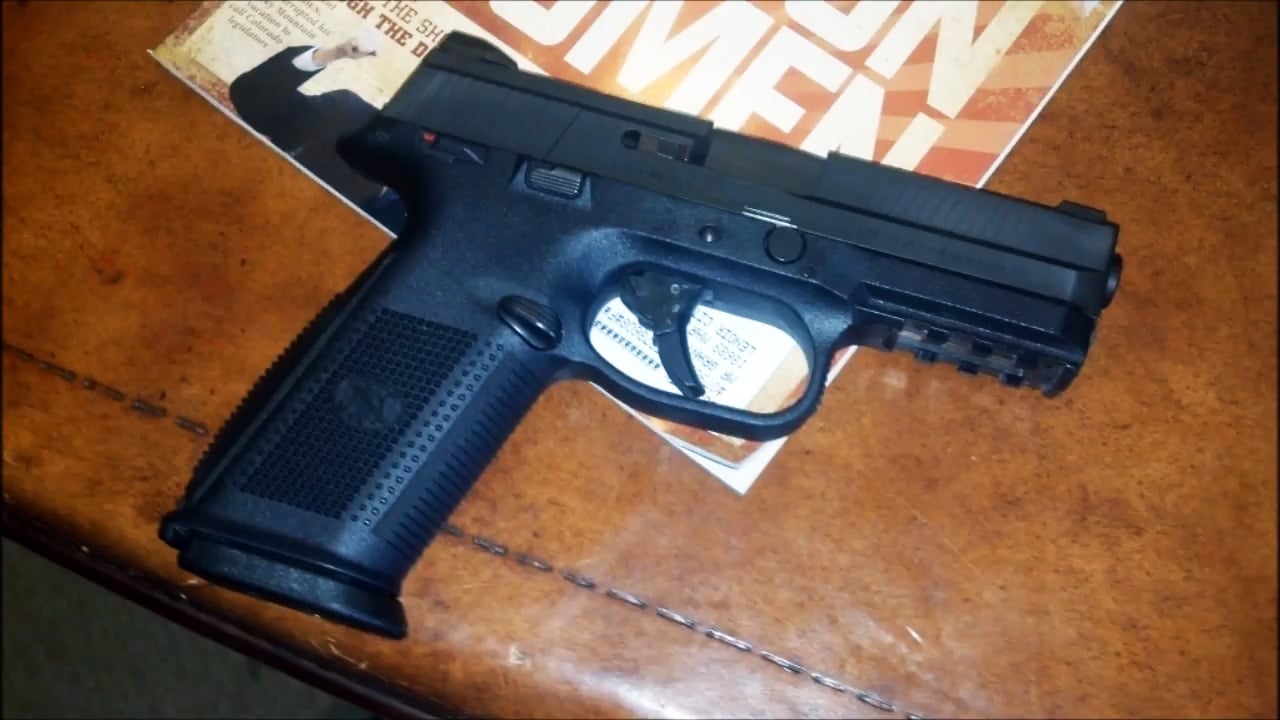
The FNS-9 is one of those pistols that didn’t get the fan club it deserved, which makes it a good buy used. It’s reliable, it feels good in the hand, and it shoots like a duty gun should.
The catch is long-term accessory support isn’t as deep as Glock or M&P. If you just need a solid 9mm with good magazines and a straightforward manual of arms, it’s a bargain when the price is right.
20. Walther PPQ (police trade-in)

The PPQ has one of the better out-of-the-box striker triggers you’ll run across. That’s the reason a lot of shooters pick one up, and then realize they shoot it better than their “serious” pistol. Ask me how I know.
Trade-in PPQs can be an excellent value if you confirm you can source magazines at a fair price. If you’re shopping for a range gun that still pulls defensive duty, it’s hard to do much better without spending a lot more.
The used-service market is where common sense beats internet hype. Look past cosmetic wear, check the basics, and budget for springs and magazines like an adult. A retired duty gun with honest holster wear is often a better buy than a bargain-bin new gun that’s never been proven outside a marketing brochure.
Like The Avid Outdoorsman’s content? Subscribe to our newsletter so you never miss an article.
Here’s more from us: