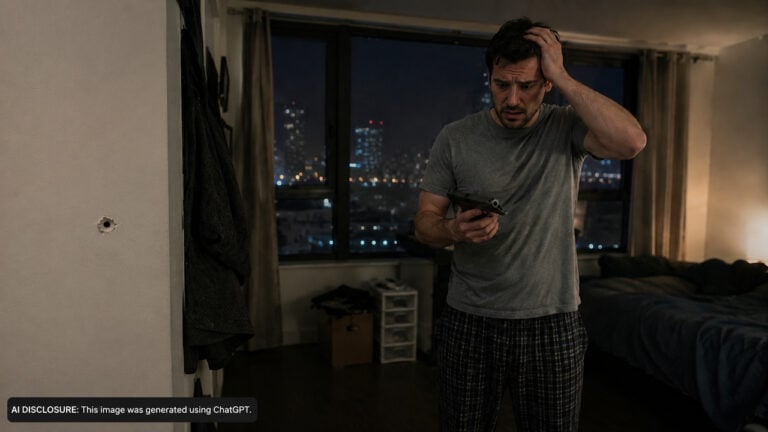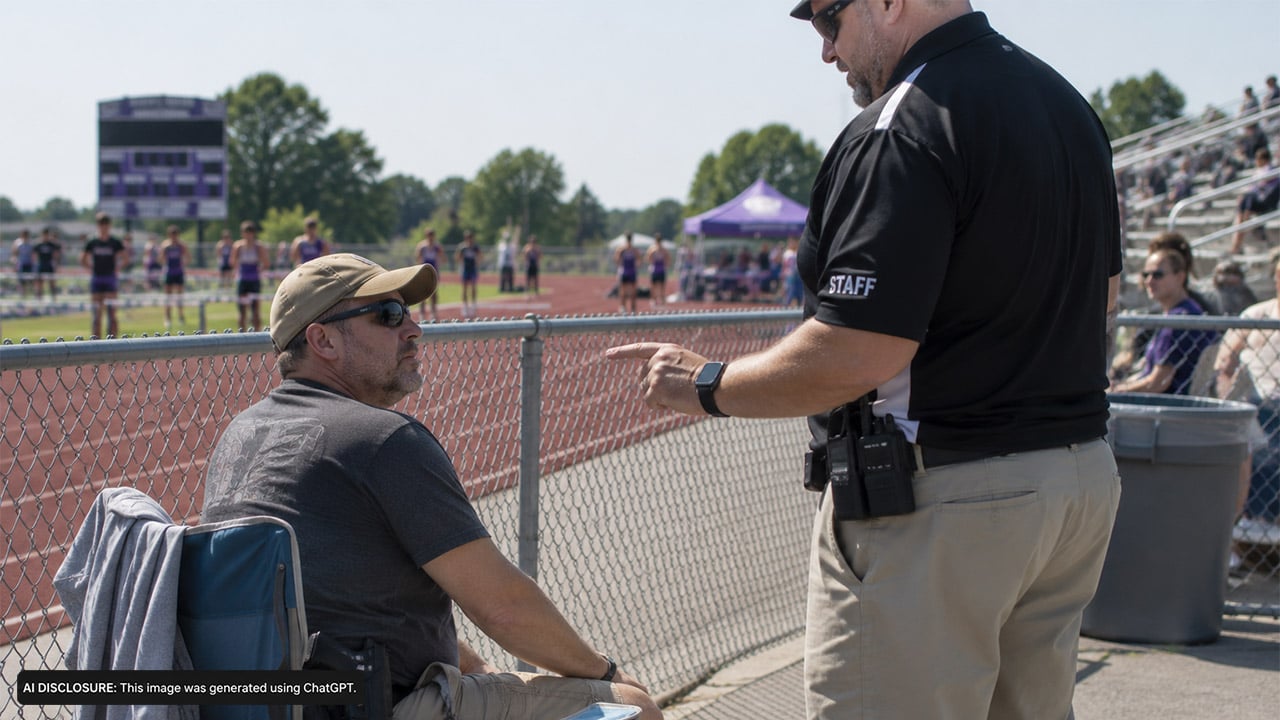
Photo credit: AI-generated image created using ChatGPT. Illustrative only
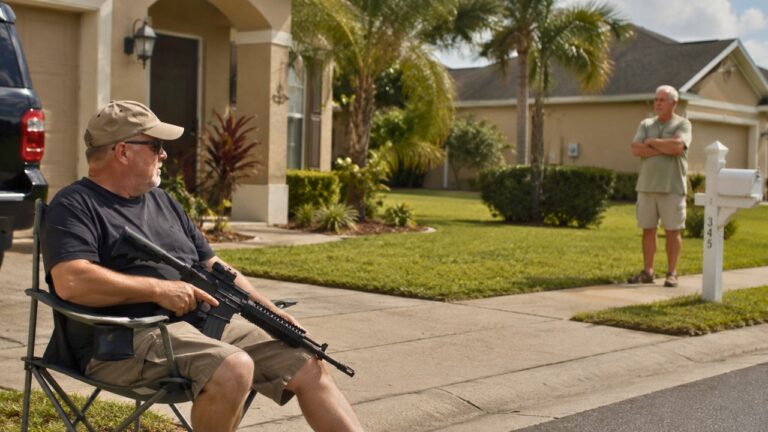
A dad wanted to watch his daughter run track without dealing with a security line and pat-downs at a local school. So he did what a lot of practical folks would do: he parked off school property, set up a camping chair by his vehicle on a public street, and opened a Kindle while he waited.
According to the original post, that simple plan turned into a long, tense law-enforcement encounter—one centered on a “school zone” gun law the man believed didn’t apply to him because he had a concealed carry permit recognized by the state.
He tried to stay out of the school’s security net
The man said the school had security and pat-downs for the track meet. He didn’t want to go through that process while carrying, so he set up outside the area—on what he described as a public street, next to his car, and not on school grounds.
That detail matters, because most folks who carry know there’s a big difference between “on school property” and “near a school.” But in real life, lines get blurry fast once someone calls in “a guy with a gun,” even if the gun never comes out.
The 1,000-foot rule was the whole crux of it
The man said he’d researched the federal Gun-Free School Zones concept and believed he was exempt due to his permit. In his view, the 1,000-foot exclusion zone doesn’t apply to permit holders recognized by that state, and he cited language he found describing an exception for individuals licensed by the state where the school zone is located (assuming that licensing requires some kind of qualification/verification).
Whether he was right depends on the exact state’s statutes, reciprocity details, and how the local agency interprets the situation in the moment. But his key point was simple: he believed he wasn’t breaking the school-zone rule by sitting on a public street with a valid permit.
A “printing” moment may have kicked the hornet’s nest
After a couple hours of reading and waiting, a police officer approached and told him he couldn’t be there armed. The man assumed someone noticed him “printing,” meaning the outline of a concealed handgun showed through clothing.
He decided not to argue right there. He went home, secured the firearm, and returned—trying to salvage the afternoon and still catch his daughter’s race.
The second contact escalated fast
Back at the same general spot, he sat down again to read—this time unarmed, according to his account. About 15 minutes later, a different officer approached and asked whether he’d previously been told to leave.
He responded that he didn’t answer questions from police, but offered to show identification. That’s where the temperature changed. He said two cruisers and several more officers showed up and began pressing him about where the gun was.
He told them he didn’t have it, but also reiterated his belief that even if he did, his permit allowed him to be within the 1,000-foot zone. The response he described was blunt: “Your permit exempts you from the law?!?”
When “leave” turns into “trespass,” things get sticky
The man said officers told him that if he didn’t leave, he would be charged with trespassing. He challenged that, telling them to write the ticket, and said he didn’t believe it would hold up.
Then came the part most concealed carriers don’t want to test in real time: he said they told him it wouldn’t be just a ticket—if the charge was made, he’d be arrested and booked.
At that point, he asked for a clear line he could stand on without being bothered. He said officers pointed across a nearby street and told him he could be there, but warned him that if he crossed back toward the school side—or if anyone called again—he would be arrested.
So he moved, called his wife, and changed the meeting point so his daughter would know where to find him.
The practical lessons carriers will recognize right away
There are a few takeaways here that don’t require anyone to pick a side on attitude or tactics. First, “concealed means concealed” is more than a slogan. Printing can be enough to trigger a complaint, and once a complaint is made near a school, the response tends to be heavy and cautious—even if you’re sitting still with a book.
Second, “public property” doesn’t always feel public when law enforcement decides they want you gone. The man’s own questions get right to the point: Can someone be trespassed off a public street? And if the underlying firearm concern was misunderstood, would an arrest for trespass be considered wrongful? Those are lawyer questions, but they’re also the exact questions that pop up when an officer’s solution is simply: leave, or else.
Third, there’s the real-world issue of winning the argument versus getting home. He initially chose the safe, low-drama route—drive home, secure the gun, come back. But once multiple officers were involved, the encounter wasn’t really about where the pistol was anymore. It was about compliance, control, and not letting the situation become a scene at his kid’s event.
Finally, the man admitted he wasn’t polite and cordial. That may or may not be satisfying to read, but in a parking-lot reality, tone can decide whether you get a warning, a hard time, or a ride downtown. Sometimes you can be right and still have a long night.
If you carry around schools for normal life stuff—ball games, meets, parent pickup—this is a good reminder to have a plan. Know exactly where school property starts, know your state’s carry rules and how they interact with school-zone restrictions, and have a backup rally point so your family isn’t stuck wondering where you went when things get complicated.
Like The Avid Outdoorsman’s content? Be sure to follow us.
Here’s more from us: