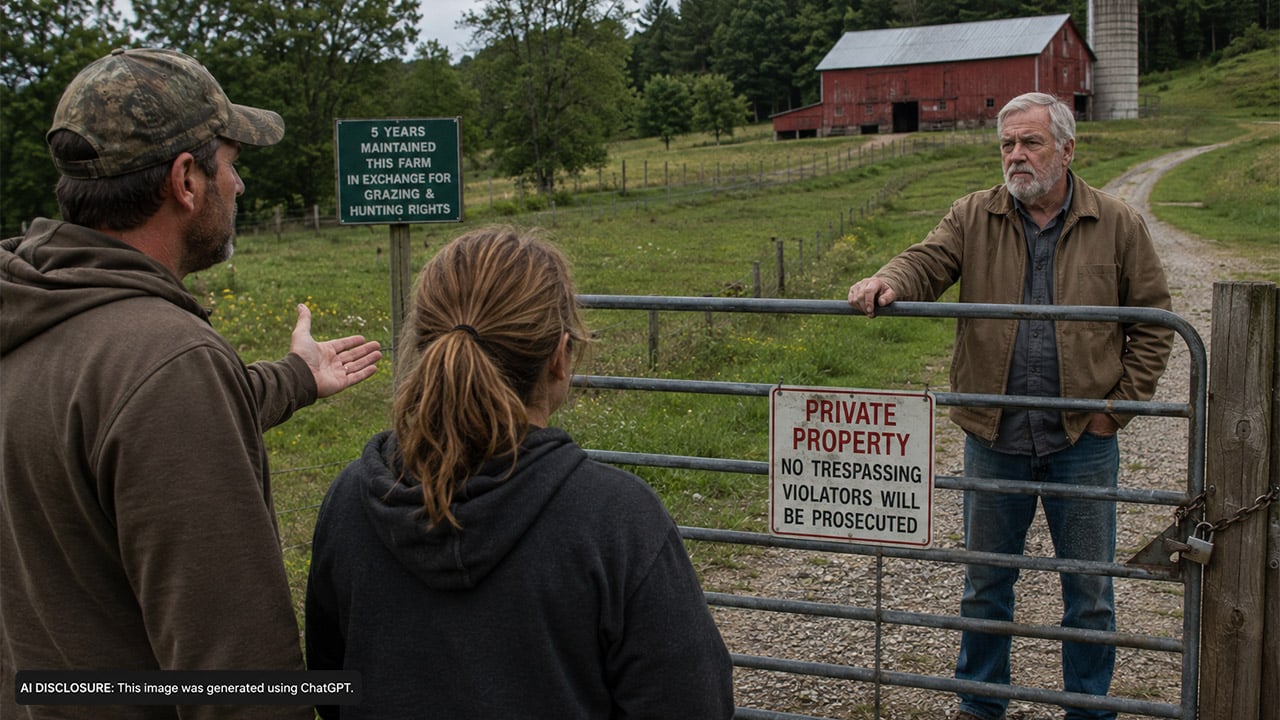
Photo credit: AI-generated image created using ChatGPT. Illustrative only
Handshake deals are common in farm country. A neighbor needs help keeping a place running, another family needs grass for cattle and a spot to hunt, and everybody figures good faith will carry the day. That arrangement can work for a long time—right up until it doesn’t.
In the original post, one family says they spent roughly five years maintaining an older neighbor’s 30-acre farm—clearing, doing general upkeep, and putting in miles of fence—in exchange for grazing rights for their cows and permission to hunt. Now, after a blowup tied to family drama, they say the landowner changed gate codes, locked them out, and left their cattle and equipment stuck behind the fence line.
A farm-sharing deal built on sweat, not paperwork
The family describes a situation a lot of outdoorsmen recognize. The neighbor owned the ground but couldn’t keep up with it, so the poster’s father-in-law and husband stepped in as “farm managers” of sorts, handling maintenance and animal work without pay.
In exchange, they were allowed to run cattle there and hunt. But the biggest detail in the whole story is this: there was no written agreement—neither for the land use nor for the cows. That’s fine when everyone’s friendly. It becomes a serious problem when someone decides the deal is over.
How four cows became a 20-head herd
The cattle situation is where this gets messy fast. The neighbor reportedly bought two female cows, while the father-in-law bought two bulls. Calves followed, and the father-in-law later added four more cows. Over time, the herd grew to about 20 head.
When cattle are mixed like that—different owners, shared breeding, shared pastures—you’d better have tags, records, and a clear understanding of who owns what. The poster says they have limited paperwork: maybe an original bill of sale for the first few cows, but for calves it’s mostly handwritten notes.
The personal drama that turned into a locked gate
This wasn’t a dispute over overgrazing, a busted fence, or a ruined food plot. It started with a demand: the neighbor wanted the family to “pick a side” in a divorce involving his daughter, specifically cutting off contact with the ex-husband. The family refused and said they’d stay neutral because the father-in-law had known the ex-husband for years.
Then the situation escalated. The father-in-law, already dealing with serious heart problems, asked the ex-husband for help finishing a job. Word got back to the daughter, and the poster says she began sending a flood of messages that stressed the father-in-law to the point he ended up in the ER and later had emergency open-heart surgery.
Right before that surgery, the neighbor reportedly texted, “you picked the wrong side.” After that, new locks and new codes went on the gates, and the family says calls aren’t being returned.
Locked out with cows, tractors, four-wheelers, and hunting gear inside
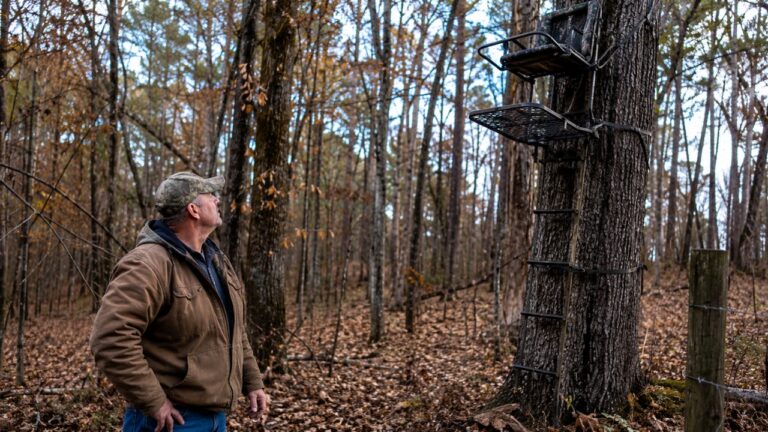
In rural disputes, the land itself is one thing. What really raises the temperature is personal property stranded on the wrong side of a fence. The poster lists tractors, four-wheelers, farm equipment, deer stands, feeders, and cattle-handling gear on the property, along with their herd.
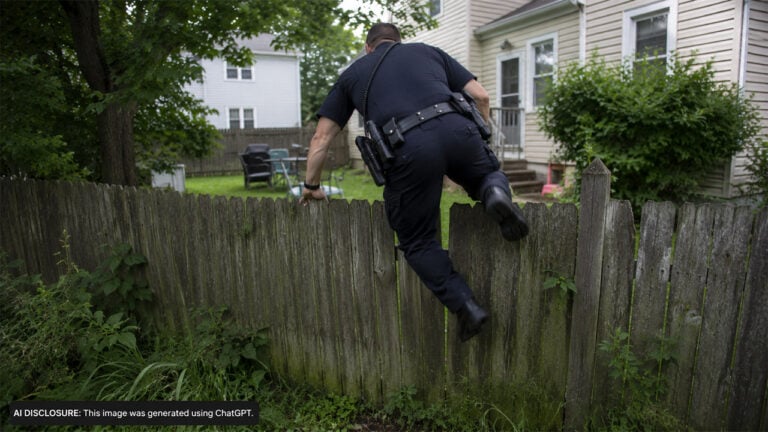
That’s not just inconvenience—there are animal welfare concerns, daily care requirements, and real money tied up in equipment. Cows don’t pause their needs because two neighbors aren’t talking. And anyone who has ever watched a small issue turn into an all-out property line war knows how quickly things can get unsafe when people start “self-helping” their way onto land they don’t own.
The big questions: trespass, proof of ownership, and what “rights” look like without a contract
The poster’s questions are the ones most folks would ask in that moment: Do we have legal standing to get our stuff back? Can we go onto the land to retrieve it? Do we need receipts for everything? What happens if this ends up in court?
Here’s the practical, outdoorsman’s version of what’s at stake based on the facts provided. First, if the landowner has revoked permission and locked the gates, forcing entry can put you in trespass territory even if your property is inside. Second, ownership disputes are easier when you can document serial numbers, photos, bills of sale, brand inspections (where applicable), vet records, tag numbers, and any written communications about the arrangement.
The cattle angle is especially touchy because livestock is mobile property that multiplies. Without clear records, a hostile party can claim the animals were his, that the “deal” was different, or that calves belong to whoever owned the dam. The poster is already thinking along those lines, mentioning the possibility of offering to sell the cows to the neighbor just to end the standoff.
What outside observers tend to focus on in fights like this
Even without a comment section included, you can predict what seasoned landowners and hunters typically key in on when they hear a story like this. One: the lack of a written lease or grazing agreement. Two: the importance of documenting property—especially items like deer stands and feeders that are easy to claim as “already here.” Three: not escalating the situation by cutting chains, hopping gates, or rolling in with a trailer and a chip on your shoulder.
In the real world, the cleanest solutions usually come from calm documentation and a formal request to retrieve property, not from a showdown at the gate. When animals are involved, folks also tend to emphasize acting quickly and responsibly—because regardless of who’s mad at who, cattle still need feed, water, and basic care.
The family also has a hard timing problem: their key decision-maker, the father-in-law, is recovering from emergency heart surgery. That changes the whole dynamic. The people who know the history and the details are often the ones least able to handle a sudden crisis.
In other words, it’s not just a neighbor dispute. It’s a stress test on the weak point of every handshake arrangement: when one side gets emotional, the other side discovers how little leverage they actually have.
Deals like this can be a win-win for years—extra help for an aging landowner, more pasture and hunting access for a working family. But when the relationship breaks, the only thing that matters is what you can prove, what access you still have legally, and how fast you can stabilize the situation without turning it into a dangerous confrontation.
Like The Avid Outdoorsman’s content? Be sure to follow us.
Here’s more from us: