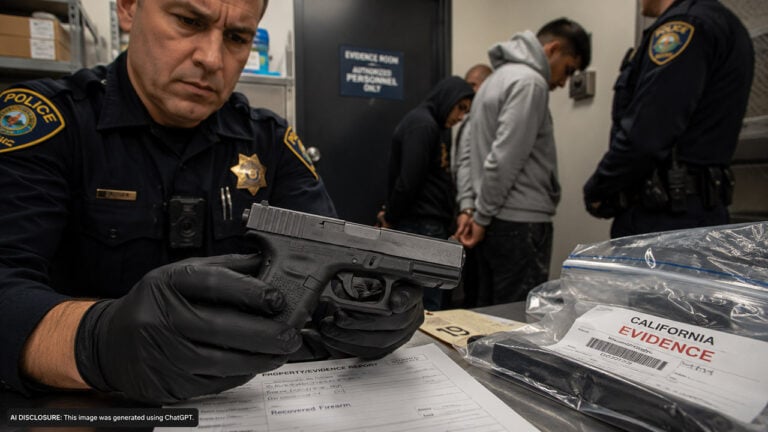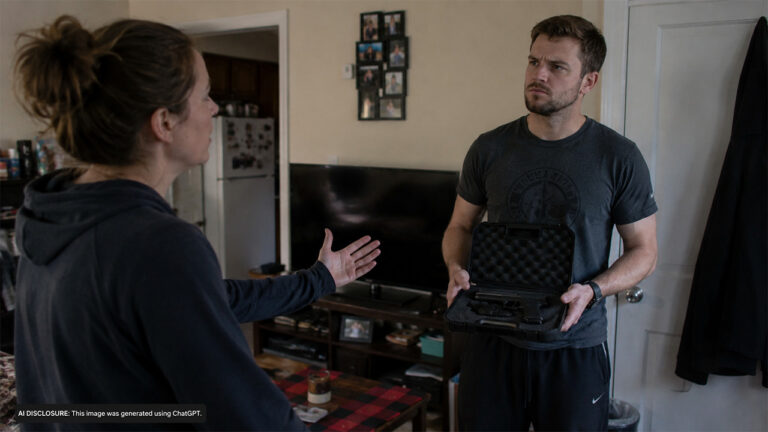
Photo credit: AI-generated image created using ChatGPT. Illustrative only
It’s one thing to lose a parent. It’s another to be standing in the garage afterward, staring at a stack of gun-related paperwork you don’t understand, while somebody tells you the clock is ticking.
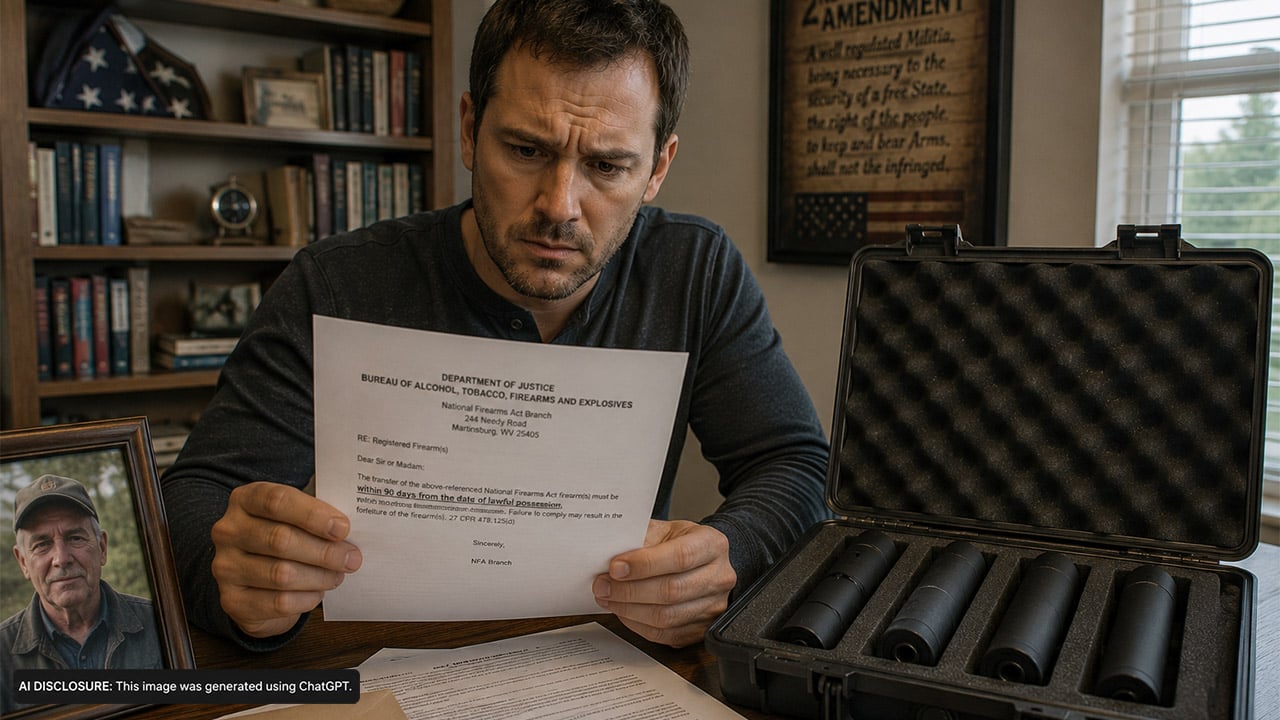
That’s the spot one man found himself in when his father died suddenly with no will, leaving behind four registered suppressors. In the original post, he said guns were his dad’s hobby, but he didn’t know the first thing about suppressors. A friend at the funeral warned him he had “30 days” to get them switched into his name, or “they” would come take them.
A well-meaning warning turned into instant panic
When people are grieving, they’ll latch onto any solid-sounding advice—especially if it comes from a friend who “knows about guns.” The problem is that a lot of gun-counter wisdom gets passed around like gospel, and suppressors live in a world with more rules, more paperwork, and more bad information than most everyday firearms.
The man’s concern was simple and practical: he didn’t want anyone taking his dad’s belongings, and he wanted to do what he had to do to keep them legally. But the way the warning was framed—“30 days” and “the government will come take them”—is exactly how confusion turns into bad decisions, like moving items around improperly or handing them to the wrong person “for safekeeping.”
Why suppressors hit different than regular guns after a death
Most gun owners understand how a typical firearm transfers after a death: the estate handles it, heirs receive it, and depending on the state you might involve an FFL. Suppressors are different because they’re regulated under the National Firearms Act (NFA). In plain talk, they’re registered items tied to paperwork, and possession is a bigger deal than folks realize.
That’s why the man’s question—“what do I need to do for his 4 suppressors?”—matters. It’s not just about ownership; it’s about who can legally possess them while the estate is being sorted out. With no will, that “who” question gets even more important, because there may not be a clear, named beneficiary lined up for the items.
That “30-day deadline” rumor is the kind that causes trouble
The most combustible part of the story is the funeral-home advice: “I had 30 days to get them changed over to my name somehow.” That kind of hard deadline gets repeated a lot in gun circles because it sounds official. And to be fair, there are timelines and requirements in the NFA world that matter.
But a one-size-fits-all “30 days or they’ll take them” warning can backfire. It can push someone into rushing paperwork, moving suppressors without understanding the legal possession issue, or trying to “transfer” them in a way that isn’t allowed. When somebody’s already dealing with grief, that pressure can lead to the very outcome they’re trying to avoid—getting the estate tangled up and drawing unnecessary attention.
The smart first moves look more like estate work than gun-shop work
When a person dies without a will, the estate usually has to be handled through the normal legal process for that state—often involving an executor or administrator appointed to manage property. Even if the family is close and everyone agrees, the paperwork world still wants a responsible party who can sign, document, and account for what exists.
In a situation like this, the practical priority isn’t “get them in my name today.” It’s “make sure they’re secured and handled by whoever is legally allowed to possess and manage them while the estate is settled.” That can mean slowing down, taking inventory, locating any paperwork tied to the suppressors, and getting competent help—especially because the man plainly said he doesn’t have experience with suppressors.
It also means being careful about where the suppressors physically are. You don’t want them bouncing from buddy to buddy, or getting tossed in a truck and driven across state lines on a handshake plan. Treat them like you’d treat a title to a vehicle or the deed to a piece of property: secure, documented, and only handled by the person who’s supposed to handle them.
What other gun owners tend to focus on in these situations
Even from the short description, you can see the same pressure points that come up every time an NFA item is left behind: paperwork, possession, and timing. The man wasn’t asking how to sell them or how to use them—he was asking how to keep them from being taken, and how to put them in his name “if its possible.” That’s a classic heir question.
In these situations, experienced owners usually steer people toward a few common-sense themes: don’t panic, don’t rely on secondhand “deadline” talk, and don’t do anything that creates a paper trail of the wrong person possessing the wrong item at the wrong time. They also emphasize getting the process right the first time, because NFA mistakes aren’t the kind you want to learn from the hard way.
And there’s an emotional element nobody talks about at the gun counter: these aren’t just accessories. They’re part of a hobby the father cared about, and now they’re wrapped up in family memory. That’s why the son’s instinct—“I’m not keen on anyone taking anything away from his stuff”—rings true for a lot of outdoorsmen.
The best way to honor the gear is to slow down and do it clean
If you’ve got a parent or spouse who owns suppressors, short-barreled rifles, or anything else NFA-related, this is the story to learn from before you’re living it. A will, a trust, and clearly labeled paperwork aren’t “extra.” They’re a gift to the people you leave behind, because they replace panic with a plan.
For the man dealing with four suppressors and no will, the path forward is likely less about beating a 30-day clock and more about making sure the estate is handled properly, the items are secured, and any transfer is done through the correct legal channel. In the outdoors world, we preach patience—wait for the right wind, the right shot, the right moment. This is one of those times where patience and clean paperwork can keep a bad situation from getting worse.
Like The Avid Outdoorsman’s content? Be sure to follow us.
Here’s more from us: