Photo credit: AI-generated image created using ChatGPT. Illustrative only
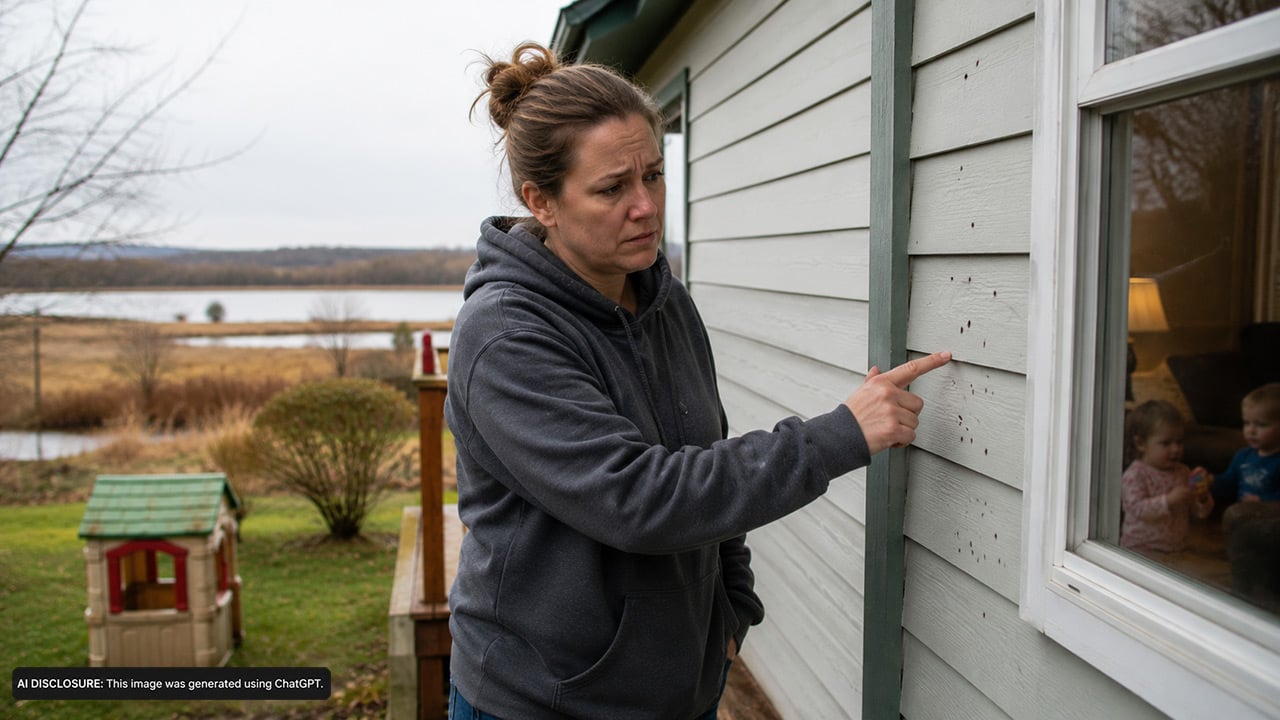
A quiet riverfront should feel like a safe buffer, not a danger zone. But one Oregon homeowner says that every duck season, stray shotgun pellets rattle into her place like clockwork—and she’s had enough, especially with two toddlers in the house.
In the original post, she describes living on a hill above a stretch of river where hunters set up. She says multiple homes sit along that hillside and she suspects her neighbors are catching pellets too. She’s called the police before, but the problem keeps coming back each season, and she asked how to get the river section in front of her posted as “no hunting.”
A familiar problem that shows up with the first flights
If you’ve spent much time in farm country or on river corridors, you’ve probably heard some version of this story. Water pulls hunters in, and when homes get built near the same water, you can end up with a tight patchwork of public access, private land, and shots that travel farther than folks think—especially when someone gets lazy about angles and backstops.
The homeowner made a point that matters: she’s not against hunting. She’s against unsafe shooting. That’s a line most hunters will agree with, because reckless shots don’t just risk property damage—they give the whole hunting community a black eye.
Why “post it no hunting” isn’t as simple as it sounds
Her main question was straightforward: can she get the river in front of her place posted as no hunting? In a lot of states, it doesn’t work like that, especially if the river itself is public water or if the hunters are set up on public land, a public easement, or private ground they have permission to be on.
Posting can absolutely matter on private property, and “No Trespassing” signs are a tool every rural landowner should understand. But posting a whole stretch of river or a corridor that isn’t yours to control is a different animal. Even when you can post your own boundary, it doesn’t automatically create a safe shooting zone beyond it if hunters are legally positioned elsewhere.
Two toddlers changes the urgency in a hurry
It’s one thing to find a few pellets in siding and feel frustrated. It’s another thing when you’ve got little kids playing in the house and yard and you’re realizing those pellets came from somewhere—meaning somebody’s muzzle was pointed in a direction it never should’ve been.
This is where the conversation stops being about “annoying hunters” and becomes about immediate safety. Regardless of hunting season, shotgun pellets striking a home means somebody is shooting without controlling where their shot is going to land. That’s not “part of living near a river.” That’s dangerous behavior.
Calling the cops helped in the moment, but not for the season
She said she’s called law enforcement in the past, but it continues to happen every season. That tracks with what a lot of rural folks see: unless an officer catches it happening or the right agency gets the right information at the right time, these cases can be hard to close out.
And even when a responding officer takes it seriously, seasonal problems often require follow-up—figuring out where the shots came from, who was hunting, and whether it was negligence, a violation of safety zones, or something worse. If the same spot on the river draws different groups each weekend, it becomes a rotating cast of suspects.
What practical, boots-on-the-ground fixes usually look like
The homeowner’s instinct—stop it at the source—is reasonable. The hard part is that the “source” could be multiple parties over time. In real life, fixes tend to be less about one perfect rule and more about stacking a few practical steps so the pattern becomes undeniable and enforceable.
In situations like this, the most effective path is usually documentation plus the right enforcement contact. If you can consistently show when it’s happening, what damage it’s causing, and where it’s likely coming from, you move from “a complaint” to “a case.” Just as important, in many hunting-related incidents, the game warden or state wildlife enforcement is often the agency that understands hunting setups, seasons, and what constitutes a safe shot in that terrain.
None of that requires confrontation on the riverbank. In fact, that’s the last thing you want when emotions are high and guns are already involved. The goal is to get the unsafe behavior corrected through enforcement and deterrence, not an argument in the cattails.
The bigger issue: one careless group can burn a whole spot
Most duck hunters are careful about where they shoot, and they’ll go out of their way to avoid houses, roads, and other hunters. But it only takes one group sky-busting at low angles, shooting at birds that are already out of range, or swinging on low flyers toward a hillside to pepper somebody’s home.
That’s why responsible hunters police their own whenever possible. If you’re hunting a river stretch and you know there are homes on a slope behind your spread, you pick safe lanes and stick to them. If the birds aren’t giving safe shots, you let them go. You don’t “hope” your shot falls short of a roofline.
For the homeowner, the frustrating part is clear: she’s not trying to end hunting. She’s trying to end pellets hitting houses. And for everyone who cares about keeping access and keeping the public on our side, that’s a fair ask.
At the end of the day, safe shooting isn’t complicated. Know what’s beyond your target, respect the landscape, and don’t take shots you can’t control. When that breaks down—season after season—landowners are going to push back, and they should.
Like The Avid Outdoorsman’s content? Be sure to follow us.
Here’s more from us: