Photo credit: AI-generated image created using ChatGPT. Illustrative only
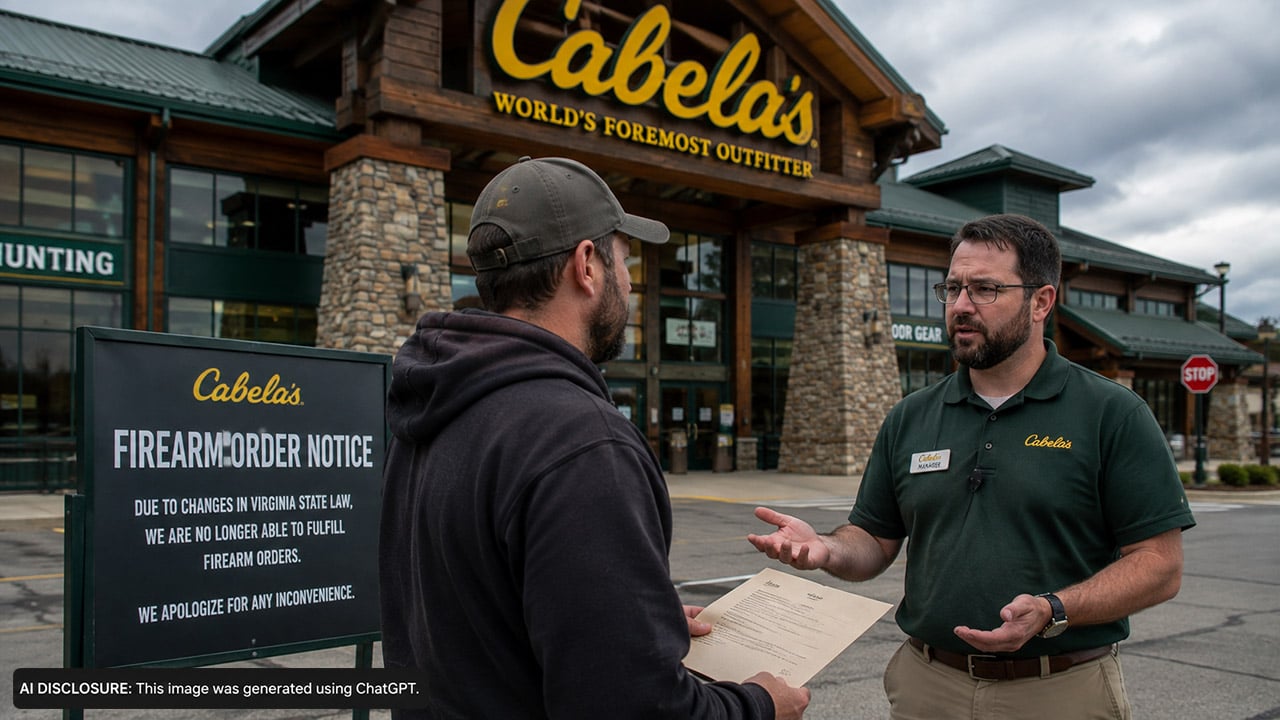
If you’ve ever timed a new rifle purchase around a season, a training class, or just the reality of when you can get off work to do the paperwork, you already know the worst part isn’t the wait—it’s the surprise. That’s the frustration coming out of a recent account involving Cabela’s in Gainesville, Virginia, where buyers say firearm orders placed before July 1 were later canceled when the only pickup dates offered pushed them past a change in state law.
In the original post, the writer is looking for other customers who believe they were put in the same boat: purchased a firearm before July 1, were only given pickup options after July 1, and then had their orders canceled without what they consider reasonable notice. The poster also raises the idea of a class action and says they’re trying to find around 40 affected people.
How a calendar problem turns into a canceled firearm purchase
The core complaint is pretty simple and pretty serious: the purchase happened pre–July 1, but the pickup window offered by the store was post–July 1. That matters because the post ties the cancellations to a state law change that kicked in on July 1.
When a law changes, a firearm that was straightforward to transfer yesterday might not be transferable the same way today. Even if the buyer did everything right at the time of purchase, a delayed pickup date can turn into a hard stop once the rules shift.
What buyers say Cabela’s did—and didn’t—communicate
According to the post, customers weren’t just told, “Sorry, the law changed.” The allegation is that the store failed to notify buyers by a “reasonable method” of its intent to cancel the order, leaving people to find out late in the game.
That’s where folks really get burned. A cancellation is bad enough, but a cancellation without clear, timely communication can cost you time, travel, and the chance to buy something else before new restrictions—or simple out-of-stock reality—set in.
Why “post–July 1 pickup only” is the detail that sticks
The most specific detail in the source material is the claim that some customers were only offered pickup dates after July 1, despite purchasing before that date. If that’s accurate, you can see why it would feel like the buyer never had a fair shot to complete the transfer under the rules that existed when they paid.
Outdoorsmen plan around deadlines all the time—tag deadlines, draw applications, season openers, range days with buddies. When a retailer controls the pickup calendar, that calendar can become the whole ballgame. If the earliest available date pushes you across a legal line, it doesn’t matter that you bought early.
Practical consequences for regular gun owners
This kind of situation hits hardest for people who aren’t trying to play games—just everyday gun owners trying to make a lawful purchase. If you’re setting up a new rifle for range work or home defense, a canceled order can mean weeks or months of delay while you figure out what’s still legal to buy and what’s even available.
There’s also the simple problem of trust. A big-box store is supposed to be the “safe,” predictable option: pay, wait your turn, do the paperwork, go home. When orders get canceled abruptly, customers start wondering whether it’s worth relying on that pipeline the next time a rule change is rumored.
The push to gather more buyers and explore legal options
The poster’s call is direct: they want to hear from others who purchased a firearm from Cabela’s Gainesville pre–July 1 and were only given post–July 1 pickup dates, and who believe they weren’t properly notified before the order was canceled. They describe “hundreds” being left without remedy and are trying to find enough people—around 40—to look at a class action approach.
Whether that happens or not, the bigger takeaway for gun buyers is to treat any looming policy change like a hard weather front. If you suspect a deadline is coming, get everything in writing, save every receipt and email, and document the pickup options you were offered. If the store won’t provide earlier dates, ask clearly—politely, but clearly—what that means for your ability to complete the transfer before any legal change.
Most folks aren’t looking for a fight. They just want the firearm they paid for, transferred legally, with clear communication. When that breaks down, the only thing left is paperwork, timelines, and proof—because the calendar doesn’t care how reasonable you were trying to be.
Like The Avid Outdoorsman’s content? Subscribe to our newsletter so you never miss an article.
Here’s more from us: