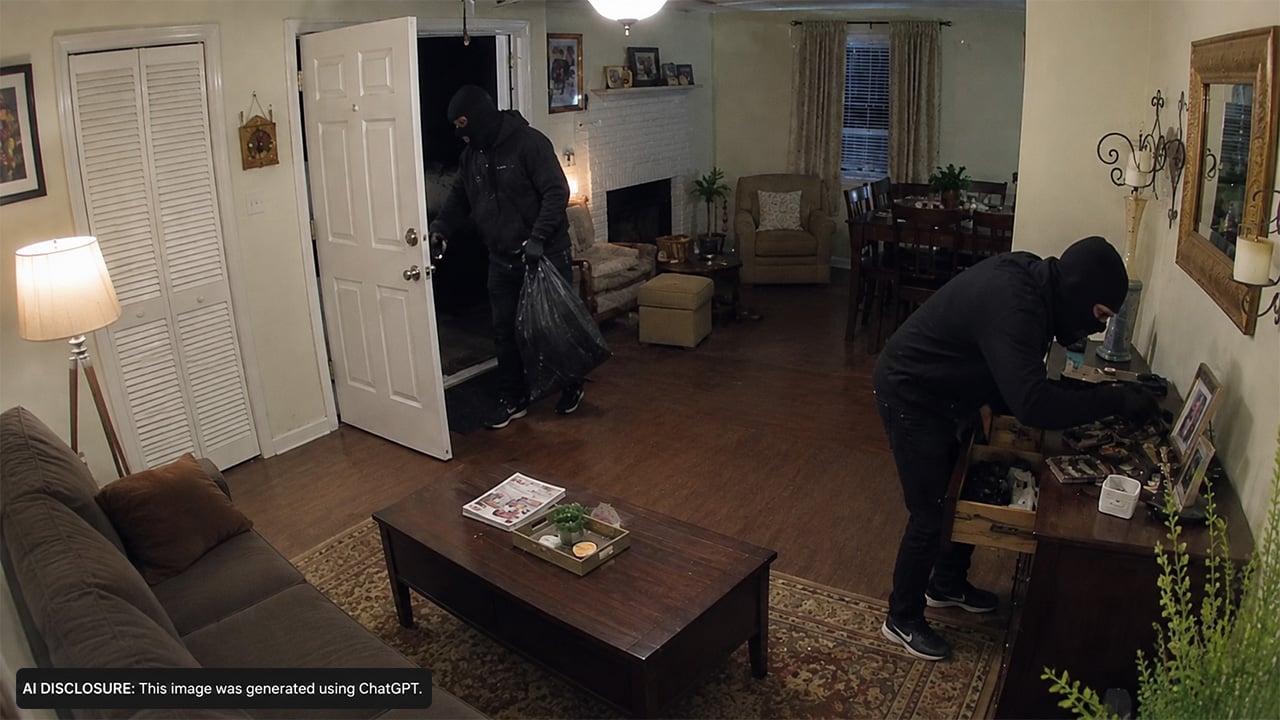
Photo credit: AI-generated image created using ChatGPT. Illustrative only
A guy in central California says he did what most of us would do after a bad situation turned dangerous: he called law enforcement, showed them video, and expected the system to move. Instead, he says the response he got felt like a dead stop—despite footage showing a rifle inside his home and threats being made.
In the original post, the homeowner described a chain of events that started with a “friend” showing back up after about a year away. They drank, smoked weed, and at some point the homeowner’s wallet went missing. The next part is where it goes from messy to frightening.
The setup: a familiar face, missing cash, and a bad feeling
According to the account, the visitor had moved out of state and reappeared with a friendly call—wanting to come over to catch up for drinks and weed. During the night, the homeowner says his wallet disappeared. He also says the visitor later had “the exact amount” of money that went missing after he spent hours “helping” look for it.
That’s the kind of thing that leaves a pit in your stomach, especially when it happens in your own living room. For a lot of outdoorsmen and gun owners, it’s also a reminder of a hard truth: the people who get you aren’t always strangers in masks. Sometimes they already know your routines, your place, and what you have.
The break-in: a door left unlocked and a rifle inside the house
The homeowner says he woke up to his front door open. It had been left unlocked. Standing there were the same “friend” and another man described as an “armed gunman with a rifle.”
He says the rifleman fired a shot inside the home and the two men made threats. That’s not a “civil dispute.” That’s the kind of moment that changes how you look at every creak in the house from then on.
The homeowner also says he captured the incident on camera. For anyone who runs trail cams, gate cams, or a basic doorbell setup, you know how valuable video is when things go sideways. It’s supposed to move a story from “he said, she said” into something concrete.
Video shown to responding officers, but the response didn’t match the risk
After the incident, the homeowner says he called the police. He reports that three squad cars and roughly five to six officers arrived. He showed them the video.
Then came the part that will frustrate a lot of folks: he says officers refused to take action because he didn’t want them “rummaging” through his house looking for a single spent casing and a bullet hole he had never located. He also notes his belief that a casing wouldn’t be present because the rifle was bolt-action.
If you’ve ever dealt with a trespass call, property theft, or a livestock issue where you’re trying to show proof and get a report taken, that feeling is familiar. You’re standing there thinking, “I’m giving you the key evidence,” and the answer you get is that they need something else—or they need access you’re not comfortable granting.
Why the casing and bullet hole became the sticking point
From a practical standpoint, it’s not hard to see why officers might want physical evidence if a firearm was discharged inside a home. A casing, a bullet strike, or a recovered projectile can help prove a shot was fired, establish direction, and support charges later. In the real world, paperwork has to survive scrutiny from supervisors, prosecutors, and defense attorneys.
But the homeowner’s side of it is just as easy to understand. When you’ve just had armed men in your house threatening you, the last thing you want is strangers tearing through bedrooms, closets, and personal drawers because they’re trying to find a tiny piece of brass that may not even be there. Consent searches can get wide fast, and a lot of folks don’t like opening that door.
This is where the outdoorsman lesson lives: documenting a crime is good, but documentation doesn’t always replace the process. A camera can show a rifle and threats, but investigators may still try to build a package with physical corroboration—especially when someone claims a shot was fired.
Home-defense reality check: cameras help, but they aren’t a force field
Most of us put up cameras to keep honest people honest and to identify the dishonest ones. The homeowner did something smart by having a system that recorded what happened. That alone can be the difference between a vague story and a clear timeline.
But cameras don’t physically stop the next visit. If a person who already knows you is willing to walk in with an armed partner, it’s time to shift from “security” thinking to “safety” thinking: locks get upgraded, doors get reinforced, and you start treating your home like the perimeter matters.
That also means taking threats seriously. If someone has already crossed the line into armed intimidation, you don’t assume it was a one-time lapse in judgment. You assume they’re capable of doing it again, and you plan like a responsible adult—not like a movie character looking for payback.
What options he appeared to be looking for next
The homeowner’s final question was straightforward: “Do I have any options or is this just how things works in California.” He wasn’t asking how to escalate a fight. He was asking how to get action when he says he already had video evidence of an armed home invasion and threats.
In situations like this, the practical path usually looks like more documentation and more formal reporting. That can mean pushing for an incident report number, making sure the video is preserved in multiple places, and continuing to communicate in a way that creates a clear record. It can also mean contacting higher levels within the same department or asking what documentation they require to move the case forward.
And yes, there’s a personal safety angle that matters just as much as the legal one: if you believe a specific person is a threat, you don’t wait for the next knock. You tighten up access, you stop social contact, and you take your own house rules seriously—locked doors, better lighting, and a plan for how you’ll respond if someone tries it again.
The hard part of stories like this is that the homeowner says he did the one thing everyone tells you to do—call the police and show the evidence—yet still felt brushed off. Whether it was a miscommunication, a policy decision, or an evidence threshold problem, it’s a reminder that your first layer of defense is keeping bad people outside in the first place, because once a rifle is in the living room, every decision gets expensive and complicated in a hurry.
Like The Avid Outdoorsman’s content? Subscribe to our newsletter so you never miss an article.
Here’s more from us: