Photo credit: AI-generated image created using ChatGPT. Illustrative only
Buying a firearm in Illinois isn’t like grabbing a new deer rifle off the rack in a lot of other states. There’s paperwork up front, and if the gears of government turn slow, it can leave a law-abiding person stuck in a gray-feeling spot—especially when online buying is involved.
That’s exactly what happened to one Illinois gun shopper who shared his situation in the original post. He applied for his FOID card, waited through the state’s timeline, then bid in an online auction anyway—telling himself he wouldn’t take possession until he had the card. He won a handgun. A week later, his FOID was approved, and the physical card showed up shortly after. That’s when the panic set in: did placing that winning bid while “pending” cross a line into felony territory?
The FOID backlog set the table for a bad decision
The man’s first move was the correct one: he applied for a FOID card, paid the fees, and waited. The state website told him 4–6 weeks was typical, and his status sat at “Pending” through that window. Like a lot of folks, he kept checking, figuring it would clear any day.
While he waited, he started browsing upcoming auction lots after watching Forgotten Weapons and getting interested in older handguns and historic pieces. That part is relatable—collectors and shooters are always hunting for something with a story. The snag was timing. He got approved to bid on the auction site by providing payment information, and when the auction finally arrived months later, his FOID still hadn’t been approved.
He bid anyway—thinking “no transfer, no harm”
On auction day, he made what he now calls a shameful call: he participated even though his FOID wasn’t in hand. His reasoning was that he wouldn’t “claim” anything until he was approved, and he wasn’t planning to contact the auction house or an FFL for a transfer right away.
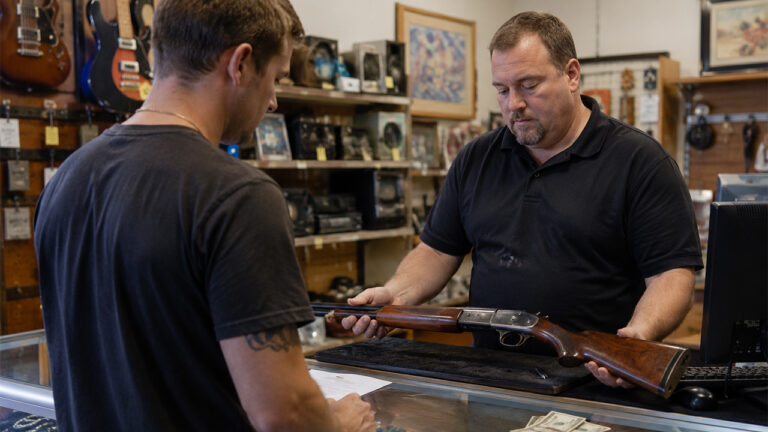
Then it happened—he won a handgun. After that, he didn’t reach out to finalize any transfer, likely trying to pause the whole situation until the state did its part. About a week later, the FOID status flipped to approved, and soon the card arrived in the mail.
Instead of feeling relieved, he started replaying the timeline: the auction date came before the FOID issue date. If the auction house or the receiving dealer looked at dates, would that look like he bought a handgun illegally?
Where Illinois gun law tends to bite: “buying” versus “possessing”
This is the part that trips people up, especially those who are used to the simple rhythm of “buy at gun shop, pass NICS, take it home.” Illinois adds a FOID requirement, and it’s easy for regular folks to get tangled up in the difference between a transaction, an attempted transaction, and actual possession.
The poster’s fear centers on the idea that winning the auction equals an illegal purchase, even if the gun never changed hands. That’s not a silly concern—because in many gun law conversations, “purchase” gets used loosely. But the practical, real-world enforcement piece usually hinges on whether a person actually took possession or arranged a transfer without the required credentials.
In his case, based on what he shared, he never picked the handgun up and never initiated the transfer while his FOID was pending. The gun stayed with the seller/auction pipeline. That detail matters in the real world, because it’s the difference between “I clicked bid” and “I acquired a firearm.” Still, Illinois is not a state where you want to assume technicalities will always break in your favor.
His biggest worry wasn’t the gun—it was the paperwork trail
What really got him was imagining the paper trail. Auction records show a winning bid date. His FOID shows an issue date. If those don’t line up, he pictured state police on the porch and his life getting flipped upside down over what he viewed as a near-miss mistake.
That’s the modern gun-buying reality: digital timestamps everywhere. Receipts, emails, payment authorizations, bidder approvals—none of it disappears. Even if you did everything right after the fact, a bad-looking timeline can make a guy feel like he’s already guilty in someone’s eyes.
He also mentioned the handgun was something he considered an antique or a piece of firearms history, but also acknowledged it was still functional and that “antique” doesn’t necessarily rescue you from the rules. That’s another common misconception—different laws treat antiques differently, and in some places “antique” means a very specific cutoff, not just “old.”
What others keyed in on: don’t take possession, use an FFL, and stop guessing
The post wasn’t just a confession—it was a guy asking, “Did I almost commit a felony, or did I commit one?” That kind of question usually pulls responses that focus on the basics: don’t touch the firearm until you’re square, and make sure any transfer goes through the proper channels.
Even without seeing a long comment thread in the source material, the standard advice in situations like this is predictable because it’s the safest lane: if your FOID is now valid, handle the transfer the right way through a licensed dealer, and don’t try to get clever with workarounds. In other words, let the system do what it’s set up to do—verify eligibility at the transfer point.
The other theme that typically comes up is simple: stop spiraling and get real legal guidance if you’re worried. Not because you’re a “bad guy,” but because Illinois firearms rules aren’t the kind you want to crowdsourced-interpret when you’re staring at potential criminal exposure.
A grounded takeaway for FOID states: don’t shop like your paperwork is guaranteed
If you live in a FOID state, treat “pending” as “no.” That’s not a moral judgment—it’s just how you stay out of the ditch. Window-shopping is fine, saving lot numbers is fine, learning the market is fine. But placing bids, putting money in motion, or signing purchase paperwork before the state says you’re good can turn into a sleepless-night situation fast.
The clean way to do it is boring: wait until the FOID is approved and in your hand, then bid and buy. If you’re going to bid on something rare and you’re worried it’ll disappear, call an FFL first and ask how they handle timing and transfers—because the transfer is where your compliance really gets measured. In this case, the man’s instinct to not take possession while pending likely kept the situation from becoming a much bigger problem, but it also shows why mixing online auctions with slow-moving state approvals is a recipe for stress.
Like The Avid Outdoorsman’s content? Subscribe to our newsletter so you never miss an article.
Here’s more from us: