Photo credit: AI-generated image created using ChatGPT. Illustrative only
When a court tells you to “surrender or transfer” your guns, a lot of folks assume the hard part is over once the firearms are out of your hands. But one Connecticut gun owner found out there’s another problem waiting on the back end: getting your property back without violating the order—or walking into a family blowup.
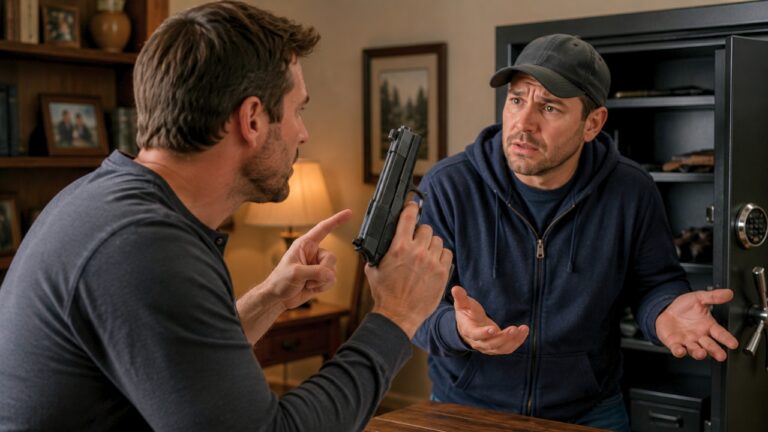
In the original post, the man explained that after an April 2022 altercation with his father, he was arrested and charged with disorderly conduct. An Order of Protection followed, and he moved out of state with his public defender’s knowledge. His AR-15 “other” was already stored in his father’s safe, and he says the judge told him that arrangement satisfied the “transfer” requirement, meaning he didn’t have to turn it over to the state.
A court order, an AR-15 “other,” and a family safe
The firearm at the center of this is described as an AR-15 “other,” a category that has been a common point of confusion in Connecticut over the years. Whatever a person thinks about the label, the practical reality is the same: it’s still a firearm with a serialized lower, and it’s still something the courts want out of reach when a protective order is in place.
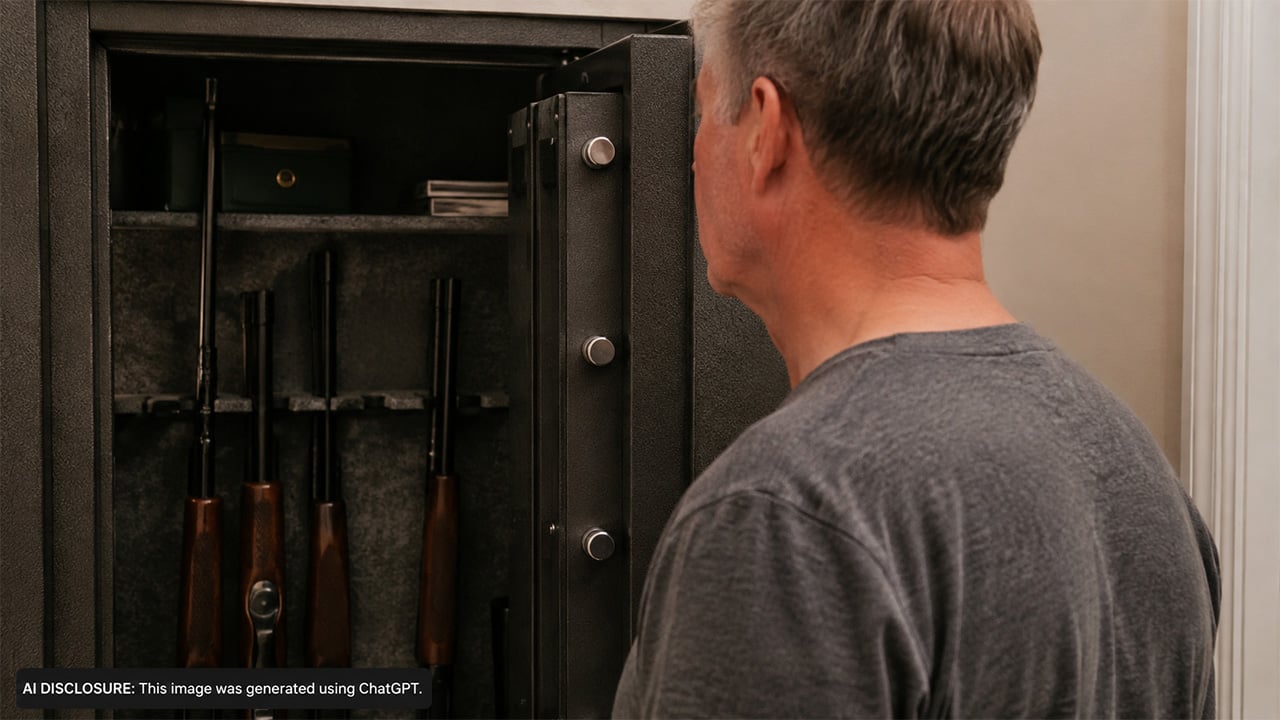
According to the post, the gun was stored in the father’s gun safe while the son lived at home. After the arrest and the initial protective order, the son left the state, but the gun stayed right where it was—locked up, but now controlled by the person who had the order against him. That’s a recipe for a “you can’t touch this” situation even if the firearm is legally yours.
“Transfer” sounded simple—until it was time to retrieve the gun
The son said the written order, confirmed in court, required he “shall surrender or transfer all firearms and ammunition.” He told the judge the rifle was in his father’s gun case/safe, and the judge reportedly said that satisfied the transfer requirement. At the time, that probably felt like the least complicated option: no additional paperwork, no running around to find a dealer, and no state storage fees.
But the catch with any protective order is the no-contact and no-harassment boundaries—and often strict rules about proximity and possession. A gun sitting in the safe of the protected person may check the “you don’t have access” box. It does not automatically solve the “how do I lawfully regain my property later?” box, especially if the relationship is bad and trust is gone.
The one-time escorted pickup raised the stakes
After the initial case, the father went to family court and sought a restraining order. The son attended remotely by video. The judge extended the protective order for one year and included similar firearms language. The judge also allowed the son to return home one time with a police escort to collect belongings and his dog, with adequate notice.
That single, supervised visit is a narrow window, and outdoorsmen can see the problem coming a mile away. When you’ve got one shot to retrieve gear—clothes, tools, maybe a bow case or fishing rods, and in this case a dog—every disagreement becomes high pressure. And a firearm in someone else’s safe is not like a tote of boots in the garage. It’s regulated property with serious consequences if the wrong person touches it at the wrong time.
The proposed solution: have a friend take possession
To avoid direct contact with his father, the son’s plan was to bring a friend who is a lawful gun owner and have that friend take possession of the firearm for the remainder of the protective order. On its face, that’s how a lot of gun owners think: keep it out of your hands, keep it stored safely, and keep it with someone responsible.
But the mother told him the parents had consulted an attorney, and that lawyer allegedly said the son was already in violation of the protective order—and that transferring the gun to another person would put the father in violation too. The post doesn’t spell out the exact reasoning they were given, but it’s not hard to see where the legal tripwires might be: the order’s specific language, who is allowed to “transfer,” whether the transfer must go through law enforcement or an FFL, and whether arranging a handoff during an escorted visit creates indirect contact issues.
When “my property” turns into “do I report it stolen?”
This is where the story shifts from awkward to serious. The son said he has text messages showing his father previously threatened to steal the gun, and he’s concerned that’s what’s happening now. He also said he has documentation for the serialized stripped lower receiver and bills of sale for most of the parts that aren’t legally firearms.
He asked when he should report the firearm or individual parts stolen, and what else he can do if the father refuses to return anything. That’s a tough spot for any gun owner: you don’t want to make a false stolen report, but you also don’t want your rifle to quietly become someone else’s “new” rifle because it’s stuck behind a protective order and family walls.
And practically speaking, even if you “win” the argument later, time is not your friend with firearms and parts. Things get swapped. Uppers get separated from lowers. Optics disappear. Magazines walk off. It’s exactly why good documentation matters—and why clean, lawful transfer pathways are worth the hassle when protective orders are involved.
The practical lesson for gun owners: do the hard transfer the right way
There’s a common-sense takeaway here that goes beyond one family dispute. If you’re ever under a court order that restricts firearm possession, the safest path usually isn’t the easiest path. The easiest path is “it’s locked in Dad’s safe, so we’re good.” The safer path is the one that leaves a paper trail and clear custody—often through the method the order or state law prefers, whether that’s surrender to a designated agency, storage through an FFL, or a documented transfer to an eligible third party.
This post also shows why you should never assume you can “just get it back later.” Once the protected person has physical control of your firearm, they also have leverage. Even if they’re wrong on the law, they can force you to fight it out in slow motion—through attorneys, court dates, and processes that don’t care that hunting season is coming or that you need the rifle for home-defense peace of mind.
The man noted that his public defender said this issue was outside her scope, and that he now lives out of state, making small claims court difficult to attend. That’s another real-world sting: gun problems tied to court orders don’t stay neatly inside the criminal case. They spill into property law, family court, and whatever the local rules say about storage and transfers.
For outdoorsmen reading this, the grounded play is simple: don’t try to freelance your way around protective-order firearm rules, and don’t rely on family safes as a long-term solution when relationships are broken. Get competent local legal advice early, use formal transfer/storage channels that are clearly allowed, and keep receipts and serial documentation like your season depends on it—because sometimes it does.
Like The Avid Outdoorsman’s content? Subscribe to our newsletter so you never miss an article.
Here’s more from us: