Photo credit: AI-generated image created using ChatGPT. Illustrative only
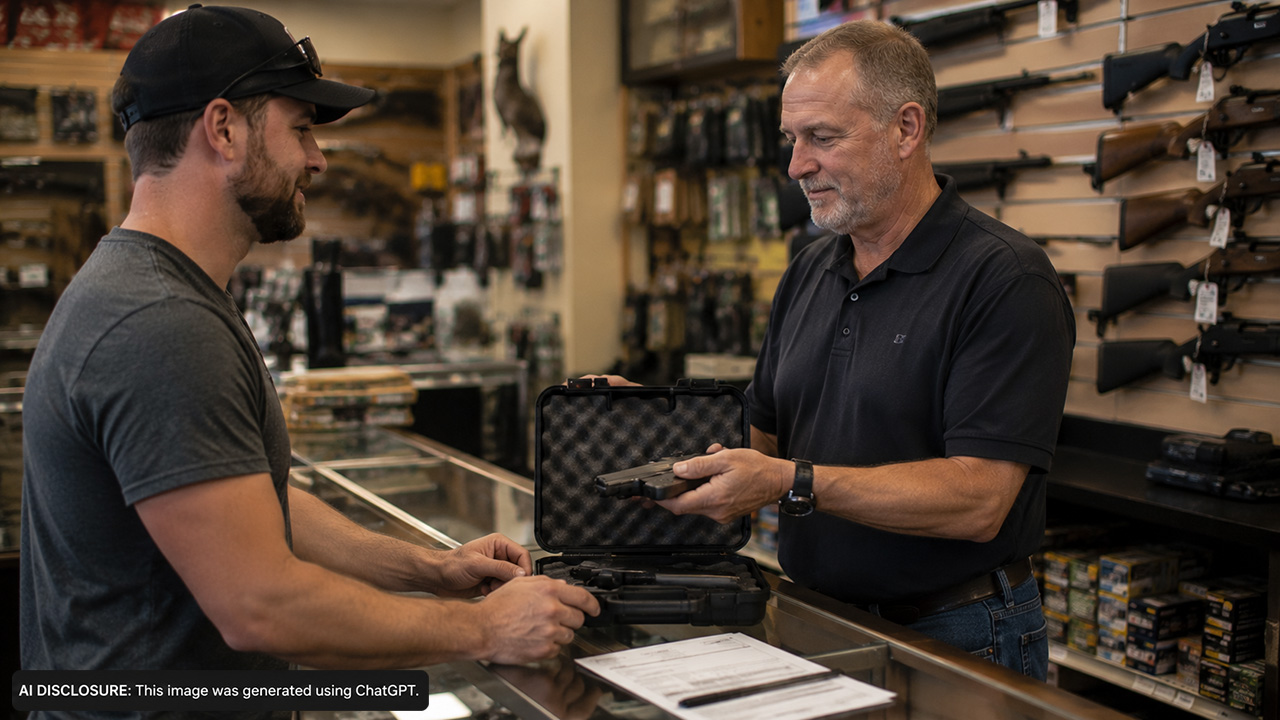
Most gun owners know the routine: you walk into the shop, show your ID, fill out the paperwork, pass the background check, and walk out with a firearm that’s yours and yours alone. That system works—until somebody starts using it to buy guns for a person who can’t legally have them.
That’s the kind of mess one North Carolina resident said they were staring at when they reached out for advice. In a short post, they said they wanted to report their father for making straw purchases for a felon friend and asked how to go about it and what tips might help. Here’s what was shared in the original post, and the practical reality of why situations like this can bring federal attention to someone’s doorstep.
A family gift can look clean on paper—and still be a red flag
On the surface, a lot of purchases look totally normal: a law-abiding adult buys a gun using their own ID and a clean record. That’s exactly how firearms are supposed to be sold at an FFL. And plenty of us have bought a rifle for a kid who’s not old enough yet, or helped a spouse pick out a handgun, or grabbed a shotgun as a gift for dad.
The trouble starts when the “real buyer” isn’t the person doing the paperwork. If a gun is being purchased with the intent to immediately hand it over to someone who’s prohibited—like a convicted felon—that’s where the line gets crossed. That’s the behavior the North Carolina poster said they believed their father was involved in, and it’s the kind of allegation that tends to trigger serious follow-up when it surfaces.
What a “straw purchase” really means in plain language
You’ll hear the term tossed around at the range or at the feed store, but the simple version is this: a straw purchase is when someone who can pass a background check buys a gun for someone else who is the actual intended owner—especially if that other person can’t buy or possess a firearm legally.
That’s why this isn’t just a paperwork technicality. It’s about keeping guns out of hands that the law says can’t have them. When a prohibited person is the end user, the purchase isn’t just “helping a buddy out.” It’s a workaround, and investigators tend to treat it like one.
Why the “felon friend” part changes everything
The post was brief, but it included the detail that the firearms were allegedly being purchased for a felon friend. For most outdoorsmen, that’s the moment the situation stops being awkward family business and turns into a real safety and legal problem.
A prohibited possessor with access to guns can put a lot of people at risk—neighbors, family members, and anybody who happens to cross paths on a bad day. And if those firearms end up used in a crime, the trail often leads back to the buyer whose name is on the 4473 and sales record. That can mean uncomfortable questions at best and major legal exposure at worst.
How law enforcement attention can land on the “clean” buyer
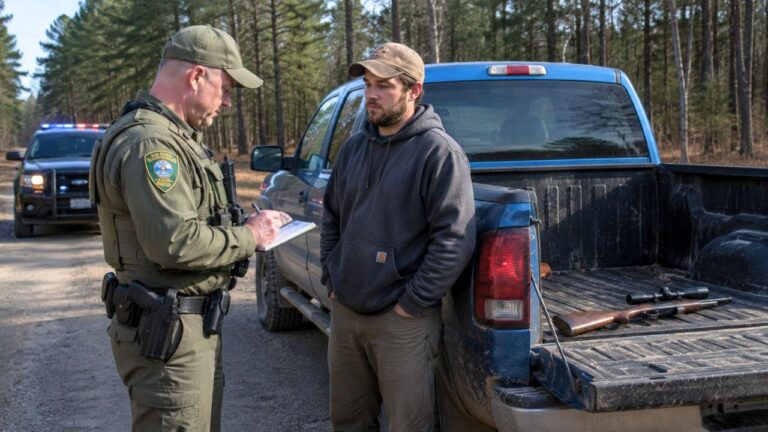
When firearms are recovered—during a traffic stop, a domestic call, a search warrant, or any number of other ways—serial numbers get run. That’s when the paper trail starts walking backwards: from the recovered gun, to the dealer, to the purchaser of record.
If the purchaser of record is someone with no criminal history who doesn’t “fit” the firearm’s eventual circumstances, that’s the sort of mismatch that can bring investigators knocking. In real life, it’s often not dramatic. It’s questions. It’s timelines. It’s “who has access to your safe?” It’s “why was this gun purchased?” And if there’s reason to believe the buyer acted as a middleman, that’s where things can turn from a chat into an investigation.
The North Carolina poster wasn’t describing that exact sequence, but their concern—reporting straw purchases by a family member—sits right on top of the kind of scenario that creates it.
What the person in North Carolina was trying to do
Their question was straightforward: they wanted to report their father for allegedly buying guns as straw purchases for a felon friend, and they wanted to know how to go about it and what would help. No long backstory, no extra details—just the core concern and the location: North Carolina.
That detail matters because reporting options can vary depending on where you are and what exactly is known. But regardless of the state, the basic idea is the same: the more specific and factual the report is—who, what, when, where, and why you believe it’s happening—the more useful it is to whoever takes the tip.
don’t “paper” a gun for someone else
If you’ve been around firearms long enough, you’ve probably heard somebody ask a buddy to “just buy it for me,” especially when a person has a shaky background, no ID, or they “don’t feel like messing with the wait.” That’s a bad road. And when the end user is a prohibited person, it’s a cliff.
There’s a clean way to give gifts in the gun world and a dirty way, and the difference is intent and ownership. Buying a legitimate gift for a law-abiding family member isn’t the same thing as buying on behalf of someone who can’t pass the check or can’t legally possess. If you’re the one filling out the form, you need to be the actual buyer, not a stand-in.
From a boots-on-the-ground perspective, the best habit is boring but solid: if you’re unsure, don’t do it. Tell the person to go through the proper legal channels. And if your gut says, “This is going to come back on me,” it usually will.
In the outdoors world, we spend a lot of time thinking about safe backstops, safe storage, and keeping kids away from loaded guns. This is another layer of that same mindset—keeping firearms away from people who are legally barred from having them, and keeping yourself out of the blast radius when someone else wants to play games with the system.
Like The Avid Outdoorsman’s content? Be sure to follow us.
Here’s more from us: