Photo credit: The Avid Outdoorsman
A pickup with a ladder rack rolled down a quiet residential road in the late afternoon, looking for an address that was easy to miss from the street. The contractor had a work order, a gate code that didn’t work, and a customer who wasn’t answering calls. He did what most of us have done in the country when GPS gets squirrely—pulled into the next driveway to turn around and get his bearings.
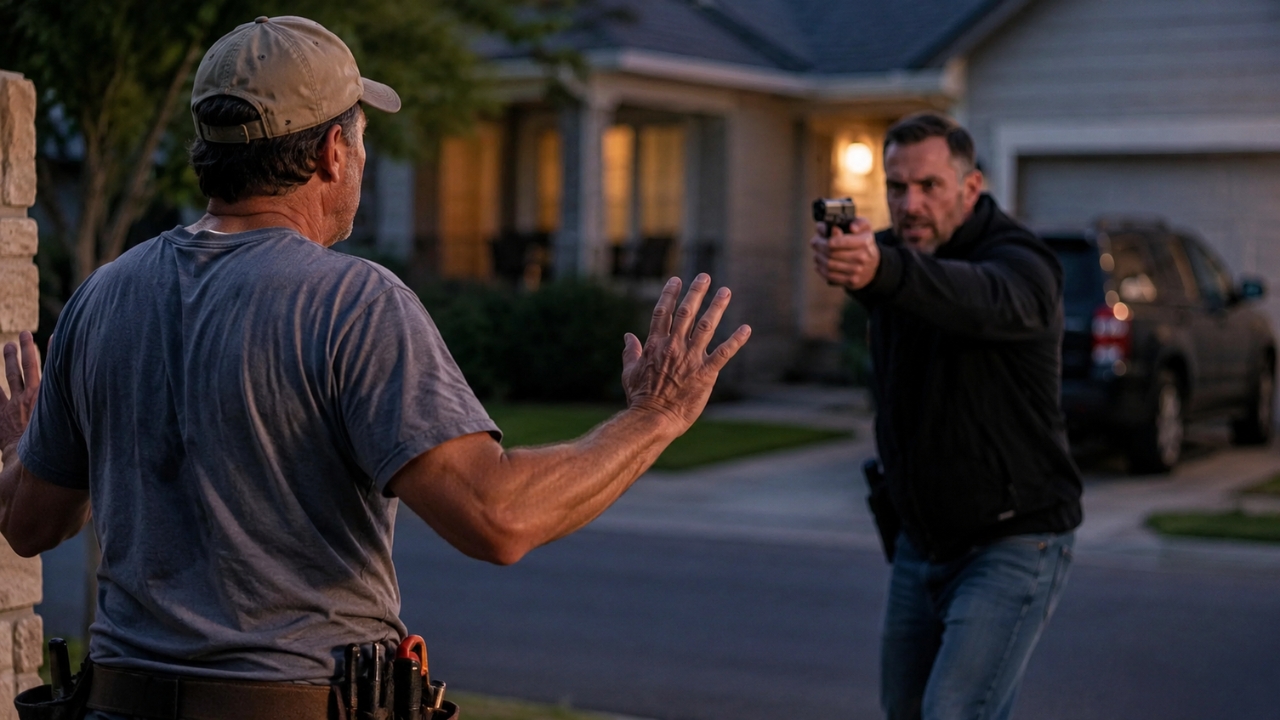
That’s when a man came out fast, closing distance and bringing a handgun into the conversation before a single question got answered. The contractor froze where he stood, hands open, trying to explain he had the wrong drive. In a matter of seconds, a normal “wrong place” mistake turned into a full-on armed confrontation—over a driveway.
The wrong turn that turned into a gun-pointing call
From what neighbors described later, the contractor never left the immediate area of the truck. He wasn’t walking around a backyard, checking doors, or peering into windows. He pulled in, stopped, and started backing out—exactly what you want a lost driver to do when they realize they’re on the wrong patch of gravel.
The homeowner, an off-duty detective, reportedly took it as an intrusion. Instead of staying behind cover and making a call, he approached with a pistol out and directed at the contractor, ordering him to leave. The contractor complied, but not before the moment escalated into raised voices and a 911 call that brought uniformed officers to the scene.
In most rural places, folks have a hard line about trespass. I get that. But there’s a big difference between a guy casing your place and a service truck making a three-point turn because the navigation app dropped a pin on the wrong mailbox.
When “off the clock” becomes a shield
After the dust settled, the department’s messaging was the part that rubbed a lot of people wrong: the detective was acting as a private citizen, not in an official capacity. That sounds tidy on paper, but it doesn’t sit right in the real world where authority doesn’t turn off like a porch light.
Even without a badge in hand, people respond differently when they learn someone is law enforcement. Contractors, delivery drivers, and utility crews are especially sensitive to it because they spend their lives stepping onto property lines and dealing with angry homeowners. When a gun comes out first and questions come later, “private citizen” starts sounding like a convenient label instead of a meaningful distinction.
Plenty of states allow open carry or permitless carry, and plenty of homeowners keep a gun handy. The issue isn’t owning a firearm. The issue is using it to control a situation that doesn’t call for lethal force, especially when the entire problem could have been solved with a flashlight, a phone call, and a little distance.
What safe gun handling looks like in a driveway dispute
If you’ve spent any time hunting public land, checking trail cameras, or dealing with a boundary line argument, you know the rule: you can’t un-ring a bell. The second you point a gun at someone, you’ve turned the volume all the way up. Now everyone is operating under fear, adrenaline, and pride—three things that don’t mix with muzzle discipline.
A safer playbook exists, and it’s boring on purpose. Stay behind cover. Keep your distance. Use exterior lights, cameras, and a loud verbal challenge from the porch if you have to. Call 911 and describe what you’re seeing without embellishment. If the person is truly a threat, distance and cover buy you time. If they’re not a threat, you’ve avoided turning an innocent mistake into a life-changing event.
Outdoorsmen understand this better than most because we live around guns. You don’t sweep your buddy crossing a fence line. You don’t use a rifle as a pointer. And you don’t go hunting for trouble just because you’re armed and feel justified.
How rural property lines and “access anxiety” feed these blowups
This kind of standoff doesn’t happen in a vacuum. Around rural subdivisions and edge-of-town neighborhoods, there’s a constant churn of strangers: contractors, roofers, pest control, survey crews, and delivery drivers who can’t see the house number until they’re already in your drive.
On the landowner side, there’s also real anxiety—tool theft, fuel siphoning, poaching, and people treating private land like a shortcut. The last few years have made folks more guarded, and a lot of homeowners have leaned hard into cameras, gates, and a “challenge first” mindset.
But that mindset needs guardrails. The same way we tell new hunters, “identify your target,” you’ve got to identify your problem. A work truck with a company logo and a ladder rack doesn’t mean “safe,” but it’s a clue that you can slow down before you go hands-on or gun-up.
What commenters latched onto: cameras, documentation, and the double standard
The loudest reaction from locals wasn’t about whether a homeowner can be armed on his own property. Most folks in hunting country assume that as normal. What got under people’s skin was the idea that a regular citizen would likely have been treated differently for pointing a gun at a contractor who was leaving.
Some pointed to the everyday reality: if a homeowner had called in “a man with a gun” and it wasn’t a detective, the response would have been sharper and the consequences quicker. Others focused on how the department’s “off-duty” framing felt like a way to wash hands of the situation while still benefiting from the deference that comes with the job.
A lot of practical-minded folks also emphasized documentation. Dash cams in work trucks. Doorbell cameras on houses. Timestamped footage matters because driveway disputes are often a “he said, he said” mess. Video doesn’t fix tempers, but it does keep stories from growing antlers after the fact.
The practical lessons for homeowners and working crews
If you own rural property, this is a good reminder to build layers that don’t involve a muzzle. Visible address numbers, reflective markers, and a clearly labeled gate reduce wrong-driveway traffic. Motion lights and cameras help you verify before you step outside. And if you’re worried enough to confront, do it from a position of safety with distance—because closing in is how accidents and bad decisions happen.
If you’re a contractor or service tech, it’s worth tightening your own habits too. Keep a dash cam rolling. Call from the road before entering long drives. If you do end up in the wrong place, stay in the open by your vehicle, don’t wander, and leave calmly even if someone is heated. Pride isn’t worth a gunfight over an address that wasn’t yours.
The whole thing is a reminder that carrying a gun is not a substitute for judgment. A driveway mix-up should end with an apology and a U-turn, not a drawn pistol and an internal PR line about being “off the clock.”