Photo credit: Akifyeva S/Shutterstock.com
There’s a special kind of heartbreak in the gun world: falling in love with a cartridge, then realizing the cartridge doesn’t love you back when it’s time to buy ammo. On paper, a lot of rounds make perfect sense—flat shooting, mild recoil, classic history, or a niche performance advantage. In the real world, none of that matters if you can’t walk into a normal sporting goods store and find a couple boxes without hunting all over the internet.
Ammo availability is the hidden cost of any caliber choice. If it isn’t widely supported, you’ll see it in empty shelves, high prices, limited bullet options, and long gaps between production runs. Some of these rounds are “seasonal” in the sense that they appear and vanish. Others are tied to older rifles, boutique makers, or small user groups. They’re easy to love right up until you’re staring at a bare shelf.
.41 Magnum

The .41 Mag is an excellent revolver cartridge that lives in the shadow of the .44. It hits hard, shoots flatter than many expect, and it’s a legitimate hunting round. Once you shoot it, it’s easy to understand why people get attached. It feels like the sensible middle ground between .357 and .44.
Then you try to buy ammo. Most stores stock .357 and .44 first, sometimes .45 Colt, and the .41 gets whatever space is left—if any. When it is available, the selection is usually thin and the price is rarely friendly. If you don’t handload, you end up buying in bulk when you see it, which isn’t how most casual shooters want to live. The .41 is easy to love. It’s harder to feed consistently.
.257 Roberts

The .257 Roberts is one of those deer cartridges that feels almost perfect—mild recoil, great field performance, and a pleasant shooting personality. It’s also the kind of round that makes experienced hunters nod, because they know it works without drama.
Finding ammo can be the drama. Many shops don’t stock it at all, and when they do, it might be one lonely box with a price tag that makes you hesitate. Rifle availability is also limited compared to mainstream calibers, which keeps the ammo market small. The Roberts isn’t dead, but it’s not living on every shelf either. If you don’t handload, you learn quickly that owning a .257 Roberts means planning ahead. It’s a great cartridge trapped in a modern world that buys what’s common.
.260 Remington

The .260 Remington is a classic example of a round that should be everywhere but isn’t. It shoots great, it’s easy to handle, and it’s a real deer cartridge with enough accuracy potential to satisfy serious shooters. It makes sense in a way that’s hard to argue with.
Then you go looking for ammo and realize the market moved on. The 6.5 Creedmoor soaked up the attention and the shelf space, and the .260 got pushed to the side. Some stores might carry one or two loads, but you rarely see the variety you’d expect for a cartridge that performs this well. If you own a .260, you often end up buying online, buying in bulk, or handloading. None of those are dealbreakers, but they are friction. And friction is why the .260 feels like a secret instead of a standard.
.280 Remington

The .280 Remington is a sweet hunting cartridge that never got the mainstream respect it deserved. It’s a strong all-around round with a loyal following, and it does excellent work on deer and elk without being punishing. It’s easy to shoot well, and it’s easy to like.
Ammo availability is where it gets annoying. Many stores stock .270, .30-06, and 7mm Rem. Mag first, and the .280 gets squeezed out. You might find it in hunting-heavy areas, but the selection can still be limited, and prices tend to run higher than the truly common calibers. The .280 isn’t rare, but it’s not reliable on shelves either. If you choose it, you’re choosing to plan your ammo purchases instead of casually grabbing a couple boxes whenever you feel like shooting.
.35 Whelen

The .35 Whelen is a hammer in the woods—great for tough angles and bigger-bodied game, and it does its job without requiring a magnum. It’s an old-school idea that still works extremely well, which makes it easy to fall for if you like practical hunting rounds.
The catch is that it’s not a casual shelf caliber. Some stores carry it, many don’t, and the ammo selection is usually narrow. When you find it, you might have one load option and a price that makes you treat each round like it matters. The .35 Whelen is also one of those rounds that many owners eventually handload for, simply because it makes life easier. If you don’t want to handload, you can still own it. You’ll just learn to buy ammo when you see it, not when you need it.
.338 Federal

The .338 Federal makes a ton of sense for close-to-mid range hunting. It hits harder than .308, fits in a short action, and it shines on deer, hogs, and elk in timber. It’s one of those cartridges that feels like it should be more popular than it is.
Ammo availability tells you why it isn’t. Most shelves prioritize the big mainstream rounds, and the .338 Federal is often missing entirely. When it shows up, it’s usually a small selection and it isn’t cheap. The cartridge is also tied to fewer rifle models than common calibers, which keeps demand low and production runs smaller. It’s a great idea with a small footprint in the market. If you love it, you end up buying ammo opportunistically and keeping a stash, because counting on local shelves is a gamble.
6.5 PRC

The 6.5 PRC is easy to love because it performs. It gives you a step up from Creedmoor in speed and energy, and it does it without being ridiculous. For hunting in open country, it’s a very practical modern round when paired with the right rifle.
Ammo is where it can get frustrating. It’s not obscure, but it’s also not as common as Creedmoor or .308, and the price is noticeably higher. Some stores carry it consistently, others don’t, and the selection can be limited to a couple premium loads. If you shoot a lot, the cost adds up fast. If you shoot moderately, availability still matters because you don’t want to be hunting ammo right before a trip. The 6.5 PRC is a cartridge that rewards planning. If you expect it to be everywhere, you’ll be disappointed.
7mm PRC

The 7mm PRC has a lot going for it—modern design, strong performance, and it hits the sweet spot for hunters who want a capable 7mm without weird baggage. It’s easy to get excited about, and it’s easy to see why people are adopting it.
The ammo reality is still settling. It’s new enough that it isn’t guaranteed on every shelf, and the loads you do find are often premium-priced. Availability can be spotty depending on your area, and not every store has leaned into it yet. That means you can own a 7mm PRC and still find yourself ordering online or buying ahead when you see it. Over time it may become easier, but right now it’s a cartridge that can make you feel like you’re chasing ammo if you didn’t plan well. Great round, not always convenient.
.300 WSM

The .300 WSM is a strong performer—short action, good velocity, serious hunting capability. It’s easy to love because it offers magnum-like performance in a handy package, and plenty of rifles shoot it very well.
Ammo availability can be annoying. It’s not dead, but it’s not a guaranteed shelf staple everywhere either. Some stores stock it, others skip it, and selection often looks thinner than .300 Win. Mag. If you travel to hunt, you also have to consider what happens if your ammo goes missing. With .300 Win. Mag., you can usually find a backup box somewhere. With .300 WSM, that’s less certain in many areas. It’s a cartridge that works well for people who keep their ammo organized and stocked. If you’re the “buy a box on the way to the range” type, it can punish you.
.325 WSM

The .325 WSM is one of those rounds that makes you grin when you shoot it and sigh when you shop for it. It hits hard, it can be excellent on elk and big game, and it fits in a short action. It’s genuinely useful, not some gimmick.
Finding ammo is the problem. Many stores don’t carry it at all, and even hunting-heavy shops may only have it occasionally. When it does show up, it tends to be expensive and limited in load selection. The user base is smaller, which means production runs can be less frequent. If you don’t handload, you’re basically committing to buying ammo when you see it and keeping a reserve. That’s the hidden price of loving a niche cartridge. The .325 WSM earns fans, but it doesn’t earn shelf space.
10mm Auto (in hunting loads)

10mm is popular, but the part that gets difficult is finding true hunting or hard-cast style loads locally. Walk into most stores and you’ll see 10mm on the shelf now, which is great. But a lot of it is range ammo, defensive ammo, or limited options that aren’t ideal for backcountry carry or hunting.
If you’re looking for heavy, deep-penetrating loads, you often end up ordering online. That’s not the end of the world, but it’s a reality check. People buy 10mm pistols expecting to feed them like 9mm, then realize the good stuff costs more and isn’t always sitting there waiting. It’s still an easy cartridge to love because it’s capable. It’s also a cartridge that teaches you to plan your ammo purchases if you want loads that match the reason you bought it.
.32 ACP (for specific classic pistols)

The .32 ACP is smooth, mild, and surprisingly enjoyable in classic pistols. It’s one of those cartridges that makes small handguns feel controllable and pleasant, and a lot of older guns were built around it in a way that just feels right.
Ammo availability can be inconsistent, and pricing often surprises people. It’s not always stocked heavily, and when it is, you might only have one or two choices. That gets worse if you prefer certain loads for a particular older pistol. It’s not that you can’t find .32 ACP—it’s that you can’t always find it easily, cheaply, or locally when you want it. If you own a .32, you learn to buy ammo when you see it. It’s a fun cartridge that makes you plan like it’s rare, even though it isn’t truly extinct.
.44-40 Winchester

The .44-40 is a classic that feels alive in lever guns and single actions. It has history, it shoots with a pleasant push, and it makes old rifles and revolvers feel like they’re doing what they were born to do. That’s why people fall for it.
Ammo is where romance meets reality. It isn’t a common shelf item in most modern stores, and when it’s available, it often isn’t cheap. Selection is usually limited, and many shooters end up handloading to keep it practical. The .44-40 isn’t hard to love when you’re shooting it. It’s hard to live with if you expect to feed it like .357 or .44 Mag. If you choose .44-40, you’re choosing a lifestyle: buy ahead, buy in bulk, or load your own.
.45 Colt (outside cowboy loads)
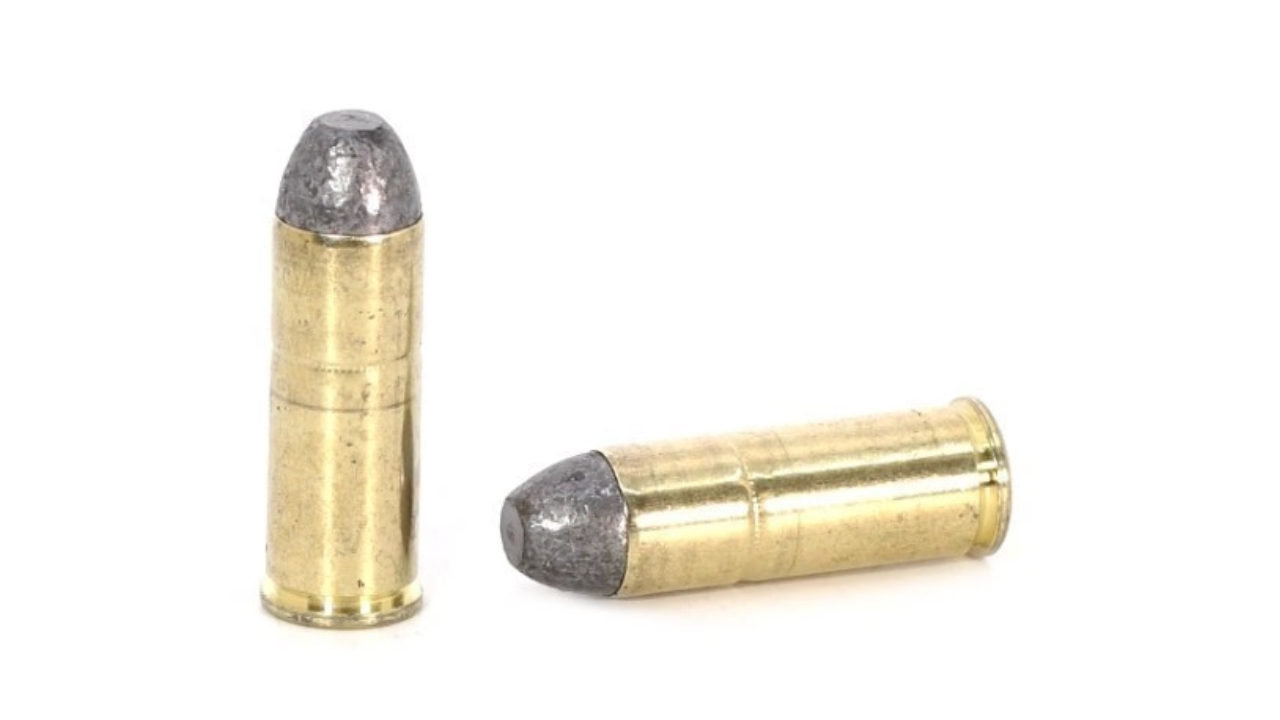
.45 Colt is popular, but the “ammo problem” shows up when you want something beyond mild cowboy loads or basic range ammo. A lot of shelves carry .45 Colt, but the selection can be narrow, and the prices often feel high compared to more common handgun calibers.
If you’re running a stronger revolver and you want hunting-level loads, those aren’t always sitting locally. Many of the heavier loads are specialty items, and you’ll usually find better options online. Even basic .45 Colt can be pricey, which discourages practice. It’s a cartridge that’s easy to love because it’s effective and classic. It’s also a cartridge that makes you pay attention to what you’re buying, because “available” doesn’t always mean “the load you actually want.”
5.7x28mm

The 5.7×28 is fun, fast, and flat, and it’s one of those cartridges that can hook you quickly. The recoil is light, the guns are interesting, and it feels different in a good way. It’s easy to understand why people get excited about it.
Ammo availability and pricing are the reality check. Some stores stock it now, but it’s still not as common as mainstream pistol ammo, and it’s rarely cheap. Selection can be limited, and you might not find your preferred loads consistently. If you shoot a lot, the cost adds up fast. If you don’t shoot a lot, you still need to pay attention because you can’t assume every shop will have it. The 5.7 is a cartridge that makes you feel like you’re shooting the future—until you’re hunting for ammo like it’s a specialty round.
.327 Federal Magnum

The .327 Federal Magnum is a great idea: more power and capacity than .357 in some revolvers, flatter shooting, and useful for small game, defense, and even some hunting roles. People who own it often really like it, because it shoots well and does more than you’d expect.
Ammo availability is the constant complaint. Many stores don’t carry it, and when they do, it’s usually a small selection and a higher price. That limits practice, which limits adoption, which keeps it off shelves. It becomes a loop. The .327 isn’t a bad cartridge—it’s a cartridge that got stuck in niche territory. If you handload, it’s easier to live with. If you don’t, you’ll spend a lot of time buying online or buying whenever you stumble across it. It’s easy to love until you try to find it on a random Tuesday.
Like The Avid Outdoorsman’s content? Be sure to follow us.
Here’s more from us: