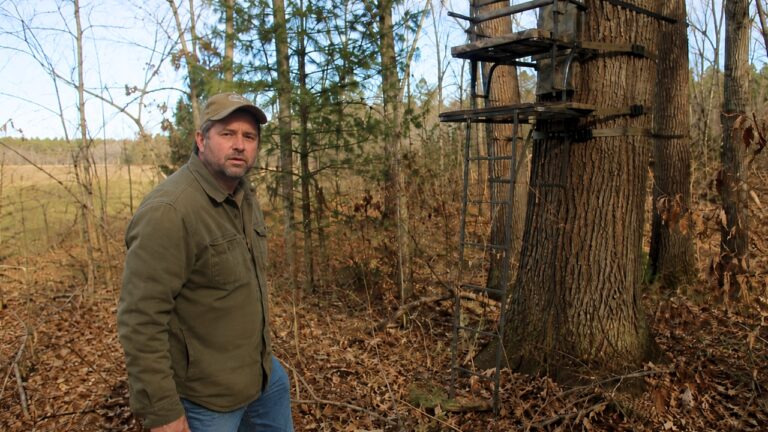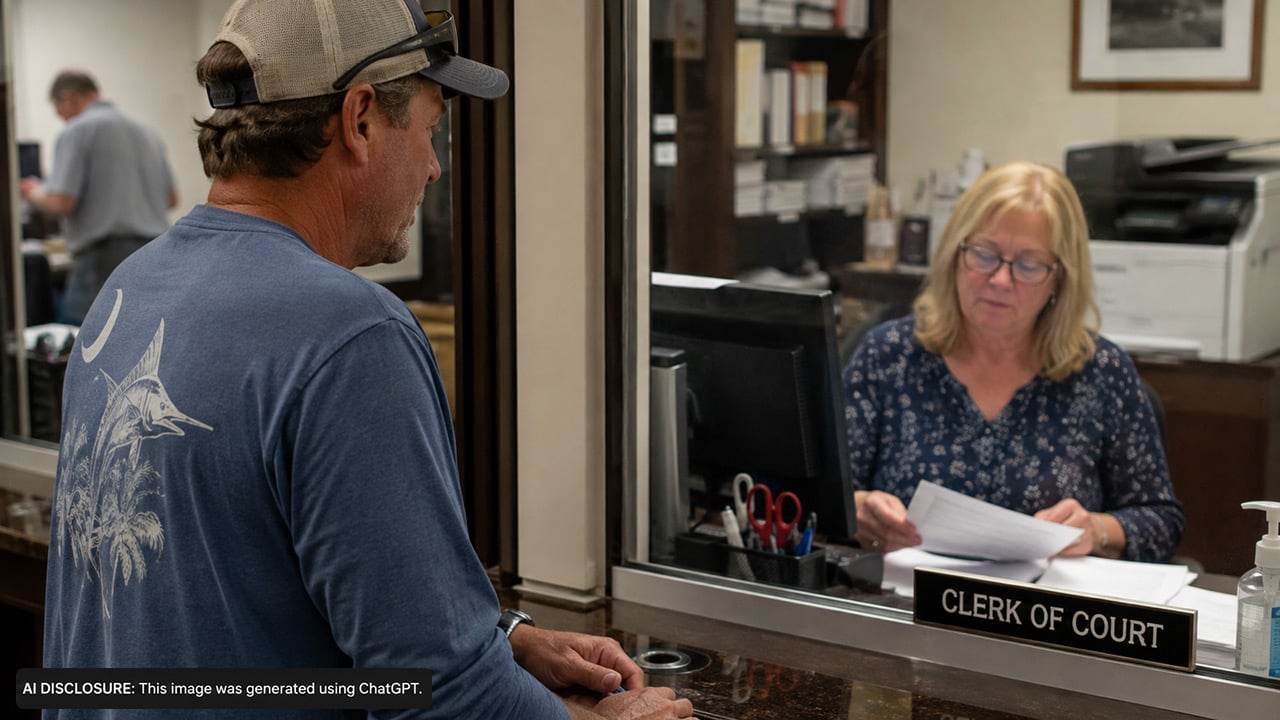
Photo credit: AI-generated image created using ChatGPT. Illustrative only
Most outdoorsmen don’t think twice about wetting a line behind their own house. In South Carolina, one lakefront homeowner did just that—until a lake warden wrote him a trespassing citation that would snowball into something far bigger than a simple shoreline dispute.
In the original post, the angler explained that he paid the court costs, believed the matter was handled years ago, and moved on. The problem is, the paperwork didn’t move on with him—and a single wrong entry turned a minor citation into a felony showing up on background checks for nearly a decade.
A simple fishing spot turned into a citation
The story starts back in 2017, after the man and his wife bought a home on a lake that serves as a county reservoir. Like a lot of folks who buy lake property, he assumed the shoreline behind his place was fair game for a little bank fishing.
Not long after moving in, a lake warden cited him for trespassing while he was fishing from that shoreline. He later learned the neighborhood was already in a dispute with the water district over access rights, and he’d basically stumbled into the middle of it without knowing it.
He handled it in court—and thought it was over
He went to court and paid only the court costs. The way he tells it, there wasn’t some long fight or drawn-out courtroom battle; it was the kind of minor legal headache plenty of outdoorsmen have dealt with when property lines and water rules get blurry.
Eventually, the neighborhood and the water district resolved the access issue. From his perspective, that should’ve been the end of it. He kept his paperwork, went on with life, and didn’t have any reason to think the citation would follow him around.
A background check is where the real trouble showed up
Two years later, in 2019, he applied for a new job and got hit with a surprise: the background check came back showing a “third-offense felony trespass.” That’s not just a blemish. That’s the kind of thing that can slam doors shut fast—employment, housing, professional licensing, you name it.
He contacted the court and was given a letter stating the wrong offense code had been entered. According to what he was told, the court had mistakenly recorded it as a third offense instead of a first offense. He was also told it would be corrected within 30 days.
If you’ve ever dealt with government paperwork, you already know where this is headed. A “we’ll fix it” doesn’t mean it’s fixed until you see it fixed.
Years later, the “fixed” record still wasn’t fixed
Fast forward to several months ago. The man said he was dismissed from his job under circumstances that didn’t appear performance-related. Around that same time, his employer had rerun background checks on all employees.
He can’t prove cause and effect from what’s written, but the timing would make anybody uneasy—especially knowing an incorrect felony was still attached to his name. That’s the scary part about record errors: you may never know which opportunity you lost because someone clicked the wrong code years ago.
Then it happened again. He accepted a new job, and their background check once again showed the same third-offense felony trespass. The only thing that saved him this time was that he still had the original citation and the court’s letter acknowledging the mistake. He provided those documents and still got the offer.
But the big takeaway was brutal and simple: the court never corrected the record like they said they would.
Why this kind of error hits outdoorsmen harder than most
A lot of folks hear “trespass” and think it’s no big deal, like a parking ticket. In the outdoor world, trespass is one of those words that carries extra weight because it’s tied to hunting access, fishing access, relationships with landowners, and how wardens look at you the next time there’s a question on the bank or at the gate.
And when “trespass” turns into “felony” on paper, it can create a whole second set of problems that have nothing to do with that original day on the shoreline. Even when firearm ownership isn’t part of the story, a felony record can affect where you work, whether you can pass a lease screening, and whether you’re viewed as trustworthy in any job that involves equipment, keys, or public contact.
Most outdoorsmen are also practical. We keep receipts for boats, we keep serial numbers, we keep tags and license numbers, and we take pictures of property lines and trail-cam timestamps. That habit of documentation is the only reason this guy had a fighting chance when the bad record came back around again.
What he’s trying to do now—and why a lawyer may matter
At this point, he’s trying to get the record corrected for good. The judge who handled the case has since retired, and he’s been told he needs to meet with the head magistrate, who is apparently the only person who can authorize the correction.
His question was straightforward: should he talk to an attorney, and if so, what kind? In a situation like this, the practical answer is that it’s worth at least consulting a criminal defense attorney—especially one who routinely handles record corrections, expungements, and court docket issues in the local magistrate system.
This isn’t about fighting the original citation anymore. It’s about fixing the official record that keeps resurfacing as a felony. An attorney can help push the process in the right lane, make sure the right motion or request is filed with the right court, and demand proof that the correction actually hit every place it needs to hit—not just a letter saying “our bad.”
Also, when someone’s livelihood may have been impacted, it helps to have a professional who knows what records exist, who maintains them, and what follow-up steps are needed when one system updates but another database doesn’t. A background check pulling stale or incorrect data is a common problem, and it often takes more than one fix to make it stop.
The hard lesson here is one most lake folks, hunters, and anglers can appreciate: you can do everything “right,” pay what the court tells you to pay, and still get burned if the paperwork is wrong. Keep your documents. Follow up until you see the change. And when a clerical error starts costing you jobs, it’s no longer a minor inconvenience—it’s a problem worth getting real help to solve.
Like The Avid Outdoorsman’s content? Subscribe to our newsletter so you never miss an article.
Here’s more from us: