Photo credit: SM Production/Pexels.com
When people get hurt around wildlife, it’s usually not because they went looking for a fight. It’s because they walked into one that was already happening and tried to “handle it.” A lot of animals are running on adrenaline in those moments, and they don’t have the mental space to tell the difference between a threat and a helper.
If you take anything from this list, take this: distance beats courage. Back out, get behind something solid, control your dog if you’ve got one, and call the right people if it’s near homes or public areas.
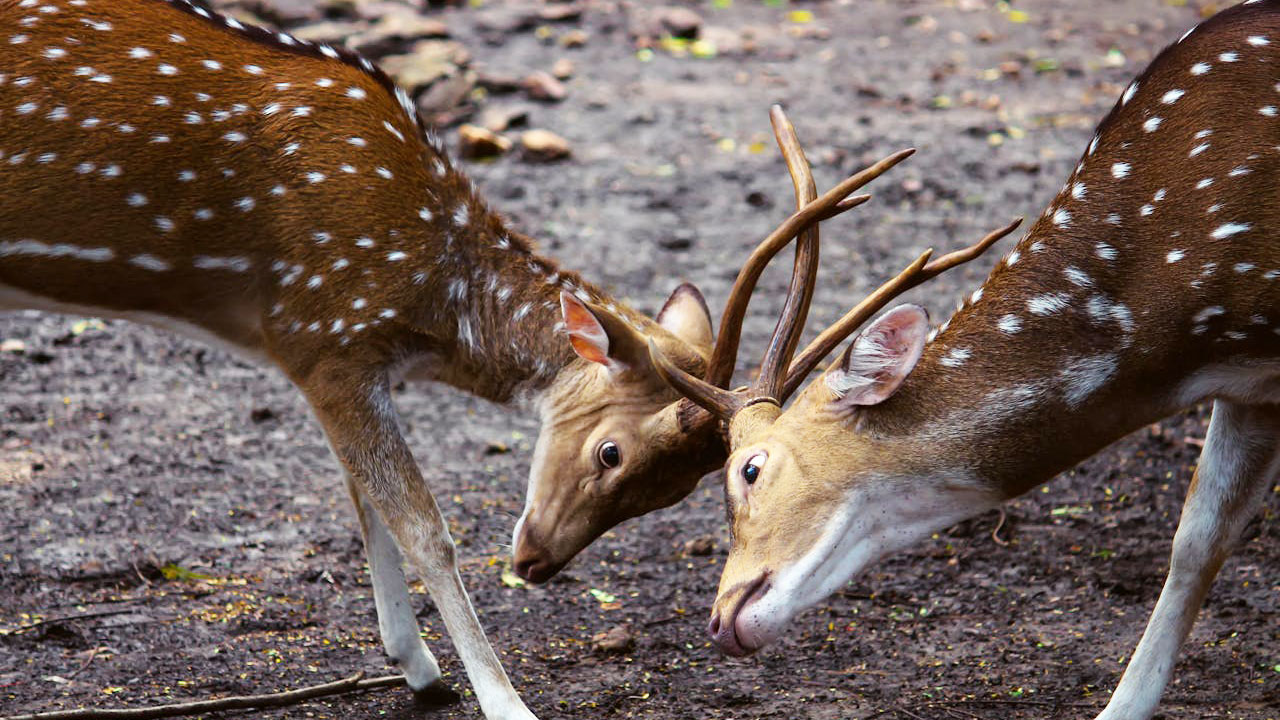
Two rutting whitetail bucks locked up

When two bucks lock antlers, it looks like something you can “break up” with yelling or getting between them. Don’t. They’re keyed up, they’re not thinking, and they can explode sideways fast. The antlers are obvious, but the real danger is the hooves and body weight when they surge, twist, and drive.
People get hurt trying to grab antlers or “push one off.” That puts your hands and legs right where the sharp stuff is moving. If you see it, give them room and let it play out. If they’re stuck and it’s a long-term problem near people, that’s when you call wildlife authorities. You don’t turn yourself into the third animal in the fight.
Two bull elk fighting in the rut

Bull elk fights are loud, violent, and way closer-range than most people think. When they clash, they’re throwing weight, stabbing with antlers, and pushing until something gives. If you walk up on that and try to intervene, you’re stepping into a moving wreck where the “swing radius” is huge.
Even if you think they’re “focused on each other,” it takes one second for one bull to spin off and redirect. If you’re in the wrong spot, you get hit before you can react. Back out, get to a tree or vehicle, and don’t stand in their lanes. If a dog is with you, get that dog under control immediately, because dogs make elk fights turn ugly fast.
Two bull moose mixing it up

Moose fights are pure brute force. Antlers are part of it, but a lot of the damage comes from shoves, stomps, and slamming bodies. If you’re close enough to “break it up,” you’re close enough to get killed. A bull moose can pivot and charge like it’s nothing, and a stomp can ruin a person in a hurry.
Moose also don’t always “see” you the way you think they do when they’re locked in. They’re in a tunnel. If you get between them and an opening, you become the obstacle. Keep distance, use trees or terrain as a barrier, and don’t assume a moose will stop because you yell. Yelling at a moose is not a plan.
A cow moose defending a calf from a dog

This is one of the most common ugly scenarios in moose country. A dog runs up, the cow sees a predator, and she goes into full defense mode. People try to grab the dog, run at the moose, or get between them. That’s how people get stomped. A cow with a calf is not negotiating.
If your dog is loose in moose country, you’re gambling with your dog and your legs. The best move is prevention: leash, recall, and don’t let your dog rush wildlife. If it’s already happening, get behind a solid object and call your dog off if it’ll listen. Don’t sprint into the middle like you’re going to “save” the situation.
Bison vs bison in a herd

Two bison fighting is a whole different level of danger because you’re not just dealing with the two animals in front of you. You’re dealing with herd movement and unpredictable shifts. Bison can slam, hook, and shove with ridiculous force, and they can move faster than people expect for something that big.
Folks get hurt because they think they can “walk around the edge” to get a better look. Don’t. Those animals can change direction instantly, and if the herd starts moving, you can get caught in the wrong place with no exit. If you’re close enough to consider intervening, you’re already too close. Back out and give them room.
Bears fighting over food or territory

Bear fights can start as posturing and turn into contact in seconds. When it goes physical, you’re looking at biting, swatting, and violent bursts of movement that cover ground fast. The problem for humans is that bears don’t fight in neat circles. They crash through brush, they roll, they separate, and then they come back together.
If you’re anywhere near it, you’re also near the thing they’re fighting over—food, carcass, space. That’s exactly where you don’t want to be. Your move is to leave quietly and quickly without sprinting, and put distance between you and that whole scene. The worst option is “hang around and see who wins.”
A bear and a dog tangled up

This is where people panic and make the exact move that gets them bit or mauled. You love your dog. I get it. But a dog in a bear’s face can keep the bear engaged, and if you rush in screaming, you just added another target and another reason for the bear to escalate.
Prevention matters here more than anything: keep dogs leashed in bear country and don’t let them run ahead in thick cover. If it’s already happening, create distance, get behind something solid, and call the dog if it will come. Pepper spray is a common tool for bear country for a reason, but the key is don’t close distance trying to physically separate them.
Mountain lion vs dog

A lion is built to grab, bite, and control, and when it’s on a dog, it’s doing what it’s designed to do. People get hurt trying to jump in because they underestimate how fast the lion can redirect. The second you’re within reach, you’ve given it another moving target, and cats are fast at bad distance.
The best way to “win” this is not letting it start. Don’t let dogs roam in lion country, especially at dawn/dusk, and don’t let them run into brush piles and rocky pockets where cats like to sit. If it’s happening, make yourself big, throw objects from a safe distance, and get to cover or a vehicle. Don’t run up and grab.
Bobcat vs small dog or cat

Bobcats don’t have the size of a lion, but they’ve got the same style: grab, bite, and hold. People see “smaller cat” and think they can rush in and separate it with hands. That’s how you catch teeth and claws in the worst possible places. A cornered bobcat fights like it has nothing to lose.
This is a common suburban/rural edge issue because bobcats move through neighborhoods, and small pets are easy targets. Keep small dogs leashed, especially at night, and don’t let cats roam if you’re in bobcat country. If it’s happening, your goal is distance and deterrence, not wrestling a wild cat.
Coyote vs dog

Coyotes are sneaky about how they fight. A single coyote might bait a dog out while others hang back, and what looks like a “one-on-one” can become a pile-on fast. People run out in the yard thinking they’re breaking up a scuffle and suddenly there are multiple coyotes moving around them.
The danger is bites to hands and legs, and the fact that dogs don’t disengage cleanly once they’re locked in. Prevention matters: fence discipline, don’t leave dogs out unattended, and don’t feed wildlife. If it’s happening, make noise, use lights, and throw objects from a safe distance. Don’t charge into the middle empty-handed like you’re a referee.
Feral hog vs dog

This one gets dogs killed and people cut up. Hogs fight low, they drive forward, and they don’t care about “fair.” A dog that grabs at a hog can end up on the receiving end of cutters, and a person trying to separate them can get sliced or knocked down fast.
Even a “small” hog is still a hard animal with bad attitude when cornered. The real lesson is not letting dogs engage hogs in the first place unless you’re experienced and equipped for that work. If it’s a surprise encounter, your job is to get distance and get the dog out, not get close enough to be in the hog’s swing zone.
Alligator vs dog at the water’s edge

If you’ve lived anywhere with gators, you’ve heard the story. Dog goes to the bank, gator hits fast, person runs in. That last part is the tragedy multiplier. Gators can strike with shocking speed, and if you’re close enough to grab, you’re close enough to get grabbed.
The mistake people make is thinking it’s a “tug-of-war” they can win. It isn’t. The right move is prevention: don’t let dogs play at the edge of gator water, especially at dawn/dusk and warm months. If it happens, don’t go in after it. Create distance and call authorities immediately.
Snake vs dog

A dog will try to “win” a snake fight and that’s how it gets tagged in the face. People try to grab the dog, grab the snake, stomp around, and it turns into bites on humans and multiple bites on the dog. Venom doesn’t care that you were trying to help.
If you see it, get the dog away using distance tools—hose, loud noise, throwing something near (not at) the snake—anything that doesn’t put your hands in the strike zone. Then get the dog to a vet fast if it was bitten. The worst move is trying to physically separate a snake and a dog with your hands.
Porcupine vs dog

This isn’t a “fight” in the traditional sense, but it turns into an emergency because dogs don’t learn the first time. A porcupine doesn’t have to chase or claw. It just needs the dog to rush in, and then the dog gets a face full of quills. People then try to pull quills immediately, barehanded, while the dog is panicking and the porcupine is still there.
You can make a bad situation worse fast by yanking quills wrong or getting bit by your own dog. The priority is to get the dog away and contained, then handle removal the right way (often with a vet depending on location and severity). The “don’t break it up” lesson here is simple: don’t turn a painful situation into a dangerous one with rushed hands.
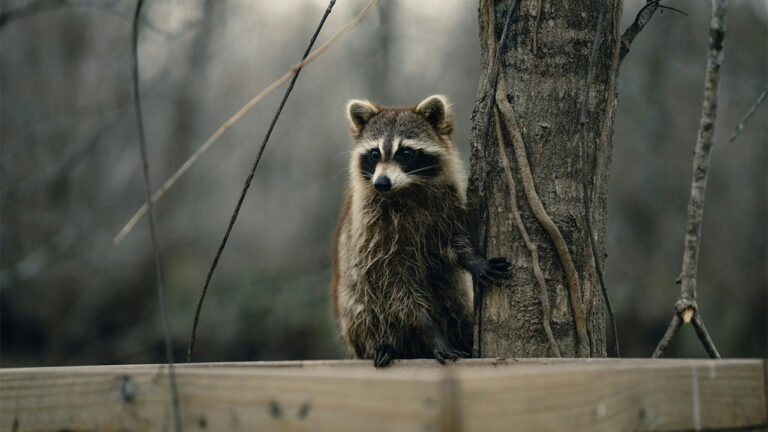
Raccoon vs dog

Raccoons fight nasty. They’ll bite, grab, and keep coming when cornered, and they’re perfectly happy fighting in tight spaces where you’re likely to get dragged into it. People get hurt because they try to grab collars, kick things apart, or reach into a dog pile. That’s exactly how you take bites to hands and legs.
There’s also a disease risk component that people ignore until it’s too late. A raccoon acting odd in daylight, wobbling, or unusually aggressive is not something you want close contact with. If a raccoon and dog are tangled up, your goal is distance and separation with tools, not hands-on hero moves.
Otter vs dog

Most folks don’t think of otters as dangerous until they see what an otter does when it’s cornered or protecting a den. Otters bite hard and fight like mustelids—clamp and thrash. If your dog rushes an otter near water, you can end up with a nasty injury situation for the dog, and then a human trying to separate them gets bitten too.
Otter encounters are more common than people realize around ponds, creeks, and lakes where dogs like to swim. The smart move is not letting dogs harass wildlife at the shoreline. If it happens, don’t wade in and grab. Get distance, call your dog off, and get out of that edge zone where bites and slips stack up fast.
Like The Avid Outdoorsman’s content? Subscribe to our newsletter so you never miss an article.
Here’s more from us: