Photo credit: AI-generated image created using ChatGPT. Illustrative only
Most hunters understand the draw is the draw. You put in, cross your fingers, and if you don’t get it, you go back to work and start thinking about next season. That’s why allegations out of New Mexico hit like a gut punch: federal prosecutors say three men tied to an outfitter spent years rigging the system to get resident elk tags into the hands of paying nonresidents.
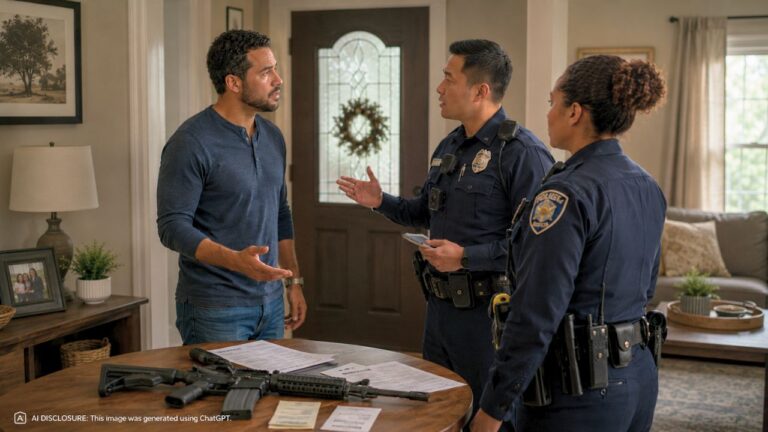
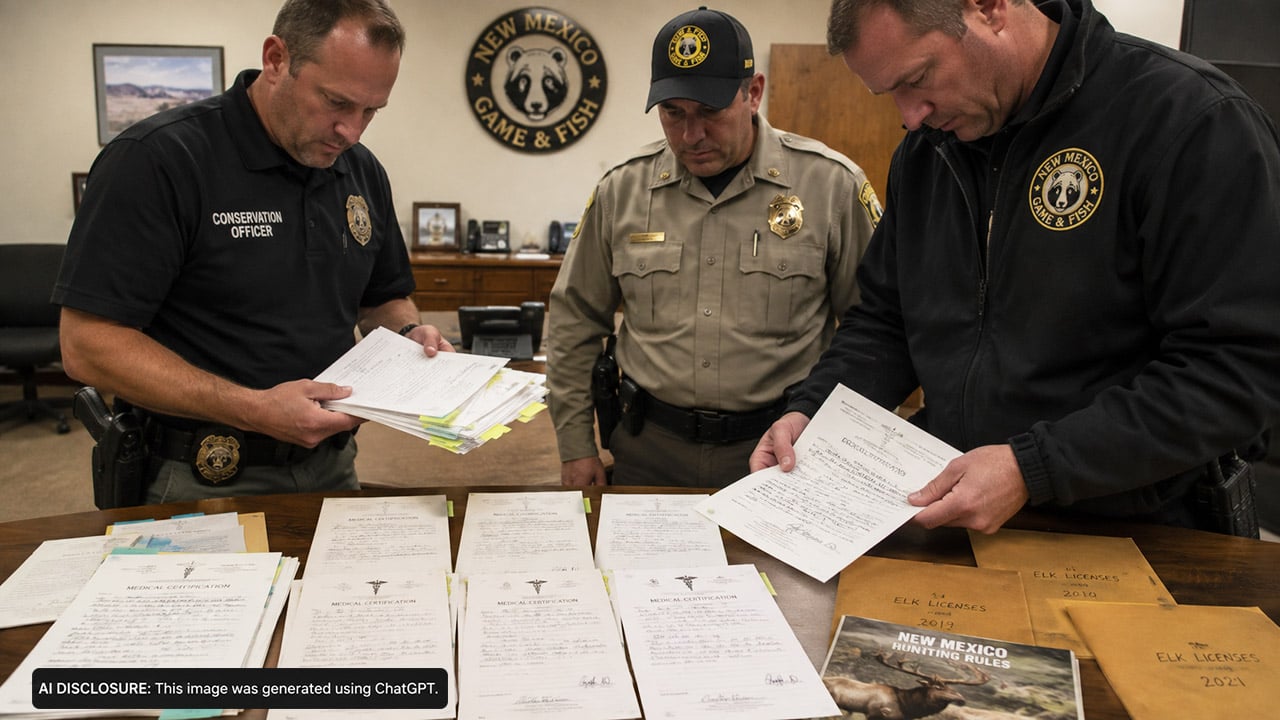
The details laid out in the original post read like a checklist of what not to do—fake identities, prepaid cards, and then the piece that really turns heads: prosecutors say they produced bogus medical transfer paperwork, including forged doctor notes, to move tags from “residents” to out-of-state clients.
A years-long tag scheme prosecutors say ran through an outfitter
Federal prosecutors with the U.S. Attorney’s Office in the District of New Mexico announced charges against Danial Adair, Daniel Nicolds, and Lary Nicolds. The men are connected to Big Horn Outfitters, and prosecutors allege the scheme ran roughly from 2019 through 2022.
According to the indictment, the approach wasn’t subtle. Prosecutors allege they created fictitious hunter accounts, used false identifying information, and paid draw fees using prepaid debit cards—steps intended to illegally draw resident elk tags that should’ve gone to legitimate New Mexico residents playing by the rules.
How “medical transfers” allegedly became the loophole
New Mexico regulations don’t allow hunters to just hand off a license or tag to someone else. There are limited exceptions where the New Mexico Department of Wildlife director may grant a transfer—like when the licensee is deceased, deployed prior to the start of the hunt, or can show they’re hospitalized or convalescing from a recent hospitalization due to a serious injury or illness.
Prosecutors allege the three men leaned hard into that exception by submitting fraudulent medical transfer requests. The indictment claims those requests included fake doctor notes and forged agreements, allowing resident tags to be transferred to nonresident clients in exchange for payment and guiding services.
The guiding and money side didn’t stop at the tag
This wasn’t just about getting a name on a piece of paper. Prosecutors also allege the men guided hunts tied to the tags and helped facilitate transporting harvested elk across state lines—details that matter because once you cross state lines with wildlife, the consequences can stack up fast.
The announcement also alleges they concealed the operation in multiple ways: using prepaid debit cards, alternate email accounts, and false tax reporting. That kind of concealment is often what turns a “tag violation” into a broader fraud case in the eyes of federal prosecutors.
The charges: wire fraud conspiracy, Lacey Act counts, and a tax-related conspiracy
Adair and the Nicolds brothers are charged with one count of conspiracy to commit wire fraud and five counts of violating the Lacey Act. Adair and Daniel Nicolds—listed as the owner-operators of Big Horn Outfitters on the outfitter’s Facebook page—are also charged with one count of conspiracy to defraud the United States.
Outdoor Life reported it did not receive an immediate response after attempting to reach Big Horn Outfitters by phone. Beyond that, the case will have to play out, but the indictment details are enough to make any law-abiding hunter wince.
Why this hits New Mexico resident hunters especially hard
New Mexico residents have been complaining for a long time that drawing an elk tag can feel like trying to win a raffle where other people keep getting extra tickets. The story points to a major source of that frustration: the Elk Private Land Use System (EPLUS), which allows landowners to obtain tags outside the public draw and sell them—often to the highest bidder.
Those tags can bring serious money. The source notes some EPLUS tags reportedly sell for $30,000 to $40,000, and in 2022, the New Mexico Wildlife Federation said more than 75 percent of tags issued to landowners through EPLUS went to nonresidents. For the average resident hunter trying to fill a freezer, it’s easy to see why the idea of someone gaming the resident draw would feel like salt in the wound.
First Assistant U.S. Attorney Ryan Ellison put it plainly in a statement: “As a hunter, I know it’s extraordinarily difficult for New Mexico residents to draw elk tags… many New Mexicans who apply wait years — sometimes decades — to draw a coveted tag.” He added that fraudsters who rig the system and make it harder for residents will be “aggressively prosecuted and held fully accountable.”
What hunters can take from this (without getting wrapped around the axle)
If you’ve hunted the West long enough, you’ve seen how a legal line can be razor thin: outfitter allocations, landowner tags, refunds, reissues, and transfer rules that change by state. This case is a reminder that the “transfer” part is not a casual workaround—New Mexico’s rules are narrow, and prosecutors are alleging these men tried to manufacture eligibility using forged medical paperwork.
The practical lesson for regular folks is simple: keep your own house clean. Apply under your real information, pay with traceable payment methods, and if you ever have to deal with a legitimate emergency that affects a hunt, go through the state the right way with real documentation. A tag isn’t worth turning your season—or your livelihood—into a federal case.
On the bigger picture side, this is also what erodes trust in already contentious systems. When resident hunters feel boxed out by money and access, allegations of outfitter-driven fraud only pour gas on that fire. Whether you hunt public ground, lease a ranch, or save up for an outfitted hunt once in a lifetime, everybody loses when the rules become optional for the guy willing to cheat.
Like The Avid Outdoorsman’s content? Subscribe to our newsletter so you never miss an article.
Here’s more from us: