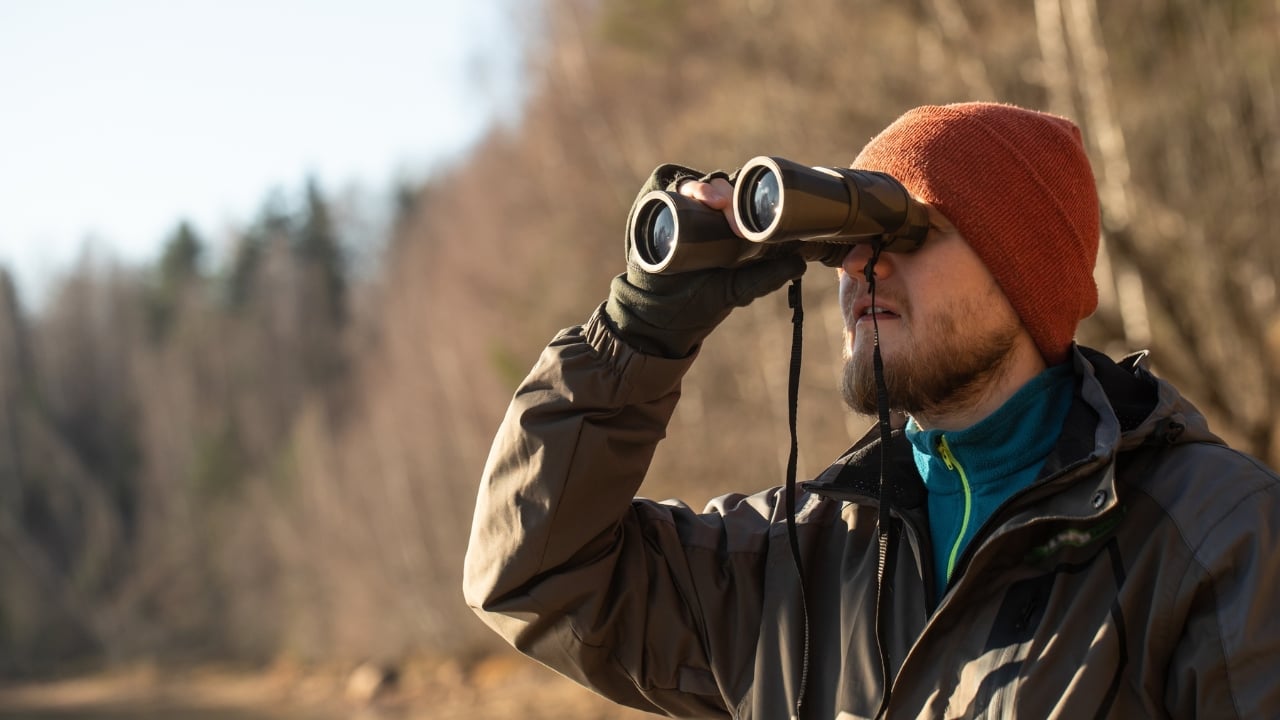
Photo credit: Mariya Surmacheva/Shutterstock.com
Prices verified September 5, 2026 from manufacturer and retailer listings. The Avid Outdoorsman is a Bass Pro Shops affiliate — if you buy through a link here we earn a small commission at no cost to you.
Walk into any store and the binocular display is organized by magnification, biggest numbers at eye level. That merchandising has convinced a generation of whitetail hunters that 12x and 15x are the serious choice.
For timber, they’re the wrong choice, and the numbers aren’t close.
A Vortex Diamondback HD 8×42 gives you 393 feet of view at 1,000 yards. The 12×50 version of a comparable Leupold gives you 257 feet. You’ve traded away more than a third of your field to magnify a deer that’s forty yards away. In thick cover, field of view is the thing that lets you find the animal at all — and a deer you can’t locate is not helped by being 50% larger once you do.
Buy an 8×42 or a 10×42. The Vortex Diamondback HD 8×42 at around $239 is the right answer for most whitetail hunters, and it isn’t close on value.
The honest version of the argument
Here’s where most articles making this case overstate it, and we’d rather not.
8x vs 12x-15x is not a debate. Comparing the same lineups: 8×42 models run 376–426 feet of field, while 12x50s run 257–280 feet and a 15×56 runs 240 feet. There’s also a real handheld-shake penalty above 10x — one resolution test found handheld performance falls to roughly 67% of tripod-mounted at 10x versus 75% at 7x, and concluded “there are little or no gains above 10x when hand holding a binocular.” (Cloudy Nights — an enthusiast test, not a peer-reviewed study, but the direction is consistent with everything else.) For timber, 12x and up is a bad buy.
8x vs 10x is a genuine preference, not a settled question. In the same model, 8x gives you about 19% more field and a 26% larger exit pupil — 5.25mm versus 4.2mm, which matters because the human pupil dilates to roughly 4–5mm at dawn and dusk. That’s a real low-light advantage.
But MeatEater, which explicitly says “a good rule for whitetail hunters is to consider either 8x or 10x,” actually picks a 10×42 as its whitetail recommendation. Field & Stream’s 2026 binocular test used almost exclusively 10x models. And Target Tamers argues stability only becomes an issue “once you’re going higher than 12X.”
So: 8x if you hunt tight timber, glass at dawn and dusk, and want the widest possible field. 10x if you also hunt field edges, CRP, or anywhere you’re identifying antlers at 200+ yards. Both are defensible. Neither of them is 15x.
One more caution against reading “8x” as a guarantee: the Maven C.1 8×42 has a 341-foot field — narrower than several 10x42s on this list. Glass design matters as much as the magnification number.
At a glance
| Model | Price | Field @1000yd | Weight | Eye relief | Warranty |
|---|---|---|---|---|---|
| Vortex Crossfire HD 8×42 | $139.99 | 393 ft | 23.8 oz | 17 mm | VIP unlimited |
| Nikon Prostaff P3 8×42 | $159.95 | 377 ft | 20.3 oz | 20.2 mm | See note |
| Leupold BX-2 Alpine HD 8×42 | $229.99 | 394 ft | 24.3 oz | 18 mm | Lifetime |
| Vortex Diamondback HD 8×42 | $239 | 393 ft | 21.8 oz | 17 mm | VIP unlimited |
| Bushnell Engage EDX 8×42 | $339.95 | 426 ft | 25.6 oz | 17 mm | Lifetime |
| Vortex Viper HD 8×42 | ~$490 street | 409 ft | 24.5 oz | 18 mm | VIP unlimited |
| Zeiss Conquest HDX 8×42 | $999.99 | 384 ft | 25.2 oz | 18 mm | Lifetime + 5yr no-fault |
Best overall: Vortex Diamondback HD 8×42 — $239
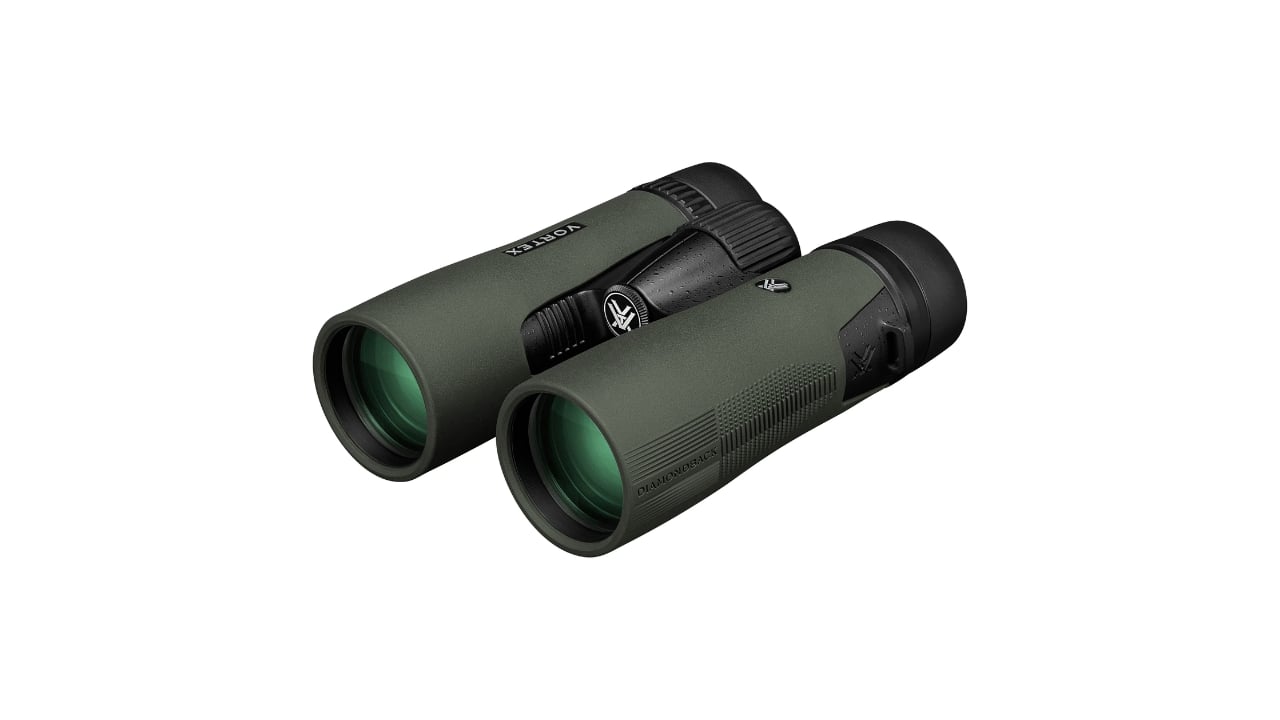
393 feet of field, 21.8 ounces, 5-foot close focus, and the best warranty in the optics business. OutdoorGearLab named it “Best Bang for the Buck,” measuring excellent brightness and calling it “one of the best values” in a 16-binocular test.
The warranty deserves its own paragraph. Vortex’s VIP warranty is unlimited, unconditional, and lifetime — “it doesn’t matter how it happened, whose fault it was, or where you purchased it,” with no receipt and no registration required. For an object that lives in a treestand and gets dropped, that’s worth real money against a competitor’s “defects in materials and workmanship.”
The catch: OutdoorGearLab scored clarity 6.2/10, noting “some color fringing and edge blur.” At this price, that’s the honest tradeoff — you’re getting field of view, brightness, and warranty, not alpha glass.
Who should skip it: anyone who glasses for hours at long range and will notice edge softness. Step up to the Viper.
Best budget: Vortex Crossfire HD 8×42 — $139.99
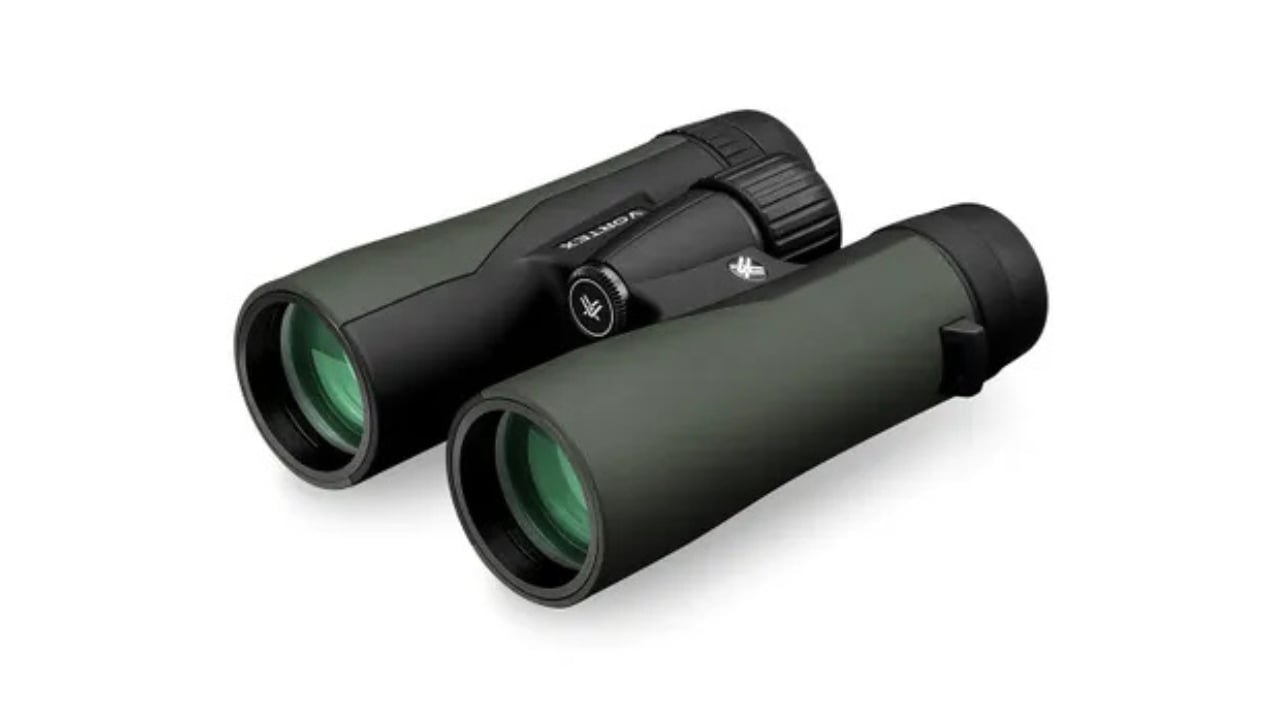
The same 393-foot field as the Diamondback HD for $100 less, plus the same VIP warranty and an included harness. The glass is a clear step down and it’s heavy for the class at 23.8 ounces, but nothing else near this price gives you both the field and the warranty.
One to avoid: the cheaper Vortex Triumph HD. Outdoor Life tested it and was blunt — “bottom-tier optical performance,” blue fringing, “uncoated lenses.” Good warranty doesn’t rescue bad glass.
Lightest, and best for glasses: Nikon Prostaff P3 8×42 — $159.95
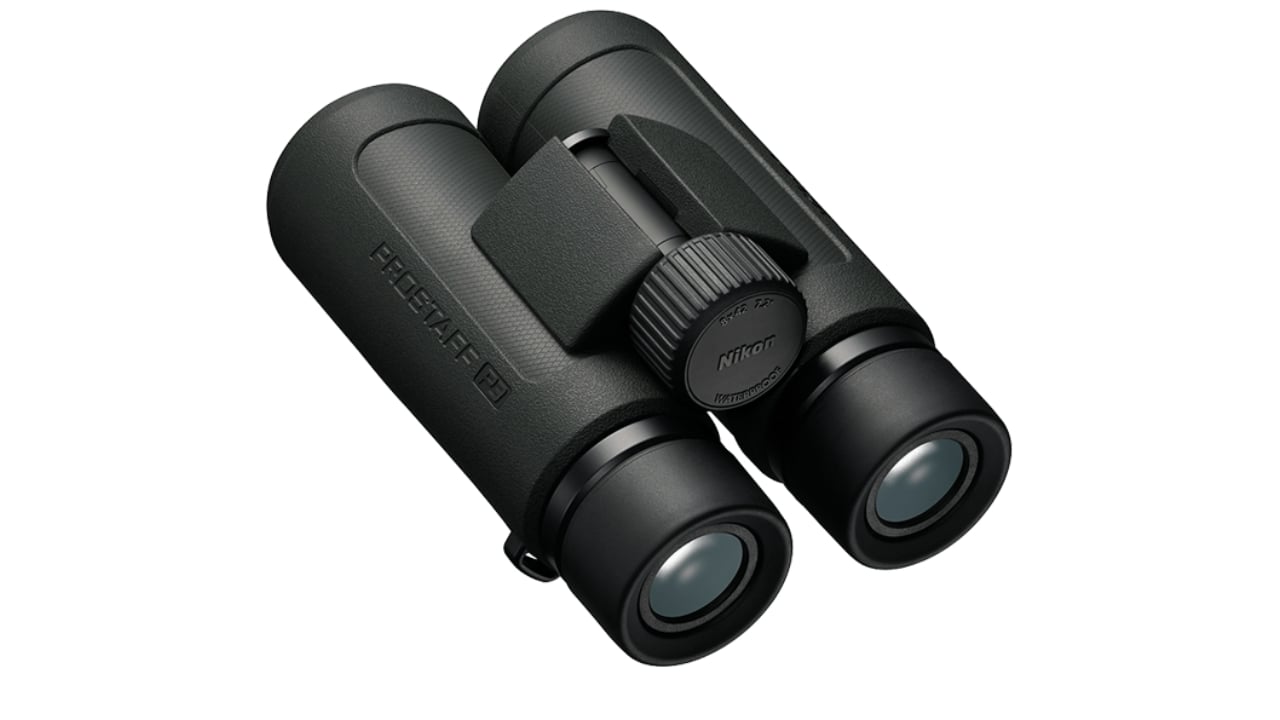
20.3 ounces — the lightest full-size 42mm here — and 20.2mm of eye relief, the most generous on this list by a comfortable margin. If you wear glasses and have fought with binoculars that won’t give you the full image, this is the spec that fixes it.
Two caveats we won’t paper over. We could not verify Nikon’s warranty terms for this specific model from a primary source. And we could not confirm Bass Pro stocks the P3 binocular specifically — they list the Prostaff 3S binocular and a P3 riflescope. Check availability before you plan on it.
Widest field: Bushnell Engage EDX 8×42 — $339.95
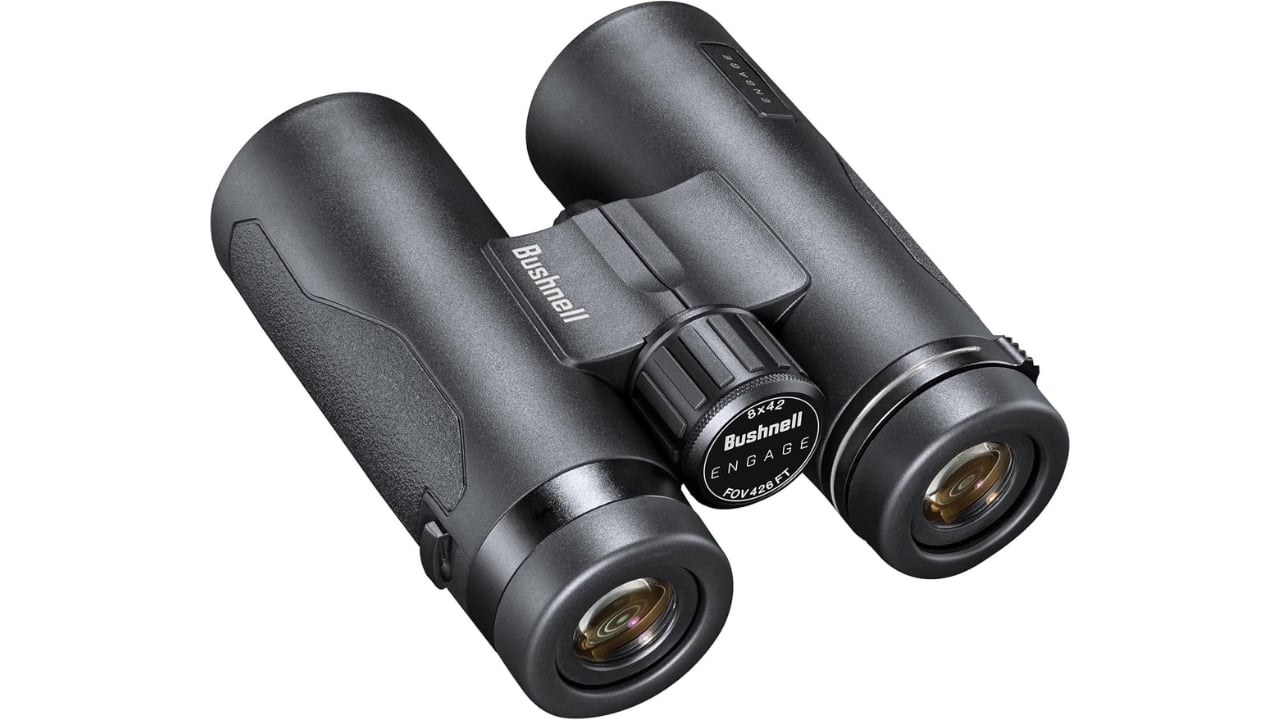
(not carried by the retailers we work with)
426 feet at 1,000 yards, which is 8% wider than the Diamondback HD and the widest 42mm in this guide. If your ground is genuinely thick — river bottoms, cutovers, early succession — field of view is the spec that finds deer, and this is the most of it you can buy under $350.
The catch: 25.6 ounces, the heaviest here. Fine on a harness in a stand, noticeable on a long walk.
Buy-it-once: Vortex Viper HD 8×42 — around $490 street
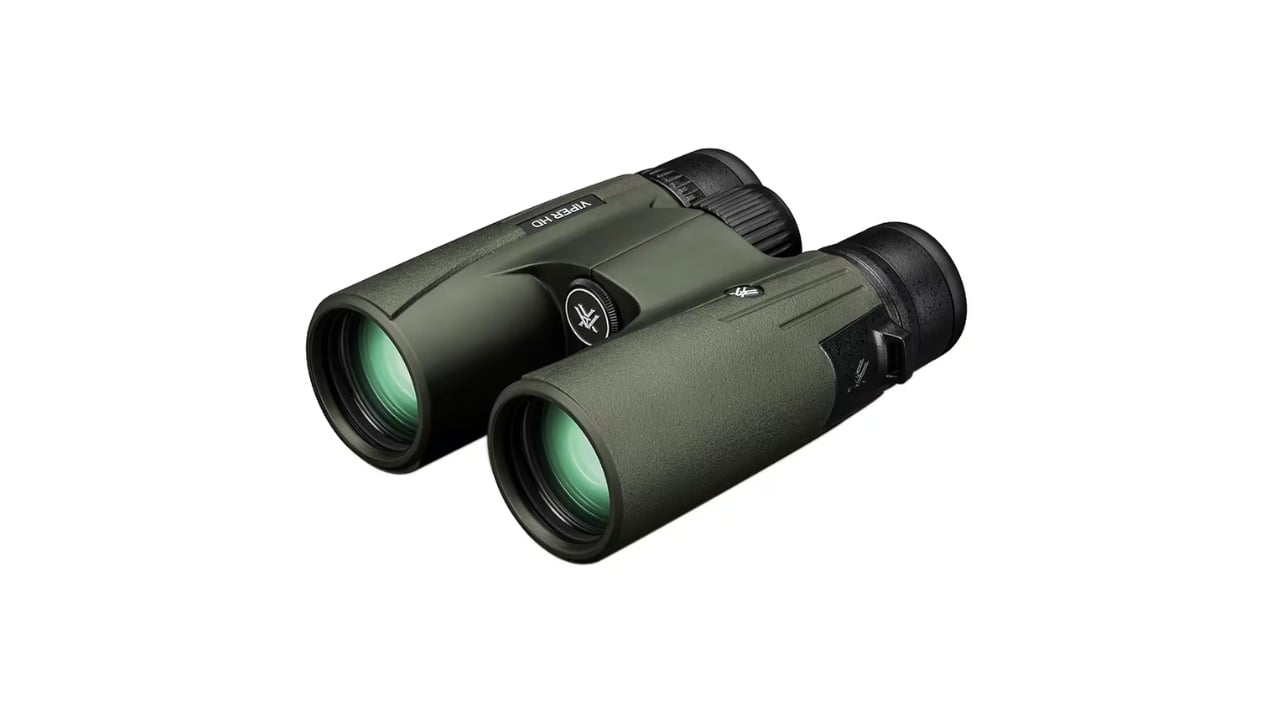
409-foot field, and OutdoorGearLab described the view as “nearly crystal clear” and said it “rivals multi-thousand-dollar models,” scoring brightness 8.9/10. With the VIP warranty behind it, this is the binocular you buy at 30 and hand to your kid at 55.
The catch: the focus knob has genuinely high tension — OutdoorGearLab scored ease of adjustment just 4.5/10. Turn one in a store before committing.
If money is no object: Zeiss Conquest HDX 8×42 — $999.99
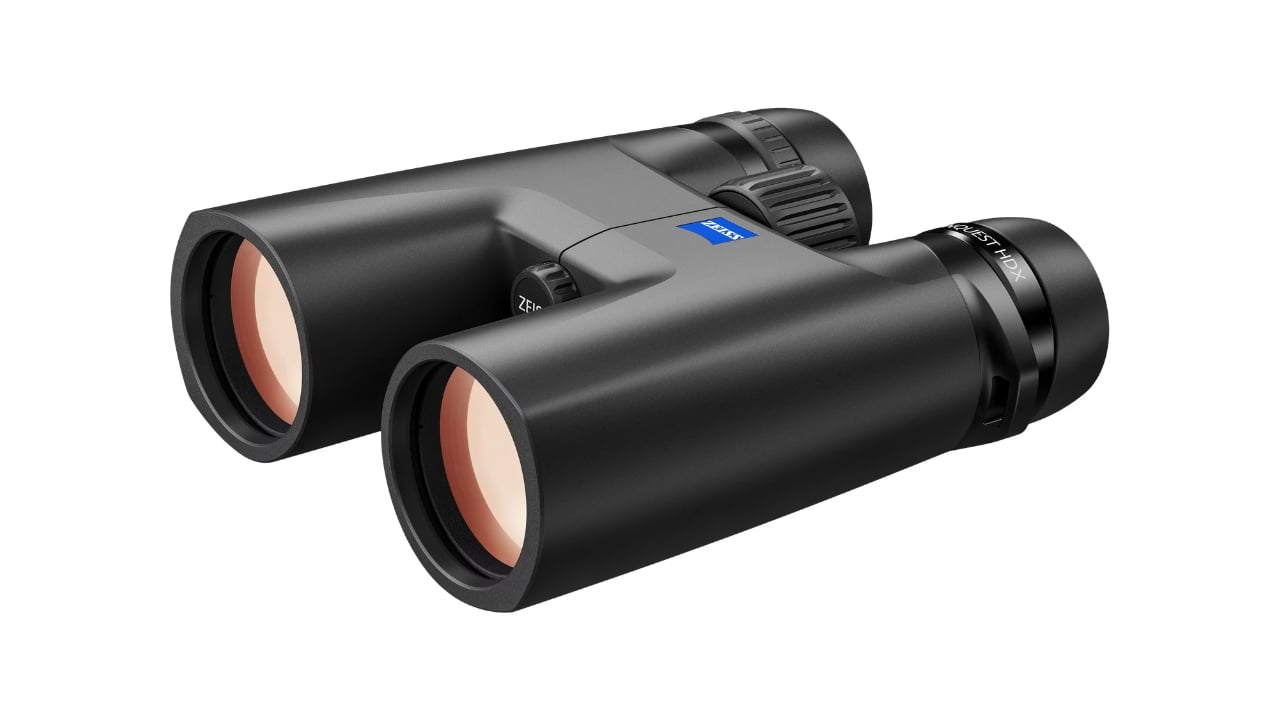
The warranty is the real story: a transferable limited lifetime warranty plus a transferable five-year no-fault policy. Transferable matters — it holds resale value, which lowers the true cost of ownership more than the sticker suggests.
Full disclosure: we could not find a hands-on test of the HDX 8×42 specifically from any major hunting outlet. The Conquest line’s reputation is long-established, but this particular refresh appears thinly tested. We’d rather tell you that than invent tester impressions.
Two things worth knowing
Buy a harness, and wear it. A binocular on a neck strap swings, bangs the stand, and ends up in your lap. A chest harness keeps it still, quiet, and out of the way of a bowstring. It’s a $30–60 purchase that changes how much you actually use the binoculars you bought.
Manufacturer weights are optimistic. OutdoorGearLab measured the Diamondback HD 8×42 at 23.1 ounces against Vortex’s claimed 21.8, and Cornell measured the Maven C.1 at 26.1 against a claimed 24.5. Caps and straps usually aren’t counted. If you’re weight-sensitive, add an ounce or two to every number here.
Frequently asked
Do I even need binoculars for treestand hunting? Yes, and for one reason people underrate: identifying whether the deer at 80 yards in low light is the one you want, before it’s at 30 and looking at you. It’s a decision-making tool more than a spotting tool.
8×42 or 10×50 for low light? 10×50 has a 5mm exit pupil — the same ballpark as an 8×42 — so it’s a legitimate low-light choice with more reach. It’s also heavier and has a narrower field. MeatEater specifically argues for the larger objective in timber. If you don’t mind the weight, it’s a real option.
Roof prism or porro? Roof, for hunting. Porro prisms can be optically better per dollar but are bulky and less weather-sealed. Everything on this list is roof.
Is there a study proving 8x finds more deer than 10x in timber? No. We looked. The case rests on field-of-view math, exit-pupil math, and expert opinion — a solid case, but not field data, and we’re not going to pretend otherwise.
Bottom line: buy the Diamondback HD 8×42 at $239 and stop researching. If your budget is $140, the Crossfire HD gives you the same field and the same warranty. If your cover is genuinely thick, the Engage EDX’s 426 feet is worth the extra hundred. And whatever you do, don’t buy 15x for the timber.
Sources: Outdoor Life · OutdoorGearLab · MeatEater · Target Tamers · Vortex VIP Warranty. Prices change — verify before buying.
Like The Avid Outdoorsman’s content? Be sure to follow us.
Here’s more from us: