
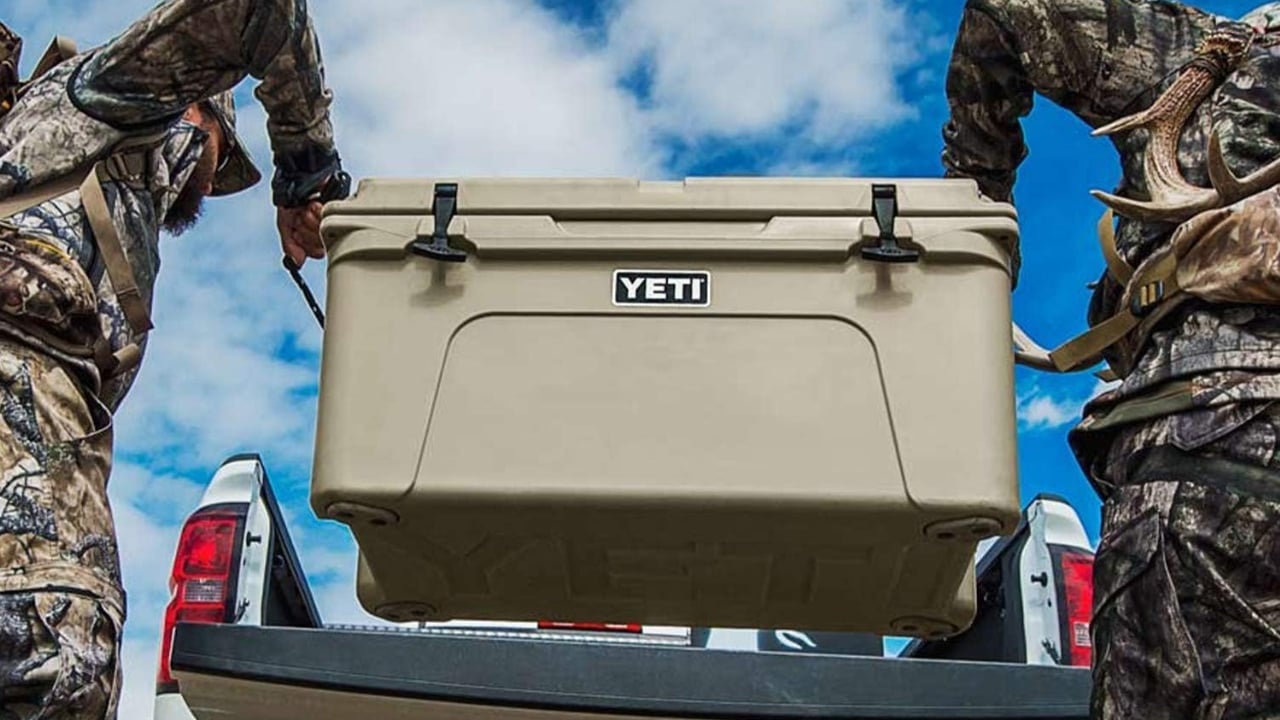
Photo credit: YETI/Amazon.com
Prices verified September 5, 2026 from manufacturer and retailer listings. The Avid Outdoorsman is a Bass Pro Shops affiliate — if you buy through a link here we earn a small commission at no cost to you.
Almost every cooler guide ranks by quarts and ice days. For a deer cooler, the number that actually decides whether it works is one nobody prints on the box: how long the inside floor is.
A bone-in whitetail hindquarter is long. A Yeti Tundra 65 gives you 23.3 inches of interior floor. A Grizzly 75 gives you 27.5. That’s not a spec-sheet difference — it’s the difference between quarters lying flat and quarters you’re wrestling to close the lid on, and the two coolers are within $20 of each other.
Best for most hunters: the RTIC 65 QT Ultra-Tough (~$269, often ~$242). 26 inches of interior floor, tested at 5.5 days holding below 40°F, and roughly $130 less than the Yeti it performs alongside.
Best value, full stop: the Igloo Polar 120 (~$130). Not rotomolded, not tough, but 120 quarts and 4.5 tested days below 40°F for the price of a tank of gas and a box of shells.
⚠️ One thing to know before you shop
ORCA is out of business. Parent company Gathr Outdoors ceased ORCA procurement and marketing operations in January 2025, and no new coolers are being made. You’ll still find ORCA inventory and an active-looking brand site, but the warranty support is gone. Don’t buy one as a long-term purchase.
How big a cooler does a deer actually need?
Honest answer first: no one has ever measured this properly. Every number in every article, including ours, is experience-based. What we can tell you is what the published recommendations converge on, and what the underlying meat math says.
| Source | Quartered deer |
|---|---|
| MeatEater | “At least 60 quarts” |
| Times Observer | 65–75 qt |
| Backfire | 65 qt bone-in “with some space left over for ice” |
| Canyon Coolers | 75 qt “absolute minimum”; “think 100+ to be safe” |
The hard data underneath: a 2017 Ohio Division of Wildlife study of 115 deer found bucks averaged 129.69 lb field-dressed yielding 62.51 lb of boneless venison — about 48% (National Deer Association). Sixty-odd pounds of boneless meat is only around 28 quarts of solid volume. But quartered means bone-in, irregular shapes pack badly, and you need ice at roughly equal volume — which is how you land on the 65–75 quart figures everyone reports.
The practical version: 65 quarts holds a quartered deer, but barely, and with less ice than you want. Most experienced hunters end up running two coolers — meat in one, ice and drinks in the other.
At a glance
| Cooler | Price | Interior floor | Empty weight | Tested days <40°F |
|---|---|---|---|---|
| Igloo Polar 120 | ~$130 | not published | 18.2 lb | 4.5 days |
| RTIC 65 Ultra-Tough | ~$242–269 | 26″ × 13″ | 37.7 lb | 5.5 days |
| Cabela’s Polar Cap Equalizer 80 | ~$350 | not published | 34.9 lb | 8 days |
| Pelican 70QT Elite | $362.95 | 23.5″ × 11″ | see note | 4.8 days (sibling) |
| Grizzly 75 | $399.99 | 27.5″ × 12.6″ | 34 lb | not tested |
| YETI Tundra 65 | $395–420 | 23.3″ × 10.7″ | 30.3 lb | 4.9 days |
Best overall: RTIC 65 QT Ultra-Tough — ~$242–269
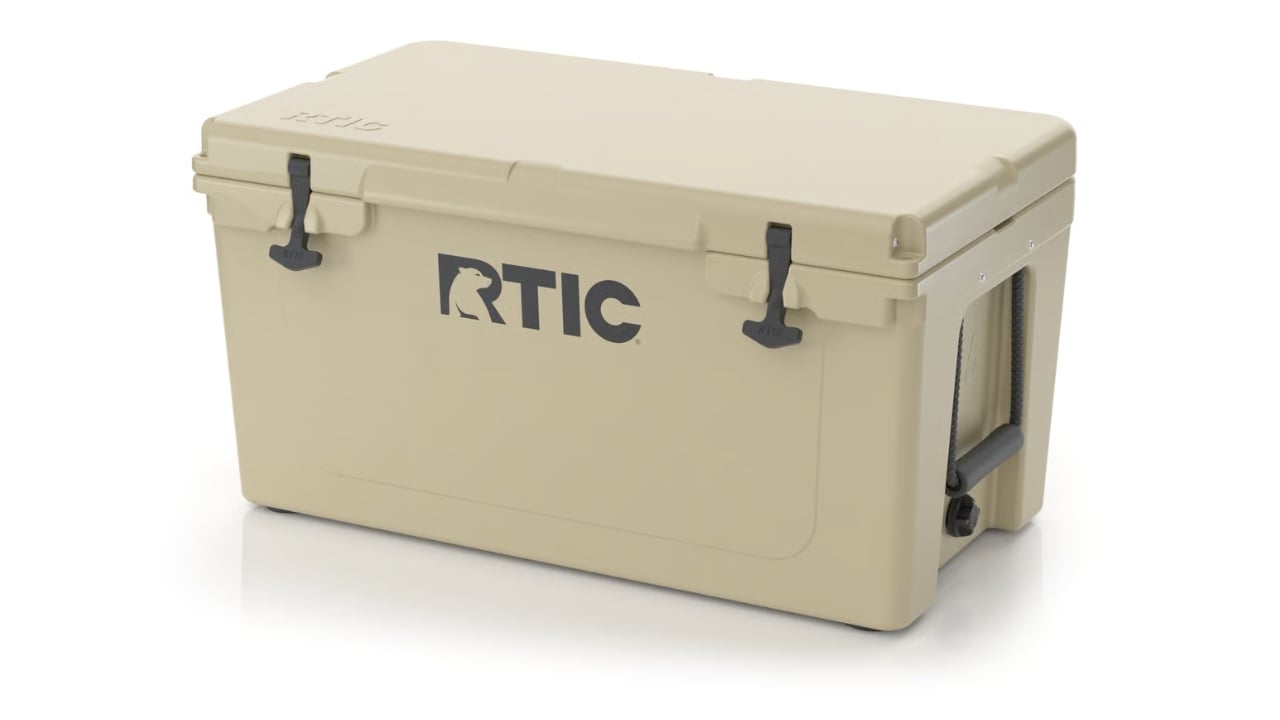
(not carried by the retailers we work with)
26 by 13 inches of interior floor, tested by OutdoorGearLab at 5.5 days holding below 40°F — better than the Yeti Tundra 65 managed in Outdoor Life’s testing — for roughly $130 less. Two drain plugs, tie-down slots, dry-ice compatible, up to 2.4 inches of closed-cell foam.
A separate head-to-head garage test found the RTIC performed “nearly identically to Yeti at substantially lower cost.”
The catch: 37.7 pounds empty, and OutdoorGearLab scored it 1.6/10 on moving and lifting — the worst subscore in their whole test. Loaded with a deer and ice, this is a two-person carry, full stop. The drain plugs also lack leashes, so you will lose one.
Best value: Igloo Polar 120 — ~$130
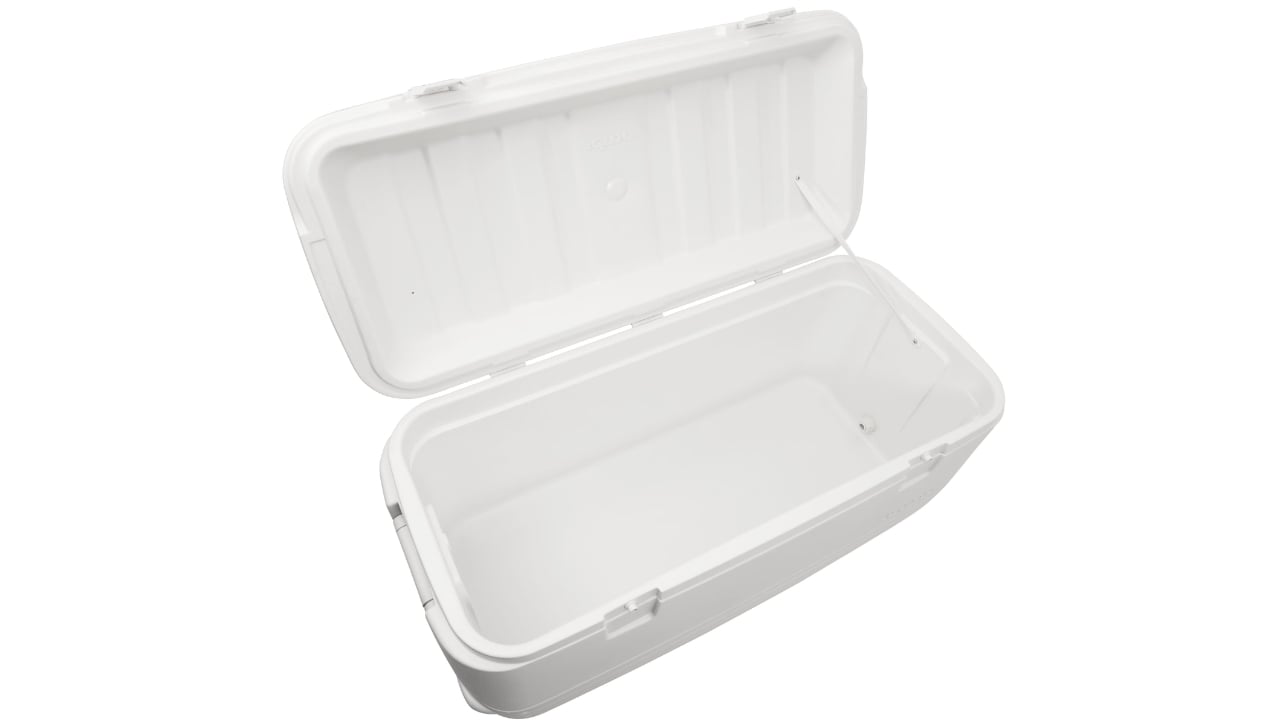
120 quarts, 18.2 pounds empty, and 4.5 tested days below 40°F. It swallows an entire quartered deer with room for ice, and it costs a third of what the rotomolded boxes do.
You’re giving up durability — thin-wall construction won’t survive being thrown in a truck bed for ten seasons the way a rotomolded cooler will. But for a hunter who fills a cooler four times a year and stores it in a garage, that’s a trade worth making. This is the best volume-per-dollar in the guide by a wide margin.
The catch: no wheels, and a two-person lift when loaded — which is true of every cooler that fits a deer.
Best insulation tested: Cabela’s Polar Cap Equalizer 80 — ~$350
OutdoorGearLab scored it 82/100 with a 9.0/10 on insulation and 9.0/10 on durability, and measured it holding below 40°F for eight days in mid-summer without pre-chilling — the strongest tested insulation number in this guide. A five-year owner reported the coolers “remain fully functional despite cosmetic scratches.”
Two honest caveats. The rated 80 quarts is actually about 68 quarts by OutdoorGearLab’s measurement — buy assuming 68. And that $350 price is from a 2023 review; we could not verify current pricing.
The catch: portability scored 4.0/10, and the long-term reviewer noted latches crack with extended use (replacements are available).
Best interior for quarters: Grizzly 75 — $399.99
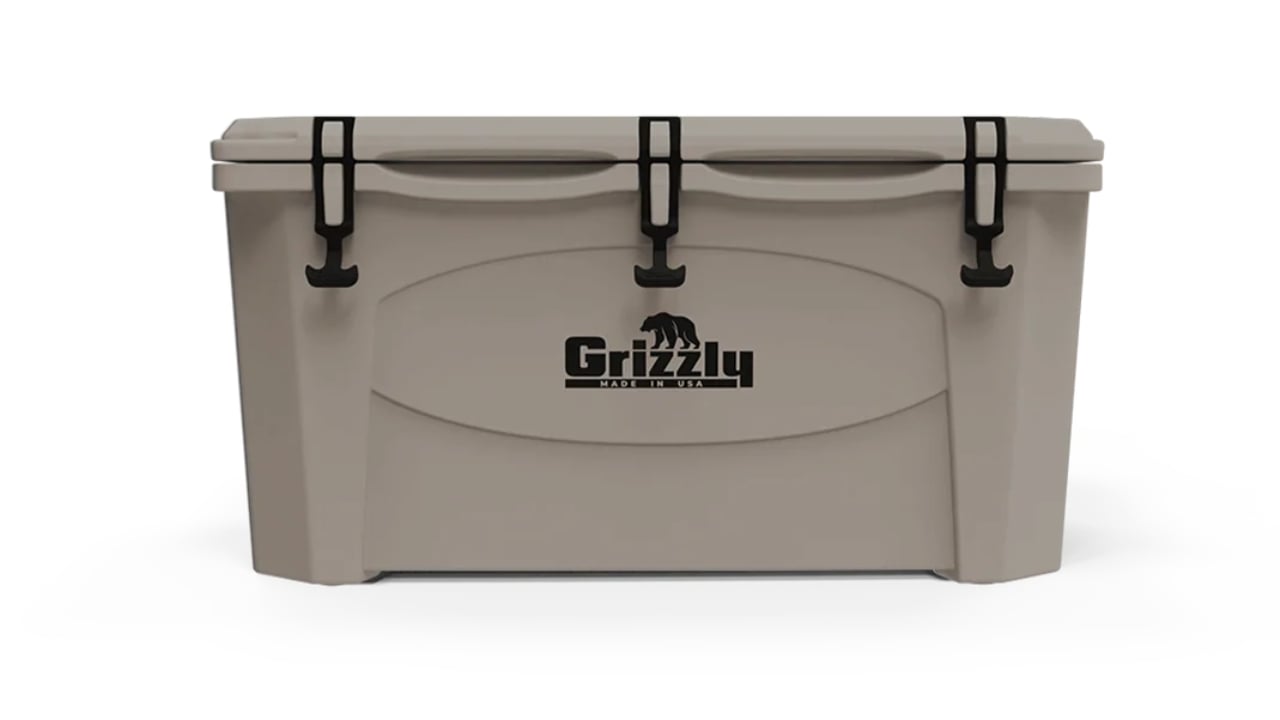
(not carried by the retailers we work with)
27.5 inches of interior floor — the longest here, and the reason it’s on this list. Dual 2″ drain plugs, bear-certified, made in Iowa, and a lifetime warranty.
Full disclosure: we found no hands-on testing of the Grizzly 75 from any major outlet, and in the one head-to-head we found, the smaller Grizzly 40 finished last of five on ice retention. Buy this for the interior dimensions and the warranty, not for a proven ice number.
The benchmark: YETI Tundra 65 — $395–420
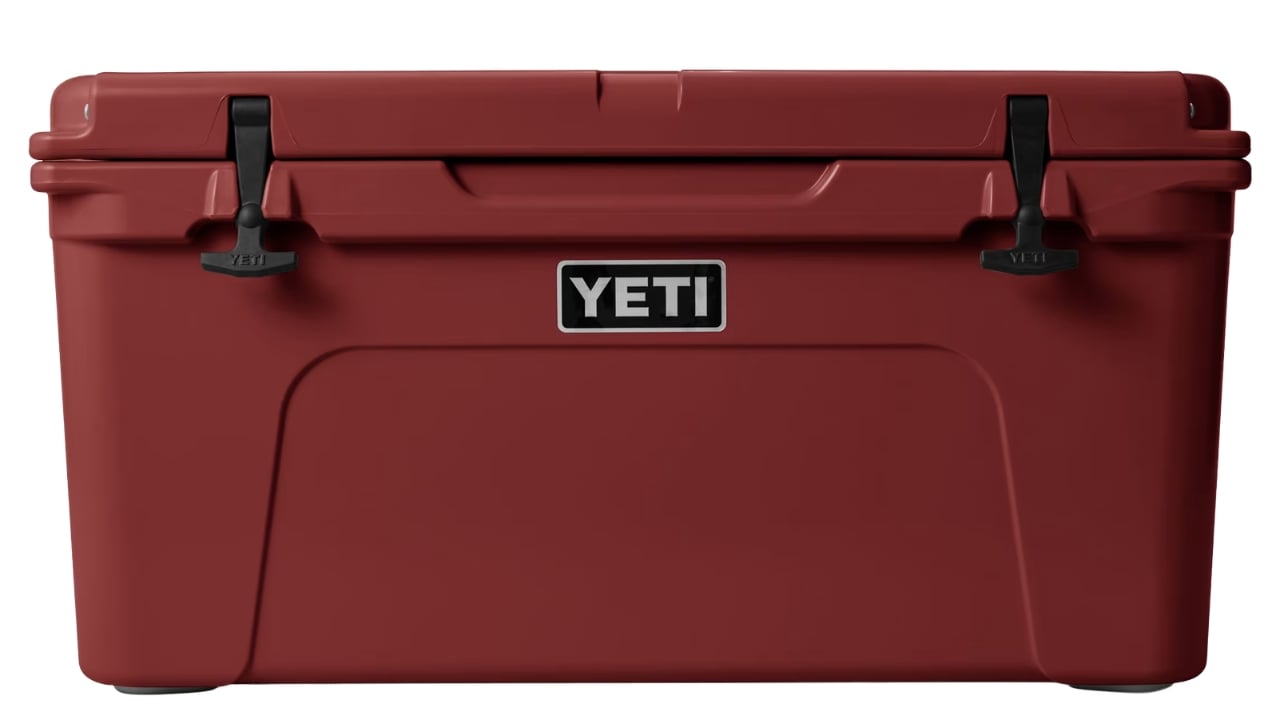
Outdoor Life measured 117 hours — 4.9 days — and Field & Stream got about six days out of the Tundra 45 in an eight-day Michigan test with 24 hours of direct sun. It’s bear-certified with two padlocks, 30.3 pounds empty (lighter than the RTIC), and it holds resale value like nothing else in the category.
The honest knock: the interior is only 23.3 by 10.7 inches — the tightest usable box among the big coolers here, at the highest price. You’re paying a premium for build quality and brand, and giving up floor space to do it.
Also worth naming
Pelican 70QT Elite ($362.95) — the strongest warranty in the guide, a genuine lifetime guarantee. Note the 36″ × 20.3″ × 21″ exterior is the biggest footprint here; measure your truck bed. Pelican’s own site lists empty weight at 50 lb while a dealer spec sheet says 33.29 lb — almost certainly shipping vs. product weight, but confirm before you plan a solo carry.
YETI Hopper M30 2.0 ($350) — a soft cooler, and worth saying plainly: this is not a deer-hauling cooler. It’s for backstraps, tenderloins, and the heart and liver on the drive home. Tested at over 48 hours, holding half its ice after nearly 24 hours in 90°F direct sun. RTIC’s Ultra-Tough soft cooler (~$110) is the budget alternative, though we found no independent testing of it.
Actually cooling the meat
The cooler is half the job. Here’s the other half, from state agencies and processors rather than gear reviewers.
Get it below 40°F, fast. Michigan State Extension: “cool the carcass to 40°F or below as soon as possible.” Wisconsin’s agriculture department: chill the carcass surface to 40°F or lower within 24 hours. Above 41°F, per Mississippi’s health department, “harmful bacteria capable of causing foodborne illness grow quickly.”
Meat on the ice, never in the water. This is unanimous across every source. Submerged meat waterlogs and turns gray, and as Deer & Deer Hunting puts it, “if you let the meat soak in ice water, all the juices that make venison taste great will leach out.” Bag the meat, or lay plastic over the bottom ice.
Mesh game bags, never trash bags. Trash bags trap moisture against the meat. Mesh lets air move while keeping dirt and flies off.
The drain plug question — and the answer. You’ll find hunters who insist on leaving the plug open to drain continuously, and hunters who insist on keeping it shut. Field & Stream’s Will Brantley changed his own practice after a friend who left his drain open had maggots crawl in through it. Deer & Deer Hunting says to drain daily and add ice.
They’re not actually in conflict: the meltwater has to go, but the drain shouldn’t live open. Open it, drain it, close it. Do it daily. This is where the RTIC 65 and Grizzly 75’s dual drain plugs earn their keep — you can drain fast without tipping a loaded cooler.
Aging in a cooler: 34–37°F is the target per MeatEater; Wisconsin says 32–36°F and never above 40°F, for no more than two weeks. Keep a thermometer in it and check daily. Above about 50°F ambient for much of the day, cooler-aging isn’t realistic.
Food safety limit: fresh raw venison keeps 3–5 days refrigerated, per MSU Extension. No agency publishes a “days in a cooler” number, because a cooler is only a refrigerator for as long as it stays under 40°F. Verify with a thermometer, not by how much ice you can still see.
A note on comparing ice numbers
The retention figures above come from four different test methodologies and are not directly comparable to each other. Outdoor Life filled to a third capacity at 60–70°F. Field & Stream filled completely in Michigan at 75–90°F with direct sun. OutdoorGearLab used hundreds of pounds of ice. One garage test never opened the lid and produced 14-day results nobody will replicate in a truck bed.
Use them to rank coolers within a single test, not across tests — and treat any manufacturer “up to X days” claim as marketing.
Bottom line: RTIC 65 if you want the best all-around deer cooler, Igloo Polar 120 if you want the most capacity for the least money, Grizzly 75 if you want the longest floor and a lifetime warranty. Then get the meat under 40°F within 24 hours, keep it on the ice rather than in it, and drain daily with the plug closed in between.
Sources: OutdoorGearLab · Outdoor Life · Field & Stream · MeatEater · MSU Extension · Wisconsin DATCP · National Deer Association. Prices change — verify before buying.
Like The Avid Outdoorsman’s content? Be sure to follow us.
Here’s more from us:


