
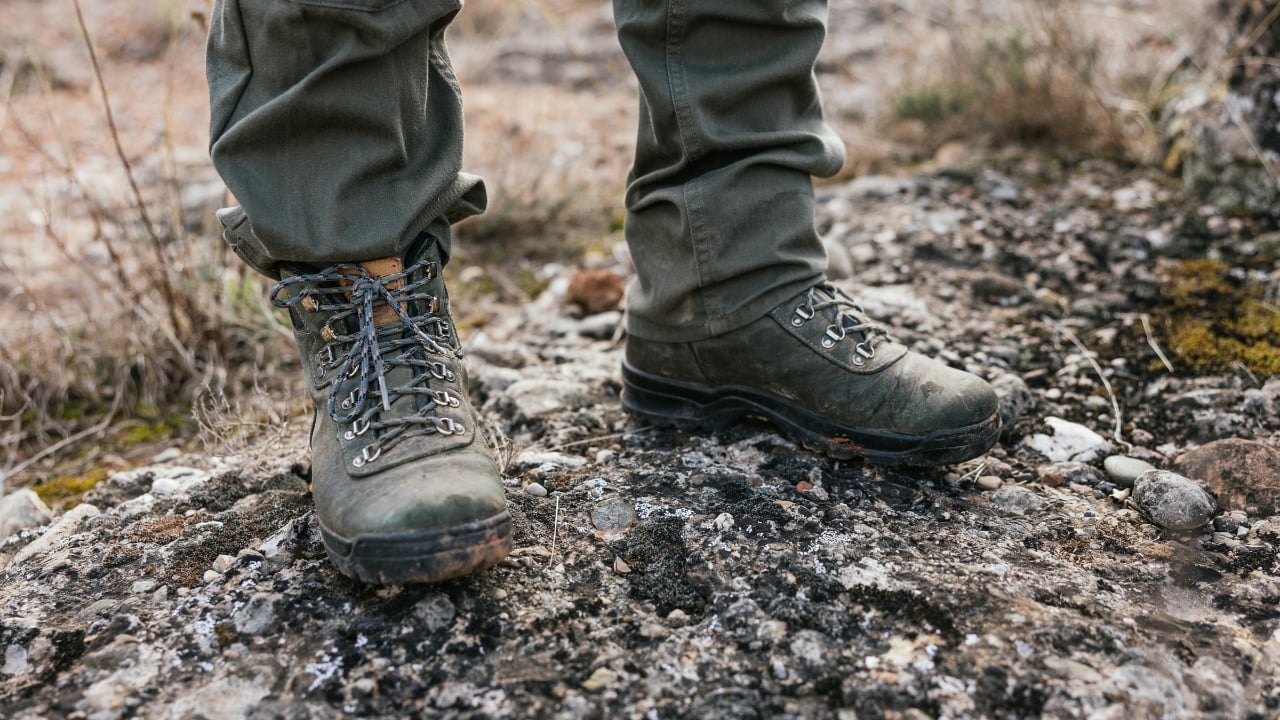
Photo credit: Jordi Mora/Shutterstock.com
Prices verified September 5, 2026 from manufacturer and retailer listings. The Avid Outdoorsman is a Bass Pro Shops affiliate — if you buy through a link here we earn a small commission at no cost to you.
The early-season boot problem is the opposite of the late-season one. In December you’re trying to keep heat in. In September you’re trying to get it out — and if you fail, you arrive at your stand with wet socks, which is how you end up cold in 55-degree weather.
There are really only two decisions here: rubber or leather, and how far you’re walking.
Rubber if you’re walking a short distance through wet ground and scent control matters — the classic Midwest walk-to-the-stand. The LaCrosse Alphaburly Pro 18″ uninsulated (~$210) is the default and has been for years.
Leather if you’re covering real miles or still-hunting — rubber boots are miserable at distance. The Irish Setter VaprTrek 8″ (~$230) is the pick.
Everything below explains the tradeoffs, and the last section is the one worth reading even if you already know what boot you want: the sizing mistake that makes people’s feet cold has nothing to do with insulation.
How we picked
Early-season boots get judged on the wrong criteria in most guides — usually waterproofing and camo pattern. What actually matters in September and October:
- Breathability. Sweat inside the boot is the entire early-season failure mode.
- Weight. You feel every ounce on a mile walk in warm weather.
- Traction on wet ground. Early season is muddy and greasy, not frozen.
- Height — enough to keep you dry crossing a creek, low enough not to cook you.
- Scent — a real argument for rubber, and the reason it dominates whitetail hunting despite being worse in every other respect.
Where we haven’t logged real miles in a boot, we say so and lean on published testing from MeatEater, Outdoor Life, GearJunkie, and Field & Stream.
At a glance
| Boot | Price | Type | Height | Weight (pair) | Insulation |
|---|---|---|---|---|---|
| LaCrosse Alphaburly Pro 18″ | ~$210 | Rubber | 18″ | 4.8 lb | None |
| Irish Setter MudTrek 17″ | ~$190 | Rubber/neoprene | 17″ | 4 lb 2 oz | None |
| Muck Edgewater II | ~$130–165 | Neoprene | 15.4″ | 2 lb | None |
| Irish Setter VaprTrek 8″ | ~$230 | Leather | 8″ | 2.75 lb | None or 400g |
| Danner Recurve 7″ | ~$260 | Leather | 7″ | 3 lb | None or 400g |
| Kenetrek Corrie II Hiker | ~$244 | Leather/nylon | 7″ | 3.2 lb | None |
Best overall rubber boot: LaCrosse Alphaburly Pro 18″ — ~$210
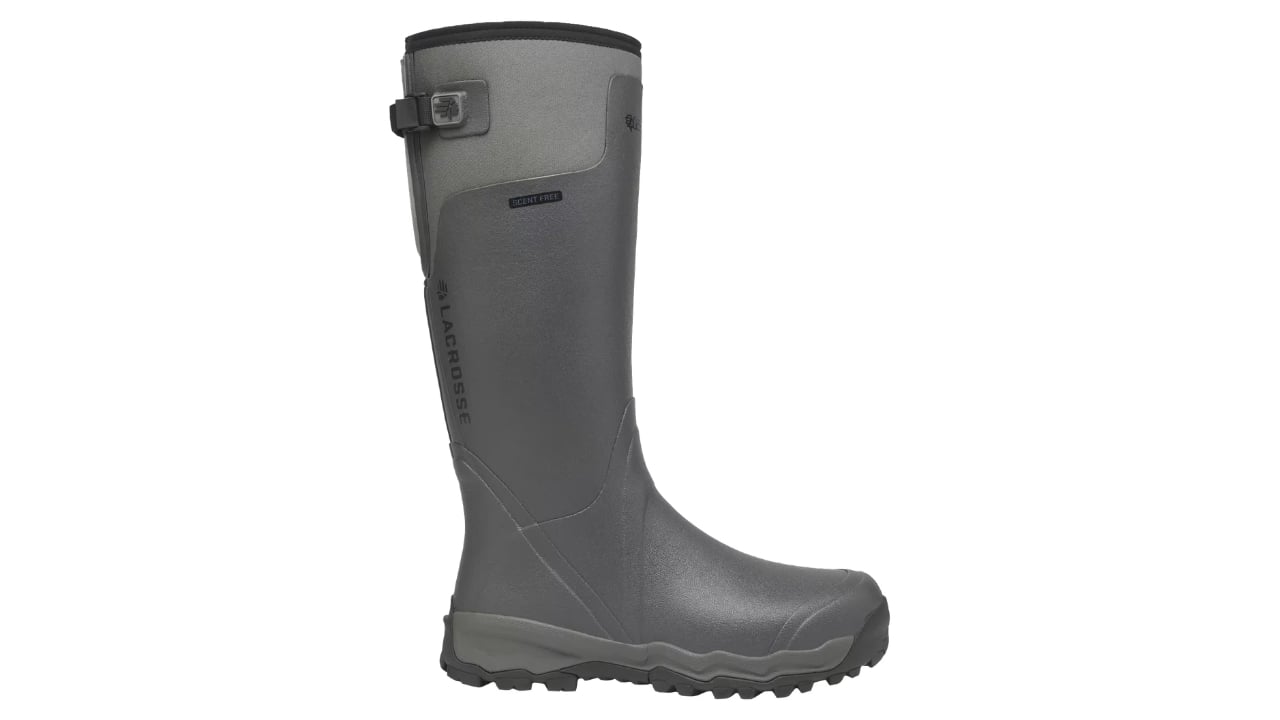
The most consistently recommended rubber hunting boot across every source we checked, and it earns it. Hand-laid natural rubber over neoprene, genuinely good ankle support for a pull-on boot, and an adjustable rear gusset that lets you tune the calf fit — which matters more than it sounds, because it’s what lets you run a heavier sock in November without buying a second boot.
MeatEater’s tester called it “my go-to hunting boot for most of whitetail season.” That’s the right framing: this is the boot you wear from September through the first real cold, then switch out of.
The catch: it’s genuinely hard to get off over layers, which every reviewer mentions. And the adjustment strap makes noise. At 4.8 pounds a pair it’s also not a boot you want to walk two miles in.
Who should skip it: anybody covering serious distance. Buy leather.
Lightest option: Muck Edgewater II — ~$130–165
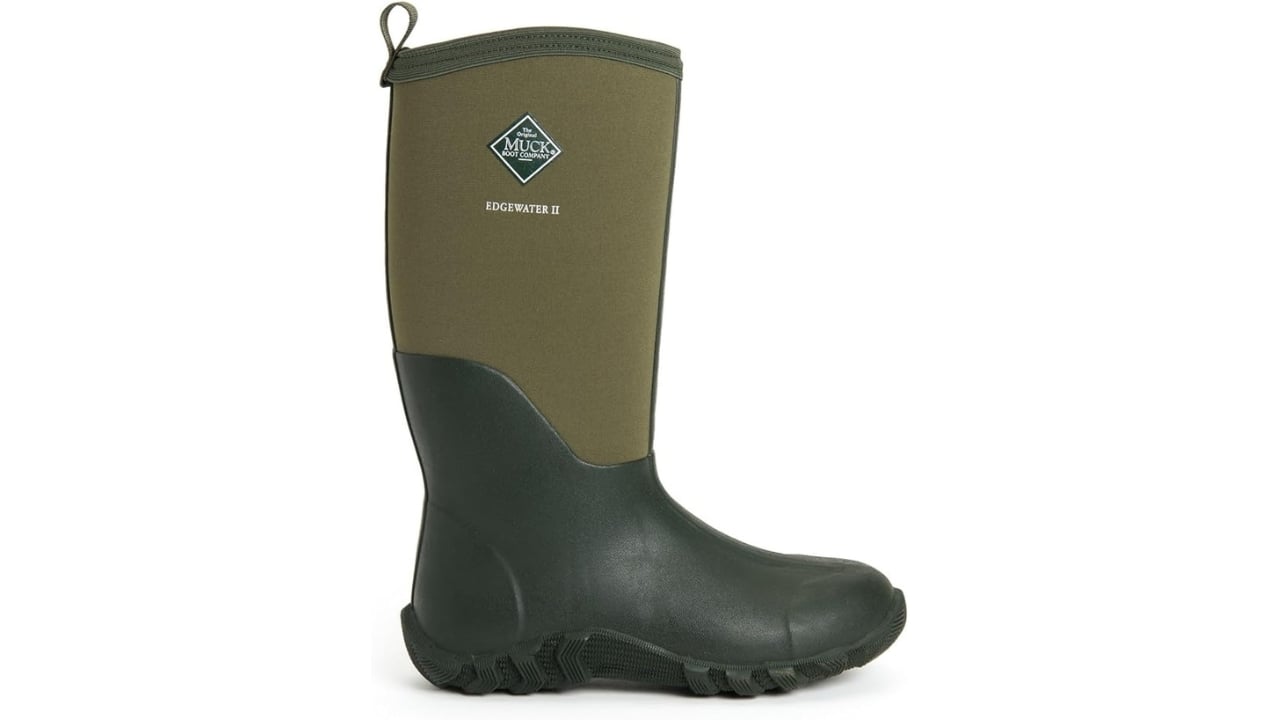
Two pounds a pair. That’s less than half the Alphaburly and it changes how a warm-weather walk feels. Breathable 5mm neoprene, easy on and off, genuinely waterproof, and cheap.
The catch, and it’s consistent across sources: the traction is poor. Outdoor Life also found the uppers “soak instead of shed water” in sustained wet. This is a flat-ground, short-walk, hot-weather boot.
Who should skip it: anyone hunting hills. The grip isn’t there.
Best athletic rubber boot: Irish Setter MudTrek 17″ — ~$190
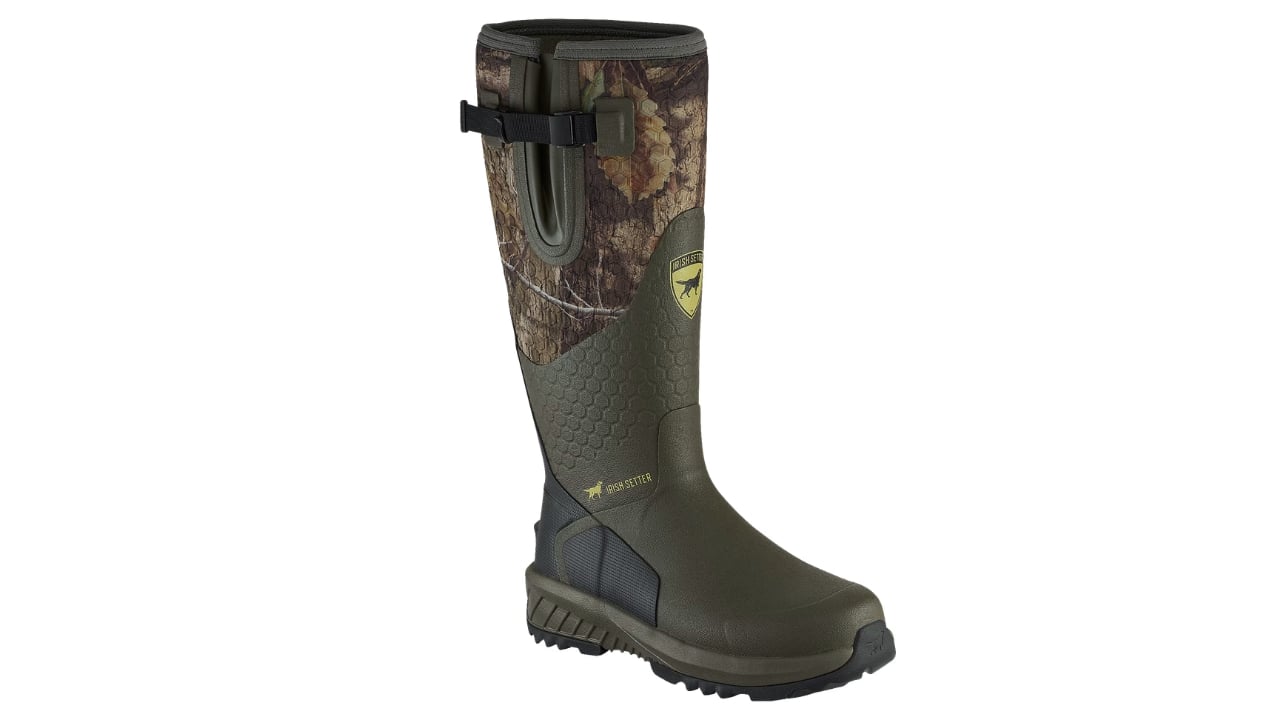
A snugger, more athletic take on the rubber boot. Field testing reported true-to-size fit with no break-in, traction on steep wet terrain that doesn’t clog with mud, and fast on/off — solving the Alphaburly’s most-cited flaw. Four pounds two ounces.
Comes in Athletic, Full, and Ankle fits, which is a real advantage if the Alphaburly’s calf has never fit you right.
The catch: we found only one hands-on field test of this boot, and it reported no downsides — which we read as thin testing rather than a perfect boot. Treat the praise as promising rather than proven.
Best for walking distance: Irish Setter VaprTrek 8″ — ~$230
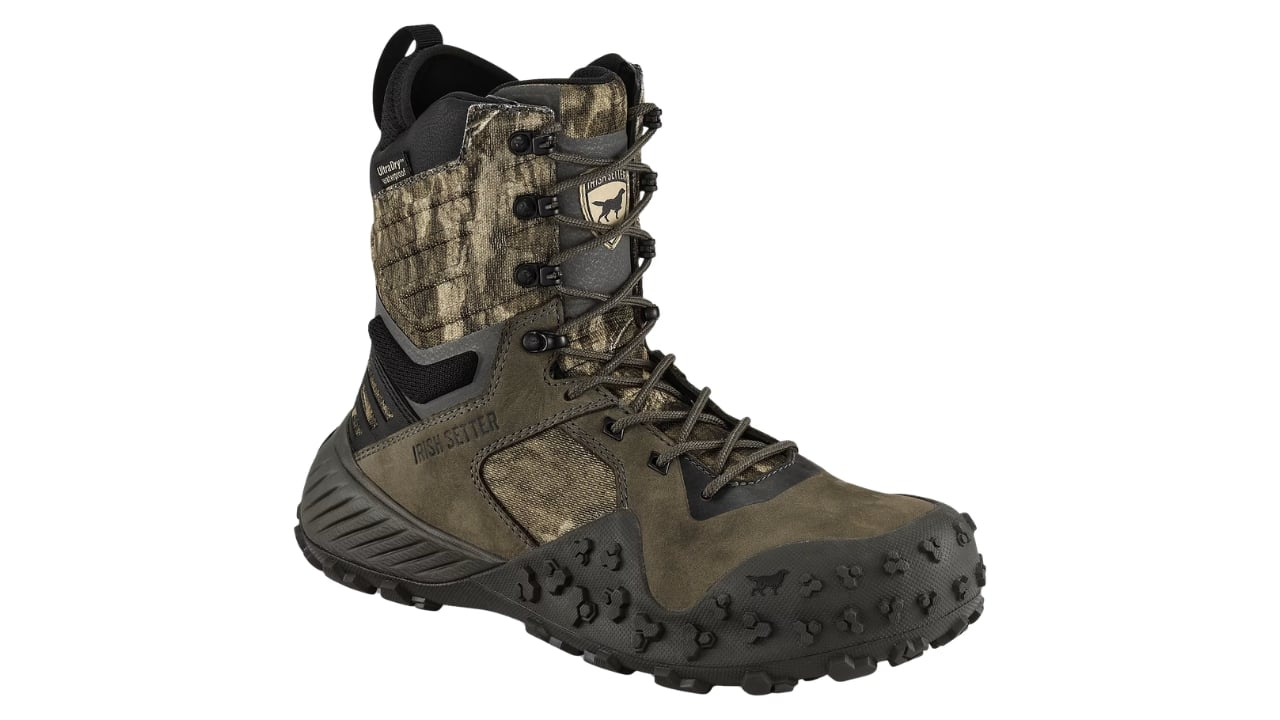
2.75 pounds a pair, nubuck leather, and GearJunkie describes the feel as “ultra-athletic.” This is the boot for hunters who walk to their spot rather than park near it, and for anyone who still-hunts.
The 400g insulated version is the smart buy if you only want one leather boot — it’s comfortable in the 40s and 50s and stretches well into November.
The catch: stiffer out of the box than expected, and not enough support for genuinely steep mountain ground.
Also worth naming
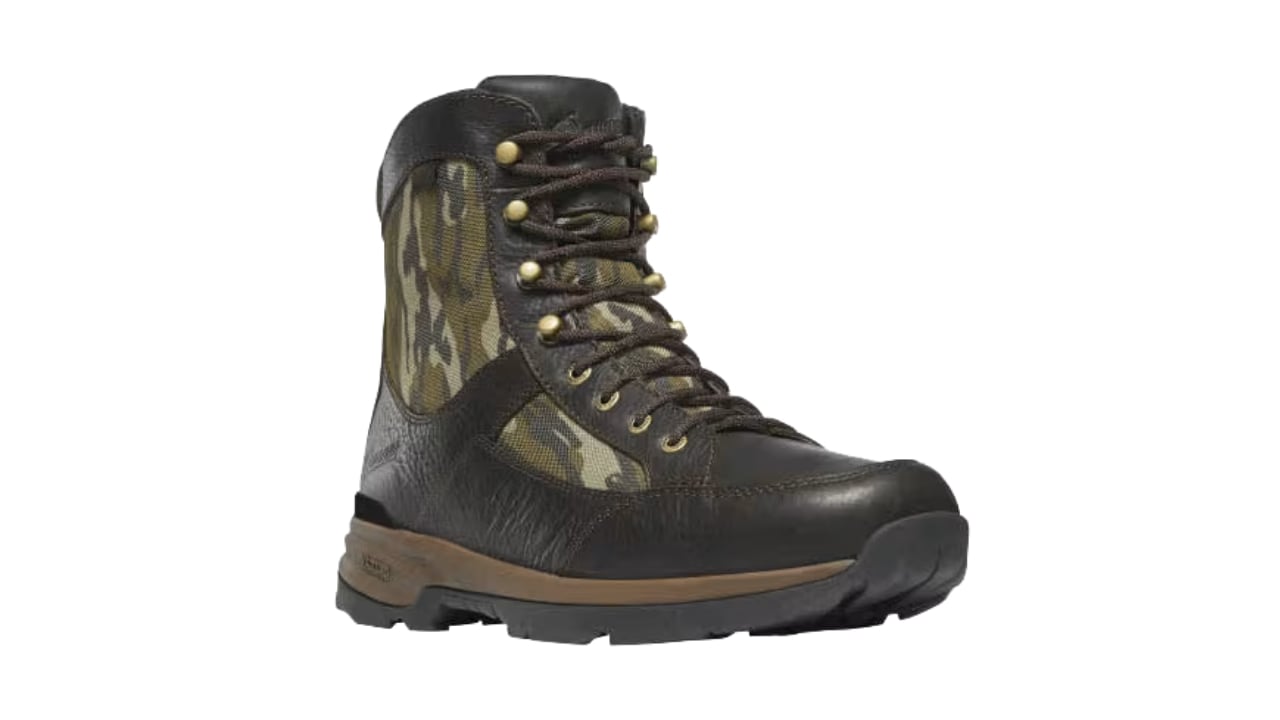
Danner Recurve 7″ (~$260) — GearJunkie’s value pick, praised for versatility and a mid-flex sole. Softer sole underperforms on steep terrain, and it’s less durable than heavier boots.
Kenetrek Corrie II Hiker (~$244) — Field & Stream’s winner for warm-weather hunting boots, lightweight with excellent ankle support. Expensive, and several reviewers note real break-in time.
Crispi Lapponia III GTX (~$350) — Field & Stream calls it “a feather on the feet.” One thing to know before you buy: despite the GTX name, Field & Stream describes it as water-repellent rather than waterproof, while GearJunkie treats it as a waterproof boot. That’s an unresolved conflict, and worth confirming with the retailer before you commit $350.
When to switch to insulated
The honest answer is not by temperature — by activity.
Insulation is sized around how much heat you’re producing. A 400g boot that’s perfect for a 45-degree walk-in becomes inadequate the moment you stop moving and sit for four hours. The switch point isn’t a number on a thermometer; it’s when your sits get long enough that your feet go cold before your hands do.
For most Midwest and Eastern whitetail hunters that lands somewhere in early-to-mid November, and it usually means going from an uninsulated or 400g boot to something in the 800g–1600g range. That’s a different article and a different boot.
The people who get this wrong are the ones who wear their insulated boots too early, sweat in them, and then discover in December that a boot they’ve been soaking for two months doesn’t work anymore.
The sizing mistake that makes your feet cold
This is the part of the article worth the most and appears in almost none of the others.
Buying an insulated boot in your normal size and then adding a thicker sock makes your feet colder, not warmer. Two separate mechanisms cause it, and they compound:
Circulation. The U.S. Army’s cold-weather injury guidance is explicit: “tight boots will constrict blood flow,” and a sock “must not be so thick that the boot fits too snugly as this can cause constriction of the blood vessels and increase the risk of cold injury.” Its recommendation: “Boots may need to be sized larger so that a liner and an insulated sock can be worn.” (TB MED 508, USARIEM)
Compressed insulation. Kenetrek adds the mechanism the medical sources leave out: a too-tight boot “actually makes your feet colder by compressing the boot insulation and reducing circulation.” (Kenetrek boot fitting) Insulation works by loft. Squash it and the R-value goes with it.
But don’t overcorrect. Outdoor Life warns against simply buying a size up: heel slippage causes blisters, and “extra room allows air to get in and decrease the boot’s warmth.”
The right approach: decide on the sock system you’ll actually wear all season, then fit the boot around it. Kenetrek’s benchmark is roughly a finger’s width behind your heel with the boot laced snug.
This makes an adjustable rear gusset — which the LaCrosse Alphaburly Pro and the Irish Setter MudTrek Full Fit both have — a genuinely functional feature rather than a marketing one. And it makes a boot with no half sizes a real liability.
Frequently asked
Does rubber actually help with scent? It eliminates one pathway — your boot itself doesn’t hold and shed scent the way leather does. It does nothing about the scent falling off the rest of you. Treat it as one input, not a solution.
One boot or two? Two, if you can afford it. The single hardest thing to do is find one boot that breathes in September and keeps you warm in December. Most people who try end up uncomfortable in both.
How long should hunting boots last? Rubber boots are the consumable ones — several reviewers report replacing them every two to three seasons, and cracking at the flex point is what kills them. Store them out of sunlight and don’t leave them in a hot truck.
Bottom line: LaCrosse Alphaburly Pro for the classic short walk to a stand, Irish Setter VaprTrek if you actually cover ground, Muck Edgewater II if you want light and cheap and your ground is flat. And whatever you buy for December, fit it around the sock you’ll wear — not the sock you own now.
Sources: MeatEater · Outdoor Life · GearJunkie · Field & Stream · U.S. Army TB MED 508 · Kenetrek. Prices change frequently — verify before buying.
Like The Avid Outdoorsman’s content? Be sure to follow us.
Here’s more from us:


