Photo credit: Smith & Wesson/YouTube
The .44 Magnum sits in a sweet spot that few handgun cartridges have ever matched. It is powerful enough for serious handgun hunting and backcountry use, yet the revolvers chambered for it can still be reasonably portable and enjoyable with lighter .44 Special ammunition. You can buy heavier magnum cartridges and larger revolvers, but once you move much beyond the .44, size, recoil, ammunition cost, and practicality start changing quickly.
The difficult part is choosing the revolver. Some .44s are built to handle heavy hunting loads for decades. Others prioritize manageable weight, smooth double-action shooting, or the accuracy of a premium single-action. There is no single configuration that wins every category. These are the 20 .44 Magnum revolvers I consider standouts, whether the priority is deer hunting, carrying through the woods, collecting, shooting from a rest, or simply owning one great big-bore revolver.
Smith & Wesson Model 29

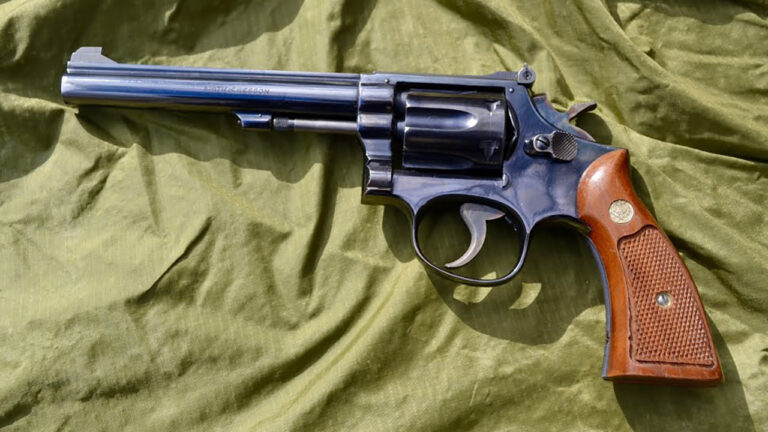
The Model 29 is still the revolver against which almost every other .44 Magnum gets compared. Smith & Wesson developed the original .44 Magnum revolver in the mid-1950s, and the Model 29 eventually became a cultural icon while remaining a genuinely excellent shooting revolver. Its N-frame gives the cartridge enough gun without creating the enormous dimensions associated with some later hunting revolvers, and the combination of adjustable sights, traditional Smith & Wesson ergonomics, and a good single-action trigger makes it remarkably pleasant when the shooter does his part.
I particularly like the classic 6- and 6½-inch guns because they balance beautifully and provide enough barrel to take advantage of the cartridge. A good Model 29 can hunt, serve as a woods gun, and satisfy the collector instinct at the same time. Few .44s manage all three nearly as well.
Smith & Wesson Model 629

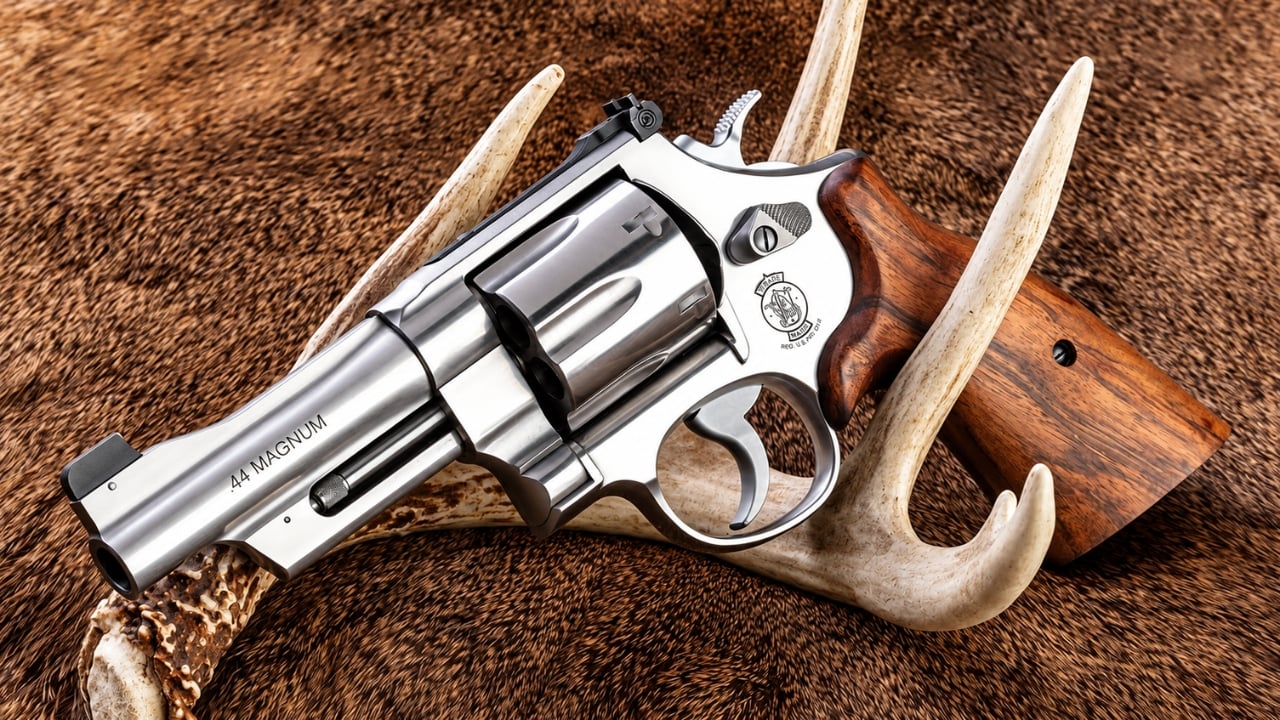
If I wanted the basic Model 29 formula in a revolver that I planned to expose to ugly hunting weather, the stainless Model 629 would be extremely difficult to beat. You still get the familiar N-frame proportions and excellent adjustable sights, but the stainless construction makes far more sense when the revolver is going to spend time around rain, sweat, mud, or damp hunting gear.
The 629 has also been offered in enough barrel lengths and configurations that almost every .44 Magnum shooter can find one that makes sense. A four-inch gun works well as a substantial woods revolver, while six-inch and longer versions become very capable hunting handguns. It is not the strongest .44 ever made and it is not the lightest. The reason it remains so good is that it never goes too far in either direction. It is a remarkably balanced interpretation of what a .44 Magnum should be.
Ruger Redhawk
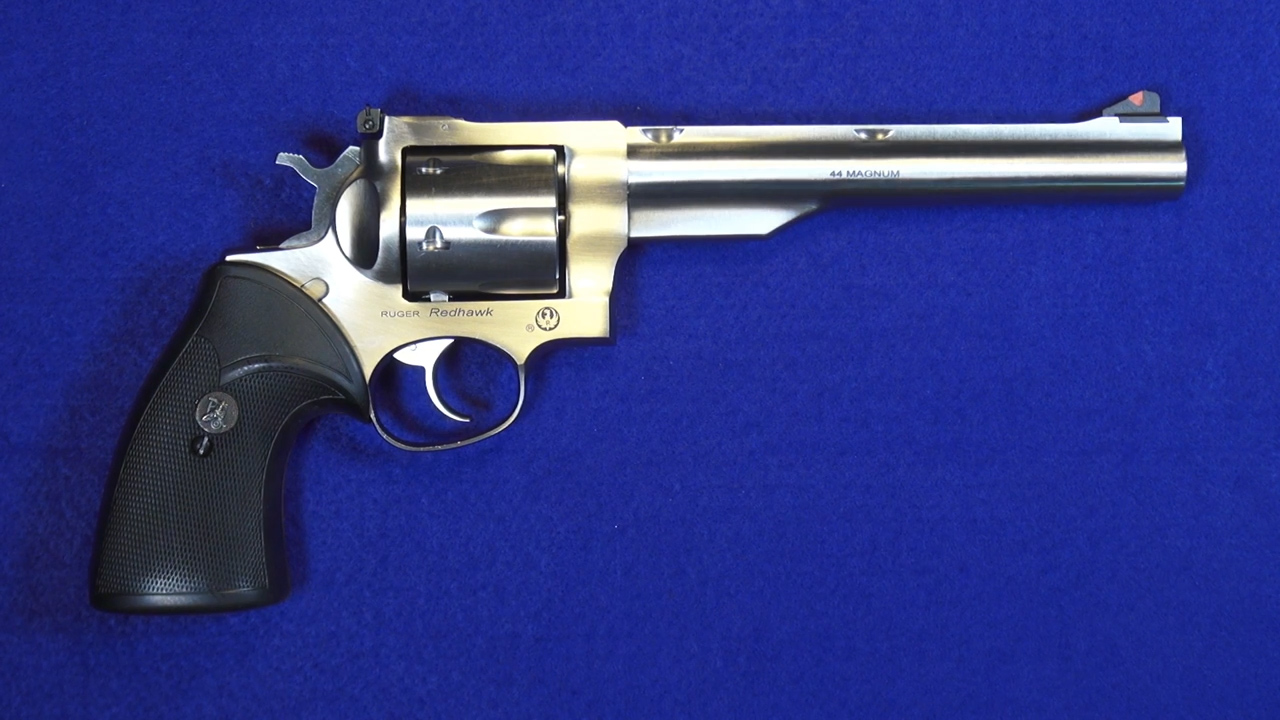
The Redhawk is the revolver I start looking at when durability moves near the top of the list. Ruger built the gun around a substantial one-piece frame and an unusually robust cylinder arrangement, creating a double-action .44 that has earned a reputation for handling serious use without feeling mechanically delicate.
It is heavier than a Model 29, and I would never pretend that extra steel disappears on a belt. Once the shooting starts, though, the weight becomes much easier to appreciate. Recoil is more manageable, the gun settles nicely from field positions, and the action has the solid feel I want in a revolver that may be carried around rough country for decades. The Redhawk is not elegant in the traditional Smith & Wesson sense. It appeals to me because it feels like Ruger started with strength and worried about everything else afterward.
Ruger Super Redhawk

For dedicated handgun hunting, the Super Redhawk may be the most sensible factory .44 Magnum ever built. Ruger reinforces the frame around the barrel and top strap, uses its triple-locking cylinder arrangement, and equips the revolver with an extended frame that lends itself naturally to optics. Ruger specifically describes the .44 Magnum version as accepting .44 Special ammunition as well.
This is not the .44 I would choose for casually carrying around town or slipping into a small holster. It is a serious hunting revolver. The large frame, heavy barrel, and substantial grip soak up recoil and make the gun much easier to control from a rest. Mount a quality handgun optic and the Super Redhawk becomes capable of remarkable accuracy. If my main goal were hunting deer or hogs with a .44 Magnum, this would be very close to the top of my list.
Ruger Super Blackhawk

The Super Blackhawk proves that a single-action revolver does not need to be expensive or exotic to become an outstanding .44 Magnum. Ruger introduced the Super Blackhawk family shortly after the .44 Magnum arrived, and the modern version still combines coil springs, adjustable sights, strong construction, and compatibility with both .44 Magnum and .44 Special.
I like the 7½-inch version particularly well because the long barrel gives the cartridge room to perform while providing an excellent sight radius. The traditional single-action grip also allows the gun to roll somewhat under recoil instead of driving all the force straight into the shooter’s hand. It requires manually cocking the hammer before every shot, but I do not consider that much of a disadvantage for deliberate handgun hunting. For someone who wants a strong, accurate .44 without moving into premium custom pricing, the Super Blackhawk remains outstanding.
Colt Anaconda
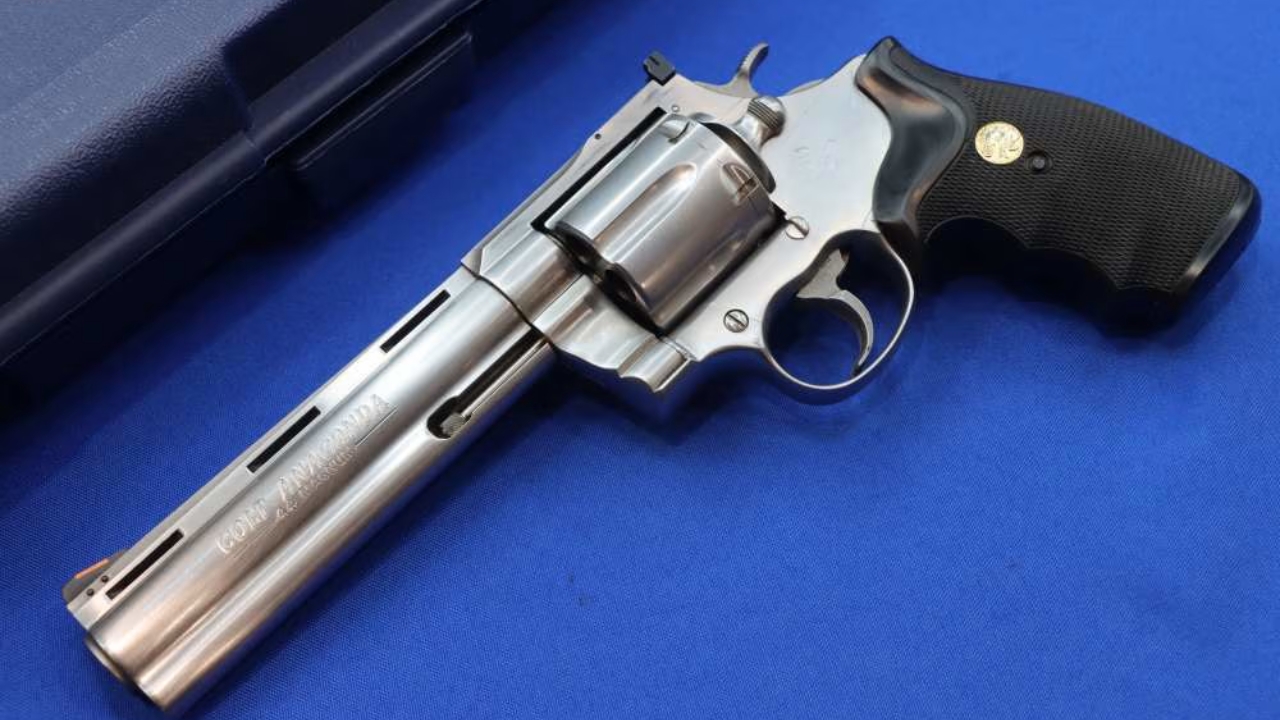
The modern Anaconda gave .44 Magnum shooters something many had wanted for years: a large-frame Colt double-action revolver back in normal production. Colt reintroduced the redesigned Anaconda in 2021, chambered in .44 Magnum. The new gun is more substantial than the old collectible Anacondas and benefits from the improvements Colt made while bringing its large revolvers back.
What really sells the Anaconda for me is the balance. It feels like a premium traditional revolver rather than a giant specialty hunting handgun. The trigger can be excellent, the sights are useful, and the full-lug barrel gives the gun enough forward weight to control full-power loads without making it completely unwieldy. I would choose the six-inch version as the all-around configuration. It has enough barrel for hunting while remaining compact enough that carrying it through the woods does not become a punishment.
Freedom Arms Model 83
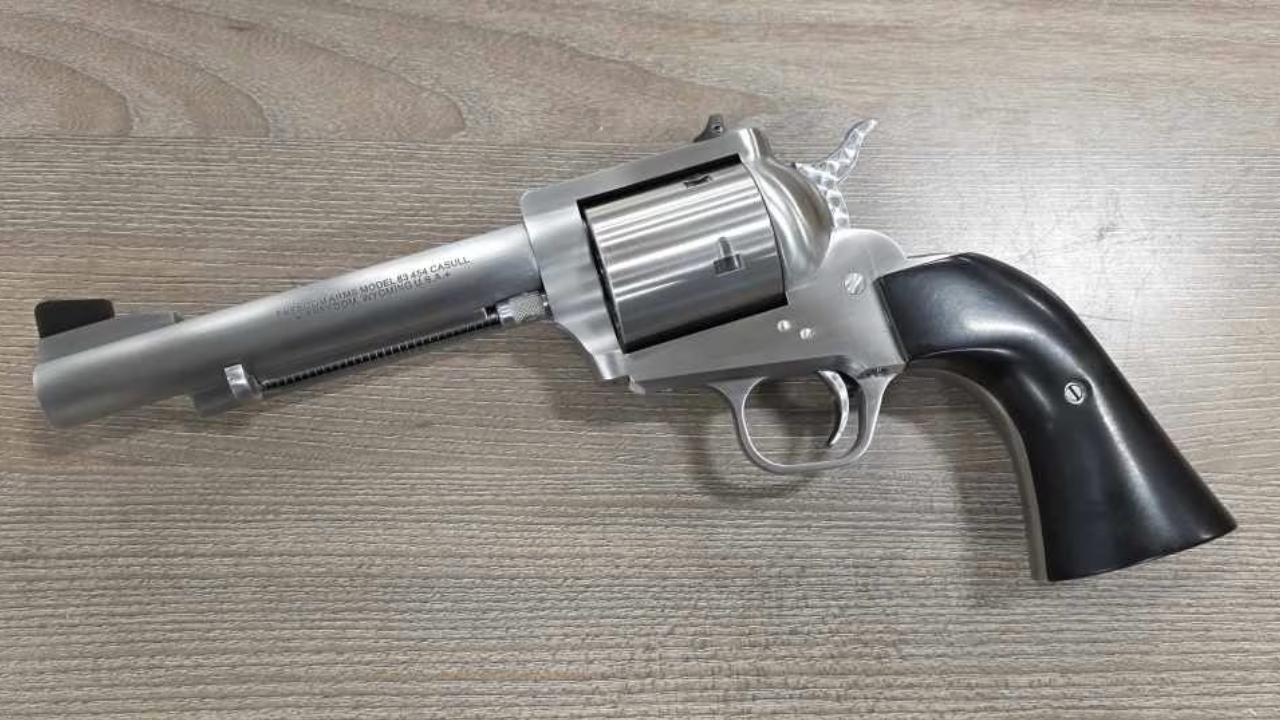
The Model 83 occupies a completely different class from ordinary production revolvers. Freedom Arms builds it around extremely tight tolerances, excellent materials, and the kind of attention to fit that becomes immediately obvious when you handle one. In .44 Magnum, that means you are using a revolver strong enough for cartridges far beyond the ordinary pressure requirements of the .44.
That strength is almost secondary to the accuracy. A good Model 83 can shoot like a miniature rifle when supported properly and paired with ammunition it likes. The single-action trigger is excellent, cylinder lockup is exceptionally tight, and the entire gun feels purpose-built for precision handgun hunting. The obvious downside is price. This is not a value-oriented revolver. If the goal is buying one premium single-action .44 and keeping it for the rest of your life, however, the Model 83 is difficult to improve upon.
Magnum Research BFR

The BFR is what I recommend looking at when a Super Blackhawk somehow does not feel substantial enough. Magnum Research builds these single-action revolvers around enormous frames capable of handling some truly oversized cartridges, so .44 Magnum is hardly pushing the platform close to its limits.
That gives the BFR a wonderfully stable feeling with normal .44 Magnum ammunition. The weight works in your favor when shooting heavy loads, while the single-action design remains mechanically straightforward and extremely strong. It is certainly not graceful. Depending on barrel length, carrying one can feel more like carrying hunting equipment than carrying a normal sidearm.
That is completely fine if hunting is the goal. From a supported position, the BFR can be exceptionally accurate, and the long-barreled configurations provide excellent sight radius. For deliberate hunting where weight matters less than strength and shootability, this big revolver makes a lot of sense.
Smith & Wesson Model 69 Combat Magnum

The Model 69 answers a question few manufacturers bothered asking: how small can a genuinely useful .44 Magnum revolver become without turning into a novelty? Smith & Wesson put the cartridge into the smaller L-frame and used a five-shot cylinder to keep dimensions under control.
That gives the Model 69 a huge advantage as a woods gun. It is much easier to carry all day than a big N-frame or Super Redhawk, yet it still provides full .44 Magnum capability when needed. The tradeoff is recoil. You absolutely know when a full-power load goes off in an L-frame revolver.
For me, that is acceptable because this gun is not supposed to be a heavy hunting revolver firing boxes of maximum loads from a bench. It is a packable .44 that can be loaded down with .44 Special for practice and carried with more serious ammunition when the situation warrants it.
Smith & Wesson Model 329PD
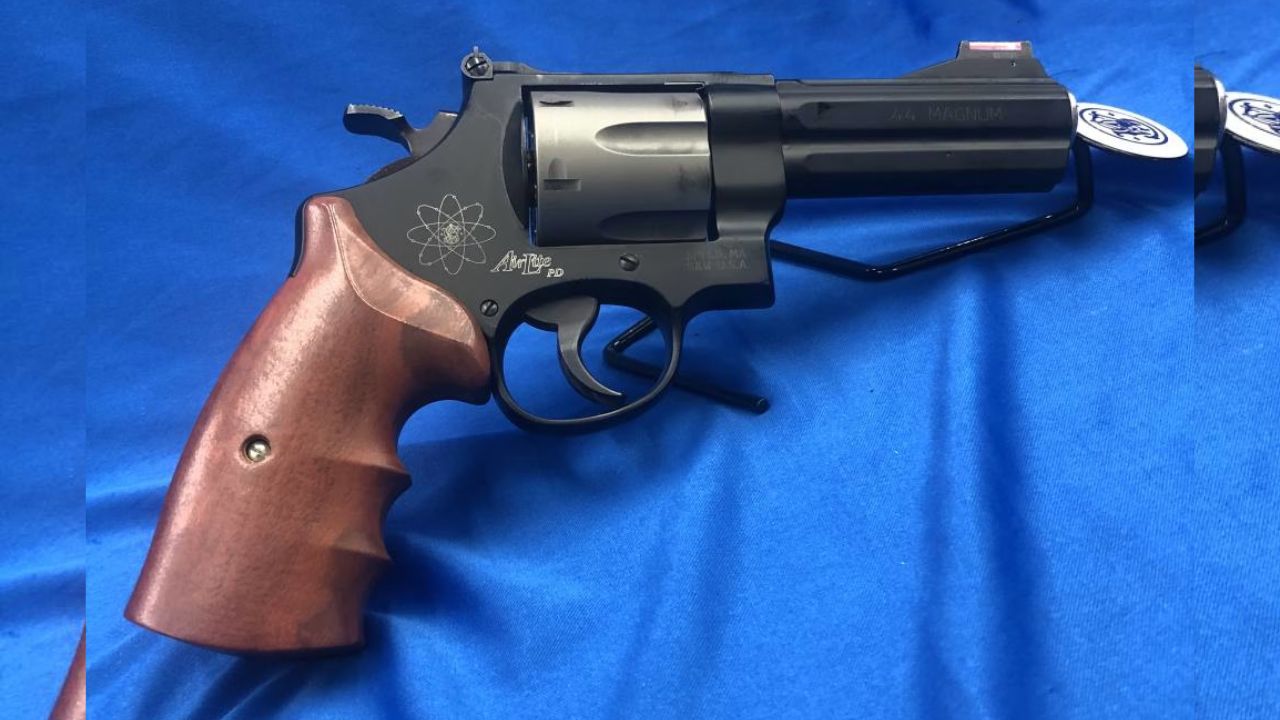
The 329PD takes the lightweight .44 concept almost to its limit. Smith & Wesson uses lightweight materials to produce a full-size N-frame .44 that weighs dramatically less than a conventional stainless 629. On a belt, that sounds wonderful. When a full-power magnum fires, you immediately understand the other side of the bargain.
I would not choose the 329PD for recreationally shooting heavy magnum ammunition all afternoon. That is not where it shines. This is the .44 for someone who has to carry the gun far more than he expects to fire it. Hunters, fishermen, and backcountry travelers can get serious big-bore capability without hanging several pounds of steel from the belt.
With sensible ammunition selection and plenty of practice, the 329PD fills a role heavier .44s cannot. It may be the easiest serious .44 Magnum revolver to actually have with you all day.
Ruger Super Redhawk Alaskan

The Alaskan is nearly the opposite of the long-barreled Super Redhawk. Ruger takes the same extremely strong basic platform and cuts it down into a compact, heavy-barreled revolver intended for close-range backcountry use. It looks almost ridiculous the first time you see one because the frame seems enormous compared with the abbreviated barrel.
That strange configuration has a purpose. The short barrel makes the revolver easier to carry and draw in thick clothing or around outdoor gear, while the heavy frame keeps the gun strong and helps put some mass between the shooter and full-power ammunition. Ruger’s production history includes Alaskan models within the Super Redhawk family.
I would not pick it for long-range handgun hunting. For carrying a very powerful .44 in rough country where portability matters more than velocity or sight radius, the Alaskan makes far more sense.
Ruger Super Blackhawk Bisley
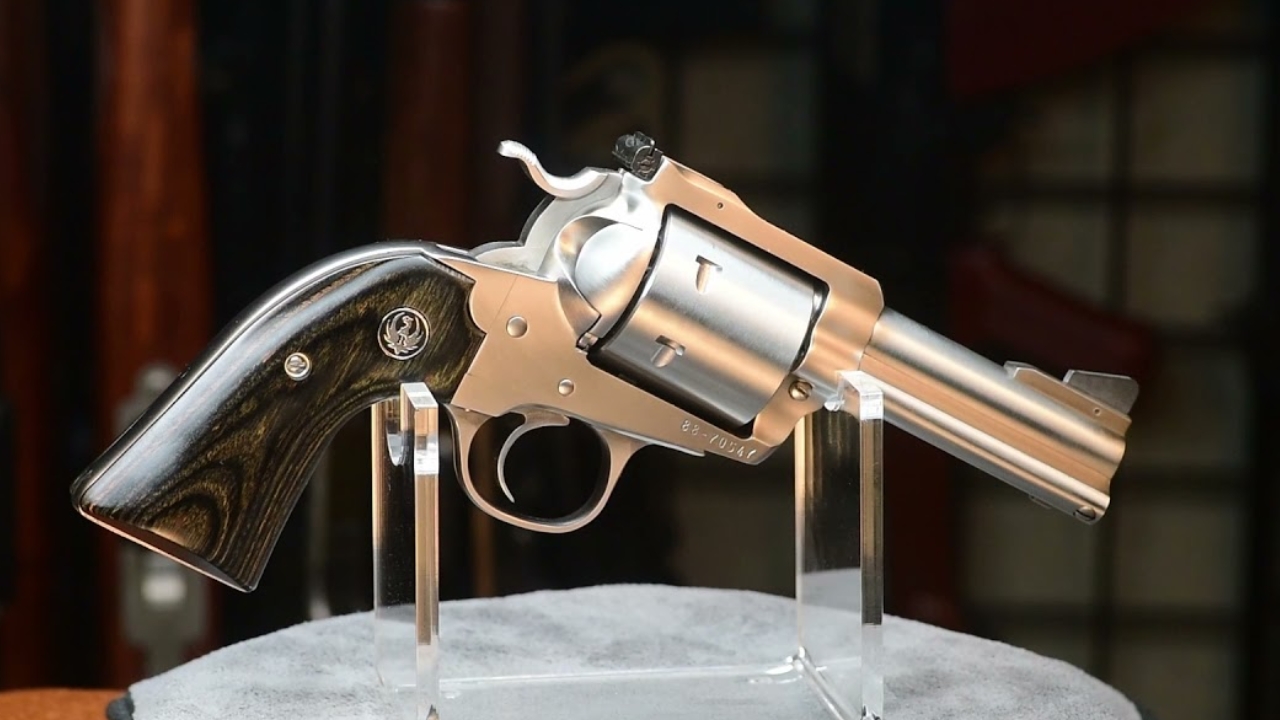
The Bisley version of the Super Blackhawk deserves its own place because the grip changes the shooting experience dramatically. Heavy .44 Magnum loads can punish the hand, and the Bisley grip shape distributes recoil differently than Ruger’s traditional plow-handle grip. Many shooters find it more comfortable when ammunition starts getting genuinely stout.
That makes the Bisley an excellent choice for hunters or handloaders who expect to spend significant time with heavy ammunition. You still get the strength and mechanical simplicity of the Super Blackhawk, but the grip geometry gives the gun a different personality.
I especially like a longer-barreled Bisley as a deliberate hunting revolver. It is not as fast or compact as a four-inch double-action gun, but that is not what it is trying to be. Put it over shooting sticks or another solid rest and it becomes an exceptionally capable field handgun.
Ruger Super Blackhawk Hunter
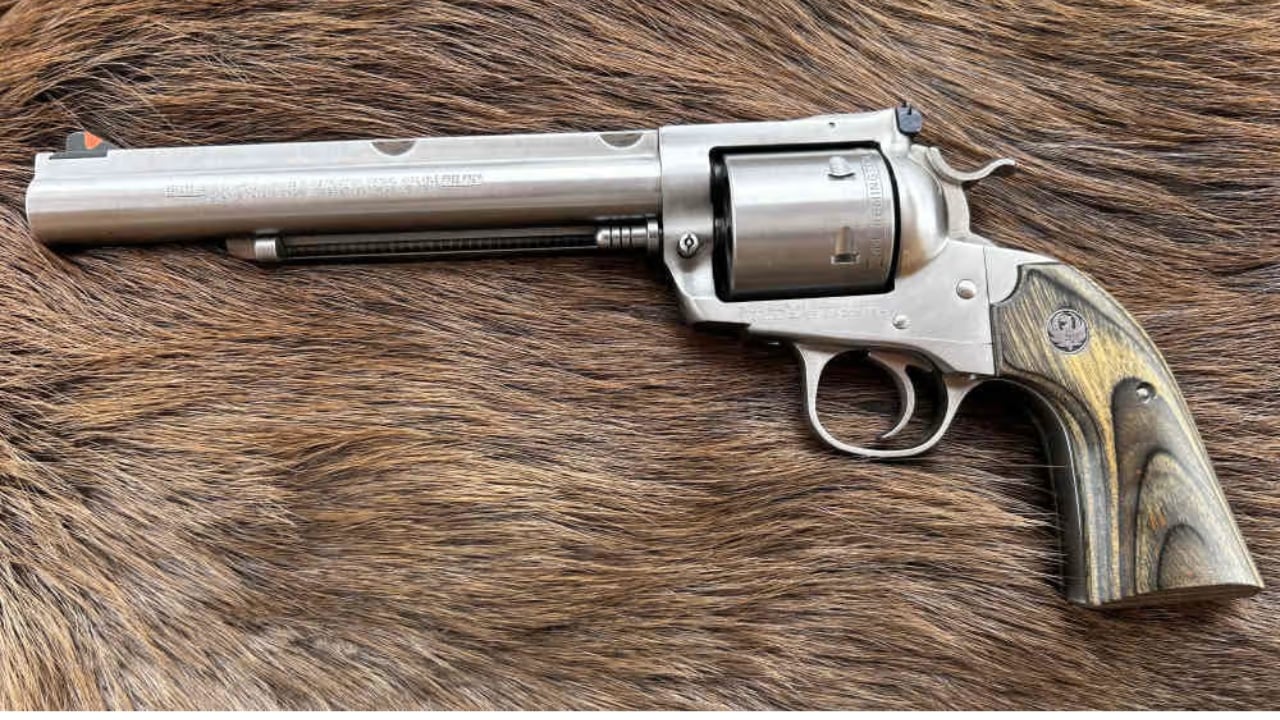
The Hunter version takes the already excellent Super Blackhawk and makes it easier to configure specifically for handgun hunting. The heavy barrel and integral scope-mounting arrangement solve one of the biggest annoyances of turning a conventional revolver into an optics-equipped hunting gun.
That matters because a properly mounted optic dramatically increases what a good .44 Magnum revolver can do from a solid position. The cartridge already has sufficient power for common handgun-hunting distances. The challenge is placing the shot precisely enough to take advantage of it.
The Super Blackhawk Hunter gives you the weight, sighting flexibility, and strength necessary to do that without jumping into the cost of a semi-custom revolver. It is heavy to carry, but most dedicated hunting .44s are. If I knew from the beginning that the revolver was going to wear glass, this is one of the configurations I would consider first.
Smith & Wesson 629 Mountain Gun
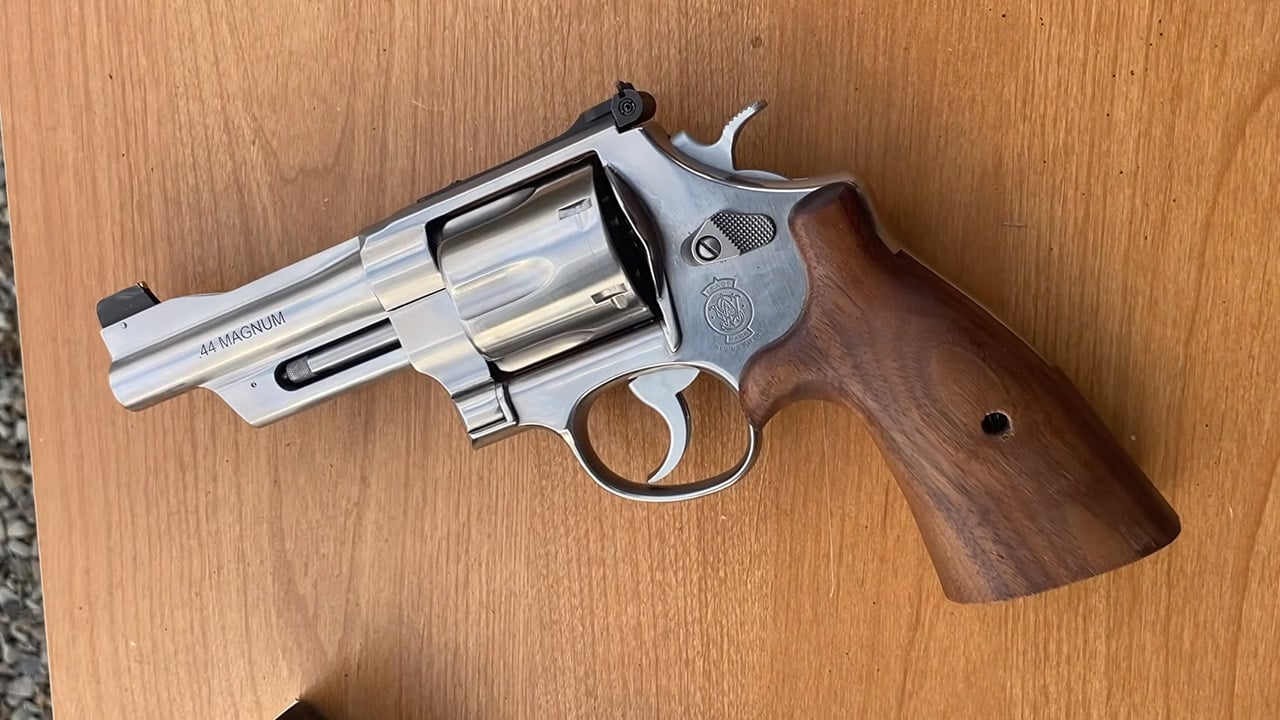
The Mountain Gun takes the opposite approach from the heavyweight hunting revolvers. Smith & Wesson trimmed unnecessary weight from the N-frame package, giving the revolver a lighter barrel profile and dimensions intended around field carry.
That makes an enormous difference after several hours on foot. A six-inch full-lug 629 shoots beautifully, but you feel every ounce when it lives on your hip all day. The Mountain Gun sacrifices some of that recoil-soaking mass in exchange for portability.
I think that is a worthwhile compromise for someone who wants a traditional steel .44 without carrying something the size of a Super Redhawk. Full-power loads naturally feel more energetic, but .44 Special ammunition turns the same revolver into an exceptionally pleasant practice gun. Unfortunately, Mountain Guns can be much harder to find than ordinary 629s, which is exactly why owners tend to hang onto them.
Dan Wesson Model 44
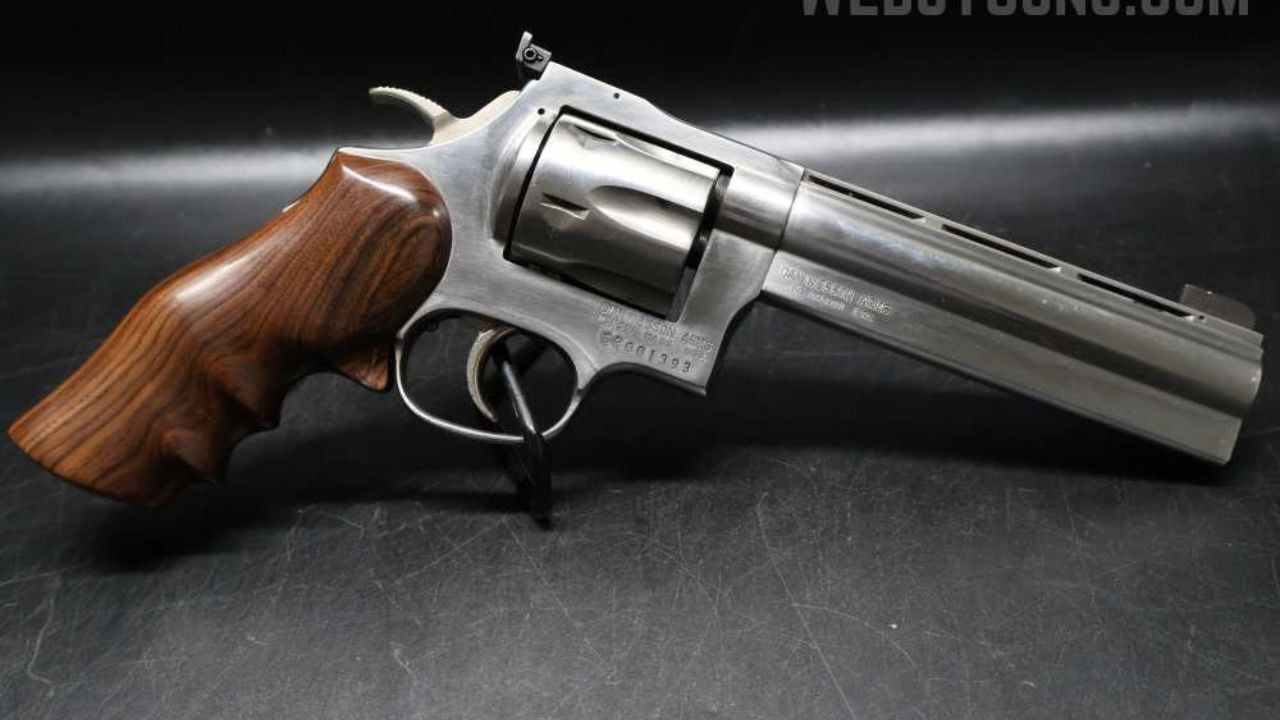
The original Dan Wesson Model 44 built a reputation around strength and the company’s unique interchangeable-barrel system. Instead of treating barrel length as a permanent decision, Dan Wesson allowed owners to change barrel assemblies using the company’s tensioned-barrel design.
That system also contributes to the model’s reputation for accuracy. Tensioning the barrel between the frame and barrel nut creates a different setup from the conventional threaded barrels used on most revolvers. Add the generally strong frame and excellent lockup, and the Model 44 becomes a serious hunting revolver even decades after production.
The downside today is finding a complete gun. Revolvers were frequently separated from their additional barrels, tools, and cases over the years. If I found a clean Model 44 with a complete pistol pack, I would view it as both an excellent .44 Magnum and one of the most interesting revolver systems ever sold.
Dan Wesson Model 744

The 744 is essentially the stainless-steel answer for someone who likes the Model 44 concept but wants a revolver better suited to hard outdoor use. You still get Dan Wesson’s interchangeable barrel assemblies and tensioned barrel system, but the stainless construction makes the gun especially attractive for hunting in wet conditions.
These revolvers also have a wonderfully mechanical feel. They are not trying to hide how heavily they are constructed, and the interchangeable barrel system makes them something an enthusiast can actually experiment with rather than merely own. A shorter barrel can create a practical woods revolver, while a longer heavy barrel turns the same frame into a serious hunting handgun.
Complete examples have become increasingly interesting because so many guns lost their extra barrels and tools over time. As an actual shooter, though, a good 744 remains an outstanding .44 Magnum regardless of whether the collector accessories are present.
Taurus Model 44
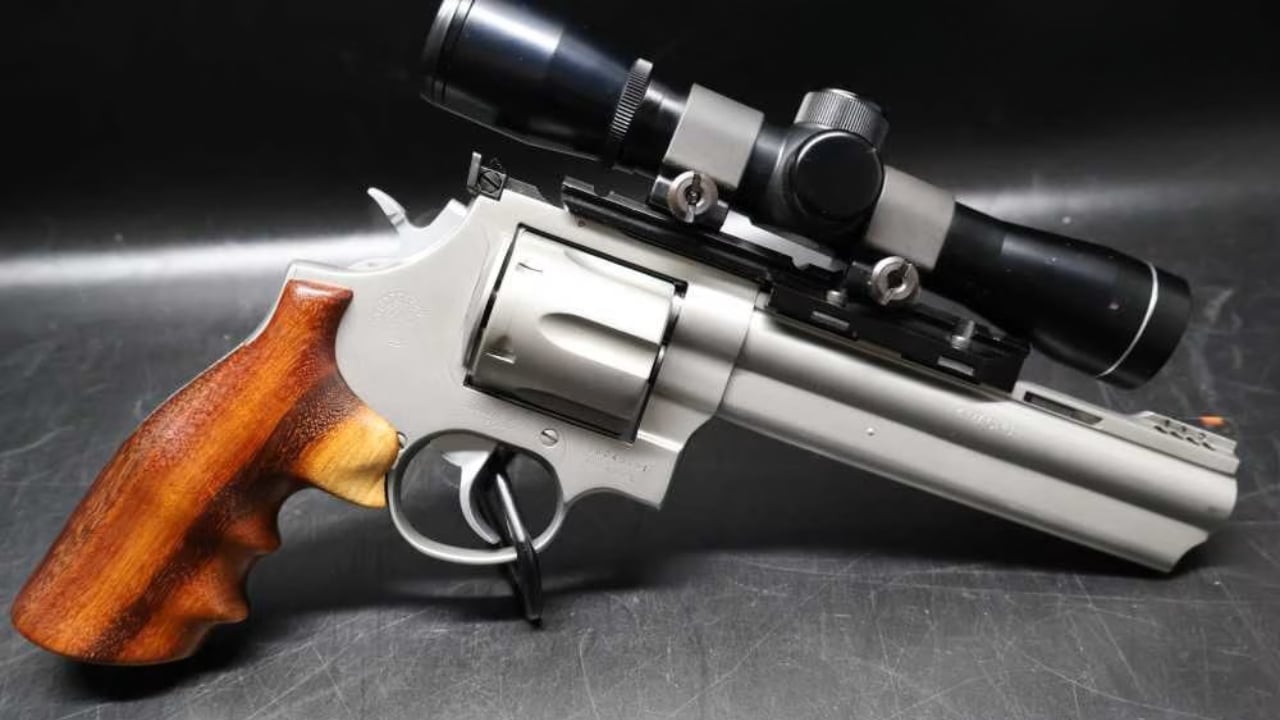
The Taurus Model 44 deserves more respect than it sometimes receives because it gives shooters a large, ported, double-action .44 Magnum without demanding premium revolver money. The substantial frame and full underlug put enough weight up front to make full-power ammunition manageable, while the porting helps keep muzzle rise under control.
It is not as refined as the most expensive revolvers here. The trigger may not have the same polished feel as a premium Smith & Wesson or Colt, and the overall finish is built to a different price target. That is exactly why the Model 44 belongs on the list.
Someone who wants a .44 primarily for occasional hunting, range shooting, or outdoor use may not need a revolver costing twice as much. A good Model 44 delivers the power, adjustable sights, and substantial construction necessary to enjoy the cartridge without turning the purchase into a major investment.
Taurus Raging Hunter

The Raging Hunter is designed around the modern handgun hunter who wants an optics-ready, recoil-conscious package straight out of the box. Taurus combines a heavy barrel system, compensating features, substantial grip, and mounting provisions in a revolver that looks more like specialized hunting equipment than a traditional sixgun.
That is precisely why it works. Nobody buys a Raging Hunter because he wants the elegance of a classic Model 29. The revolver is designed to control a powerful cartridge and make it easier to hit precisely from field positions.
The weight is substantial, so I would carry it in a chest rig or dedicated hunting setup rather than treat it like a general belt revolver. Once you are settled into a stand or shooting from support, that same weight becomes an advantage. For hunters who prioritize function over traditional appearance, the Raging Hunter offers a tremendous amount.
Korth NXR .44 Magnum
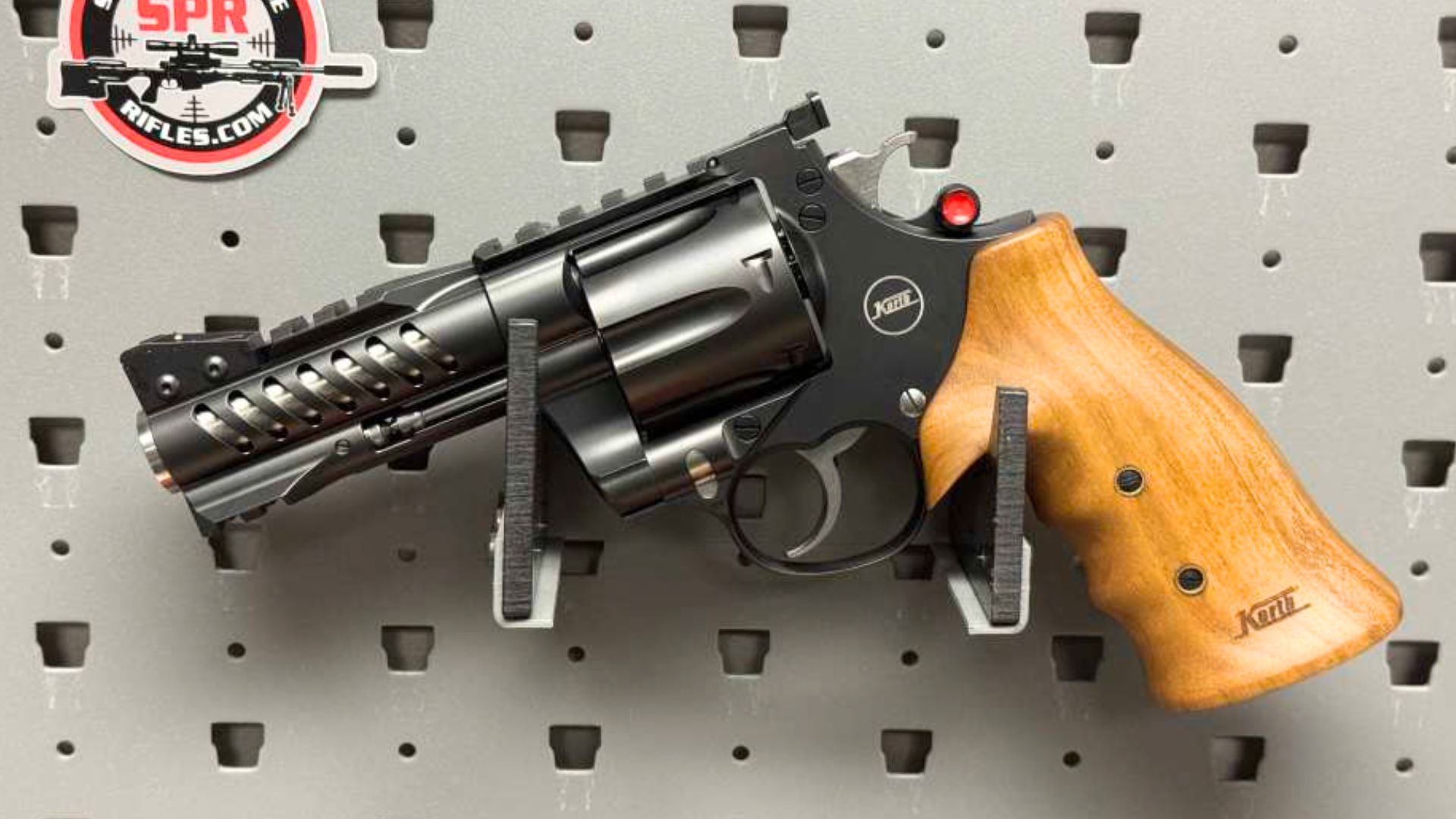
Korth operates in a different world from ordinary factory revolvers. The NXR .44 Magnum is the kind of gun someone buys after deciding that normal production quality is no longer enough. Machining, lockup, trigger feel, and attention to small details are all pushed toward the high end.
The result is a revolver that can feel excessive if the only requirement is putting a .44 Magnum bullet downrange. A Ruger can do that for far less money. What the Korth provides is refinement layered on top of capability. The action feels exceptionally precise, the ergonomics are modern, and the entire package has the character of a premium mechanical instrument.
I would never call it the best value on this list. That is not the point. If money is secondary and the goal is owning one of the finest modern double-action .44 Magnum revolvers possible, the NXR belongs in the conversation.
Smith & Wesson 629 Classic
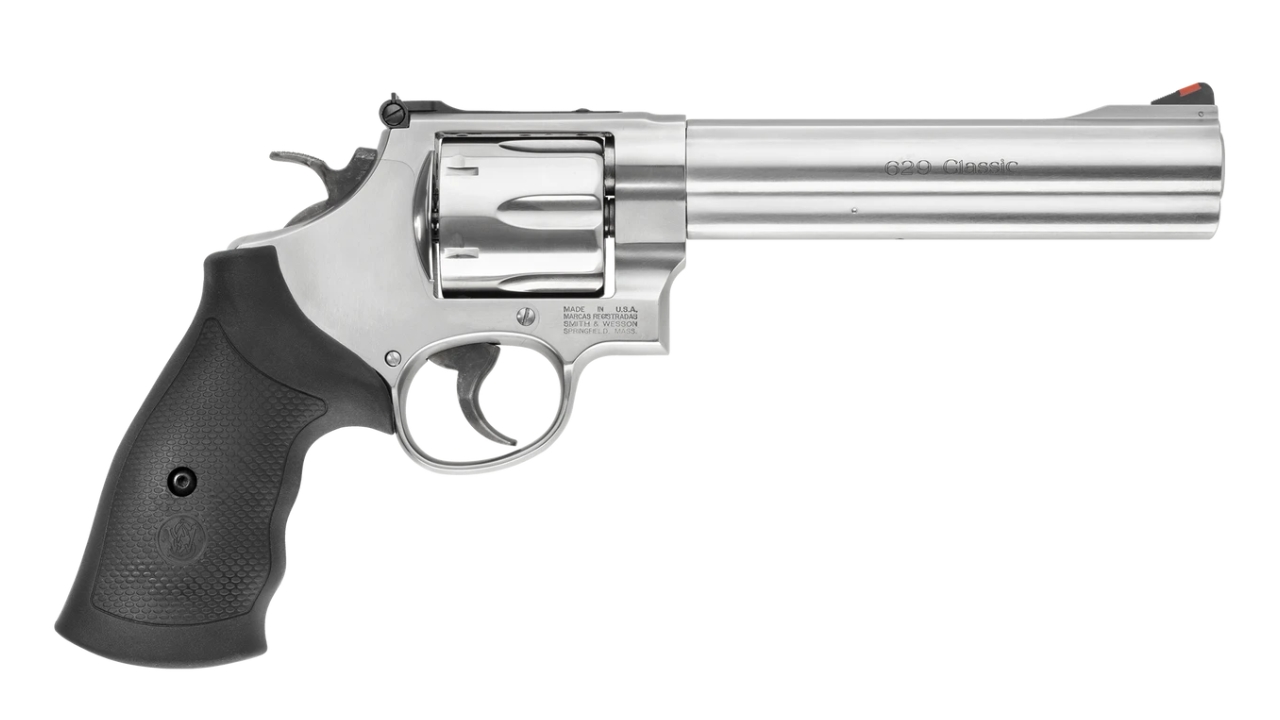
The 629 Classic may be my favorite all-around configuration for someone who wants a stainless Smith & Wesson primarily for shooting and hunting. The full underlug adds forward weight, the adjustable sights are familiar, and the N-frame remains large without crossing into the truly enormous territory of some dedicated hunting revolvers.
That added barrel weight is especially useful with full-power .44 Magnum ammunition. It helps keep the muzzle settled and makes deliberate shooting more comfortable, particularly from a supported position. Load it with .44 Special and the same big revolver becomes wonderfully mild.
There are lighter .44s to carry and stronger ones for extreme loads, but the 629 Classic lives in the middle of the spectrum exceptionally well. If somebody told me he wanted one .44 Magnum for the range, deer stand, and occasional woods carry, this configuration would make an extremely strong case.
Smith & Wesson Performance Center 629
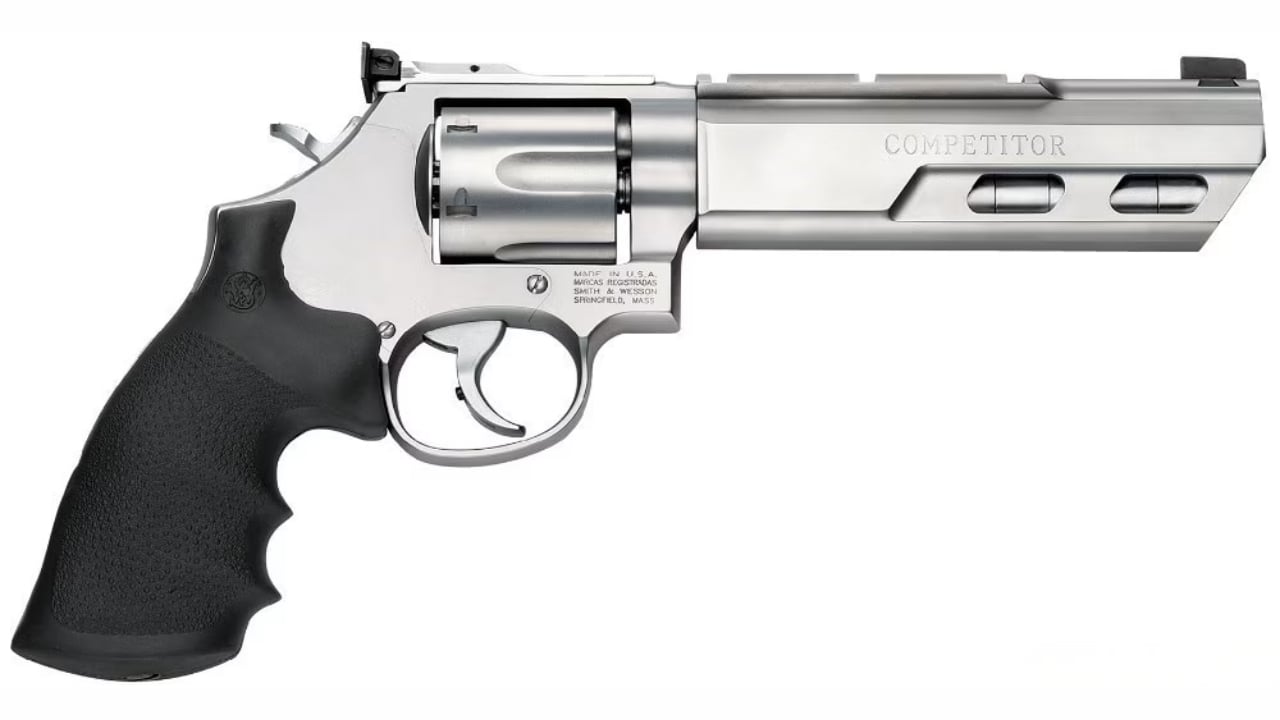
The Performance Center treatment takes the basic 629 and pushes it toward the shooter who wants something more specialized without leaving the factory-production world entirely. Depending on configuration, these revolvers have appeared with heavy barrels, specialized sights or mounting arrangements, tuned actions, and other features aimed at serious shooting.
What I like about them is that Smith & Wesson starts with an already proven platform. The N-frame does not need to be reinvented. The Performance Center simply extracts more from it.
These guns tend to be heavier and more expensive than a standard 629, so I would not choose one merely because the name sounds impressive. For deliberate handgun hunting or someone who appreciates a better action and specialized setup, though, the extra money can make sense. It is the natural endpoint for the shooter who already likes the 629 and wants a more purpose-built version.
Like The Avid Outdoorsman’s content? Be sure to follow us.
Here’s more from us: