Photo credit: AI-generated image created using ChatGPT. Illustrative only
There are few things more frustrating for a law-abiding hunter or shooter than doing everything by the book—only to get stopped cold at the gun counter by a background check denial you didn’t see coming. One Vermont outdoorsman ran into exactly that problem when he tried to buy a rifle and got a flat “denied” back from NICS.
He wasn’t claiming a spotless record, either. He had a prior conviction and figured that might be the reason, but when he looked closer, it didn’t seem to fit the way the firearm purchase form spells things out. That’s when the whole thing turned into a headache with no quick off-ramp, even if the denial came down to confusion over what his conviction actually means under federal law.
A rifle purchase gets stopped at the counter
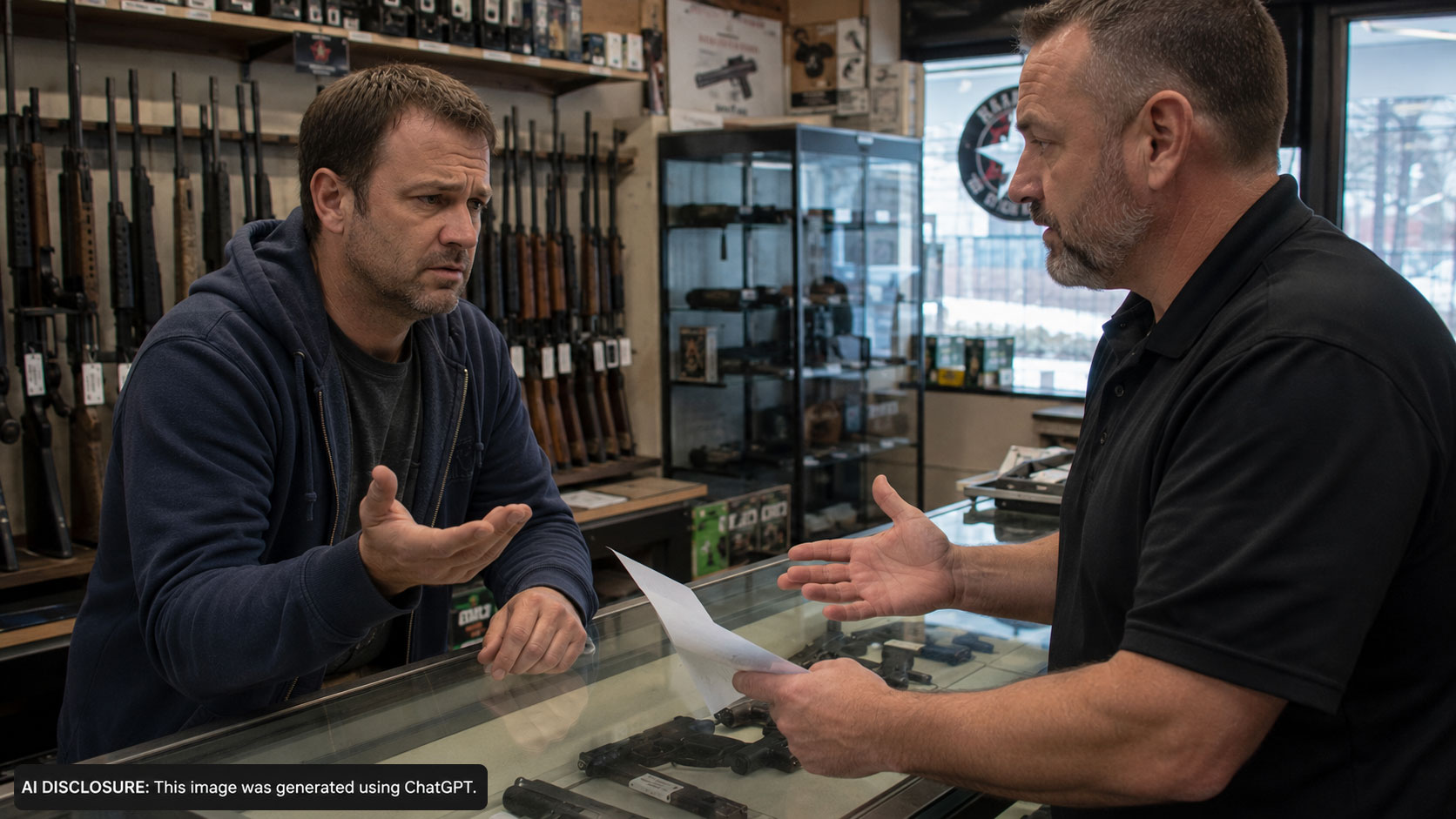
The buyer explained that he recently attempted to purchase a rifle and was denied after the NICS check. He knew he had one criminal conviction on his record, so he didn’t assume the system was wrong right away. Like most folks would, he went back to the wording on the federal form used in gun sales and tried to line up what the form asks with what he’d actually been convicted of.
That form language is a big deal because it’s what most gun owners have in their head when they think about eligibility: felonies, and misdemeanors that can land you more than a year. His understanding was that his case didn’t cross that line.
His conviction didn’t seem to match the “over one year” rule
According to his post, in 2015 he pleaded guilty in federal court to misdemeanor possession of a controlled substance. He described it as a Class A federal misdemeanor, and when he checked the sentencing guidelines, he saw a maximum penalty of “up to one year.”
In plain language, that reads like it tops out at 12 months, not more. Since the gun purchase form focuses on felonies or misdemeanors with potential sentences exceeding one year, he believed that a misdemeanor capped at one year shouldn’t automatically bar him from buying a firearm.
That’s a common-sense read of the question. If you’re a working guy trying to stay straight, you look at “over one year” and think, “Mine wasn’t.”
The denial reason he received didn’t clear anything up
After the denial, he didn’t just shrug and walk away. He filled out the request to learn the reason for the denial. The answer he got back, in his telling, was essentially the same language: if you’ve been convicted of a felony or a misdemeanor with a sentence exceeding one year, you aren’t eligible.
That response didn’t address the part he was hung up on—whether his misdemeanor conviction actually counts as a disqualifier under the way federal firearms law defines it. So he was left staring at a system message that sounded like a template instead of an explanation tied to his case.
He even considered gathering certified court paperwork showing the maximum possible penalty, but he wasn’t sure if he was misunderstanding the law or if the denial was tied to something else in the record.
Where the “same name” problem can turn into a brick wall
Here’s where this kind of situation often gets ugly for regular gun buyers: NICS isn’t just checking “good guy/bad guy.” It’s trying to match people to records, and name-based or identity-based mix-ups can happen—especially when someone shares a name or similar identifiers with a prohibited person.
That’s why the headline angle matters. Even when you’re confident you’re eligible—or when your conviction seems like it should fall outside the disqualifying category—a match to the wrong record (or a muddy record) can trigger the same denial you’d see if you actually were prohibited.
The practical consequence is the same either way: no rifle, no “we’ll fix it in 10 minutes,” and no guarantee that walking into a different shop tomorrow will change anything. The system doesn’t care that deer season’s coming or that you drove an hour to get to the store.
What people tend to focus on in situations like this
In the the original post, the buyer’s questions were straightforward: does his misdemeanor count, and if not, how does he prove it? Folks reading along generally zero in on a few points when these denials happen.
First, the difference between what you were sentenced to and what the offense is punishable by matters. Second, “misdemeanor” doesn’t always mean “safe” when firearms eligibility is involved; the disqualifying categories don’t follow the same gut-level labels most of us use around a campfire. And third, paperwork helps, but it doesn’t always produce an instant fix because the problem can be in how a record is coded, how it’s being matched, or how the law applies to a specific conviction.
That’s the part that makes responsible gun owners grind their teeth. You can do the homework, have your documents, and still be stuck in a process that moves on its own timeline.
Why there’s rarely a “fast fix” once you get denied
Even if the denial is ultimately wrong—or based on a mistaken identity—there’s usually no magic button a gun shop can press to override NICS. The dealer can’t just eyeball your paperwork and decide the federal system is mistaken. They have to follow the result that comes back.
For the buyer, that means the next steps are the slow, official steps: requesting the reason (which he already did), disputing the denial if appropriate, and being prepared to document exactly who he is and what his record actually says. If the hang-up is truly a record mismatch—like sharing a name with someone prohibited—untangling that can take time and repeated follow-up.
And if the issue is that the conviction is being treated as disqualifying under the way federal firearms law defines “a crime punishable by imprisonment for a term exceeding one year,” then it’s not something you solve by arguing at the counter. It becomes a paperwork-and-legal-interpretation problem, which is about as far from “quick and easy” as it gets.
For everyday outdoorsmen, the big takeaway is simple: if you’ve got anything in your past that could possibly be misread by a database—or if you’ve got a common name—don’t assume your next rifle purchase will go smoothly just because you believe you’re in the clear. Keep records, know what you pleaded to, and understand that a denial can turn a five-minute purchase into a long, bureaucratic slog.
Like The Avid Outdoorsman’s content? Be sure to follow us.
Here’s more from us: