Photo credit: Irene Miller/Shutterstock.com
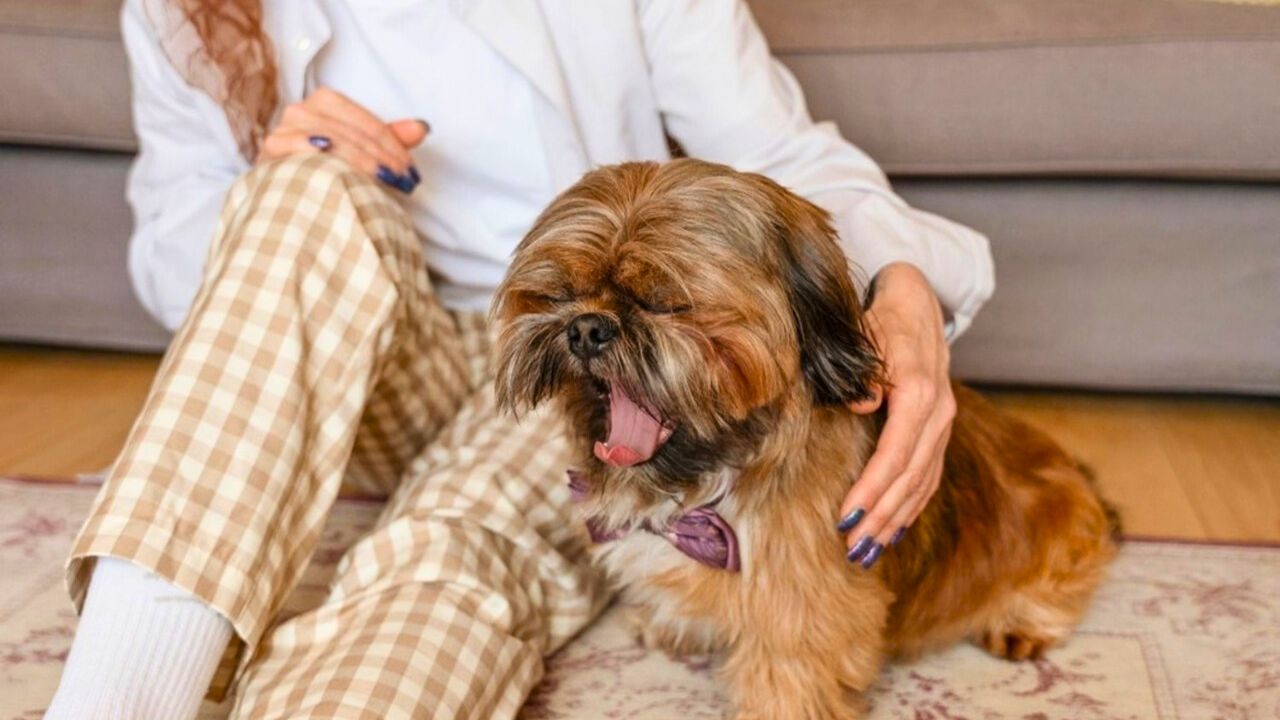
Dogs yawn for the obvious reason sometimes — they’re tired — but yawning is also one of the most common calming signals dogs use when they feel pressure, uncertainty, or social intensity. When you talk to your dog, you’re not just making noise in their world. You’re changing the energy in the room. Your tone, eye contact, posture, and proximity all matter. If you lean over your dog, speak with a firm voice, repeat commands quickly, or get very animated, your dog may yawn as a way to regulate themselves and keep the situation from escalating. It’s not disrespect and it’s not them “tuning you out.” It’s closer to a stress-release valve. Many dogs yawn when they’re trying to stay calm, when they’re a little unsure what you want, or when they’re picking up on emotional signals from you that feel intense. The yawn is one of the ways they communicate “I’m handling this, but let’s keep it gentle.”
What a “calming yawn” actually means in dog language
In dog-to-dog communication, calming signals are small gestures that reduce conflict and lower arousal. Yawning is one of them, along with lip licking, turning the head away, sniffing the ground, blinking slowly, and stretching. These behaviors can show up in situations that aren’t dangerous at all — training, greetings, crowded rooms, kids being loud, guests leaning in to pet, even you getting excited and talking fast. To us, it can look like the dog is bored or sleepy. To the dog, it can mean, “This is a lot, and I’m trying to keep it calm.” Some dogs are especially likely to do this because of personality. Sensitive dogs, dogs that don’t like intense eye contact, and dogs that are easily overstimulated will often yawn more during interactions with humans.
When yawning is just tiredness and when it’s stress
Context is everything. If your dog yawns at bedtime, after a nap, or during a quiet moment when their eyes look heavy and their body is loose, it can truly be simple tiredness. But if the yawning happens during training, during a scolding tone, when you’re hovering over them, or when something is happening that raises excitement, it’s more likely a calming signal. A good way to tell is to look at the whole body. A tired dog looks relaxed. A stressed dog often looks tense or conflicted. They may yawn and then look away, lick their lips, pin their ears back, or shift their weight as if they want to move away but aren’t sure if they’re allowed.
A dog may also yawn when they’re overstimulated, even if they’re happy. Some dogs yawn when they’re excited because they’re trying to regulate that excitement. Think of it like a human taking a deep breath before speaking. It doesn’t always mean fear. It can mean “big feelings.”
Contagious yawns and emotional mirroring
Another reason dogs yawn when you talk is that dogs can mirror our emotional state, especially in close bonds. Many owners have noticed their dogs yawning after they yawn. That kind of mirroring has been observed in dogs, and it tends to show up more between dogs and people who are closely bonded. Even without true “contagion,” dogs are great at reading our mood. If you’re stressed, your voice and breathing change. If you’re upset, your posture changes. If you’re excited, your movements get bigger. Your dog reacts to those shifts, and yawning can be part of how they process and respond.
What your dog might be telling you in that moment
If your dog yawns while you talk to them, it can signal a few things depending on what’s happening:
- “You’re a little intense right now.” This happens when you’re leaning close, making strong eye contact, or using a firm tone.
- “I’m not fully sure what you want.” Repeated commands or confusing cues can make dogs yawn because they’re conflicted and trying to stay calm.
- “This environment feels busy.” Guests, kids, noise, or new places can trigger yawning as a self-soothing behavior.
- “I’m trying to behave.” Some dogs yawn when they’re holding themselves back from jumping, barking, or reacting.
- “I’m actually tired.” Especially if it’s paired with slower movement and relaxed posture.
The point isn’t to diagnose the yawn in isolation. The point is to treat it as information.
The other signals to watch alongside yawning
Yawning becomes much easier to interpret when you watch for companion behaviors. A yawn paired with lip licking, turning away, ears pinned, whale eye, stiff posture, or a tucked tail leans toward stress or discomfort. A yawn paired with loose posture, soft eyes, a relaxed tail, and normal movement leans toward tiredness or mild regulation. If your dog yawns and then immediately tries to leave the interaction, that’s a clear message that they want more space. If they yawn and then stay close and engage willingly, it’s likely low-level regulation, not a major issue.
What you should do when your dog yawns while you’re talking
If you suspect the yawn is a calming signal, the best response is to lower pressure. That can be as simple as stepping back, softening your voice, stopping the direct stare, and giving them a second to reset. If you’re training, slow the pace and make the next cue easy so they can succeed. Dogs often yawn when they feel stuck. Clear, simple tasks reduce that.
If your dog yawns when you’re talking in an excited voice, try a calmer tone and fewer words. Dogs don’t need long explanations. A lot of human talking can feel like “noise plus intensity” to them, especially if you’re leaning in and repeating yourself. Short cues, calm energy, and space often bring the best response.
If your dog yawns during greetings with strangers, it can be a sign they’d prefer a slower approach. Ask people not to hover, not to hug, and not to put hands over the dog’s head. Let the dog approach first. That one change reduces stress yawning in many dogs because it removes the pressure of forced interaction.
When yawning might mean something else
Occasional yawning in normal contexts is rarely a concern. But if yawning suddenly increases and comes with other signs — restlessness, pacing, panting when it’s not hot, avoidance, changes in appetite, or unusual clinginess — it can signal anxiety or discomfort. In those cases, you’re looking at the full pattern, not the yawn itself. Pain, nausea, and stress can all change behavior. If you’re seeing a cluster of changes, it’s worth checking with your vet or a qualified trainer to rule out health issues and improve the dog’s environment and routines.
Like The Avid Outdoorsman’s content? Subscribe to our newsletter so you never miss an article.
Here’s more from us: