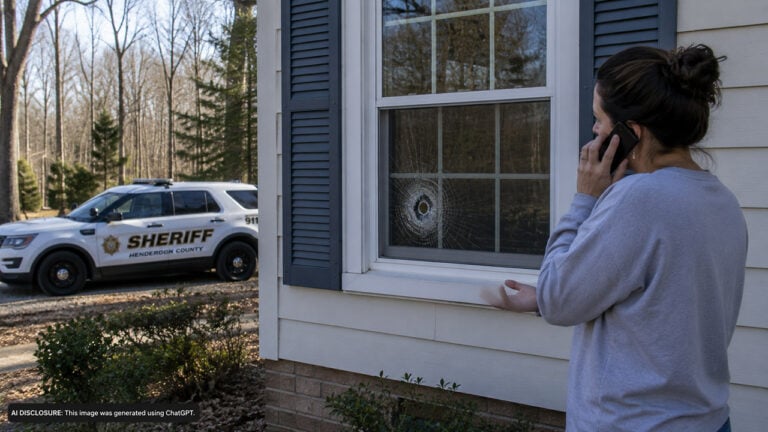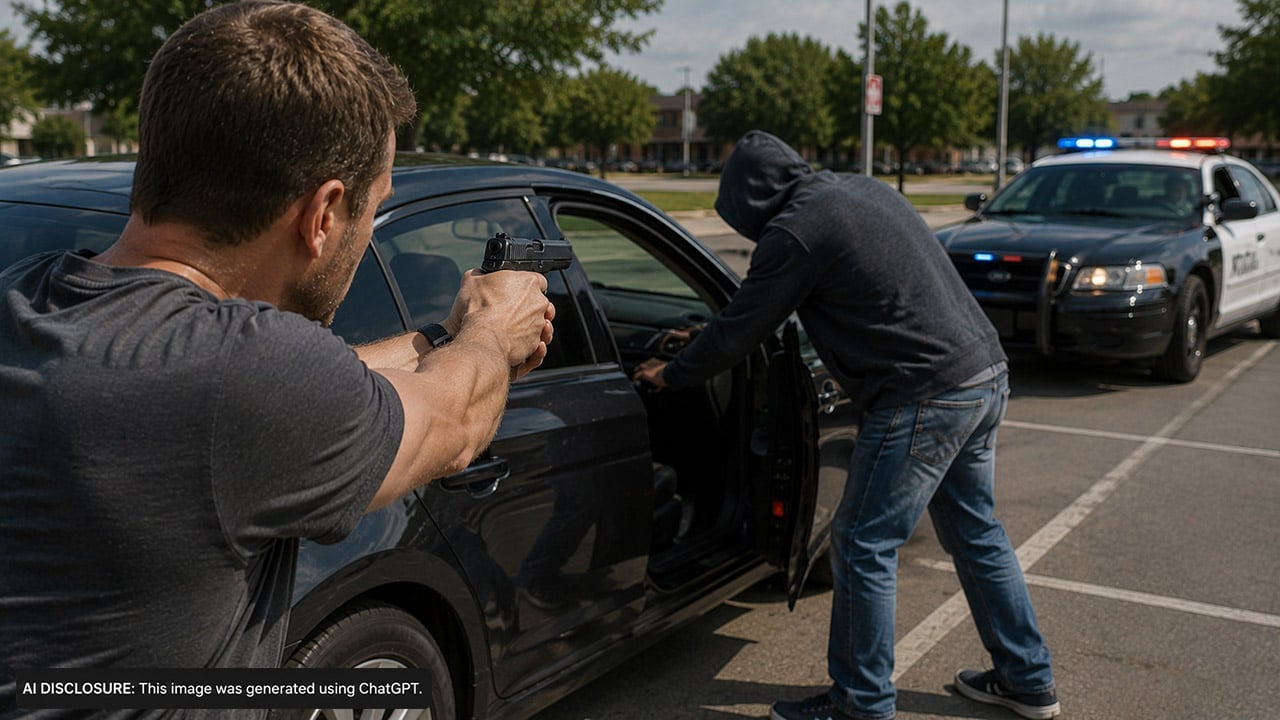
Photo credit: AI-generated image created using ChatGPT. Illustrative only
It started the way a lot of parking-lot thefts start: a quick realization that something important is missing, followed by that sick feeling in your gut. In a detailed account shared in the original post, a Dallas man said he noticed his car keys and wallet were gone while he was at NorthPark Center, and he hustled back outside to see if his vehicle was about to be the next thing to disappear.
What happened next is the kind of scenario every concealed carrier thinks through at least once—except this one didn’t end with a handshake and a “good job.” He says he drew his legally owned pistol to stop the suspected thief, the police arrived hard and fast, and even after he was released without charges, he still got hit where it hurts: his car was towed, impounded, and the fees started stacking up.
The setup: missing keys, a “ping,” and a thief walking up to the car
According to the man’s account, he and a friend were at the mall when he realized his wallet and keys were missing. He didn’t know if they’d been dropped, lifted, or left behind, but he went straight to his car.
His friend suggested positioning themselves to watch for somebody using the fob—waiting for the telltale lights and horn that can happen when someone tests a key. Roughly 20–40 minutes later, he says he saw his car’s lights flash and horn honk repeatedly, and then watched a man walk up to the vehicle.
The confrontation: wallet and keys in hand, gun drawn, and seconds later police arrive
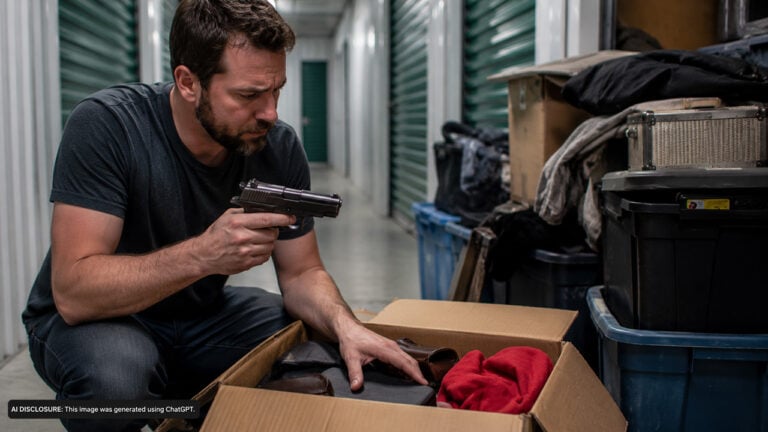
The man says he approached to interrupt the suspected theft. When the suspect turned and started to walk away, he claims he saw his wallet and keys in the suspect’s hand. That’s when he drew his pistol and ordered the man to stop, while his friend moved to block the other direction.
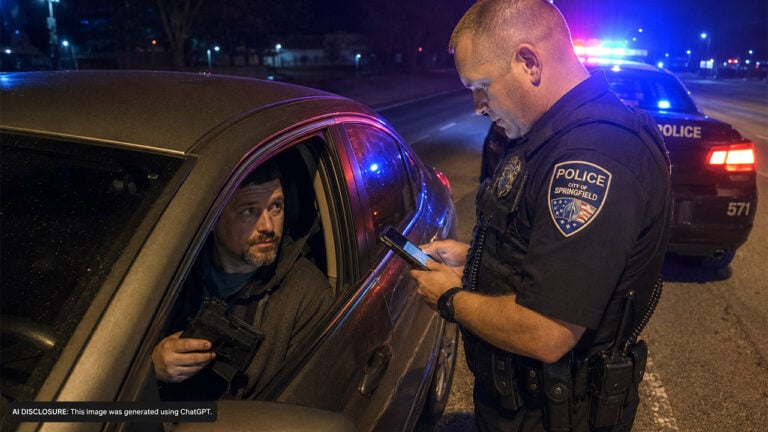
Anyone who’s spent time around big malls knows the next part. He says it took less than a minute for police officers to arrive yelling commands—drop the pistol, get on the ground—and the tone instantly shifted from “stopping a theft” to “high-risk gun call.” Police detained all three people while sorting out what happened.
The licensing claim and the arrest that didn’t stick
The man says officers quickly determined the car, wallet, keys, and even $500 cash found on the suspect were his. He also says his License to Carry (LTC) was in his wallet.
But he claims police told him that because he drew his pistol while he didn’t physically have his wallet on him, he wasn’t “properly licensed” at that moment. He disagreed and believed the explanation was made up, but he says he was arrested anyway.
Then the whiplash: he reports being held at the station for an hour or two and released with no charges. He says no officer offered much explanation beyond telling him he could leave.
How the “no insured driver” decision turned into an impound bill
Plenty of outdoorsmen have dealt with towing policies after wrecks or traffic stops, and the frustration is always the same: the rules feel rigid until they’re convenient. In this case, the man says his friend was free to go—but because the friend wasn’t insured on the vehicle, police said they “had to tow it.” He believed his friend could have simply driven the car away.
Instead, the car went to impound. That’s when the real damage began. Impound lots don’t care whether you were the victim of a theft, the hero of the story, or the guy who got everything sideways. The meter runs either way.
He later called and was told he’d need his driver’s license and proof of insurance to retrieve the vehicle. When he arrived, he says he was then told he’d also need a copy of the title. By the time he made another trip to get that paperwork, the day was too far gone to pick the car up, and he’d have to wait until Monday—while daily fees kept piling on.
Getting the gun back was simpler than getting the car back
One detail that stands out is how differently his property was handled. He says his pistol was placed into property storage and that he was given a location to request it back. He went as far as obtaining a reprinted receipt from the gun store where he bought it, made an appointment, and reports getting the firearm returned with little hassle.
The car, though, was a different story. Even with license and insurance in hand, he ran into shifting requirements and tight time windows—exactly the kind of “administrative friction” that can turn a bad week into an expensive one. His biggest concern wasn’t criminal charges anymore; it was how to recoup several days of impound fees for a tow he didn’t think should have happened.
The hard lesson for armed citizens: being “right” doesn’t prevent the system from costing you
The man’s post also included a heated edit about Texas law and when deadly force is justified to protect property, linking to a statute he believed supported his view. That’s a common point of confusion, and it’s where real life gets dangerous—legally and physically—fast. Even in gun-friendly states, what you believe is allowed, what an officer thinks in the moment, and what a prosecutor or jury agrees with can be three different things.
But his immediate problem wasn’t a courtroom—it was logistics. Police treated the gun call as a gun call, ordered him to the ground, detained everyone, and made towing decisions based on their procedures. Once the car hit impound, “victim” didn’t equal “fee waiver.”
For concealed carriers, the practical takeaway is plain: when you step into a confrontation—even one where you believe you’re preventing a theft—you’re also stepping into policies, paperwork, and decisions that may not feel fair afterward. If your carry permit or license is normally stored in your wallet, losing that wallet at the start of an incident can create a mess even if you’re otherwise law-abiding.
On the vehicle side, it’s a reminder to keep your documents squared away and accessible. A digital copy of your insurance card is common now, but title requirements can still bite you, especially on weekends. If your vehicle is ever towed after an incident, time matters, and every extra trip to “go get one more document” can turn into another day of fees.
In the end, the man said he walked away without charges and with his firearm returned, but the tow and impound bill still landed on his shoulders. That’s a tough pill to swallow when you believe you did the right thing—yet it’s the kind of real-world fallout gun owners and vehicle owners should plan for, because sometimes the most expensive part of stopping a crime is what happens after the uniforms show up.
Like The Avid Outdoorsman’s content? Subscribe to our newsletter so you never miss an article.
Here’s more from us: