Photo credit: Buck/Amazon
Every hunting camp has at least one knife that’s been around longer than most of the stories told around the woodstove. The kind of blade that shows up in an old coffee can with spare .30-30s, broadheads, and a broken headlamp, then goes right back to work like it never left. These aren’t safe-queen collectibles. They’re working knives that get blood on them, get sharpened on whatever stone is handy, ride in wet sheaths, and still keep cutting year after year.
What makes them last isn’t magic steel or marketing. It’s simple geometry, sane heat treat, handle materials that don’t quit, and designs that don’t depend on tiny screws and gimmicks. Here are 20 hunting knives I’ve seen outlive their original owners—and still earn their spot on a belt when it’s time to get serious.
1. Buck 110 Folding Hunter
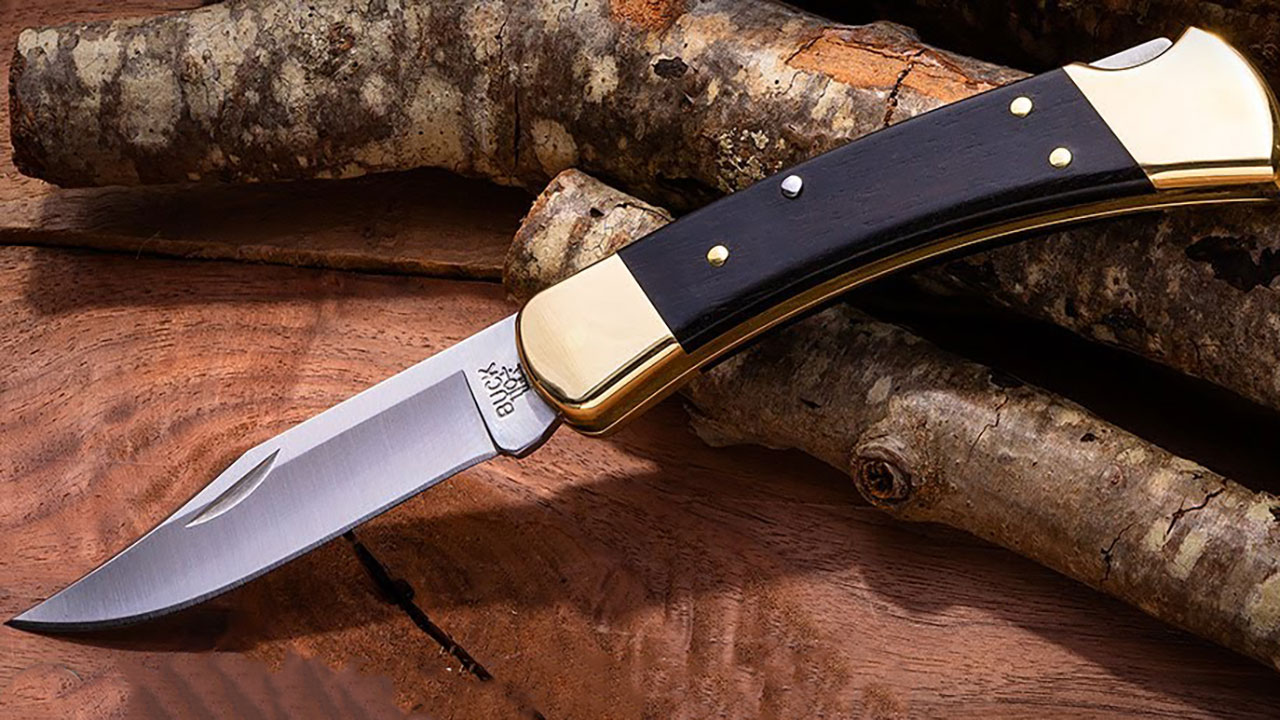
The Buck 110 is heavy in the pocket and slow compared to modern one-hand folders, and that’s exactly why so many are still around. Brass bolsters, real wood scales, a lockback that doesn’t get cute, and a blade shape that actually does field work. You can dress a deer with it, then slice salami with it, then hand it to a teenager and not worry it’ll fold on them if they hit resistance.
It’s also the knife that lives in gloveboxes for decades. The edge is easy to bring back with basic stones, and the point isn’t so needle-thin that it snaps the first time somebody pries on a stuck knot. There are “better” folders on paper. In real life, the 110 just keeps showing up.
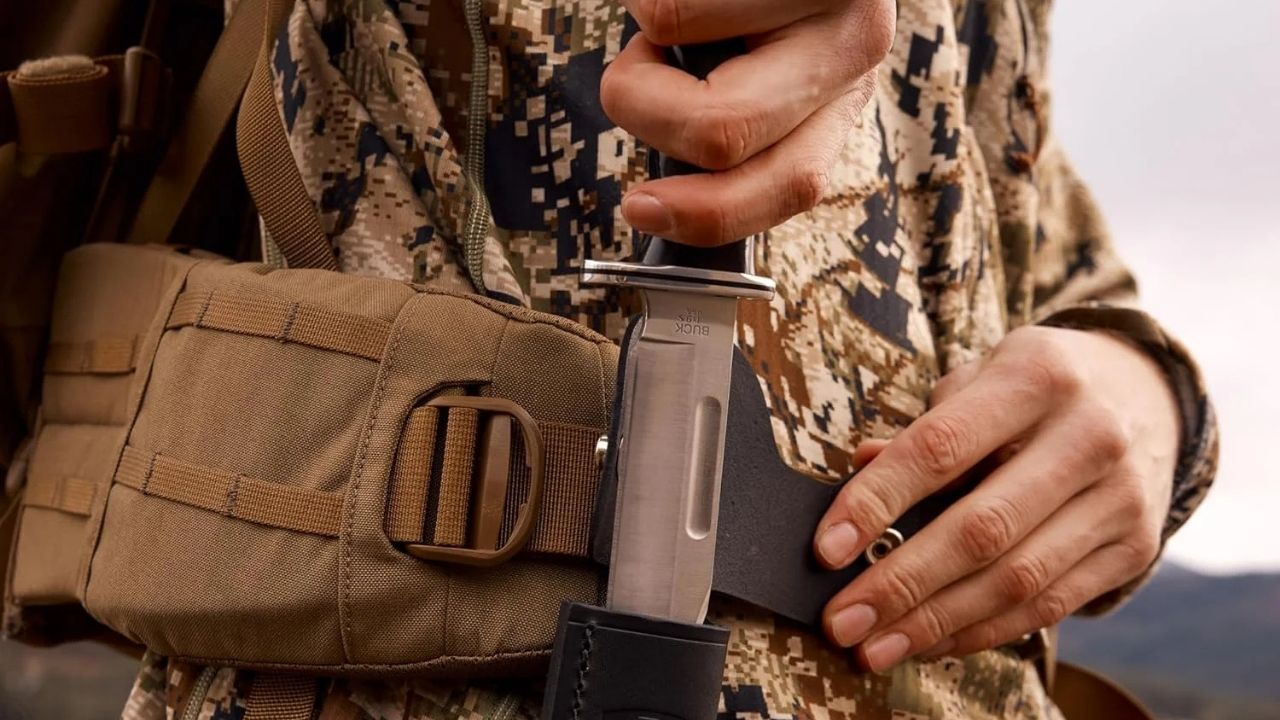
2. Buck 119 Special

If you grew up around deer hunters, you’ve seen a Buck 119. It’s not trendy. It’s not trying to be a bushcraft statement piece. It’s a straightforward, mid-sized fixed blade with a guard, a sensible clip point, and enough belly to do real skinning work without feeling like you’re steering a canoe paddle.
The 119 lasts because it isn’t delicate and it isn’t complicated. The handle fills the hand even when it’s cold and slick, and the blade is forgiving when someone gets lazy with maintenance. Plenty of them have been sharpened on cheap stones and still cut fine. The old ones especially—carried hard, put away wet, and still ready.
3. Ka-Bar USMC Fighting/Utility (1217)
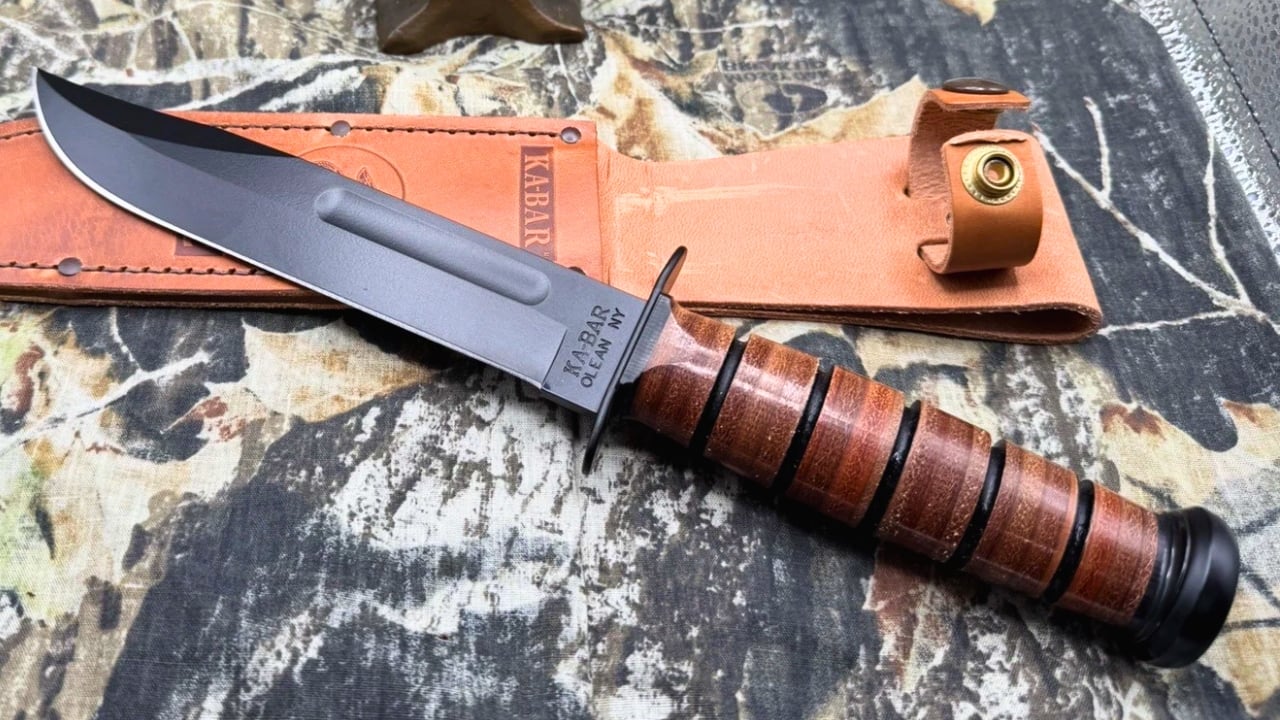
Is it a perfect hunting knife? No. The Ka-Bar’s guard and longer blade can feel clumsy when you’re doing careful work around a pelvis or caping tight. But for general camp use—splitting kindling, cutting rope, knocking through brush, opening feed bags—it’s hard to kill. That’s why they keep surviving long after the original owner is gone.
The stacked leather handle has proven itself in the real world, not just in photos. If it dries out, you can bring it back. If it gets soaked, it can handle it if you don’t store it like a dummy. It’s a working knife that forgives hard use, and a lot of “hunting knives” honestly don’t.
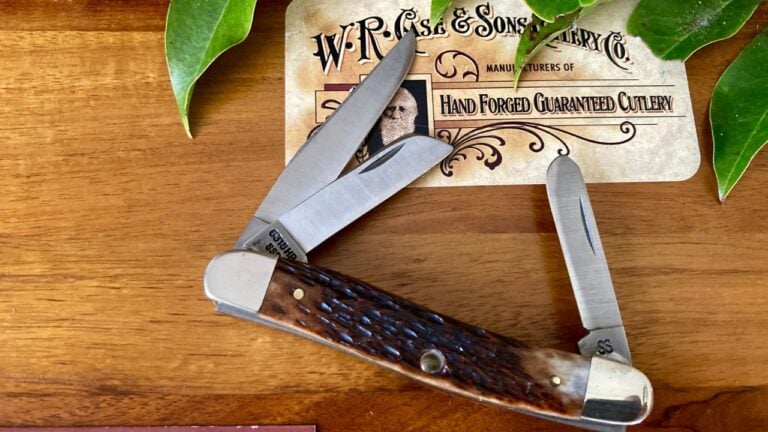
4. Case XX Trapper (folding pattern)

The Case Trapper is one of those knives that ends up in pockets from high school to retirement without ever being called “gear.” Two blades, simple slipjoint, and thin enough to disappear until you need it. For a lot of hunters, that means it’s on them when the big knife is back at the truck.
It’s not a pry bar and it’s not a baton tool, so don’t treat it like one. But for cutting cord, cleaning squirrels, trimming tag ends, and handling all the small chores that actually happen on a hunt, it just works. Those jigged scales and pinned construction age well, and the knife doesn’t rely on springs and bearings that get gritty and quit.
5. Case XX Stockman
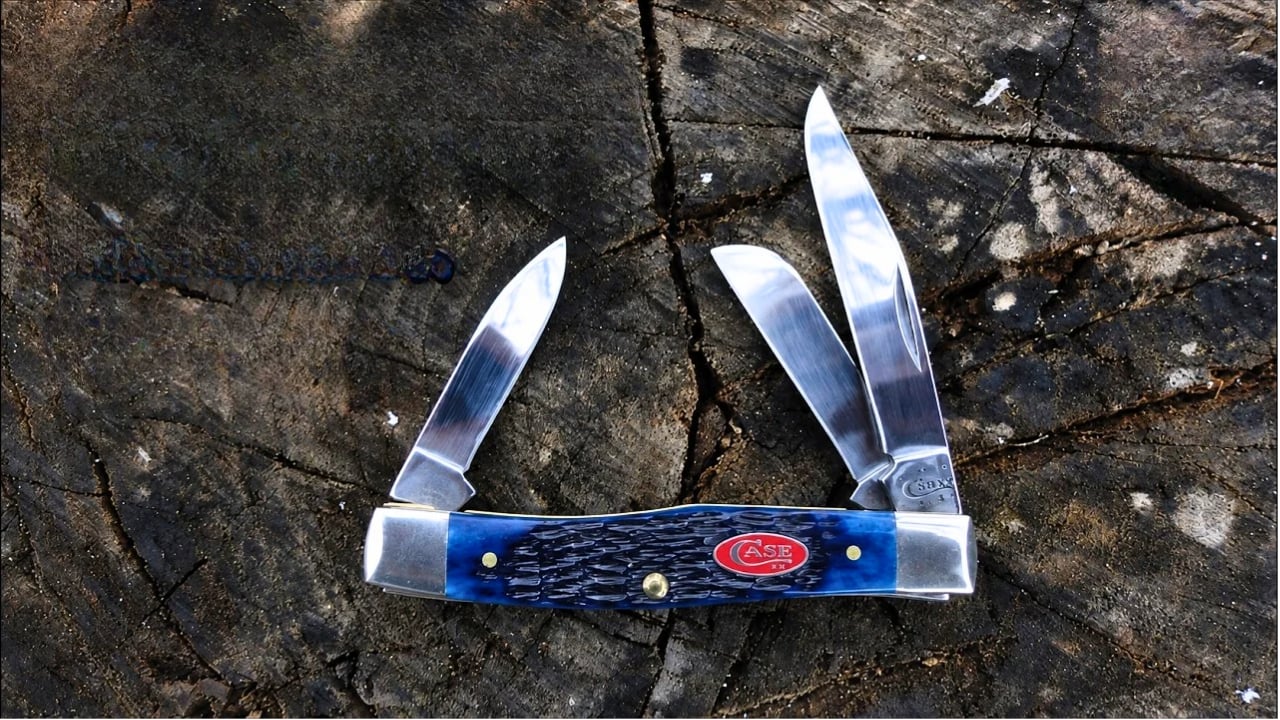
The Stockman is the old-timer’s multi-tool before multi-tools were a lifestyle. Three blades means you can keep one scary sharp for clean cuts and let the others do the ugly work. That’s a big reason so many survive for decades: they don’t get ground down into toothpicks as fast because the wear is spread out.
In camp, a Stockman is always “good enough.” It trims, slices, scrapes, and handles small game without needing a sheath. It also teaches good habits—if you abuse it, it’ll show it, but it rarely just dies. You’ll see them with worn bone scales and blades polished smooth from use, still snapping open with that familiar talk.
6. Old Timer Sharpfinger (Schrade 152OT)
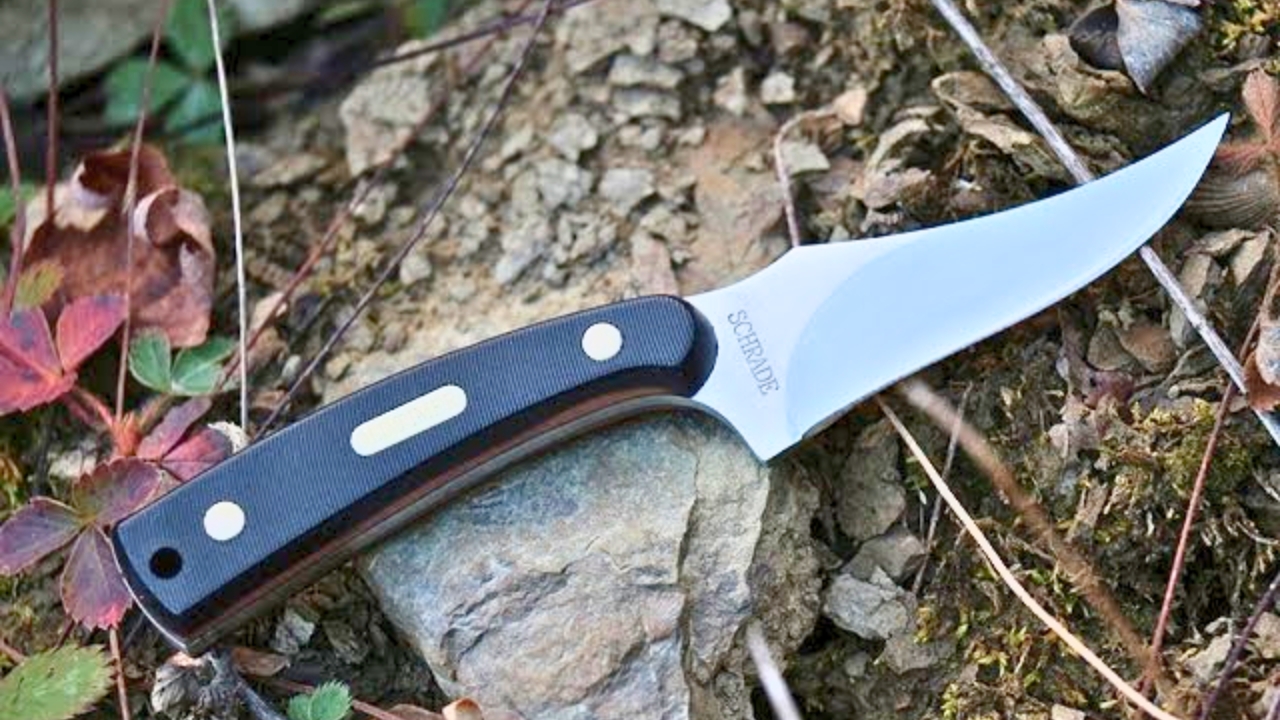
The Sharpfinger looks odd until you use one on a deer. The upswept blade and fat belly are made for skinning, and the handle locks into the hand like it was shaped for cold fingers. It’s the kind of knife that gets grabbed first even when a guy owns “nicer” knives, because it just feels right when hide meets steel.
Plenty of these have lived in tackle boxes, daypacks, and shed drawers for half a lifetime. They’re not exotic steel, but the geometry does the work and the edge is easy to maintain. If you’ve ever tried to skin with a thick, wedge-like blade, you understand why the Sharpfinger keeps getting handed down.
7. Schrade Uncle Henry Pro Hunter (LB7)
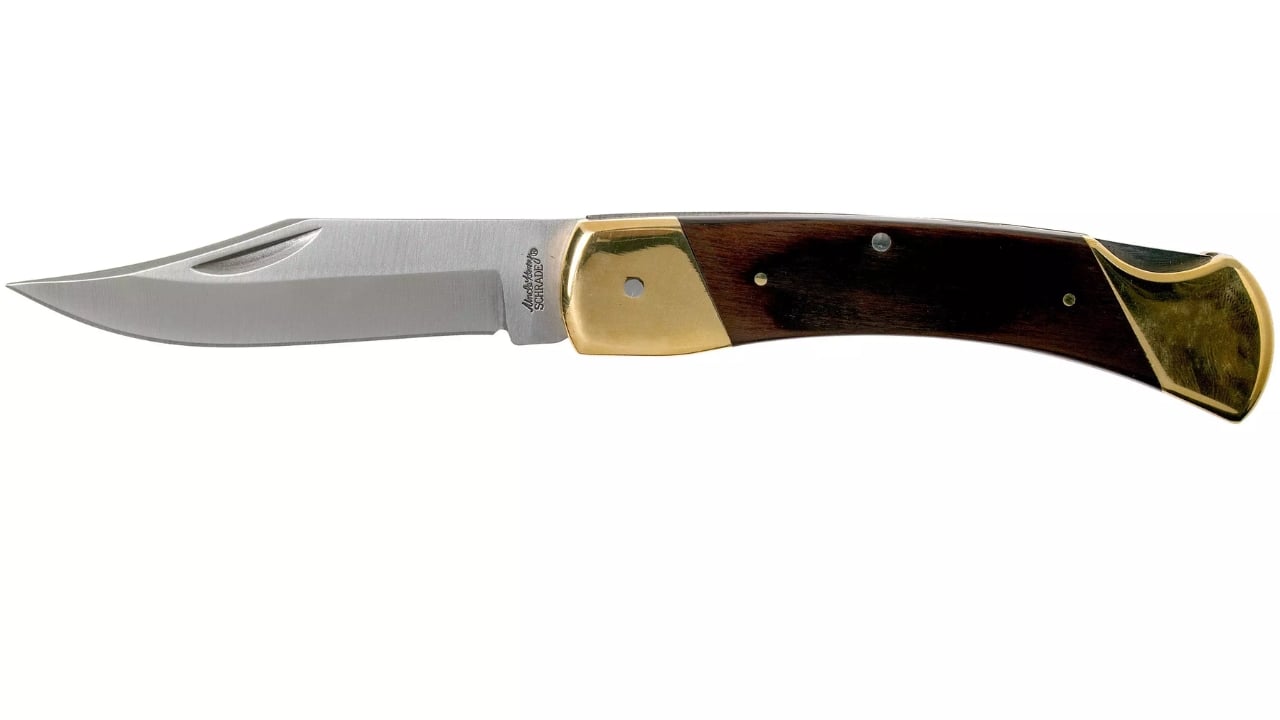
The LB7 is one of those lockbacks that feels oversized until you’re wearing gloves or your hands are numb. Big handle, long blade, solid lockup. It was a serious working folder back when a lot of folders still felt like toys. If a hunter carried one for 30 years, there’s a reason.
They ride well in a belt sheath, and that’s a big deal for folks who hate pocket carry. The blade profile does hunting chores better than you’d think, and the knife doesn’t mind getting dirty. You can clean one with basic tools and common sense. No tiny hardware to strip out in a cabin with bad lighting.
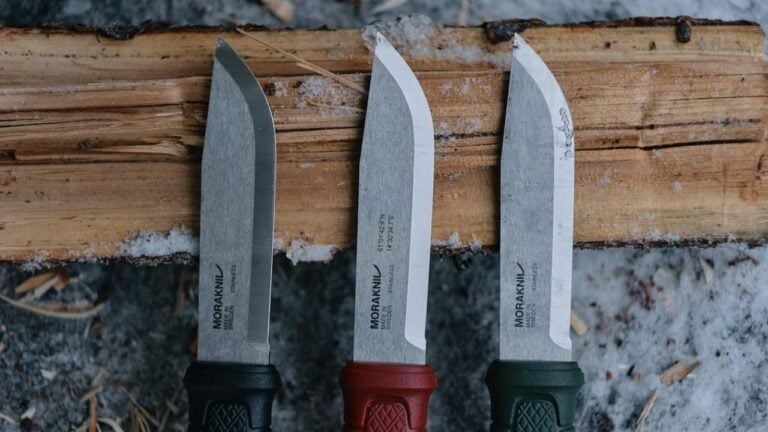
8. Mora Companion (and classic Mora carbon models)
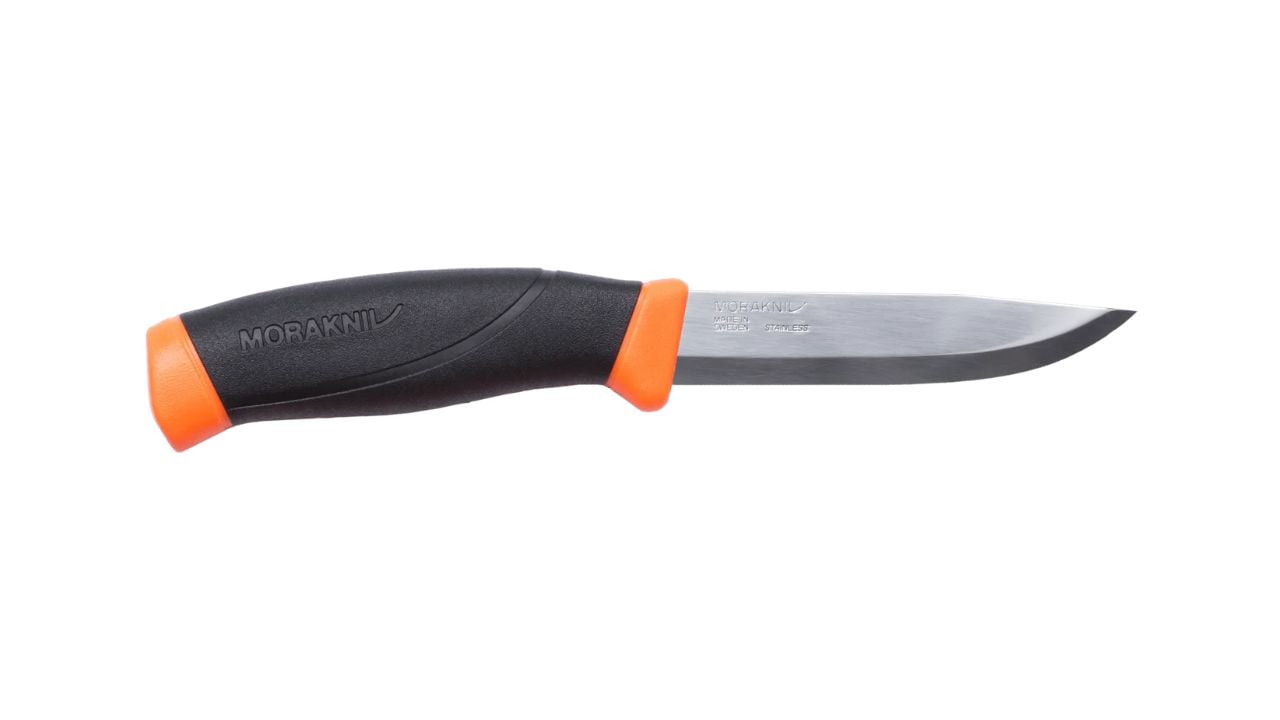
Mora knives are almost boring until you realize they cut like crazy and don’t ask for much. They’re lightweight, inexpensive, and stupid-effective. That makes them a classic “truck knife” that turns into a “real knife” because it’s always there. The scandi grind bites into wood and meat with very little drama.
The carbon models especially will patina, spot, and look rough, but they keep cutting. If you rinse them, dry them, and touch the edge up, they’ll outwork knives that cost five times more. The handles are simple but secure, and the sheaths are functional. Nothing fancy about it, and that is kind of the point.
9. Grohmann No. 1 Original (D.H. Russell)
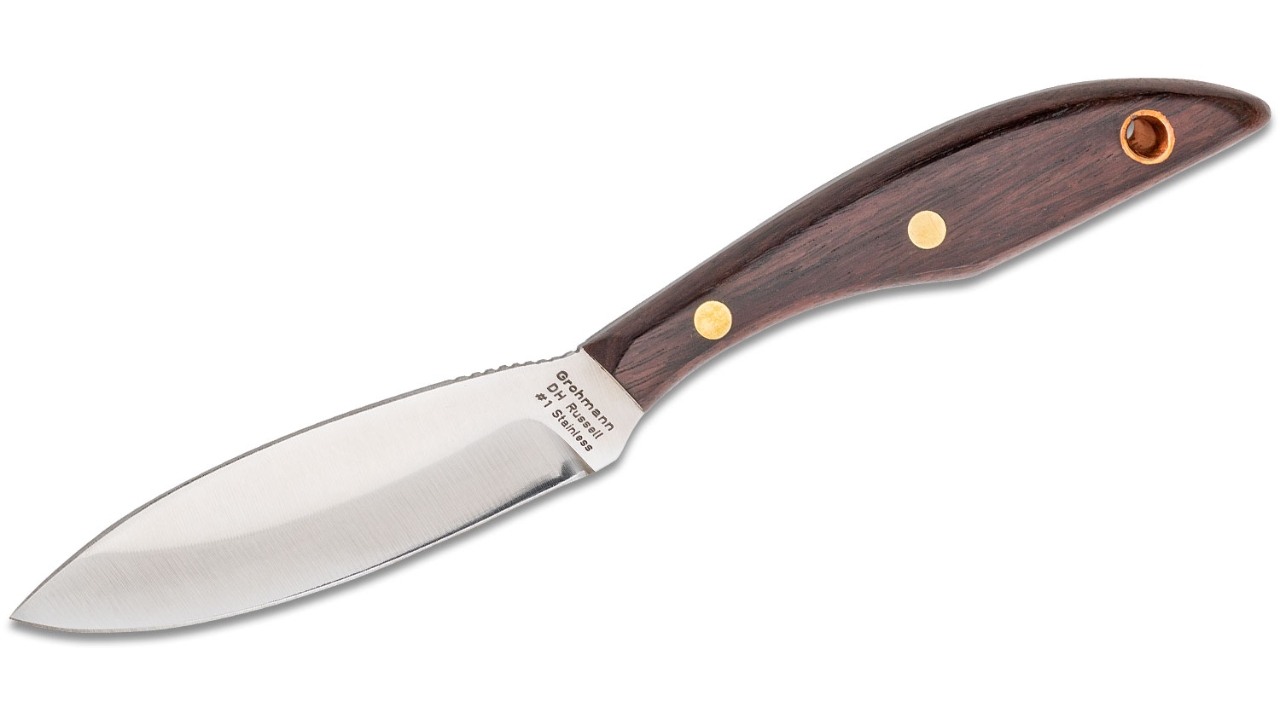
The Grohmann No. 1 has a blade shape that looks like it was drawn by someone who actually cleaned animals for a living. There’s belly where you need it, a tip that behaves, and a handle that seems to index itself when your hands are wet. It’s a Canadian classic for a reason, and it shows up in camps like a family tradition.
They hold up because they’re built to be used, not admired. The steel takes a working edge and the design is forgiving if your technique isn’t perfect. A lot of “caping knives” are too specialized and end up unused. This one does nearly everything well enough that it stays on the belt season after season.
10. Marttiini Lynx (Finnish puukko style)
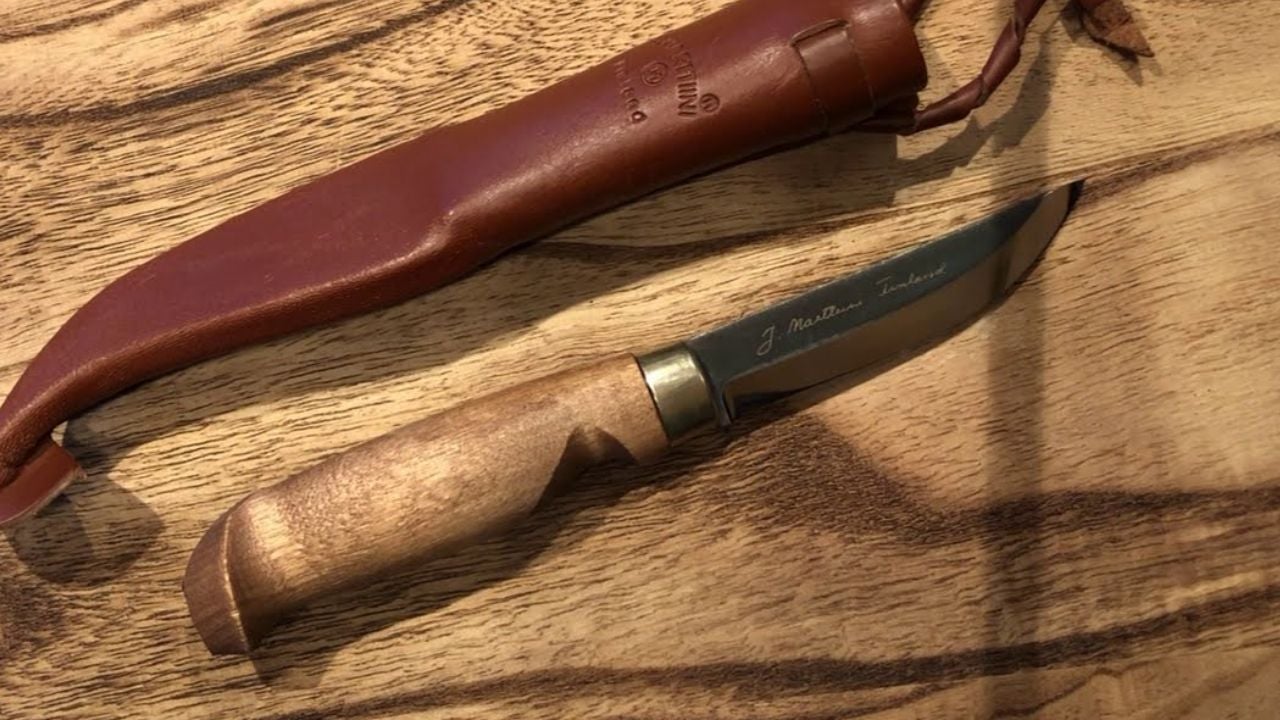
A good puukko is a quiet kind of tough. Marttiini’s Lynx knives have been carried for generations because they do daily cutting chores without fighting you. The blades tend to be thin and lively, which is exactly what you want for controlled cuts when you’re skinning or trimming meat.
The simple stick tang and traditional handle shapes have proven they don’t need to be overbuilt to last. If you treat it like a knife—not a pry bar—it’ll be around when plenty of chunky “survival” blades have snapped tips or loosened handles. For hunters who actually process their own game, that thin blade is a gift.
11. Helle Temagami (and similar Helle fixed blades)

Helle knives have a reputation for being too pretty to use, and that’s a shame because they’re excellent tools. Laminated blades with a fine edge, comfortable handles, and sheaths that carry well. They’re the kind of knife you buy once and then stop shopping because it does what you need without drama.
Will you chip an edge if you abuse it? Sure. But normal hunting and camp use is exactly what these were made for. The handle shapes reduce fatigue when you’re doing a lot of slicing, like breaking down quarters or trimming silver skin. Taken care of, they don’t wear out. They just get character.
12. Randall Made Knives Model 1 (All-Purpose Fighting Knife)
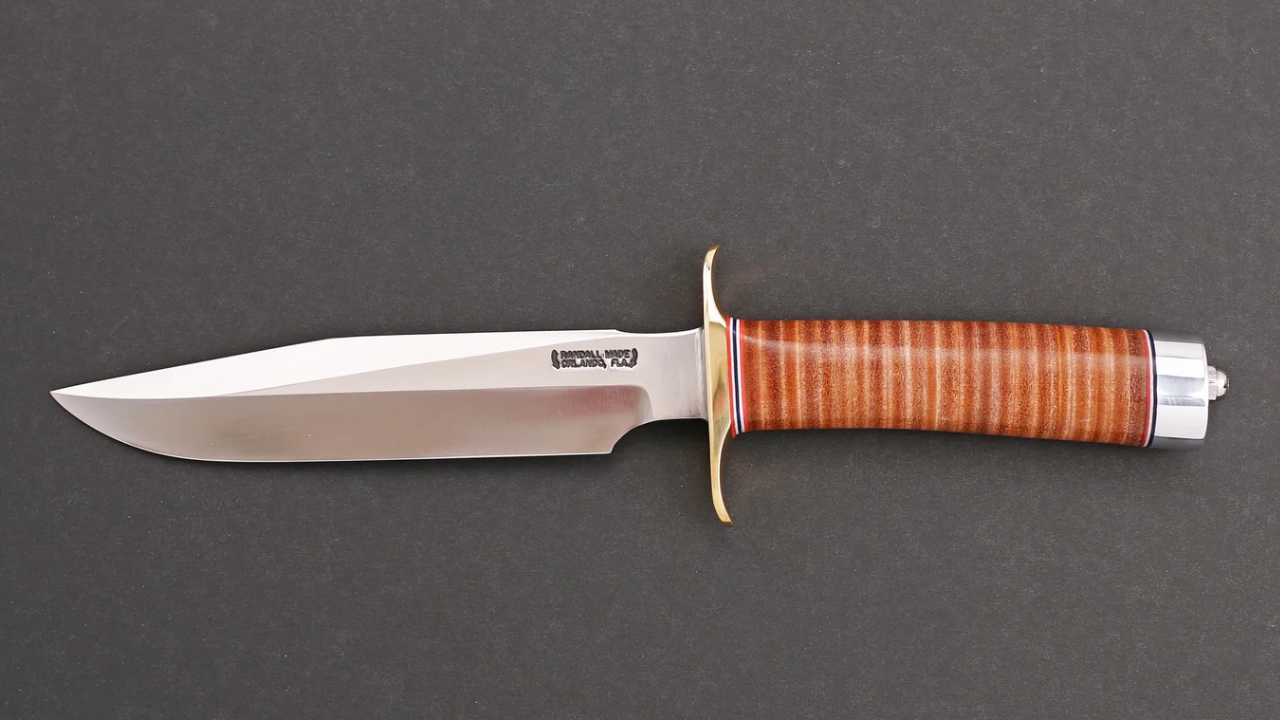
Randalls are expensive and not everyone wants to actually carry one in the woods. I get it. Still, the reason you see old Randalls passed down isn’t only “collector value.” They’re built like serious tools with heat treat and fit-and-finish that hold up to decades of use if the owner wasn’t afraid of scratches.
The Model 1 in particular sits in that overlap between camp knife and hunting knife. Not perfect at any one thing, but capable of most things without breaking down. A lot of older hunters bought one, used it for everything, then it became the knife the family argues about after they’re gone. Ask me how I know.
13. Bark River Bravo 1
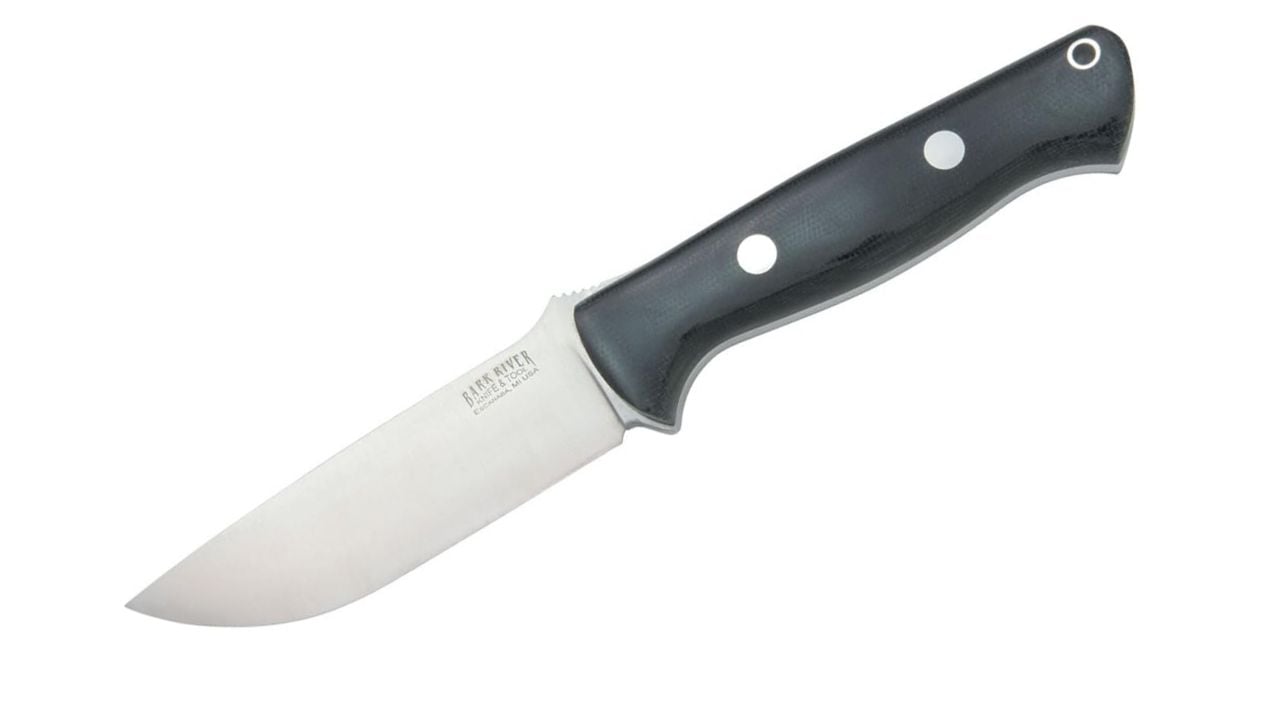
The Bravo 1 is a modern classic because it’s built for hard, wet, cold reality. It’s thick enough to handle camp chores but still shaped well enough to dress game without feeling like you’re pushing a wedge through hide. The handle is a big reason it endures—comfortable for long work sessions and secure even when slick.
Bark River’s convex edges can be maintained in the field if you understand what you’re doing, and the steel choices are usually solid. These knives don’t come cheap, but they age well. They don’t loosen up, they don’t rattle, and they don’t depend on gimmicks. If you want one “do most things” fixed blade, this is a strong candidate.
14. ESEE-4

The ESEE-4 is one of the toughest mid-size fixed blades going, and that toughness translates to longevity in hunting camps. It’s a knife that can live on a pack strap, get soaked in rain, get covered in blood, and keep going with basic care. The warranty reputation doesn’t hurt either, but most owners never need it.
Is it slicey like a thin Scandinavian blade? Not really. But it’s predictable and durable, and the handle ergonomics are better than a lot of “tactical” knives that look cool online. For the hunter who also does a lot of camping, scouting, and property work, the ESEE-4 ends up being the knife that’s always within reach.
15. Ontario Knife Company RAT-3 (and RAT-5)

The RAT line has been a working-man’s favorite for years because it hits the sweet spot: tough, affordable, and not fussy. The RAT-3 is compact enough to carry without thinking about it, but big enough to handle most field dressing and camp chores. It’s not a showpiece, which is why it doesn’t get babied.
They also tolerate neglect better than many. Coated blades resist rust, handles are simple, and the overall design doesn’t have weak points waiting to fail. Hunters hand these down because they’re not precious. They’re dependable. When a tool doesn’t create drama, it stays in the family.
16. Cold Steel SRK (Survival Rescue Knife)

The SRK is not subtle. It’s bigger than what many guys want on a belt while dragging a deer, and it can feel like overkill for fine work. But the SRK survives hard use, and it’s one of those knives that ends up on ranches, in trucks, and in camps because it will take a beating.
The blade shape is practical, the handle is grippy, and the knife is easy to maintain. Cold Steel has used different steels over the years, but the design is the constant: simple, strong, and built to be used by people who aren’t gentle. If a knife can handle years of cutting, scraping, and the occasional dumb idea, it tends to outlast its owner.
17. Benchmade Griptilian 551
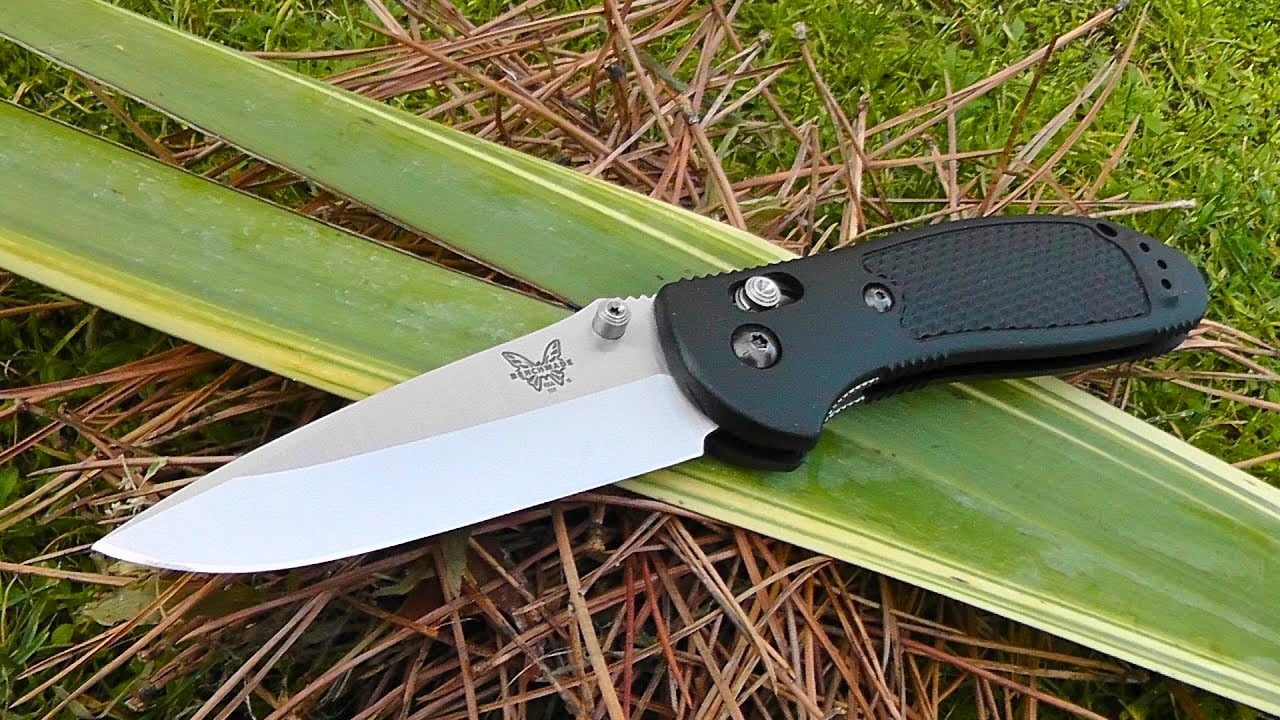
The Griptilian is a modern folder that earns long-term trust. The Axis lock is easy to run with gloves, it carries well, and the blade shapes are actually useful for hunting chores. Plenty of guys buy one for “everyday” and then it quietly becomes their field knife too, because it’s the one that’s always in the pocket.
What keeps them around is that they’re serviceable. Screws can be replaced, clips can be swapped, and the knife doesn’t have the fragile feel some lightweight folders do. It’s not the cheapest option, and it’s not the coolest. But it’s a tool you can live with for decades, which is the whole point of this list.
18. Spyderco Endura 4

The Endura has been riding in pockets since before “EDC” was a hashtag. It’s light, it cuts like a laser, and it opens easily even when your hands are cold. The thin blade stock is a feature, not a flaw, for hunters who do a lot of slicing and trimming instead of prying and twisting.
It also doesn’t demand a special routine. Keep it reasonably clean, touch up the edge, and it’ll just keep working. The FRN handles look cheap to some folks, but they survive moisture, temperature swings, and general abuse. Enduras get passed down because they become familiar—like an old rifle sling that fits just right.
19. Victorinox Swiss Army Knife Huntsman
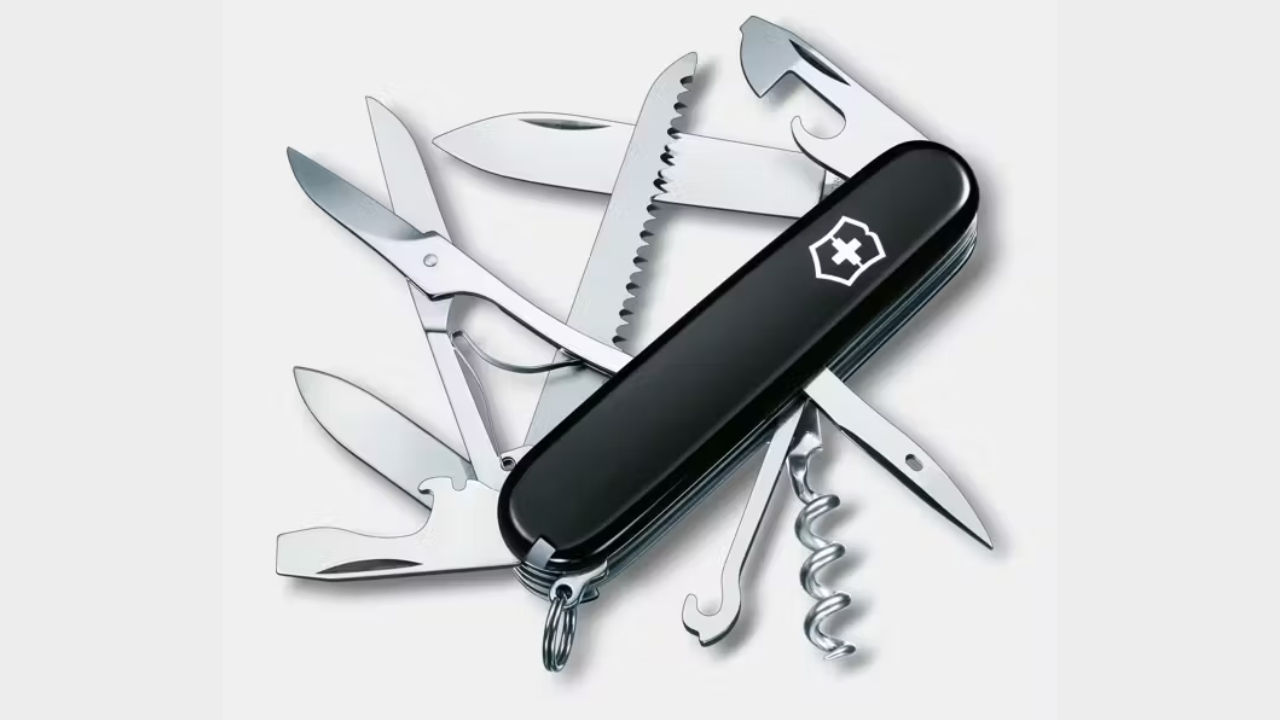
A Huntsman isn’t a dedicated hunting knife, but it’s one of the most “always useful” tools in the woods. Scissors for mending gear and cutting tape, a saw for small limbs, blades for general cutting, and tools for the million little problems that show up in camp. When someone carries one for years, it ends up living in their kit permanently.
These knives last because they’re well-made and because they get used intelligently. Nobody batons with a Swiss Army Knife, and that’s good. They get cleaned, dried, and put back in a pocket. I’ve seen old ones that look worn slick from decades of carry and still snap open with that familiar spring tension.
20. Leatherman Wave+

Purists will say a multi-tool isn’t a hunting knife. Fine. But the Wave+ has probably solved more hunting problems than a lot of “premium” fixed blades ever will. Needle-nose pliers for broadhead tweaks, cutters for snipping wire, drivers for scope rings, and a serviceable blade that handles the everyday cutting that fills most of a hunt.
They outlast owners because they become part of the routine. It’s the tool you grab when a stand strap slips, when a sled needs a quick fix, or when something on the ATV rattles loose five ridges back. Keep it reasonably clean and oiled, and it just keeps doing its job. Boring? Maybe. Also the definition of dependable.
The funny part about long-lasting knives is that they aren’t always the “best” knives. They’re the ones that got carried, used, sharpened, and trusted until they became familiar. If you’ve got one of these sitting in a drawer, don’t wait for it to become an heirloom by accident. Put it on your belt this season and make it earn the stories it’ll outlive.
Like The Avid Outdoorsman’s content? Subscribe to our newsletter so you never miss an article.
Here’s more from us: