
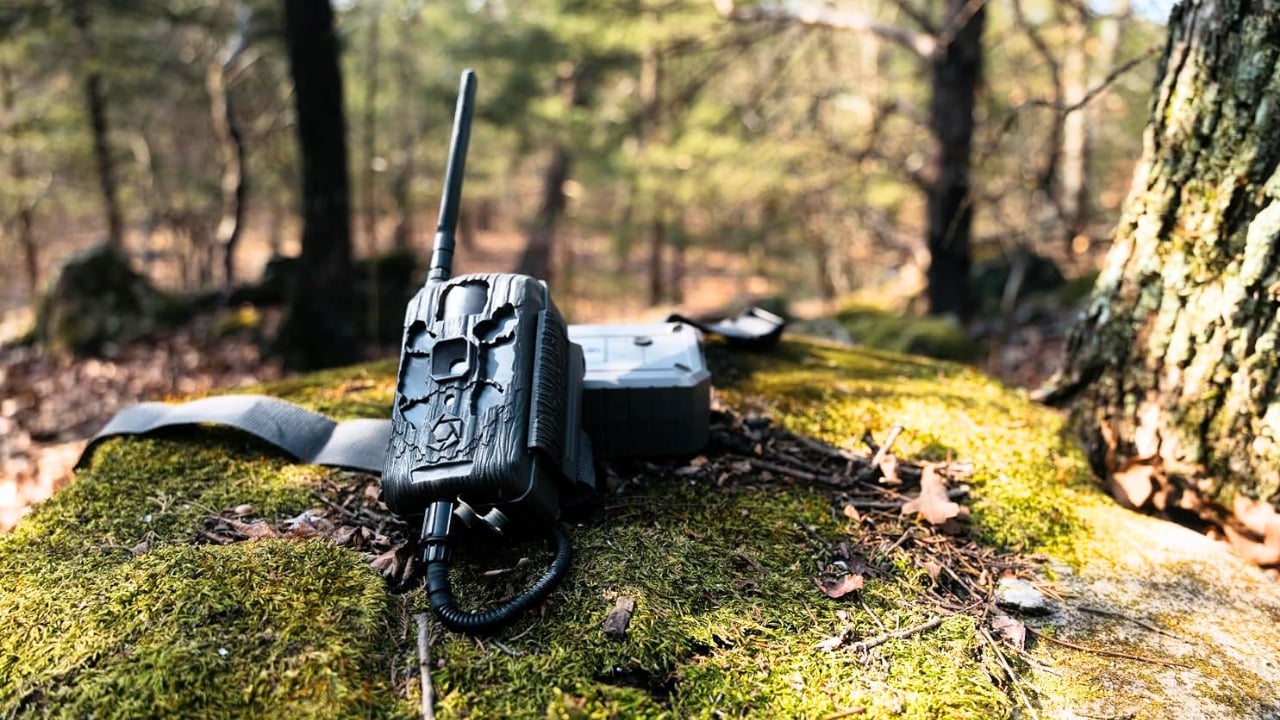
Photo credit: Stealth Cam/Amazon.com
Prices and plan terms verified September 5, 2026. The Avid Outdoorsman is a Bass Pro Shops affiliate — if you buy through a link here we earn a small commission at no cost to you.
One of these costs $79.99 and can run for free forever. The other costs $119.99 and takes the best pictures on this side of $200. They are not competing for the same buyer, and almost every “budget cell cam” roundup pretends they are.
Buy the Spypoint Flex-M2 ($79.99) if you want to find out whether cellular is even worth it to you. The free tier gives you 100 photos a month with no card on file. It is the only realistic zero-ongoing-cost cellular camera you can buy.
Buy the Stealth Cam Deceptor Max 3.0 ($119.99) if you already know you want cellular and you’re tired of squinting at grainy night photos. It took the clearest images in Field & Stream’s 2026 testing and logged very few false triggers.
The $40 sticker gap is the least important thing about this comparison. Read the plan section before you decide.
Where we haven’t run a camera a full season, we say so and lean on Field & Stream’s 2026 cellular trail camera testing plus consistent owner reports.
Side by side
| Spypoint Flex-M2 | Stealth Cam Deceptor Max 3.0 | |
|---|---|---|
| Price | $79.99 | $119.99 |
| Power | 8 AA | 16 AA |
| Detection range | 90 ft | 100 ft |
| Trigger speed | 0.4 sec | under 0.3 sec |
| Plan | Free tier: 100 photos/mo · paid from ~$10/mo per camera | ~$10/mo per camera |
| Standout | Genuinely free to run | Best image clarity under $200 |
| Weak point | Eats alkaline batteries | Weak antenna |
Check Spypoint Flex-M2 price at Bass Pro Shops · Check Stealth Cam Deceptor Max 3.0 price at Bass Pro Shops
The free tier is the whole point of the Spypoint
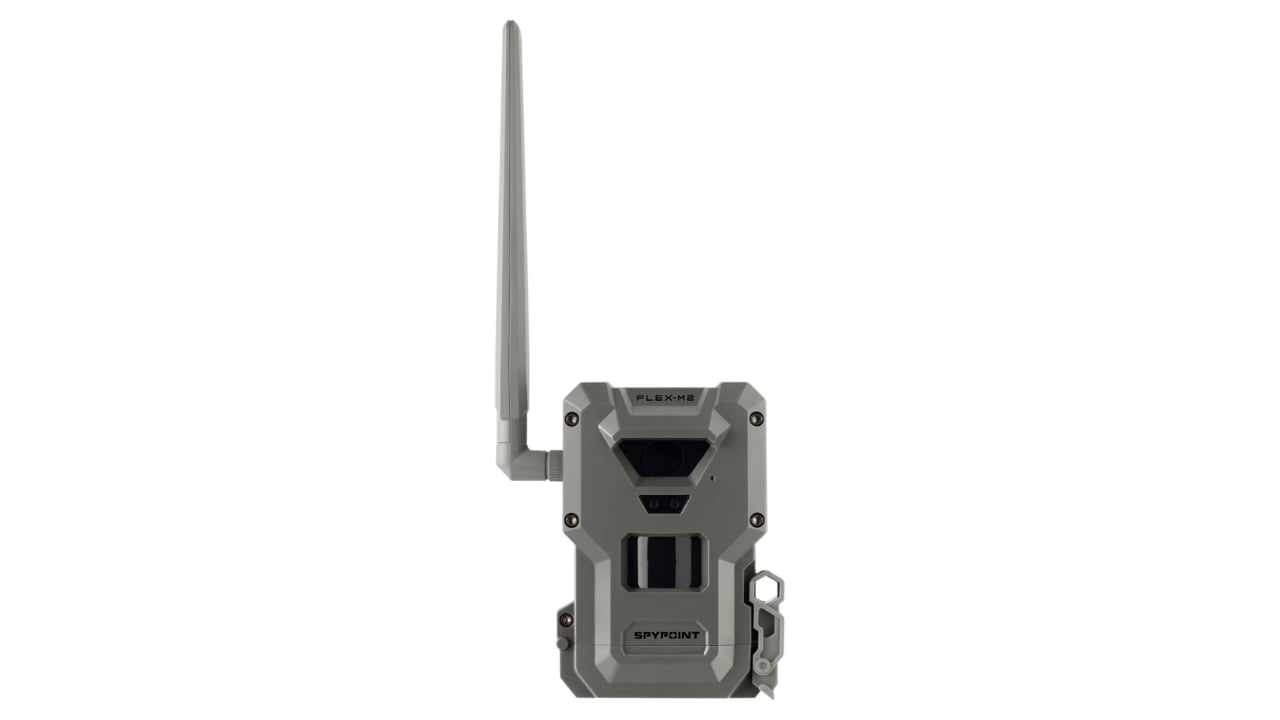
One hundred photos a month, no credit card, no trial expiring. For a single camera on a food plot where you want to know whether deer are using it — not catalog every visit — that’s genuinely enough.
Here’s the three-year math nobody puts next to the sticker price:
| Setup | 3-year total |
|---|---|
| Spypoint Flex-M2, free tier | $80 |
| Spypoint Flex-M2, paid plan | $440 |
| Stealth Cam Deceptor Max 3.0, paid plan | $480 |
The $80 column is the only one of its kind in this category. That’s the reason to buy this camera.
But be honest with yourself about 100 photos. On a good scrape in early November you will burn through that in four days. Once you’re paying $10 a month for an $80 camera, you’re in the worst position in the whole category — budget hardware on full-price service. At that point you should have bought a better camera.
So the Flex-M2 is the right call in exactly two situations: you’re testing whether cellular fits how you hunt, or you have a low-traffic camera where 100 photos genuinely covers the month. Outside those two, it’s a trap.
One thing to budget for: it eats standard alkaline AAs. Run lithium instead — about $15 a set — and a two-month camera becomes a four-month one. That’s not a knock on the camera so much as a line item people forget.
The Stealth Cam is buying you two things
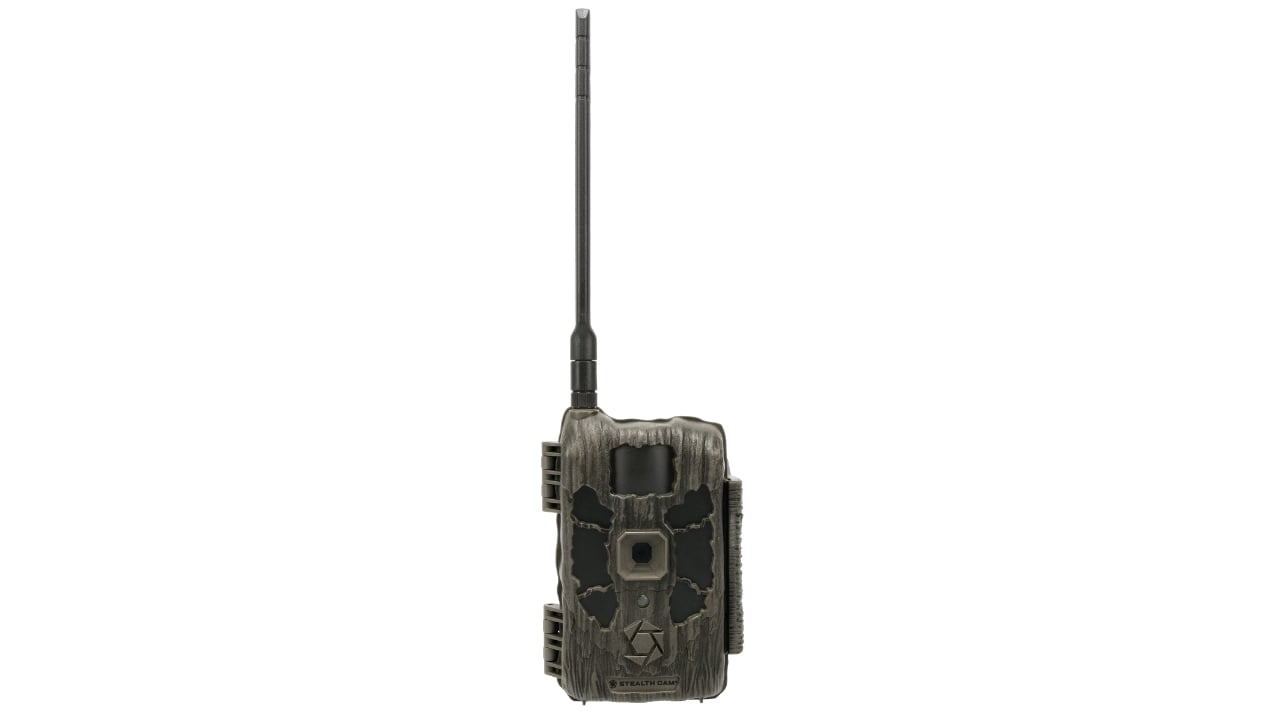
Image clarity. It was the sharpest camera in Field & Stream’s testing, and on a metered plan that matters more than it sounds. A clear photo answers your question in one frame. A grainy one makes you wait for another pass.
Very few false triggers. This is the underrated half of image quality. A camera that fires at every branch shadow buries the twelve photos you needed under four hundred you didn’t — and on a per-photo plan, every junk trigger costs you money. Low false-trigger rate is a feature you pay for and then never think about, which is exactly why nobody markets it.
Sixteen AAs is also a genuinely long deployment. It gets to the same place the solar cameras do, just by brute force.
The problem is the antenna. It’s the weakest part of this camera, and no amount of image quality rescues a camera that can’t send. If your ground has marginal signal — a hollow, a river bottom, anywhere your phone shows one bar at the tree — this is the model most likely to disappoint you. The internal interface is also awkward to reach, which you’ll notice every time you change a setting in the dark.
How to actually choose
Check your signal at the tree, not at the truck. This is the first question, not the last one. Stand where the camera will hang and look at your phone. One bar or less and the Stealth Cam is the wrong buy at any price — its antenna is the compromise that made $119.99 possible.
Then count your expected photos. Under 100 a month, the Spypoint free tier wins on cost by a margin nothing can close. Over 100 a month, you’re paying either way, and $40 more for meaningfully better images and a faster trigger is an easy yes.
Then ask if you’re actually buying budget. If you’re going to end up on a paid plan regardless, the $40 you saved is 4% of your three-year cost. Buy for the camera, not the sticker.
Who shouldn’t buy either of these
Anyone who wants video or burst mode. Both will chew through a metered plan, and neither of these cameras is the one you want doing it.
Anyone running five or more cameras. Both brands bill per camera. At five cameras that’s roughly $600 a year in service alone. Look at a per-account billing system instead — the difference gets large fast.
Anyone who can pull SD cards without disturbing their spot. Cellular solves an access problem. If you don’t have one, buy a good non-cellular camera and keep the subscription money.
Frequently asked
Will the Spypoint free tier get discontinued? Nobody outside Spypoint knows. It’s been offered for years and it’s central to how they sell cameras, but plan an $80 camera as an $80 camera — if the free tier disappears, you haven’t lost much.
Does 100 photos/month mean 100 detections? It means 100 photos transmitted to your phone. The camera still records to the card. That distinction matters: you can run it as a mostly-normal camera that sends you a limited number of alerts, and pull the full card when you’re in the area anyway.
Low-glow or no-glow? Neither of these is your no-glow answer. If you need a camera that doesn’t announce itself — near a road, a property line, or public ground — look at models with a dedicated no-glow option rather than compromising here.
Bottom line: the Flex-M2 is the cheapest honest way into cellular scouting, and the only one you can run for free. The Deceptor Max 3.0 is the better camera and the wrong buy if your signal is marginal. Check your bars first; that answers it faster than any spec sheet.
Sources: Field & Stream, Best Cellular Trail Cameras of 2026 · Trail Cam HQ, Cellular Trail Camera Data Plans Compared. Verify current pricing and plan terms before you buy.
Like The Avid Outdoorsman’s content? Be sure to follow us.
Here’s more from us:


